Kids interview Marcus Aurelius
by Charactorium · Marcus Aurelius (121 — 180) · Philosophy · Politics · 5 min read

Two twelve-year-old visitors push the heavy palace door, a little intimidated. Before them, an elderly man in a simple cloak sets down a small wax tablet and smiles at them. This is Marcus Aurelius, emperor of Rome and philosopher, who invites them to sit near him.
—What are those little tablets you were holding when we came in?
Ah, sharp eyes! They are called pugillares, wax tablets. Imagine a wooden board covered with soft wax. You scratch words onto it with a stylus, and you can erase and start again. In the evening, I would jot down little phrases, just for myself. Not to display, not to sell. It was my secret journal. Today they might call it a commentarii, a private notebook. I would write things like: correct myself, rebuke myself, start again tomorrow. You see, my child, running an empire is heavy. Those few words at night were my way of staying upright.
I wrote those words for myself alone, never for anyone to read.
—Where did you write when you were at war?
In a tent, my child! A simple canvas tent pitched near the river called the Danube, at Carnuntum. By day I commanded the legions against the Germanic tribes. By night I would sit down. Imagine a single small flame in the dark: a lucerna, an oil lamp. No sound but the wind and the sentries. And there, tired, I would take my tablets. I told myself: life is short, so do your duty without complaining. Strange, isn't it? The same man led soldiers in the morning and sought wisdom at night. But for me, it was the same task.
By day I commanded armies, by night I commanded myself.
—Were you afraid at night in the camp, so far from home?
Yes, sometimes. I won't lie to you. Those Marcomannic Wars lasted years, from 167 until my death. Tribes had crossed the Danube and threatened Italy. It was the first time in a very long while. So yes, you fear for your people. But Stoicism, my philosophy, taught me a simple thing. You cannot command the cold, nor the enemy, nor tomorrow. You only command what you do, right now. I repeated to myself: attend to your duty, not your fears. Imagine carrying a big sack of worries. The Stoic learns to keep only what truly depends on him.
You command neither the cold nor tomorrow — only what you do now.
—Is it true that a great disease struck the whole empire while you reigned?
Alas, yes, and it was terrible. In 166, our soldiers returned from the East. With them came a dreadful disease, likely smallpox. It was called the Antonine Plague. Imagine empty streets, entire families swept away. Villages where no one answered anymore. I organized public funerals for the dead. I even had bodies burned in my own gardens to prevent contagion. And because there were not enough soldiers, I had to arm gladiators to defend our borders. You see, an emperor cannot stop a disease. But he can refuse to flee. Stay, tend, bury with dignity: that was within my power.
An emperor cannot stop a disease, but he can refuse to flee.
—And you, what did you eat in the morning? Did you live like a spoiled king?
Oh no, not at all! They say I changed almost nothing in my life when I became emperor: neither my house, nor my furniture, nor my table. I rose before dawn, even when I was sleepy. I scolded myself not to stay lazy under the covers! At meals, little: bread, vegetables, a bit of olive oil, wine mixed with water. Not those lavish banquets other emperors loved. You see, luxury does not make the soul better. Imagine two men: one eats from gold, the other from a simple bowl. The wise one is he who remains calm in both cases.
Luxury never makes the soul better.
—What was it like sharing power with your brother? Did you quarrel?
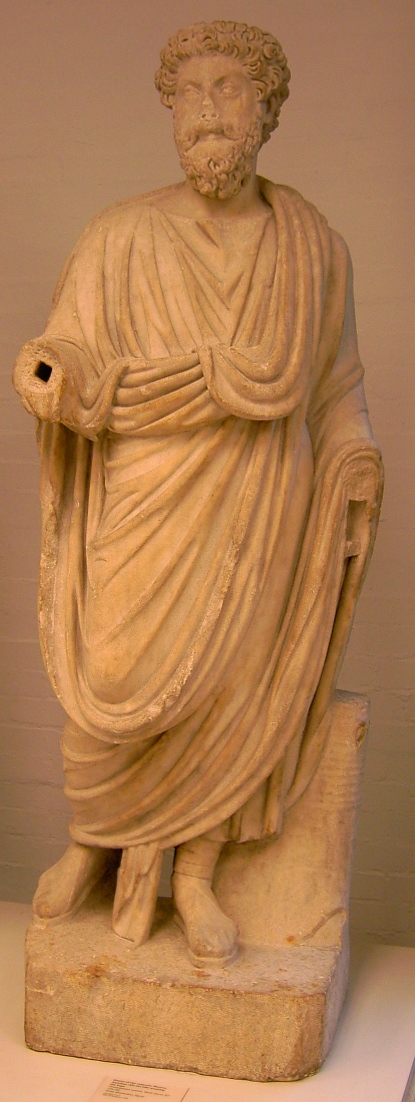
Good question! When I became emperor in 161, I did something new. I shared the throne with my adoptive brother, Lucius Verus. Two emperors at once! No one had ever done that in Rome. Lucius loved to have fun, much more than I did. He was less serious, it's true. But I never criticized him in public. Do you know why? Because duty, for a Stoic, is to play your role without complaining about others. Imagine two brothers carrying a heavy table together. If one constantly grumbles at the other, the table falls. So I carried, and I kept quiet.
You don't carry an empire together by grumbling at your brother.
—And the general who tried to steal your throne, did you punish him harshly?
You mean Avidius Cassius. In 175, that great general proclaimed himself emperor in my place. A betrayal, yes. Many kings would have cried vengeance. Imagine the anger you could feel! But I had a word for that: apatheia. It is not indifference, mind you. It is learning not to be carried away by anger. So I wanted to forgive him. I dreamed of speaking to him face to face, to bring him back to reason. Alas, his own soldiers killed him first. But I did not seek a bloodbath. You see, revenge is easy. The hardest, and the greatest, is to forgive.
Revenge is easy; forgiveness requires much more strength.
—What was your philosophy actually good for in everyday life?
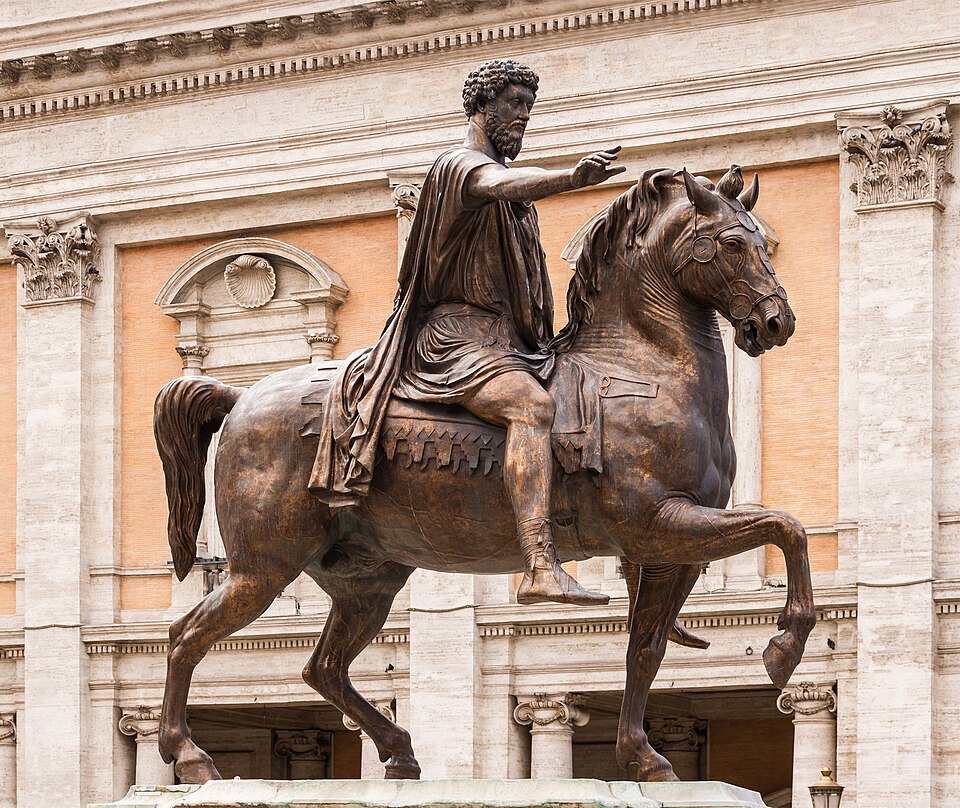
Excellent question, my child! A fine thought that serves no purpose is not worth much. So I wanted to put my philosophy into my laws. I had rules passed to protect slaves from the cruelty of their masters. I defended orphans, the weakest. This virtue was called philanthropia, love of fellow human beings. For a Stoic, all men are part of one great body, governed by a common reason, the logos. If one part suffers, the whole suffers. Imagine a single great tree of which you are a leaf. Harming another leaf is wounding yourself.
A fine thought that protects no one is not worth much.
—Is it true that you funded schools to teach thinking?
It is true! In 176, in Athens, the city of the great Greek sages, I created four chairs of philosophy. A chair is a paid teaching position. I funded one for each major school of the time: Plato's, Aristotle's, the Stoics like me, and Epicurus'. You see? Even the schools I disagreed with! Why? Because learning to think is a treasure for everyone. I myself, as a child, had extraordinary teachers. I wanted others to have that chance after me. Imagine a lamp that lights a thousand others without ever going out.
Learning to think is a lamp that lights a thousand others.
—If we had to remember just one of your phrases, which would it be?
You touch me by asking that. I never wanted those tablets to be read, you know. Yet if I were to entrust you with one, it would be this: “Start with yourself: examine yourself, question yourself, and if you find that you are wrong about something, correct yourself.” It is very simple, but it is the work of a lifetime. Before judging the world, look first within yourself. Before correcting others, correct yourself. Imagine a mirror you would take out every evening, not to see your face, but your heart. That is what I did by the lamp, in my tent. And you too can do it, starting this very evening.
Before judging the world, look first within yourself.

This imaginary interview was generated by artificial intelligence from sources documented in Marcus Aurelius's profile. It dramatises what the figure might have said based on what we know about them, but does not constitute attested historical testimony. For primary sources and factual documentation, refer to the full profile.