Kids interview Marco Polo
by Charactorium · Marco Polo (1254 — 1324) · Exploration · 5 min read
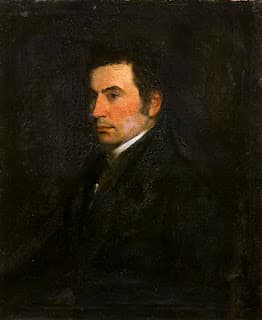
Two young visitors, aged twelve, on a school trip, are lucky enough to meet an old Venetian merchant with bright eyes. He has crossed the world, slept under felt tents, and eaten at the table of an emperor. Today, he agrees to tell it all, provided they listen to the end.
—Where did you live when you were little, before all your travels?
You know, my child, I was born in Venice in 1254, into a family of merchants. Imagine a city built on water, with no land roads: you move around by boat, and goods arrive by ship from all over the world. Our house was near the Rialto, the great market. It smelled of spices, salt, and wet wood. My father and uncle had already left far away, toward the East. I grew up watching the sails on the horizon, wondering what lay at the end. In Venice, you breathe trade from the cradle. That's what made me want to go so far.
In Venice, you breathe trade from the cradle.
—How old were you when you left for Asia? Were you scared?
I was seventeen when we left, in 1271, from the port of Acre. Yes, I was a little scared, I won't lie to you. Ahead of me lay deserts, mountains higher than anything I had ever seen, and peoples whose language I didn't know. Imagine walking for months without knowing if you'll ever see your home again. The journey to China took nearly four years! But at that age, fear and wonder mix. Every morning brought a new landscape. And my father was there. When you travel with your family, you feel less cold at heart.
When you travel with your family, you feel less cold at heart.
—What was it like to meet an emperor as powerful as the Great Khan?
Ah, I still remember that! We met him at Shangdu, his summer capital, in 1275. He was called the Great Khan — that's the title of the supreme ruler of the entire Mongol Empire. His name was Kublai, the grandson of Genghis Khan. Imagine a marble palace surrounded by vast gardens, with thousands of servants. I, a young Venetian, was tiny before him! But he was curious, he loved to listen. He asked me a thousand questions about faraway lands. I think he liked my memory for details. That's how a little merchant became his trusted envoy.
A little merchant can become the trusted envoy of an emperor.
—How did you manage to travel so far without being attacked?
Good question! The Great Khan had given me a paiza. It was a gold tablet that you wore as a safe-conduct. By showing it, everywhere in the empire, I was given shelter, fresh horses, and food. Imagine an object that opens all doors and lowers all spears! In the evening, I often slept in caravanserais — large fortified inns along the roads, where merchants and their beasts rested. This gold tablet was Kublai's trust made visible. Without it, a foreigner alone on those roads would not have survived long.
This gold tablet was the emperor's trust made visible.
—Is it true that you were governor of a Chinese city?
That's what I tell, yes! The Great Khan is said to have entrusted me with the city of Yangzhou, a great city in China, for about three years. You know, some scholars still doubt that I actually governed that city. Maybe I only had a more modest post there. But imagine the trust needed for an emperor to place a foreigner from Venice in his administration! At court, my days were full: I learned languages — Mongolian, Persian — and I went out to inspect provinces. I observed everything: crops, roads, customs. And I kept it all in my head.
An emperor trusted me, the foreigner from Venice.
—What surprised you most there, that we didn't have at home?
Oh, so many things! The strangest was money. In China, you didn't pay with metal coins, but with paper bills! They were called jiaochao. Imagine giving a simple piece of paper marked with a seal, and receiving silk or grain in exchange. At home, that seemed impossible. I also saw black stones that were taken from the ground and burned better than wood for heating houses — what you call coal. When I told all this in Venice, many thought I was exaggerating. Yet I wasn't inventing anything.
Give a piece of paper and receive silk: that's what Europe refused to believe.
—Why didn't people believe you when you told them all that?
Because what I described was beyond their imagination, my child. For them, such a vast empire, cities bigger than any in Europe, endless riches... it was too much! They even gave me a mocking nickname: Marco Millions, because I was always talking about thousands and millions of things. Imagine someone who comes back and swears they saw marvels that no one else has seen. You hesitate to believe them, don't you? Yet I clearly distinguished Cathay, North China, from Mangi, South China. I knew those lands better than anyone in the West.
What I described was simply beyond their imagination.
—How did you manage to write a book while traveling all the time?
Ah, but I didn't write that book while traveling! I dictated it in prison, believe it or not. In 1298, during a naval battle between Venice and Genoa, I was captured and imprisoned. In my cell, there was a companion, Rustichello of Pisa, who was a writer. Imagine two prisoners: one tells his memories, the other puts them on paper, day after day. That's how The Description of the World was born — "description" means an account, a detailed story. I turned my captivity into something useful. A defeat can give birth to a book that people will still read centuries later.
A defeat can give birth to a book read for centuries.
—And when you returned to Venice, did your friends recognize you?
Not at all! It's almost funny. I came back in 1295, after twenty-four years away. Imagine leaving as a child and returning as a mature man, face tanned by deserts, dressed in worn Mongol robes. No one recognized me! They say that to prove who we were, my companions and I unstitched our old clothes. And then, from all the seams, precious stones hidden during the whole journey rolled out! Rubies and emeralds shone on the table. Only then did my family understand. Twenty-four years change a man, my child, as much as they change the world.
Twenty-four years change a man as much as they change the world.
—What did you eat during those long journeys? Was it good?
It depended a lot on the place! On desert roads, we made do with flatbread, dried meat, and dates. Simple, solid traveler's food. The Mongols, they drank koumiss: fermented mare's milk. The first sip is surprising, believe me, it's sour and a bit tangy! But at the Great Khan's court, what a feast! Rice, noodles, rare spices, fresh ginger. Imagine banquets with thousands of guests, acrobats and musicians between courses. I went from the harshest deserts to the richest tables in the world. Traveling is also tasting a thousand flavors.
I went from the harshest deserts to the richest tables in the world.
—Did you ever regret telling all that?
Never, my child. On my deathbed, in 1324, relatives begged me to admit that I had invented or exaggerated my stories, so that I could depart with a clear conscience. Do you know what I replied? That I hadn't told even half of what I had seen. It was true. Imagine trying to describe an entire ocean with just a handful of words. My book, The Description of the World, nourished cartographers and explorers for two hundred years. Men dreamed of Asia thanks to my pages. That is my pride: having opened a window onto a world that Europe was ignorant of.
I haven't told even half of what I saw.
This imaginary interview was generated by artificial intelligence from sources documented in Marco Polo's profile. It dramatises what the figure might have said based on what we know about them, but does not constitute attested historical testimony. For primary sources and factual documentation, refer to the full profile.