Alexandra David-Néel
1868 — 1969
France
French explorer and writer (1868-1969), Alexandra David-Néel was the first Western woman to reach Lhasa, the capital of Tibet, in 1924. A passionate Orientalist, she devoted her life to exploring and studying Asian cultures, particularly Tibetan Buddhism.
Émotions disponibles (6)
Neutre
par défaut
Inspirée
Pensive
Surprise
Triste
Fière
Key Facts
- 1889: Began studying Orientalism and learning several Asian languages
- 1911: Departed for Asia and began her explorations in India, Burma, and Japan
- 1924: Reached Lhasa, becoming the first Western woman to enter the holy city of Tibet, after 14 months of travel
- 1927: Published 'My Journey to Lhasa', a major account of her expedition
- 1969: Died in Digne-les-Bains at the age of 100, having written more than 30 books
Works & Achievements
Account of her journey to Lhasa (1924), recounting her expedition through Central Asia and her arrival at the Tibetan capital, a major achievement documenting her spiritual and geographical quest.
First Western woman to reach Lhasa, capital of Tibet, an achievement considered one of the greatest explorations of the 20th century, despite British prohibitions.
Major work presenting an in-depth analysis of Tibetan Buddhism and its practices, the fruit of her studies and observations during her stays in Asia.
Ethnographic and spiritual study documenting Tibetan mystical practices, reflecting her immersion in Buddhist culture and her pursuit of esoteric knowledge.
Work exploring the life and teachings of the Buddha through an orientalist perspective, a synthesis of her scholarly research on Buddhism.
Fourteen-year period of immersion in Asia, including stays in India, Japan, China, and Tibet, allowing her to acquire unique expertise in Asian cultures.
Anecdotes
In 1924, Alexandra David-Néel became the first Western woman to enter Lhasa, the forbidden capital of Tibet. Disguised as a Tibetan beggar and accompanied by her adopted son Yongden, she traveled over 2,000 kilometers on foot through icy mountains to reach this sacred city that Westerners had never been able to visit.
Alexandra David-Néel spoke thirteen languages fluently and mastered Tibetan, Sanskrit, and Chinese. This exceptional gift for languages allowed her to communicate directly with Buddhist monks and access sacred texts that were inaccessible to most Western explorers.
Before becoming an explorer, Alexandra David-Néel was an opera singer and a committed feminist activist. She fled her tedious married life in 1911 to devote herself to exploration, which was a very bold choice for a woman of that era.
Alexandra David-Néel wrote more than thirty books about her travels and her studies of Buddhism, including the famous 'My Journey to Lhasa'. Her accounts fascinated Westerners by revealing the mysteries of Asia and became international bestsellers.
At the age of 100, Alexandra David-Néel was still active and planning to return to Asia. She lived to be 101, fulfilling her final wish: to keep exploring and learning until her last day, embodying the indomitable spirit of the adventurer.
Primary Sources
I had resolved to reach Lhassa, and I would reach it, whatever obstacles lay in my way. It was not a mere whim, but the fulfilment of a life-long dream and the realization of plans carefully laid for years.
The aim of this work is to explain the doctrines and practices which constitute what is commonly called Lamaism, and to show how these doctrines and practices are connected with the primitive Buddhism and with the other forms of Buddhism.
I beg you to receive the expression of my deep veneration for your wisdom and your spiritual teaching, which illuminates the path of the faithful of Tibetan Buddhism.
The initiations which are given in the Tibetan Buddhist monasteries are not the exclusive privilege of the monastic order, but can be conferred upon lay disciples who have shown themselves worthy of receiving them.
Key Places
Birthplace of Alexandra David-Néel on October 24, 1868. This commune in the Paris suburbs was where the explorer who would become a major figure of French Orientalism was born.
Capital of Tibet, which David-Néel reached in 1924, becoming the first Western woman to enter the city. This major achievement crowned years of study and exploration in Central Asia and represents the pinnacle of her spiritual and scientific quest.
The city where Alexandra David-Néel settled from 1927 onwards after her explorations. She founded her house-museum there and wrote her major works, living until her death in 1969 at the age of 101.
The Himalayan region where David-Néel stayed and deepened her knowledge of Tibetan Buddhism. She studied Sanskrit and sacred texts there, preparing for her future explorations and publications.
Alexandra David-Néel crossed these regions during her journey toward Tibet. These territories were crucial stages of her travels from 1911 to 1924, during which she perfected her knowledge of Tibetan and Buddhism.
The French capital where Alexandra David-Néel began her intellectual formation and started her career as an Orientalist before devoting herself to exploration. She maintained contacts there with academic and Orientalist circles.
Typical Objects
Handwritten notebook used by Alexandra David-Néel to document her observations and experiences during her explorations in Asia. This tool was essential for explorers of the 19th–20th centuries to record their ethnographic and geographical discoveries.
Traditional Tibetan robes and costumes adopted by Alexandra David-Néel during her journey to Lhasa, allowing her to blend in with the local population. These garments symbolize her commitment and respect for the cultures she studied.
Portable camera typical of the early 20th century used by the explorer to visually document her travels in Tibet and Central Asia. Photographs served as crucial evidence of explorations and contributed to the spread of knowledge.
A string of 108 beads used in Tibetan Buddhist practice. Alexandra David-Néel, as a passionate orientalist, studied and practiced Buddhism, carrying this spiritual symbol with her throughout her explorations.
Handwritten and printed maps of Tibet and Central Asia that David-Néel used to plan her routes and document her discoveries. These maps reflect the importance of geography in 20th-century explorations.
Works on Tibetan Buddhism and Eastern philosophies that the explorer consulted and enriched with her own observations. Alexandra David-Néel was as much a writer as a traveler, producing several widely recognized works.
Horses, mules, and mountain equipment needed to cross the Tibetan highlands and Asian mountain ranges. These means of transport were indispensable for overland explorations in the early 20th century.
School Curriculum
Vocabulary & Tags
Key Vocabulary
Daily Life
Morning
Alexandra David-Néel rises early, often before dawn, for her meditation practices and study of Tibetan Buddhism that she had adopted. She devotes the first hours to reading Orientalist texts, corresponding with her academic contacts, and taking notes for her future works. A light breakfast of tea and bread precedes her intellectual activities.
Afternoon
The afternoon is generally dedicated to her in-depth research: she meets scholars, lamas, or local informants to deepen her knowledge of Tibet and Buddhism. She writes up her observations and translations of Tibetan texts, meticulous work requiring concentration and linguistic expertise. When traveling, she alternates between exploration and ethnographic documentation.
Evening
In the evening, Alexandra devotes herself to writing her books and her abundant correspondence with loved ones and scientific collaborators. She dines modestly, often alone or with a small circle of intellectuals sharing her interests. Before bed, she practices Buddhist meditation again, a central daily ritual in her spiritual life.
Food
Alexandra adopts a diet suited to her periods of travel in Asia, combining European foods and local cuisine depending on her location. In the West, she consumes an early 20th-century bourgeois diet: meats, vegetables, breads, and dairy products. During her expeditions to Tibet and Asia, she adapts to the local diet including butter tea, tsampa (roasted barley flour), and travel provisions.
Clothing
Alexandra first wears typical Western clothing of early 20th-century bourgeois women: long dresses, bodices, hats. During her Asian expeditions, she progressively adopts local garments, particularly Tibetan dress, to blend in more with the population and ease her movements. This sartorial adaptation symbolizes her growing integration into the cultures she studies.
Housing
Alexandra lives in bourgeois residences in Europe (notably in Belgium and France), equipped with well-stocked libraries and space for her writing work. During her explorations in Asia, she stays in Buddhist monasteries, guesthouses, or modest dwellings, integrating into the daily life of local communities. Her homes always reflect a studious atmosphere, surrounded by books and Asian cultural objects.
Historical Timeline
Period Vocabulary
Gallery

Thomas Manning

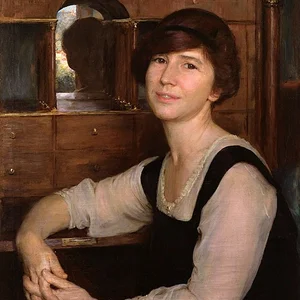
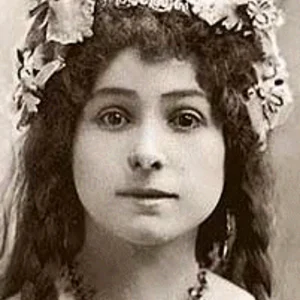
Louise Eugenie Alexandrine Marie David 19th century

Alexandra David-Neels

Alexandra David-Neels, cropped

Alexandra David-Néel, also know as Louise Eugenie Alexandrine Marie David 19th century (cropped)

Alexandra David-Néel et le Lama Aphur Yongden au Tibet

Alexandria David-NeelinLhasa
Wing Yin Pang - A Historical Review of the Comparative Study of Mohism and Christianity During the Late Qing and Republican China Periods
Visual Style
Un style fusionnant aquarelle voyageuse avec les motifs orientalistes du début du XXe siècle, évoquant les carnets d'exploration et l'esthétique spirituelle du Tibet. L'atmosphère combine l'élégance Art Nouveau avec l'authenticité des cultures asiatiques.
AI Prompt
Early 20th century expedition aesthetic: watercolor and ink illustration style reminiscent of travel journals and orientalist paintings. Soft, diffused natural lighting suggesting Himalayan mountain atmospheres. Incorporate elements of Art Nouveau decorative patterns mixed with Tibetan artistic motifs. Warm earthy tones with touches of gold leaf, creating an atmosphere of spiritual adventure and scholarly exploration. References to vintage explorer photography, botanical illustration, and traditional Buddhist iconography.
Sound Ambience
Une ambiance immersive mêlant les sons mystiques du Tibet bouddhiste (cloches de temple, chants de moines) avec les bruits de l'exploration himalayenne (vent, pas sur les sentiers montagneux), évoquant le voyage spirituel et d'aventure d'Alexandra David-Néel.
AI Prompt
Ambient soundscape of early 20th century Tibet and Eastern exploration. Layer distant Himalayan wind howling through mountain passes, Buddhist temple bells resonating in a monastery, Tibetan monks chanting in deep harmonic tones, gentle rain on fabric tents, creaking leather saddles and footsteps on rocky paths, prayer wheels slowly turning with metallic whispers, distant yak herds, pages of old journals being carefully turned, occasional wooden flute melodies, subtle background of bustling Asian markets with distant voices, all creating an immersive atmosphere of spiritual journey and exotic discovery.
Portrait Source
Wikimedia Commons — domaine public
Aller plus loin
Références
Ĺ’uvres
Voyage d'une Parisienne Ă Lhassa
1927
Expédition à Lhassa
1924
Le Bouddhisme du Bouddha
1936
Mystiques et Magiciens du Tibet
1929
La Vie secrète de Bouddha
1937
Explorations et résidence prolongée en Asie
1911-1925