Imaginary interview with Marco Polo
by Charactorium · Marco Polo (1254 — 1324) · Exploration · 6 min read
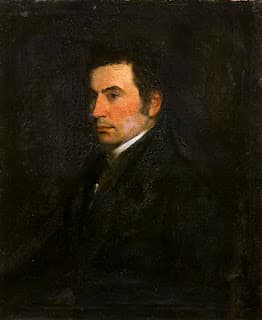
Genoa, autumn 1298. In a damp cell where the smell of the port and pitch seeps in, a Venetian merchant whose hands are still browned by twenty-four years of Asian sun receives his visitor. Before him, a Pisan named Rustichello sharpens his quill: Messire Marco is about to tell the world.
—How was your return to Venice after so many years away?
When we finally crossed the threshold of our house near the Rialto in 1295, no one recognized us. Imagine: I had left as a boy, I returned a mature man, with a weathered face, dressed in the Tartar fashion, speaking half Venetian, half the languages of the East. Our own parents took us for Tartar beggars. So, as the story goes, we had those worn-out Mongol robes brought in, and with our knives we unstitched the seams: out fell rubies, emeralds, sapphires, sewn there to protect them from road bandits. Twenty-four years of dust suddenly spitting precious stones onto the table. Thus, by the gleam of gems more than by our words, our family finally gave us back their blood and their name.
Twenty-four years of dust suddenly spitting precious stones onto the table.
—What did that departure into the unknown mean to you at seventeen?
I was seventeen when we left Acre — my father Niccolò, my uncle Maffeo, and I — in the year 1271. They already knew the road; they had seen the Great Khan; for me, everything was a first. I did not know that I would not see my city again until I had traveled, they say, more than twenty-four thousand miles round trip. Before us lay Persia, the deserts, mountains so high that fire itself burns pale and cold. I did not weep for the Venice of canals: I was a merchant's son, and the merchant knows that his homeland is the road. But I confess that as I looked at the sea behind us, I prayed to God and our saints to bring me back alive one day to San Marco.
The merchant knows that his homeland is the road.
—Why did you choose to put your memories down on paper here, in this prison?
Believe me, I did not choose these walls. I was captured last year at the naval battle where Genoa defeated our galleys — just one more Venetian in the chains of his rivals. But God turns prisons into workshops: I have as my cellmate Master Rustichello of Pisa, who knows how to tell stories and how to write, which I lack. By day, I spin it all out for him: the kingdoms, the beasts, the cities I have seen, the customs of the Tartars. In the evening, he puts into fine order what my memory throws out in disorder. We call it The Description of the World, for it is the description of the entire inhabited earth. Without this captivity, perhaps these wonders would have died with me, with no other tomb than my skull.
God turns prisons into workshops.
—Do you fear that your account will be taken for pure fable?
I do fear it, and already people laugh about it in the streets of Venice. They call me Marco Millions, as if I count by millions everything I describe, out of boastfulness. Yet I swear before God that I have said nothing that I have not seen with my own eyes or that was not reported by trustworthy men. Master Rustichello writes at the beginning of our book that since Adam was formed, no Christian, Saracen, Tartar, or Indian has explored as many different parts of the world as I have. This is not pride: it is that the earth is far vaster and stranger than our doctors sitting in their schools believe. Whether they believe me or not, I will have told the truth, and time, I hope, will be a better judge than my neighbors.
The earth is far vaster and stranger than our doctors sitting in their schools believe.
—How could a young Venetian merchant enter the service of the sovereign of the Tartars?
The Great Khan Kubilai, grandson of the great Genghis, liked to be told about the distant things of his empire. Now, I knew how to see, remember, and soon I spoke enough languages — Mongolian, Persian, and other tongues of his provinces — to tell him what his own officers neglected. He took a liking to me and entrusted me with missions across his immense lands. To travel safely, he gave me a paiza, that golden tablet engraved with a command: whoever showed it received a mount, lodging, and provisions throughout the empire, on pain of the Khan's wrath. Imagine what that means for a foreigner: to wear around your neck the very voice of the master of the East, and to cross a thousand leagues as if protected by an invisible army.
To wear around your neck the very voice of the master of the East.
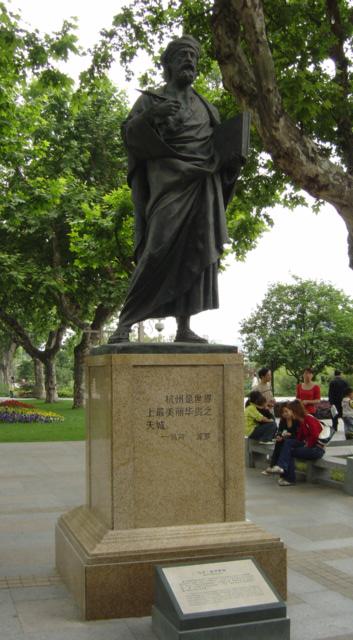
—It is said that the Khan entrusted you with the government of a great city. What of it?
It is said that I was, for three years, governor of Yangzhou, on the great river, a city so populous that it fed merchants from all over Cathay. Whether I fully held that office or served in that province alongside the Khan's officers matters little to my honor: what counts is that a Latin, a man from Venice, was deemed worthy to administer a city of the greatest empire the earth has ever borne. At home, a foreigner governs nothing. There, Kubilai cared little whether one was Tartar or Christian, as long as one served him with loyalty and intelligence. I saw justice rendered, taxes levied, famines relieved by the Khan's granaries: an order from which our quarrelsome republics would do well to learn.
—What Eastern technical wonders most challenged your European understanding?
Two especially, which people here still refuse to believe. First, throughout Cathay, they extract from the mountain a kind of black stone that they light like wood, and which burns better and longer, so much so that they heat the baths of entire cities with it. Black stones that burn! Next, and this is an even greater marvel: the Great Khan makes money out of paper. Yes, beaten mulberry bark, marked with his vermilion seal, and no one in the empire would dare refuse it, for it is worth gold and silver. This currency, the jiaochao, the Khan makes and unmakes at will: thus he is the richest lord in the world, possessing the fortune of all his subjects in a leaf. Tell that to a money changer in Venice: he will call you mad.
The Great Khan makes money out of paper.
—Beyond these marvels, what did you bring back that changes the way of navigating and trading?
On the China Sea, I saw pilots guide themselves not by the stars alone, but by a magnetized needle that always seeks north, even under clouds — an instrument that their sailors have known much longer than ours. And everywhere, on the great road, I touched silks, brocades, rare spices like nutmeg, goods that here are worth their weight in gold and that there pile up. That, perhaps, is the true treasure of my Description: not the rubies sewn into my clothes, but the knowledge of the roads by which these riches come. Let other merchants, after me, know where the road leads, and our Latin cities will gain more from it than from all the crusades.
The true treasure is not the rubies sewn into my clothes, but the knowledge of the roads.
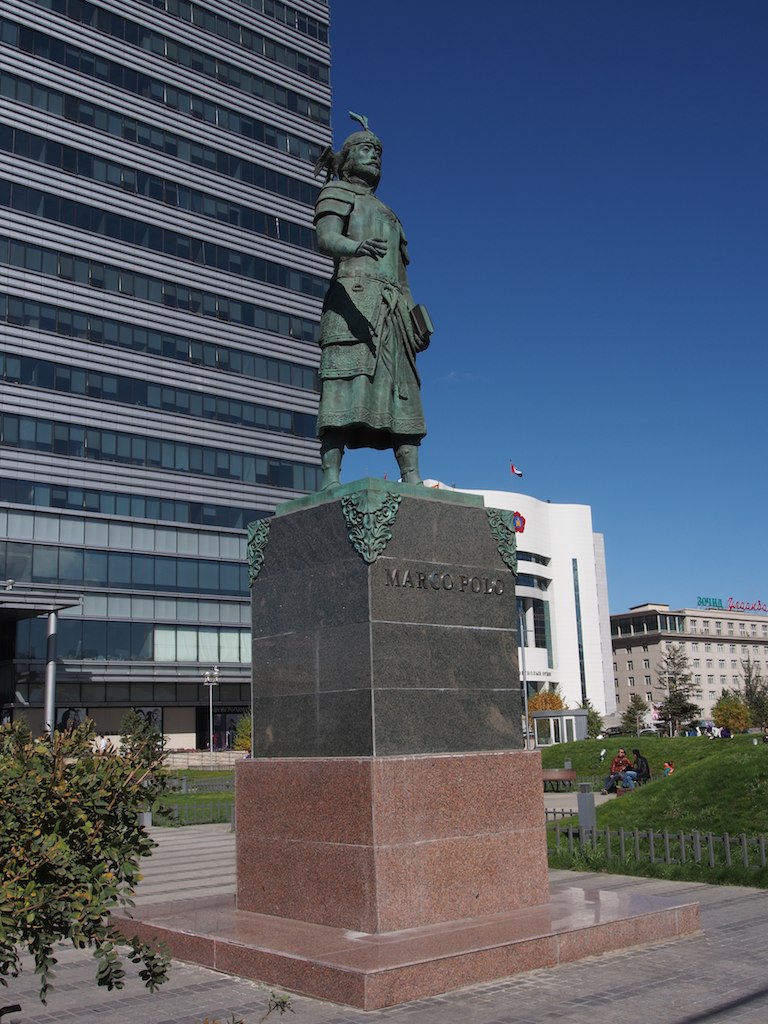
—You speak of Cathay and Mangi as two worlds. What difference do you make between them?
For someone who has only seen our maps, China is a single confused mass. But I learned to name as they do there: Cathay is the north, the lands that the Tartars have held for a long time, with Khanbaliq, which I call Cambaluc, the great capital of the Khan. Mangi is the south, the former kingdom of the Song, which Kubilai finished conquering around 1279, a country of breathtaking wealth, crisscrossed by canals, full of cities more populous than all of Christendom combined. One still smells of the steppe and the horse; the other, of rice, silk, and commerce. To confuse them is to confuse France and Spain. I wanted my book to give each kingdom its own name, its cities, and its customs.
—Do you remember the days on the great road, before reaching the Khan's court?
How could I forget them? We walked from one caravanserai to another, those fortified inns where merchants and animals find shelter for the night, along what you would call the great road of the East. Sometimes we slept under felt yurts, in the Tartar fashion, in the wind of the steppes. And we drank koumiss, that fermented mare's milk that the Mongols cherish above all wine, sour and strong, which surprises the mouth of a Venetian used to the wine of Venice. I learned their languages on those roads, listening to the drivers, the soldiers, the hosts. For four years, from the deserts of Persia to the gardens of Shangdu, where Kubilai finally received me: it is there, more than in any book, that I learned what the world is.
It is on the road, more than in any book, that I learned what the world is.
—If pressed, at the end of your life, to admit that you exaggerated, what would you reply?
I am already pressed, and they will press me until my deathbed, I am sure: 'Marco, retract your lies before you appear before God.' But how can I retract what I have seen with my own eyes? The marble palace of Shangdu, the fleets of Mangi, the paper money, the black stones that burn — all of it exists, whether my neighbors like it or not. The truth is that I have not even told half the wonders I witnessed, so much did I fear that I would no longer be believed at all. If God grants that I be read still a century from now, perhaps some bold navigator, my book in hand, will go and verify that poor Marco Millions told the truth. That is all I ask of posterity.
I have not even told half the wonders I witnessed.
This imaginary interview was generated by artificial intelligence from sources documented in Marco Polo's profile. It dramatises what the figure might have said based on what we know about them, but does not constitute attested historical testimony. For primary sources and factual documentation, refer to the full profile.