Imaginary interview with Margaret Bonds
by Charactorium · Margaret Bonds (1913 — 1972) · Music · Society · 5 min read
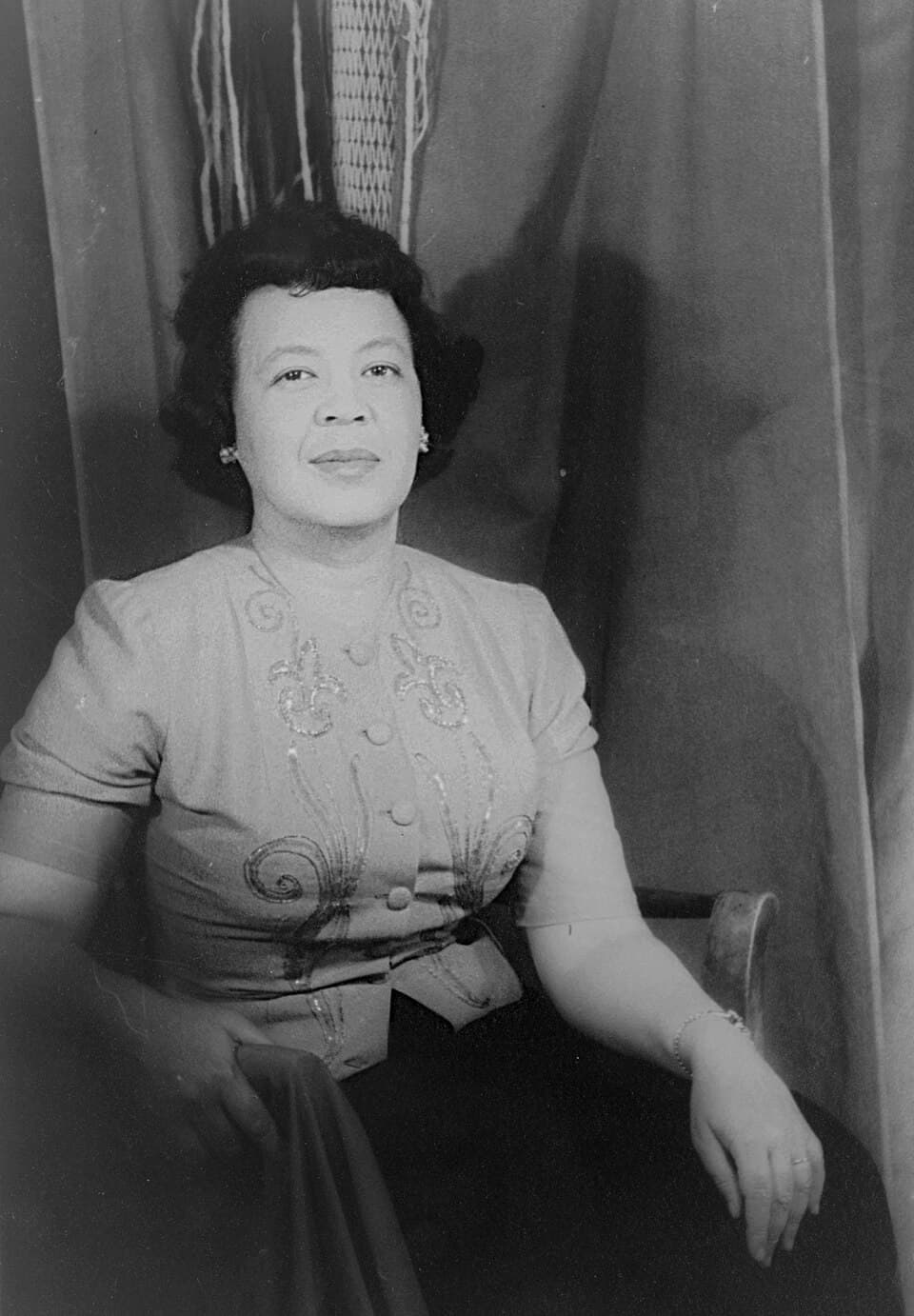
Autumn 1968. The late afternoon sun falls obliquely on the keyboard of a Steinway placed near a window in Los Angeles, where sheets of music paper blackened with corrections wait, pinned. Margaret Bonds heats up coffee, sits down at the instrument, and agrees to look back on sixty years spent making Bach and spirituals converse.
—How did you feel, at twenty, stepping onto the stage of the Auditorium Theatre before the Chicago Symphony Orchestra?
1933. The city was hungry, banks were closing, and I had ice-cold hands backstage at the Auditorium Theatre. Understand: the great halls did not open their doors to a Black girl; they locked them tight. That evening, I was the only one of my color before an entire white orchestra, and I knew that the Chicago Defender would relate every note to my community as a battle won. My mother had raised me at the piano, in a Chicago home always full of musicians; I told myself I was playing for them too, for all the hands that had been kept from touching that keyboard. I placed my fingers, and fear became focus. You never play better than when you carry more than yourself.
You never play better than when you carry more than yourself.
—How did you experience your years of study at Northwestern University?
At Northwestern, in Evanston, they wanted my ear but not my body in the dormitories. Forbidden, because of my skin. So I lodged with a local family, far from campus, and traveled each day to learn counterpoint and harmony of a demanding rigor. It was in those years that a woman saved me: Florence Price, a family friend, a composer before me. She showed me that one could hold in the same hand the rigor of the European school and the memory of the spirituals, the blues, the gospel heard in church. They taught me Debussy in the morning; she taught me not to deny what I sang as a child. Without her, I would have believed I had to choose.
They taught me Debussy in the morning; she taught me not to deny what I sang as a child.
—Do you remember your first meeting with Langston Hughes?
I keep his annotated poems as others keep love letters. Our first major work together, The Negro Speaks of Rivers, dates from 1941: I took his poem and sought, beneath the words, the rhythm that already slept there. For a verse by Langston breathes on its own; my work is not to cover it but to let it sing. Our exchanges lasted more than thirty years, mostly by mail — I think we discussed every text to be set to music, every direction, with the seriousness of craftsmen. He sent me his rivers, his dreams; I sent him back melodies. A friendship where poetry and note were two voices of the same phrase.
A verse by Langston breathes on its own; my work is to let it sing.
—Why did you insist on representing one of the Magi as a Black king in your Christmas cantata?
Because a Black child has the right to see himself in the nativity scene. The Ballad of the Brown King was born of this simple desire, with a text by Langston Hughes, and we had it premiered in 1954 in a New York public school — before children, not critics. I revised the version for years, until a final form around 1960, for chorus, soloists, and orchestra. Celebrating one of the Magi as a man of our skin was not a provocation; it was making visible what tradition had erased. Sacred music belongs to no one in particular, so it belongs to us as well. I wanted it to be heard, and above all to be sung.
A Black child has the right to see himself in the nativity scene.
—What drove you to compose the Montgomery Variations?
Ordinary courage. In 1955, in Montgomery, people refused to board the buses, day after day, to say they were worth a seat like anyone else. That boycott lasted over a year; it was dignity set in motion. I wanted the orchestra to carry that, so the Montgomery Variations came in 1964 — not a pamphlet, but the translation into sounds of a resistance that refused violence. Music makes heard what speeches cannot reach: the fatigue, the fervor, the stubborn hope of a community. I was not in the streets of Alabama, but at the keyboard I could walk with them. A composer bears witness with the means at hand.
I was not in the streets of Alabama, but at the keyboard I could walk with them.
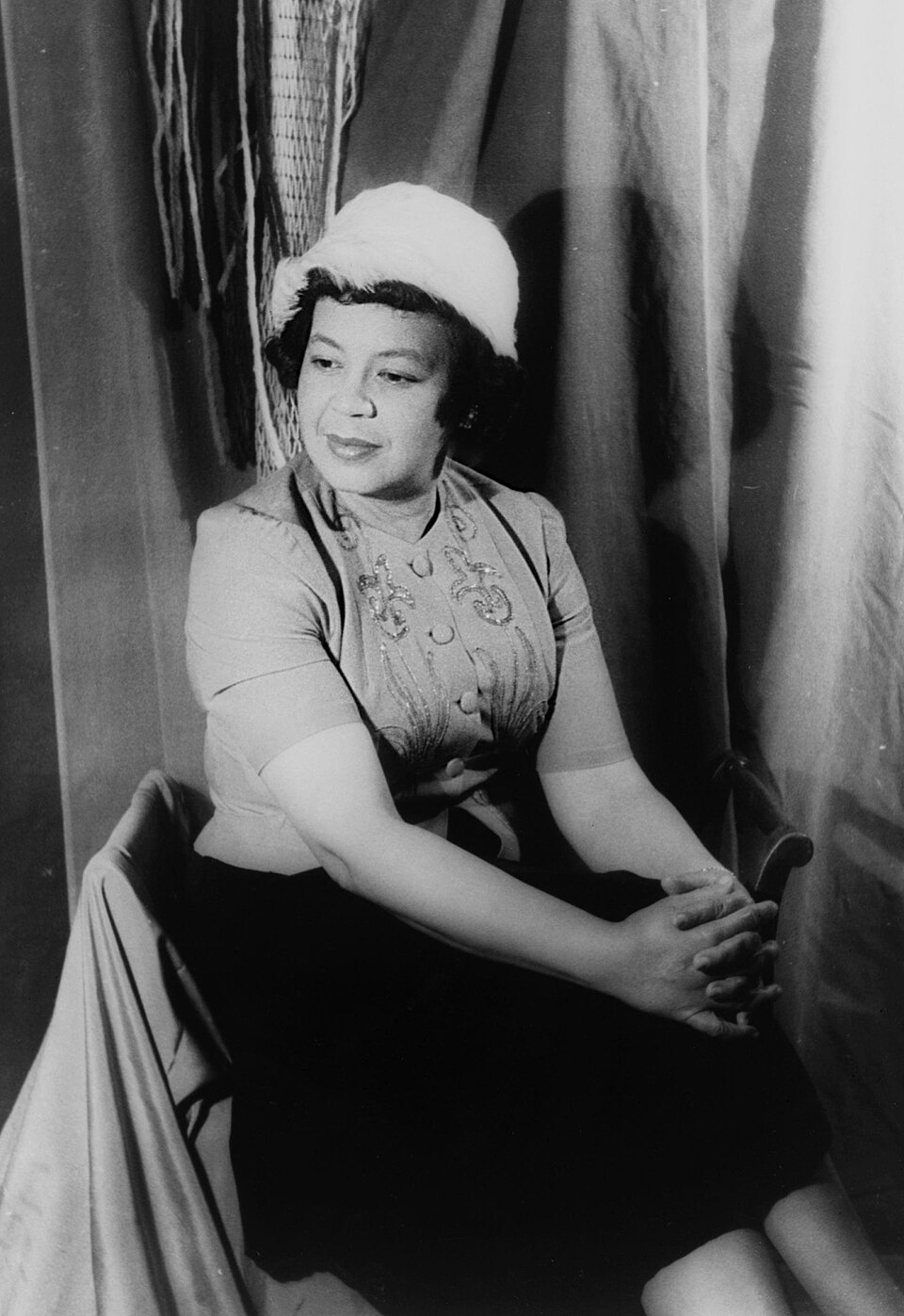
—How do you transform an old spiritual like 'Wade in the Water' into a concert piece?
With immense respect, otherwise you betray it. Troubled Water, which I wrote in 1967, starts from Wade in the Water, that spiritual where the water hid the trail of slaves fleeing to freedom. Beneath a seemingly pious melody slept a code, a message of survival. My work, at the keyboard, is to keep that ember intact while deploying a demanding concert writing — virtuosity, yes, but in service of memory, never of showing off. You can elevate a folk song to the rank of learned work without tearing out its soul, provided you know where it comes from. The troubled water of the title is also that of our history: beautiful and painful at once.
Beneath a seemingly pious melody slept a code, a message of survival.
—What do those melodies for voice and piano, like the Three Dream Portraits, represent for you?
They are my corner of intimacy. The concert song, what the Germans call the lied, is a form inherited from Europe: a voice, a piano, a poem, nothing else. I wanted to seize it and plant it in our soil. The Three Dream Portraits, in 1959, on texts by Langston Hughes, are just that: the finest harmonic sophistication placed at the service of an African American sensibility. Three portraits, three dreams, each lasting a few minutes. In this stripped-down form, you cannot cheat; every chord must ring true. I love that greatness can be contained in so few means — a singer, my ten fingers, and the words of a friend.
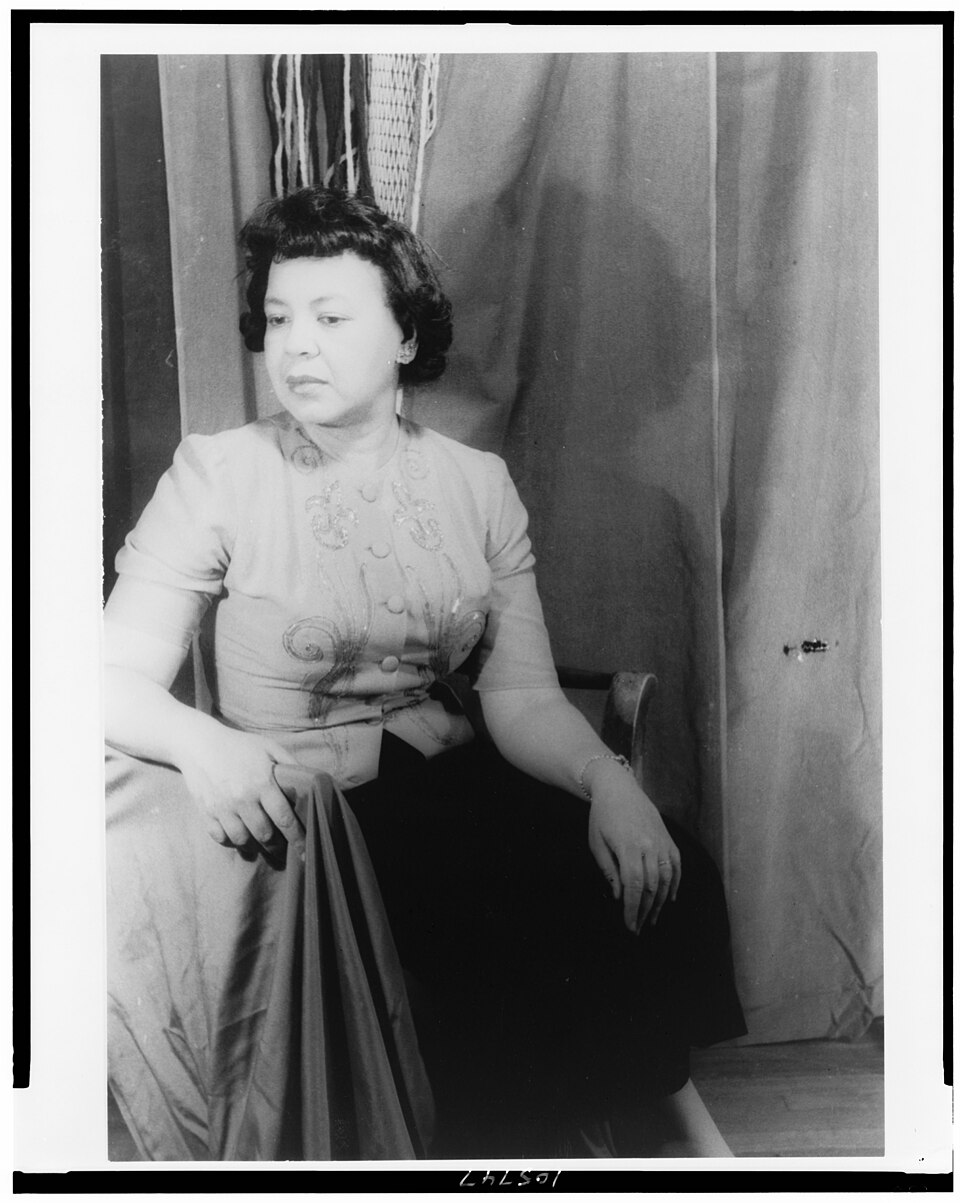
—What place did music occupy in your childhood home in Chicago?
All the place. Our home in Chicago was never empty: my mother, a pianist, opened her door to musicians of the Black community, carried by that Great Migration that brought so many talents from the South to the North. I grew up in the noise of rehearsals, voices, instruments being tuned. They played Chopin as much as they hummed spirituals, and no one found that contradictory. It was there, before any school, that I learned my deepest lesson: so-called classical music and folk music are not two enemy worlds. A grand piano and a collection of old church songs can fit in the same room — and in the same life.
So-called classical music and folk music are not two enemy worlds.
—What did it mean for you to step onto a stage like Carnegie Hall?
A door that was thought walled up and that, one evening, opens. Performing at Carnegie Hall, the most prestigious hall in the country, when you are a Black woman, is not just playing: it is occupying a place that was not designed for you. I chose my concert gowns carefully, long, elegant — not out of coquetry, but because in a milieu quick to look down on women of my color, dignity is also composed. On stage, every detail affirms that you belong here, fully. The program bore my Black name in white, distributed to hundreds of hands. Making a Black artist visible in a space that remained so white was already part of the work.
Occupying a place that was not designed for you.
—How do you view the role of an artist in a time of struggle like yours?
I do not believe one must choose between beauty and struggle; great moments unite them. I think of Marian Anderson, in 1939, singing before tens of thousands at the Lincoln Memorial because a Washington hall had been closed to her — the voice become argument. My weapon is the manuscript score, those sheets I blacken by hand, blending the classical language with the inflections of our churches. Every work that enters the repertoire is a seat won, a trace that will remain when the newspapers have yellowed. The artist does not replace those who walk in the streets; he engraves in sound what they accomplish, so that memory keeps its fervor intact.
Every work that enters the repertoire is a seat won.
This imaginary interview was generated by artificial intelligence from sources documented in Margaret Bonds's profile. It dramatises what the figure might have said based on what we know about them, but does not constitute attested historical testimony. For primary sources and factual documentation, refer to the full profile.