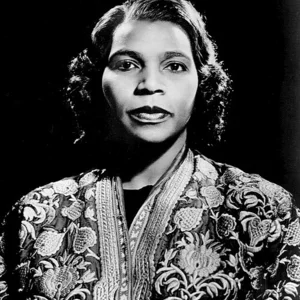

An African-American contralto (1897–1993), Marian Anderson was one of the greatest operatic voices of her era. In 1939, barred from Constitution Hall because of her race, she sang before 75,000 people at the Lincoln Memorial. In 1955, she became the first African-American woman to perform at the Metropolitan Opera in New York.
Marian Anderson(1897 — 1993)
Marian Anderson
États-Unis
10 min read
Frequently asked questions
Famous Quotes
« A singer must have the soul of a great artist and the wisdom of a philosopher.»
« None of us is responsible for the complexion of his skin. This fact of nature offers no clue to the character or quality of the person underneath.»
Key Facts
- 1897: born in Philadelphia into a modest African-American family
- 1939: historic concert at the Lincoln Memorial before 75,000 people after the DAR refused to allow her to perform at Constitution Hall
- 1955: first African-American woman to sing at the Metropolitan Opera in New York
- 1958: U.S. delegate to the United Nations
- 1963: awarded the Presidential Medal of Freedom by John F. Kennedy
Works & Achievements
An impromptu concert before 75,000 people, staged in response to the discriminatory refusal by Constitution Hall. Broadcast on national radio, the event transcended music to become a major political act, transforming Marian Anderson into an iconic figure of the civil rights struggle.
By portraying the sorceress Ulrica, Anderson broke a historic barrier, becoming the first African American to sing at that institution. The audience gave her a memorable standing ovation, honoring both her exceptional artistry and the symbolic weight of this landmark first.
Anderson played a decisive role in bringing the spiritual repertoire to international audiences. Her renditions of Deep River, Trampin', and He's Got the Whole World in His Hands remain definitive recordings, having established the genre as a cornerstone of America's musical heritage.
A memoir in which Anderson traces her journey as a Black singer in a segregated America. The book stands as a primary historical source on the discrimination faced by Black artists, and on dignity as a form of resistance.
At age 66, Anderson sang at the largest civil rights gathering in American history, alongside Martin Luther King Jr. Her presence embodied the continuity of a struggle stretching back at least to her 1939 concert at the Lincoln Memorial.
The United States' highest civilian honor, awarded by President Lyndon B. Johnson. The distinction officially recognized Marian Anderson's role not only as an exceptional artist, but as a moral force who helped advance the cause of racial equality.
Anecdotes
In 1939, Constitution Hall in Washington refused to host Marian Anderson because of the color of her skin. Eleanor Roosevelt, wife of the U.S. president, publicly resigned from the organization responsible for this decision in protest. On April 9, 1939, Anderson sang at the foot of the Lincoln Memorial before 75,000 people gathered under the open sky, in a concert broadcast live on national radio — an event that left a lasting mark on American history.
In 1935, at a recital during the Salzburg Festival, the legendary conductor Arturo Toscanini attended her performance and told her: “A voice like yours is heard only once in a hundred years.” This phrase, picked up by the international press, made Marian Anderson a worldwide celebrity — even as she remained subject to racial segregation in her own country.
In 1955, at the age of 57, Marian Anderson became the first African American to sing on the stage of the Metropolitan Opera in New York. She performed the role of the fortune-teller Ulrica in Verdi's *Un ballo in maschera*. The audience gave her a memorable standing ovation, honoring both her voice and the symbolic weight of this historic first.
On August 28, 1963, during the great March on Washington for civil rights, Marian Anderson sang before hundreds of thousands of people gathered at the Lincoln Memorial. It was at this same rally that Martin Luther King Jr. delivered his “I Have a Dream” speech. Her presence that day brought things full circle: twenty-four years earlier, it was at that very same place that she had sung after being turned away from Constitution Hall.
Primary Sources
A voice like yours is heard only once in a hundred years.
I am unable to remain a member of an organization that has shown such intolerance. To deny Marian Anderson the use of Constitution Hall is contrary to the principles of a democracy that recognizes the rights of all its citizens, regardless of their race or religion.
In this great open-air auditorium, we are all free and equal… Genius, like justice, is blind. And genius, with the tip of its wing, has touched this woman who, without the great spirit of Jefferson and the great heart of Lincoln, could not stand among us today as a free individual in a free country.
I had not sought to become a symbol. I simply wanted to sing. But if my concert at the foot of the Lincoln Memorial could contribute, however little, to advancing the idea that all human beings deserve to be treated with dignity, then that moment held a meaning that reached beyond my own career.
There are many people ready to do what is right because deep down they know it is right. But they hesitate, waiting for someone else to take the first step — and that someone else, in turn, waits for them to move.
Key Places
Marian Anderson's birthplace, where she grew up in the South Philadelphia neighborhood and developed her voice in her Baptist church choir. It was here that her community organized fundraisers to pay for her first singing lessons, after several music schools denied her admission because of her skin color.
Site of the historic concert of April 9, 1939, organized after she was denied access to Constitution Hall. Singing before 75,000 people at the foot of the Abraham Lincoln memorial made Marian Anderson a national symbol in the fight against racial segregation.
On January 7, 1955, Marian Anderson became the first African American to perform on its stage. Her performance as Ulrica in Verdi's Un ballo in maschera broke a symbolic racial barrier at one of the greatest musical institutions in the Western world.
Property acquired in 1940 by Marian Anderson and her husband, architect Orpheus Fisher. This Connecticut farm served as her refuge and primary residence throughout her adult life, far from the segregated hotels that often refused her entry during her tours in the South.
At the Salzburg Festival in 1935, Marian Anderson impressed Arturo Toscanini with the power of her voice. This European consecration opened the world's greatest concert halls to her and earned her an international recognition that her own country still denied her.
Typical Objects
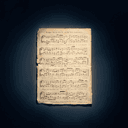
Marian Anderson was renowned for her interpretation of spirituals — those religious songs born among enslaved Africans in the United States. Her annotated scores of titles such as Deep River or He's Got the Whole World in His Hands reflect her rigor and deep attachment to a repertoire that told the story of her people.
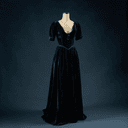
On stage, Anderson wore long, understated evening gowns — generally dark in color — that accentuated her commanding stature and dignity. Her consistently polished appearance contributed to the image of a grande dame of classical music that she had forged for herself despite the discrimination she endured.

As early as the 1930s, Marian Anderson recorded for the RCA Victor label and used radio to bring her voice to millions of Americans. Her concert at the Lincoln Memorial, broadcast live on national radio, allowed her to reach far beyond the 75,000 people who were present in person.

An international artist, Anderson was constantly traveling between Europe and the Americas. Her suitcase was the symbol of a lifetime of journeys — from her early tours through the Southern states to recitals before the crowned heads of Europe — often shadowed by the humiliation of being turned away from whites-only hotels.

In 1939, the NAACP awarded her the Spingarn Medal, its highest honor, for her contribution to the dignity and renown of African Americans through her art. This recognition symbolized the gratitude of an entire community for an artist who embodied excellence in the face of segregation.

In her concerts, Marian Anderson was always accompanied by a pianist — notably Franz Rupp, with whom she collaborated for over twenty years. The grand piano was the inseparable instrument of her recitals, which she gave in venues ranging from Carnegie Hall in New York to the great stages of Europe.
School Curriculum
Vocabulary & Tags
Key Vocabulary
Tags
Daily Life
Morning
Marian Anderson began her mornings with rigorous vocal exercises, a practice she maintained throughout her life to preserve and develop her contralto voice. A woman of deep faith, she also devoted time to prayer and religious reading, as spirituals had been the first repertoire she knew from childhood in her Baptist community in Philadelphia.
Afternoon
Her afternoons were often spent in rehearsal with her accompanist — notably Franz Rupp, her musical partner for more than twenty years. During her many tours by train or ship, she studied her scores in compartments or cabins, preparing each recital with meticulous care.
Evening
Her evenings revolved around concerts — recitals that could last two hours including encores, in venues ranging from Carnegie Hall to the great stages of Europe. After performances, she would warmly and graciously receive admirers backstage before withdrawing to rest her voice, fully aware that it was both her working instrument and her passport to the world.
Food
To protect her voice, Anderson was mindful of what she ate: she avoided heavily spiced foods, very cold drinks, and alcohol. At her farm in Danbury, Connecticut, she enjoyed simple, nourishing cooking — often made from produce grown in her own garden — far from the hectic pace of touring.
Clothing
On stage, Anderson wore long, elegant evening gowns of studied simplicity, chosen to underscore her natural dignity. In everyday life, she dressed carefully but without ostentation, aware that in segregated America, a Black woman's appearance was constantly scrutinized and judged.
Housing
Anderson lived primarily at Marianna Farm, her property in Danbury, Connecticut, purchased in 1940 with her husband, the architect Orpheus Fisher. The farm represented a space of freedom and peace for her, a contrast to the humiliations she endured touring the American South, where many hotels refused her entry even at the height of her international fame.