Imaginary interview with Marie of Champagne
by Charactorium · Marie of Champagne (1145 — 1198) · Literature · Politics · Society · 6 min read
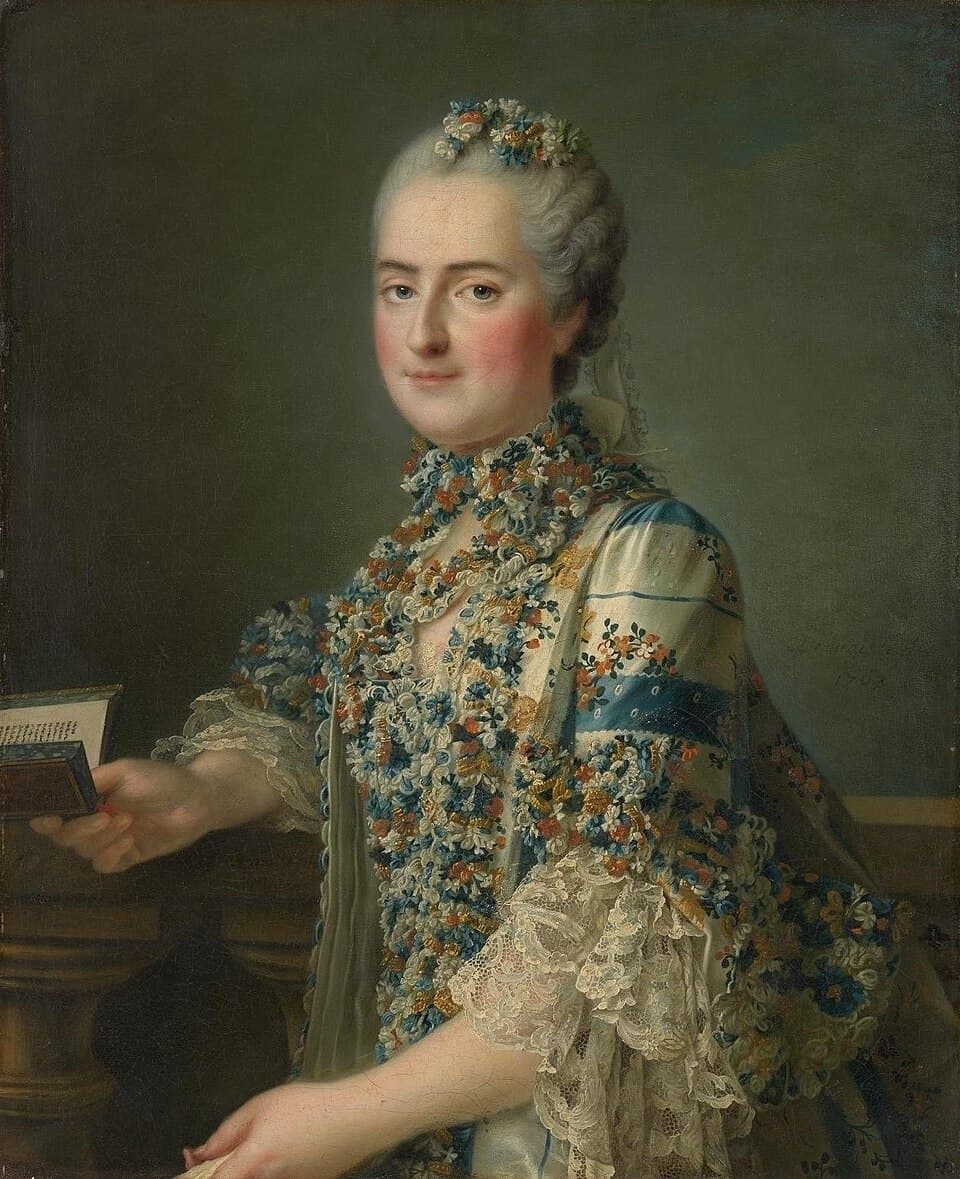
Troyes, a winter evening near the end of the 12th century. In the great hall of the comital palace, tapestries hold in the warmth of the embers and a vielle still echoes in the distance. The Countess Marie, widow and twice regent, agrees to remember aloud for anyone who wishes to listen.
—How would you introduce yourself to someone who knew neither your name nor your lineage?
I was born in 1145, eldest daughter of King Louis VII of France and Eleanor of Aquitaine. I am called Countess of Champagne, and I am so by marriage; but in my blood flows first the blood of the crown and that of the richest duchy in the South. My father left for the crusade when I was a child, and I grew up in the shadow of masses and charters, in Paris, where I was taught that a king's daughter does not belong to herself but to the plan that God and his house reserve for her. I quickly understood that I would be given to a great lord, and that my task would be to hold my rank with honor.
A king's daughter does not belong to herself but to the plan that God reserves for her.
—They say that your parents' separation made you a relative of the two greatest houses in Europe. What do you say to that?
It is the truth, and it is not without strangeness. In 1152, my father and mother had their marriage annulled by the Church, on grounds of too close kinship. My mother soon married Henry Plantagenet, who became king of England. Thus I found myself half-sister of Richard, called the Lionheart, on my mother's side, and half-sister of Philip Augustus, king of France, on my father's side. Two houses that dispute lands and crowns, and I carry the blood of both within me. I learned young that the same woman can be a bridge between warring shores, and that this bridge must be held without ever losing oneself.
I carry the blood of both houses that wage war.
—Do you remember the day you asked Chrétien de Troyes to write for you?
I remember above all what I expected of him. He was a cleric, he knew his clergie, and he had that rare gift of making verses hold a knight truer than the living. I gave him the matter of a tale: a knight who, to save the queen, agrees to mount the cart of infamy, to cover himself with shame for love. In the prologue of the Knight of the Cart, he himself acknowledged that the matter and the meaning were, he said, provided and given by the countess. Many ladies commission illuminated manuscripts; it is rarer for a poet to confess to whom he owes his soul. That I wanted, and I keep pride in it without arrogance.
It is rare for a poet to confess to whom he owes his soul.
—Why insist that your court of Troyes be a center of letters, rather than a simple palace of power?
Because a county is not governed only by iron and the coin of the Champagne Fairs. In the evening, in the great hall, when the jongleurs and trouvères sound the vielle and one listens to a romance read aloud, as much loyalty is forged as at the table of oaths. A lord generous to clerics and poets attaches hearts to himself, and his name travels farther than his armies. I wanted Troyes to be one of those places where one comes not only for trade, but to hear what is said there most beautiful. Courtliness is not an ornament: it is a way of ruling souls.
—What can you say about those famous "love judgments" that were supposedly rendered at your court?
It was a game, but a serious one, as are games that instruct. We debated fin'amor as clerics debate points of law: a lady posed a question of love, and great ladies decided, with seriousness and wit. The cleric Andrew the Chaplain reported some of these sentences in his treatise De Amore, and he puts several in my mouth. Let there be no mistake: no one there defied the Church or the sanctity of marriage. We refined the art of loving and conducting oneself, as one polishes a blade. A lady who knows how to judge a case of love also knows how to judge a case of vassalage; the mind is exercised where one least expects it.
It was a serious game, as are games that instruct.
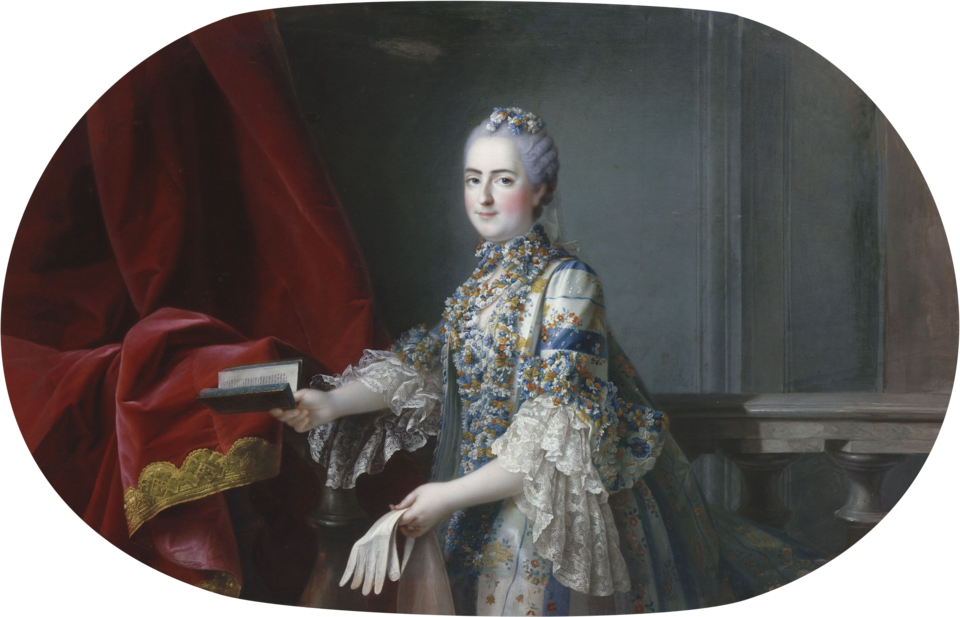
—You are credited with this surprising sentence: that true love cannot exist between spouses. How should we understand that?
It must be understood within the rules of our game, not as a lesson for life. In De Amore, one reads a sentence given in the year 1174, on the first day of May, according to which love cannot extend its rights over two married persons. Between spouses, you see, there is duty, sworn faith, obligation: they owe themselves to each other. But the fin'amor sung by the trouvères is entirely free gift, desire that is earned and never demanded. Distinguishing the two is not to offend the sacrament of marriage, it is to recognize that courtly love lives by a different sap. It was matter for debate before the court, not an article of faith — and one left subtler than one had entered.
—You did not only protect adventure romances. Why commission a translation of Genesis?
Because the word of God must not remain locked in the Latin of clerics alone. I begged the cleric Evrat to put into verse in the Romance language the book of Genesis, the very first of Scripture, that of Creation and the patriarchs. He undertook it, his dedication says, at my prayer, so that laypeople might hear in their tongue what they could not read. Understand the boldness: to move a sacred text from Latin into the common language is no small thing, and some see it as audacity. But if the exploits of knights are put into Romance, how much more should the work of God be, so that simple souls may be nourished by it.
If the exploits of knights are put into romance, how much more the work of God.

—You governed the county for the first time while your husband was still alive. How did that come about?
My husband, Henry the Liberal, left in 1179 on a pilgrimage to the Holy Land, and it fell to me to hold the county in his absence. Then he died soon after his return, in 1181, leaving our son Henry still too young to gird the comital sword. I became regent. I had to receive stewards and messengers after mass, listen to petitions, settle disputes, dictate charters to my clerics. And I sealed these acts with my countess's seal, in my own name, like a lord who answers for his land before God and men. One does not learn that from books: one learns it the day the burden falls on your shoulders and there is no one else to bear it.
—Then your son, grown up, left in turn, and you were again at the helm. What was that second regency like?
In 1190, my son Henry II took the cross for the Third Crusade, and he was never to return: he became king of Jerusalem, then died at Acre. A second time, Champagne was entrusted to me, and I held it until my own end. Consider: one of the richest territories in the kingdom, with its fairs, its towns of Troyes and Provins, governed for years by a woman. I drew no vain glory from it, only the weight of duty. A regent is not a sovereign: she keeps the land for another, absent or too young, and must return it in better state than she received it. That was my way of serving my house to the end.
—If you imagined being read in a century or two, by what would you wish to be remembered?
That is a thought I dare not push too far — we leave that to God, who alone knows the duration of things. But if I am to be read when my bones rest at the Collégiale Saint-Étienne, let it not be first for my regencies or my royal blood. Let it be for the verses I brought forth. Stones fall, fairs fade, but a romance copied on parchment passes from hand to hand and does not entirely die. If the name of the Countess of Champagne survives attached to the prologue of a book, in an illuminated manuscript that a child reads aloud by the fireside, then I will have lasted longer than my county. That is the sweetest ambition a lady can confess.
Fairs fade, but a copied romance does not entirely die.

This imaginary interview was generated by artificial intelligence from sources documented in Marie of Champagne's profile. It dramatises what the figure might have said based on what we know about them, but does not constitute attested historical testimony. For primary sources and factual documentation, refer to the full profile.