Imaginary interview with Marilyn Monroe
by Charactorium · Marilyn Monroe (1926 — 1962) · Performing Arts · Music · 6 min read
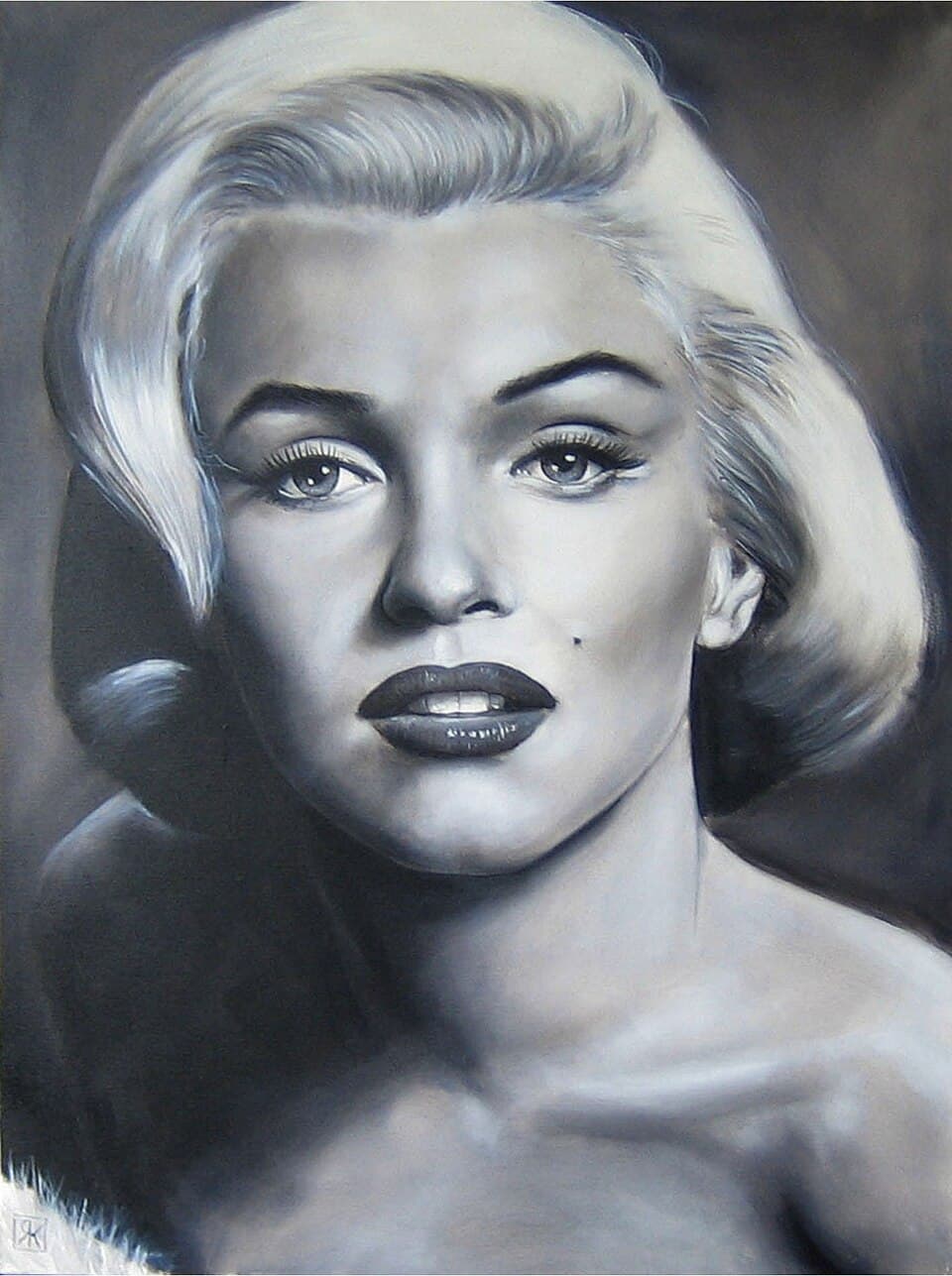
Los Angeles, an afternoon in 1961. In a modest villa in Brentwood with still half-unpacked boxes, Marilyn Monroe receives without makeup, a dog-eared book resting on the armrest. She speaks softly, chooses her words, and smiles whenever someone stops taking her for an image.
—You are rarely imagined with a book in hand. What do we find on your shelves?
Over four hundred volumes, and I could tell you where each one hides. Dostoevsky first — I've dreamed for years of playing Grushenka; people laugh when I say that, as if a blonde doesn't have the right to love the Russians. There's Proust, Joyce, poetry collections that I annotate in pencil. People think I'm posing for a photo when they see me reading; they don't understand that a book is the only place where no one looks at me. They made me a hollow head, and I've spent my life secretly filling it. When I close a novel in the evening, in this house in Brentwood, I am no longer the girl from the calendar — I am someone who thinks, and that, no studio ever gave me.
A book is the only place where no one looks at me.
—Where does this need to prove you have a mind come from?
I was born Norma Jeane, fatherless, a mother who was locked away, foster families that took turns like trains. When you grow up without a name that sticks, you look for roots somewhere — I found mine in other people's words. No one can take away a sentence you've understood. They call me a sex symbol, this word almost invented for me, and it designates a body, never a consciousness. But the little girl from the orphanages wanted to be believed intelligent long before she was found desirable. I read Freud because I want to understand why I'm afraid. It's not decoration — it's survival.
No one can take away a sentence you've understood.
—In 1955, you abruptly left Hollywood for New York. What had happened?
I was suffocating. Fox kept giving me the same roles of the beautiful dimwit, extra's salary, and they decided everything for me. So in January 1955, with my photographer friend Milton Greene, I founded my own company, Marilyn Monroe Productions. An actress being her own boss — at the time, that wasn't done; they laughed, they said I was having a tantrum. I simply said out loud what I thought quietly: that I was tired of being exploited, that I wanted to choose my films and have a say in what they did with me. The star system treats actresses like livestock under contract; I wanted a say in my own life on screen. It wasn't pride. It was refusing to be a commodity.
An actress being her own boss — at the time, that wasn't done.
—Did this revolt against the studios cost you dearly?
You don't defy a Hollywood studio without bearing scars. The star system is a magnificent and cruel machine: it makes you, lights you up, then charges you for your very smile. By creating my company, I eventually renegotiated my contract, got some control over my roles — a small victory that opened a door. But a studio doesn't forget being stood up to. They punish me with mediocre scripts, they whisper that I'm capricious, late, difficult. Difficult, yes — because I'm finally asking what a male actor would get without raising his voice. I've learned that the price of freedom for a woman in this business is being seen as ungrateful.
The price of freedom for a woman is being seen as ungrateful.
—In New York, you walked through the doors of the Actors Studio. What were you looking for there?
A truth. I wrote to Lee Strasberg that I wanted to be a real actress, not just an image — to feel things from the inside and show them to the audience authentically. That wasn't a polite formula; it was a cry for help. At the Actors Studio, you don't play the surface; you go down to find the emotion where it hurts — that method that asks us to dig up our own wounds to inhabit a character. Strasberg treated me like a serious student, not like a poster. I sat among strangers, terrified, and for the first time they judged my work, not my curves. I annotate my scripts, I ask the director a thousand questions; I want to understand what my mouth is going to say before I say it.
To go down and find the emotion where it hurts.
—Did this work change anything in your on-screen acting?
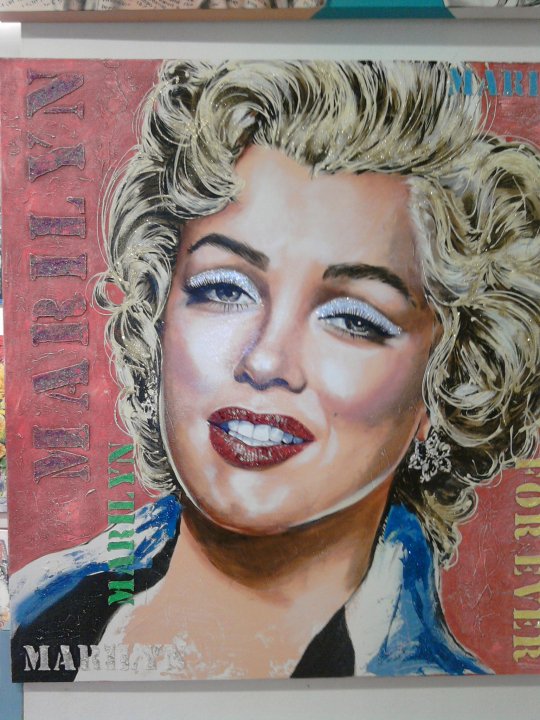
Look at Sugar Kane in Some Like It Hot. People think it's just another light comedy, but beneath the laughter there's a bruised, tender, slightly lost girl — and I know that from the inside. Billy Wilder drove me crazy with patience, because I insisted on redoing takes until I felt the scene was right. But the film earned me a Golden Globe, and above all the proof that comedy demands as much gravity as drama. What the Actors Studio gave me isn't one more technique — it's permission to put my real cracks at the service of the character. The vapid blonde you see on screen, from now on, I construct her. Nothing is innocent in her innocence.
Nothing is innocent in her innocence.
—Tell us about that white dress, above the subway grating.
Ah, The Seven Year Itch, 1955. A night of shooting in New York, a subway grate, the hot air billowing the pleated dress by William Travilla, and a crowd of onlookers packed behind the barriers like at a fair. That image went around the world — they still reproduce it everywhere, on cards, posters, mugs. What amuses me is that people think it's spontaneous: nothing is. I know exactly when to lower my eyes, when to let the smile float. I've been photographed since I was twenty; I've learned that the lens doesn't capture what you are, it captures what you decide to give it. That dress is sex appeal, yes — and a completely calculated innocence.
The lens captures what you decide to give it.
—You seem to have a very conscious relationship with photographers.
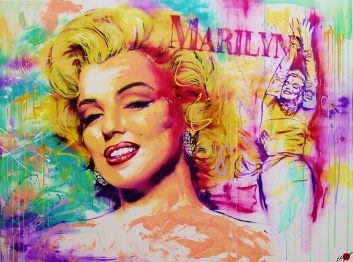
They are my accomplices and my jailers. I've posed for the greatest, from the studio to the street, and I've learned every lens the way you learn a dance partner. The public thinks a pin-up is subjected to the camera; I direct it. One day, at Life, they asked me what I wore to sleep: I answered a few drops of Chanel No. 5, and just like that a bottle became a global symbol of glamour. A phrase, a half-smile, and the image works for you for years. It's a dizzying and dangerous power. Because by fabricating your reflection so well, the world ends up loving only that reflection — and the real you remains alone in the next room.
By fabricating your reflection, the world ends up loving only it.
—Last May 19th, you sang for President Kennedy. Tell us about that evening.
Madison Square Garden, fifteen thousand people in the dark, and that dress by Bob Mackie covered in thousands of crystals, so tight it had to be sewn onto my body — I couldn't wear anything underneath, could barely walk. I waited in the wings trembling, I who have never conquered stage fright. Then I whispered Happy Birthday, Mr. President for John Kennedy's forty-fifth birthday, almost a breath rather than a song. The photographers snapped relentlessly; I knew that image would outlive the evening. Under the spotlights, in that second skin of light, I was exactly what America expected of me — radiant, offered, unreal. No one suspected how fragile I was inside all those crystals.
I was fragile inside all those crystals.
—After an evening like that, how do you return to ordinary life?
You don't really return. You come home to a half-furnished villa in Brentwood, you take off a dress worth a fortune, and the silence suddenly falls. Those gala evenings, premieres under the flashbulbs, limousines — everything shines, then everything goes dark, and there remains a woman who rarely gets up before eleven because she slept badly. I recently shot The Misfits, a dark film that Arthur Miller wrote for me; you can feel the tiredness of an era ending. A career is wonderful, but you can't snuggle up to it on a cold night. What I'm really looking for, beneath the noise, is to be a good actress — and perhaps, finally, a stable home.
You can't snuggle up to a career on a cold night.
This imaginary interview was generated by artificial intelligence from sources documented in Marilyn Monroe's profile. It dramatises what the figure might have said based on what we know about them, but does not constitute attested historical testimony. For primary sources and factual documentation, refer to the full profile.