Imaginary interview with Matsuo Bashō
by Charactorium · Matsuo Bashō (1644 — 1694) · Literature · 6 min read
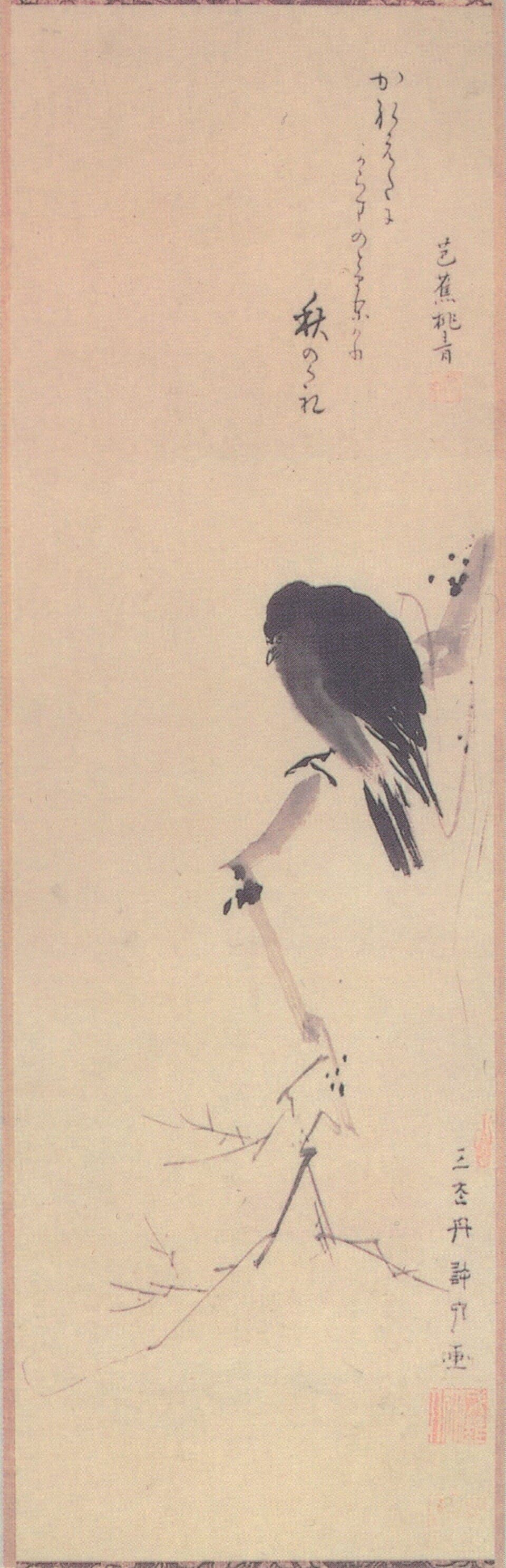
Fukagawa, an autumn evening, at the edge of the year 1691. The old poet receives us in his mud hut, at the foot of the banana tree that gave him his name, a steaming bowl of tea in his hands. Outside, the Edo wind makes the large torn leaves clatter; he smiles, as if that sound were already a poem.
—How does a man born a samurai come to bear the name of a tree?
It was my disciples, around 1681, who planted this banana tree before my hut in Fukagawa. An absurd tree, truly: its immense leaves tear at the first wind, it bears no fruit under our sky, it trembles at the slightest rain. I recognized something of myself in it. I had carried other pen names, names of serious men, and I let them fall like one sheds a robe too stiff. A poet should resemble this useless and fragile plant — that is where beauty lies, in what does not last, in wabi-sabi. People sometimes ask me why I chose weakness as an emblem. Because strength lies, and the torn leaf speaks the truth of every living thing.
A poet should resemble this useless and fragile plant — that is where beauty lies.
—Do you remember the day you composed that famous poem of the frog?
It was a gathering of poets, around 1686, right here, a quiet afternoon where we took turns composing verses. There was this old pond in the garden, still, and suddenly the sound of a splash. Nothing more. My predecessors would have sought the frog in old Chinese poems, they would have made it sing as the Ancients wished. I kept only the water closing: "The old pond — / A frog jumps in, / The sound of water." Some thought I was mocking art. On the contrary — I had finally found where it dwells. The kigo, that season word, is not for decoration: it anchors the moment in reality, and the moment suffices. Seventeen syllables for a rustle of water, and the whole world was contained within.
Seventeen syllables for a rustle of water, and the whole world was contained within.
—Many judged this style too bare, almost poor. What did you tell them?
That they confused richness with clutter. The literati of my time loved learned allusions, wordplay borrowed from Chinese masters; a poem was valued by the number of references a scholar could unearth. I wanted the opposite. A child before the old pond hears the same splash as the old monk — that is what matters. What I sought has a name: makoto, sincerity. A verse can be skillful and ring hollow; it can be clumsy and pierce you like an autumn wind. Sabi, too, that beauty which appears only in destitution and solitude, cannot be manufactured with ornament. I was reproached for the poverty of my images. But the pond was truly old, and the frog truly jumped.
—In 1689, at forty-five and in frail health, you set off on foot toward the North. What drives a man over 2,400 kilometers?
An old unease, which I had already noted years earlier when leaving for the west: the feeling that I might die on the road, and that this would be fine. For this great journey through Tōhoku, I carried almost nothing — a kasa, that conical hat, a straw coat against the showers, rope sandals that had to be retied each evening. My disciple Sora accompanied me. We slept in the humblest inns, with fleas and smoke. Why set out so old, so weary? Because the sun and moon are eternal travelers, and the years themselves pass like travelers. Sitting still was already dying. Walking was to set my pace to the great movement of the world.
Sitting still was already dying. Walking was to set my pace to the great movement of the world.
—On that road, which landscape moved you most?
Two, utterly opposite. At Matsushima, that archipelago of hundreds of islands crowned with pines, beauty disarmed me to the point that I could write nothing — there are splendors before which the poem bows and falls silent. And then Hiraizumi. There once rose the glory of a warrior lineage, palaces, ramparts, splendors; nothing remained but tall grasses waving in the wind. Three generations of power reduced to a field. I sat down, my hat placed on the ground, and wept long over the brevity of all human greatness. That is what I brought back from the North, more than maps: the certainty that nothing lasts, neither the dreams of kings nor the leaves of my banana tree.
Three generations of power reduced to a field.
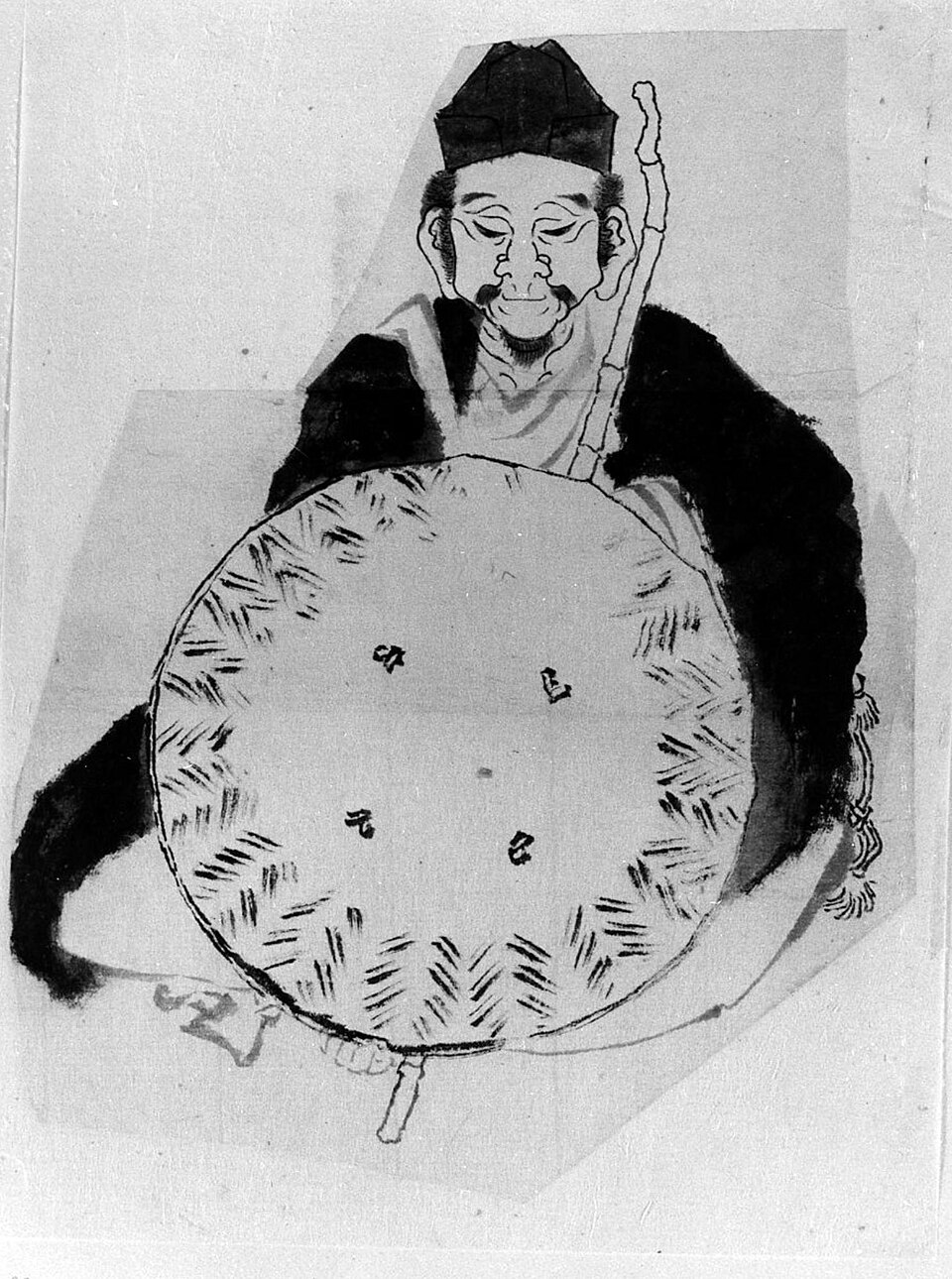
—You kept notebooks throughout these walks. What did that object represent to you?
My travel notebook was my only precious possession, more than the robe or staff. In the evening, by the light of a wick, in a rain-soaked inn, I would jot down a verse before it escaped — for a moment does not return, and the morning dew waits for no one. Those pages were not drafts intended to become a beautiful book. They were the journey itself: the prose that walks, the haiku that stops. I mixed in what I saw, what I felt, the names of places, the fatigue in my legs. Later all that was bound, made into The Narrow Road to the Deep North. But for me, the work was already accomplished each evening, in the scratching of the brush on damp paper.
—You spoke of makoto. Can you explain what you mean by that word?
I spoke of it at length in a letter to my disciple Kyorai, for it must be repeated to every generation of poets. In haiku, what matters above all is makoto — sincerity. Without it, even the most skillful words ring hollow. Understand me: I am not talking about confessing one's moods, baring one's little heart. Makoto means making oneself so transparent that the thing seen passes through you without distortion. The poet must efface himself so that the pine speaks the pine, so that the moon speaks the moon. It is a lifelong task, harder than learning a thousand turns of phrase. People think writing a haiku requires wit. Above all, it requires honesty, and honesty cannot be feigned.
The poet must efface himself so that the pine speaks the pine, so that the moon speaks the moon.
—How did you work with your disciples, on collections like Sarumino?
The poem, among us, is rarely born in solitude. We would gather for renga, that linked poetry where each adds his link to the previous verse; one must listen to the other before speaking, bounce without breaking the thread. That is where my entire art came from. Sarumino, "The Monkey's Raincoat," which we assembled in 1691, is not my book alone: it is the voice of my school, my best disciples gathered under the same rain. I wanted to inscribe our principles — lightness that does not weigh, depth that does not pose. Correcting a young man's poem, showing him where he cheats himself, is as valuable as writing my own. A master who transmits nothing is but embers under ash.
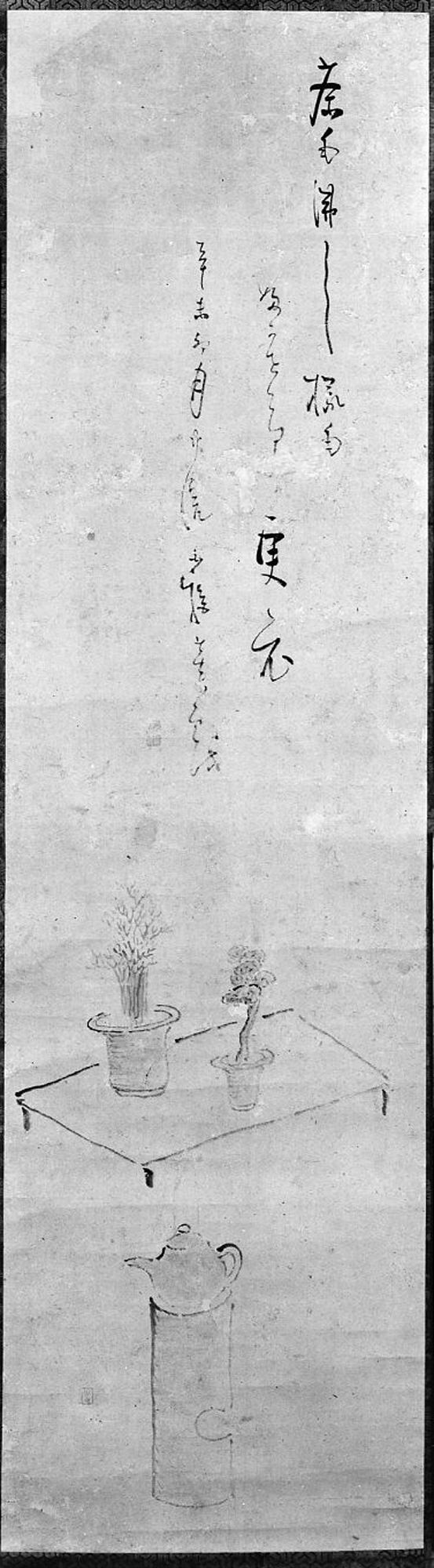
—You live in a Japan closed to the world. How does this isolation weigh on the poet you are?
Since my birth, the country has lived under sakoku: no Japanese may leave, no foreigner may enter, and the Tokugawa hold everything in an iron peace. One might think this stifling. For me, it was a strange fortune. Since I could not see the China of the ancient masters nor the distant kingdoms, I looked more closely at what was at my doorstep: a pond, a cicada, the moon on a lake. The closed world forces one to dig rather than flee. My roads crossed no borders; they plunged into my own country and, through it, into the heart of things. Perhaps a man free to go anywhere would never have heard the frog's splash. Confinement made me attentive.
The closed world forces one to dig rather than flee.
—It is said that you refused paid positions at court. Why choose such poverty?
Because security has a price I could not pay: my freedom to wander. I was offered honorable situations, a safe roof, enough to no longer stretch out my hand. I preferred the mud hut and the sometimes empty bowl. I sometimes accepted rice from my disciples to keep from collapsing, and I noted it without shame in my journals, with gratitude even. A settled man ceases to see; he possesses, therefore he falls asleep. I wanted to remain that traveler who has nothing and to whom, for that reason, every landscape is offered whole. My straw coat and staff were worth more, in my eyes, than a post in the city. Chosen poverty is not a lack: it is a way of keeping one's hands open.
Chosen poverty is not a lack: it is a way of keeping one's hands open.
—At this hour we speak, how do you imagine what will remain of you?
A poet would be presumptuous to answer. I am like my banana tree: my leaves tear, and I do not know if the root will hold another winter. My health declines, my journeys cost me more each year. If I were to imagine being read a century from now, I would not wish my name to be remembered, but that a stranger, before his own old pond, might feel the same shiver as I — and understand that he did not need me for that. Haiku is not a monument, it is a door: I open it, I step aside, and the reader enters alone into the moment. If, after me, people still stop to listen to the sound of water, then the old fool of the banana tree will not have walked in vain.
Haiku is not a monument, it is a door: I open it, I step aside.
This imaginary interview was generated by artificial intelligence from sources documented in Matsuo Bashō's profile. It dramatises what the figure might have said based on what we know about them, but does not constitute attested historical testimony. For primary sources and factual documentation, refer to the full profile.