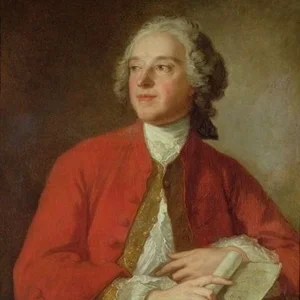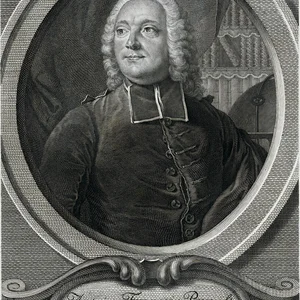

An 18th-century French novelist, historian, and clergyman, Abbé Prévost is best known for his novel "Manon Lescaut" (1731), which is part of the French baccalauréat curriculum. His work embodies the tensions between religious morality and human passion that defined the era.
Abbé Prévost(1697 — 1763)
Abbé Prévost
France
7 min read
Frequently asked questions
Key Facts
- 1697: Born in Hesdin (Pas-de-Calais)
- 1727: Joins the Jesuits and is ordained as a priest
- 1731: Publication of "Manon Lescaut" within "Memoirs of a Man of Quality"
- 1734–1740: Travels to England and the Netherlands; contributes to periodicals
- 1763: Dies in Courteuil
Works & Achievements
Major novel of the 18th century, telling the story of the tragic love between the Chevalier Des Grieux and Manon Lescaut. This work is part of the French baccalaureate curriculum and explores the conflicts between passion and morality.
Historical work combining romance and scholarship, demonstrating Abbé Prévost's talents as a historian. Exemplary of his literary approach to history.
A collection of moral tales and narratives exploring human psychology and ethical dilemmas. Reflects the author's philosophical thinking on human nature.
Monumental compilation of around twenty volumes chronicling the great voyages and geographical discoveries. A major editorial undertaking that popularized knowledge of the world.
A series of seven volumes including notably the story of the adventures of the Chevalier Des Grieux and Manon Lescaut. A foundational work that established Prévost's literary reputation.
A philosophical novel in six volumes exploring the travels and reflections of an English thinker. Demonstrates Prévost's engagement in the Enlightenment debate on morality and freedom.
Anecdotes
Abbé Prévost led a turbulent life marked by several entries and exits from the seminary. Ordained as a priest in 1721, he left the Benedictine order in 1728 to live a freer life, which reflects the internal conflicts found in his fictional characters. This religious instability brought him trouble with the Church, but nourished his writing.
Manon Lescaut, published in 1731 as the final volume of his novel sequence 'The Story of the Chevalier Des Grieux and Manon Lescaut', became his masterpiece and one of the great works of French literature. This short novel, which tells a story of passionate love and social downfall, shocked contemporary readers with its sympathy toward morally reprehensible characters.
Prévost lived in exile in England and the Netherlands from 1728 to 1733, fleeing ecclesiastical prosecution and scandals in France. These years away from his homeland were productive: he worked on several of his major novels and learned English, which allowed him to translate the works of Samuel Richardson.
Abbé Prévost was a tireless translator and an important figure in 18th-century literary journalism. He founded and edited 'Le Pour et Contre', a periodical in which he commented on French and foreign literary news, placing him at the heart of Parisian intellectual life.
Prévost attempted to rehabilitate himself with the Church at the end of his life by returning to the Benedictine order in 1735 and leading a more regular existence. He received a royal pension that allowed him to live comfortably, thus acknowledging his literary importance despite his earlier religious troubles.
Primary Sources
I was at once an honest man and an unhappy one. Various upheavals, which befell my fortune and my inclinations, caused me to alternate almost without respite between virtue and vice, between the best and the worst moral situations.
It is a constant truth that love, when it is violent and passionate, confounds all principles and overturns all duties.
History must instruct us not only in facts, but in the customs and characters of the peoples we discover.
I always strive to paint the human heart truthfully, without fear of showing its weaknesses and contradictions.
Key Places
Birthplace of Abbé Prévost in 1697. It is in this town in northern France that Antoine François Prévost d'Exiles was born, who would become one of the great novelists of the 18th century.
Centre of intellectual life where Prévost pursued his literary and ecclesiastical activities. It was in Paris that he published his major works, including 'Manon Lescaut', and where he moved in the learned circles of the Enlightenment.
Monastery where Prévost resided and carried out his duties as a clergyman. This place represents his dual life between ecclesiastical obligations and his calling as a writer.
Another important site in his monastic journey in Normandy, where Prévost lived the life of a Benedictine before turning increasingly towards literature.
City where Prévost voluntarily went into exile to escape troubles in France. He stayed there and published some of his works, including additions to 'Manon Lescaut'.
Prestigious monastic centre where Prévost was called to hold ecclesiastical positions, illustrating his path through the great religious institutions of the kingdom.
Typical Objects

Essential writing instrument of the 18th century used by Abbé Prévost to compose his novels and historical works. Symbol of literary production during the Age of Enlightenment.

Container holding the ink required for writing manuscripts. A typical piece of writing furniture found on the desk of an Enlightenment-era writer.

Religious garment worn by Abbé Prévost as a man of the Church. Symbolizes the character's clerical status and the ambivalence between his religious duties and his worldly preoccupations.

Printed and bound volume characteristic of 18th-century literature. Represents the published works of Abbé Prévost, most notably 'Manon Lescaut', which became a classic of French literature.

Place of prayer and spiritual retreat associated with Abbé Prévost's religious life. Symbolizes the conflict between his clerical vocation and his literary interests.

Autograph document bearing the writer's corrections and annotations. Attests to the compositional and revision work behind Abbé Prévost's novels.

Headwear worn indoors by men of letters in the 18th century. A typical accessory of the domestic dress of writers of the period.
School Curriculum
Vocabulary & Tags
Key Vocabulary
Daily Life
Morning
Abbé Prévost begins his day with religious offices, a major obligation of his ecclesiastical condition. He then devotes several hours to reading and writing, working on his novel manuscripts or his translations, activities that constitute his main source of income.
Afternoon
The afternoon is generally devoted to pastoral visits, to gatherings in Parisian or provincial literary salons, and to correspondence with other writers and publishers. Prévost also frequents the cafés where men of letters meet to discuss literary novelties.
Evening
In the evening, the Abbé attends the evening offices once more, then retires to continue his literary work or receive visitors. He may also take part in public readings of his works or in intellectual debates within cultivated circles.
Food
As a churchman of the 18th century, Prévost observes religious abstinences. His diet includes bread, vegetables, fruits, fish, and cheese. On ordinary days he eats simple and frugal food, while meals in society offer meats and fine wines.
Clothing
The Abbé wears the traditional ecclesiastical dress: black cassock, white collar, and pectoral cross. As a man of letters frequenting the salons, he takes care of his appearance with elegance and conformity to the aristocratic customs of the era.
Housing
Prévost resides in a presbytery or lodging provided by his ecclesiastical duties, in Paris or in the provinces depending on his postings. His apartments, modestly furnished but functional, contain a substantial personal library reflecting his erudition and literary interests.
Historical Timeline
Period Vocabulary
Visual Style
Un style rococo intimiste et mélancolique, combinant l'élégance décorative du XVIIIe siècle français avec une atmosphère psychologique tourmentée. L'éclairage candéla et les teintes sépia renforcent l'introspection des personnages face aux tensions entre passion charnelle et contraintes morales.
Sound Ambience
Une atmosphère sonore qui mêle la solennité des offices religieux dans une abbaye du XVIIIe siècle avec les bruits de l'érudition et de la création littéraire, où la voix de la conscience morale s'entrechoque avec les passions humaines.
Liens externes & ressources
Références
Œuvres
Manon Lescaut
1731
Histoire de Marguerite d'Anjou
1740
Le Monde moral, ou Mémoires pour servir à l'histoire du cœur humain
1760
Histoire générale des voyages
1746-1759
Mémoires d'un homme de qualité
1728-1731
Cleveland ou le Philosophe anglais
1731-1739