Kids interview Max Planck
by Charactorium · Max Planck (1858 — 1947) · Sciences · 6 min read
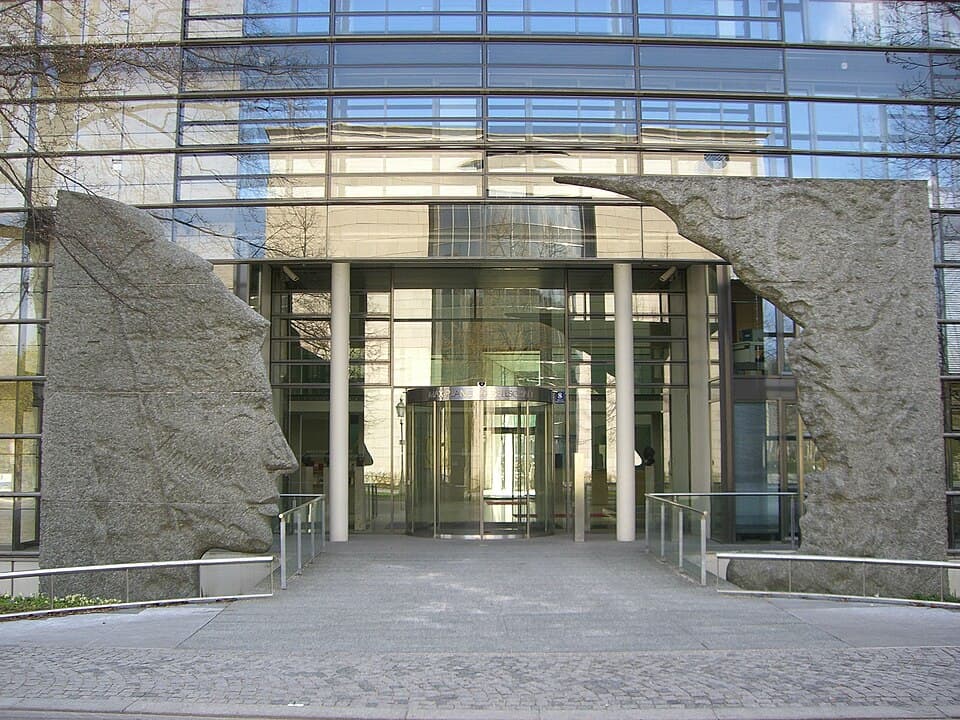
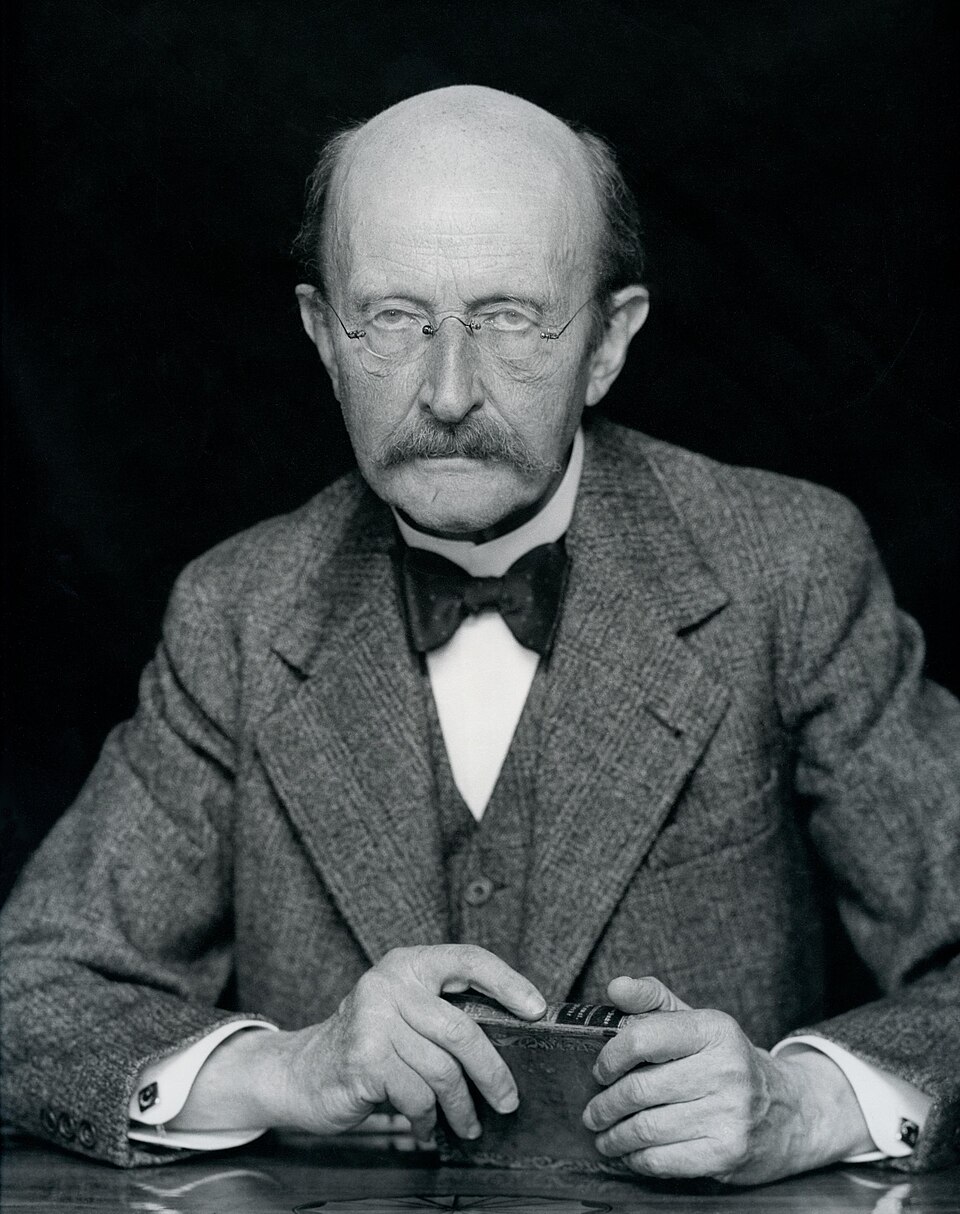
Two twelve-year-old visitors, on a school field trip, are received by an old gentleman in a dark suit, his gaze gentle behind his pince-nez. He invites them to sit near his piano and smiles at them: he is touched that children want to listen to him. The conversation can begin.
—What was that famous blackbody problem? We don't really understand.
Ah, come, I'll show you with an image. Imagine a closed oven with a tiny hole. When you heat it, the hole starts to glow: red, then orange, then white. That is what we called the blackbody. The problem, my child, is that my equations went crazy. They told me the oven had to spew out infinite energy in the blue colors. We called that the ultraviolet catastrophe. Can you imagine? A candle that would blind you like a thousand suns! It was absurd. Nature, on the other hand, remained calm and reasonable. So my beautiful formulas had a flaw. And that kept me from sleeping.
Nature remained calm and reasonable — it was my equations that went crazy.
—And how did you find the solution? Did it take you a long time?
Six years, my child. Six years fighting this problem, standing in front of my blackboard covered in chalk. I ended up trying something that almost disgusted me. I said: what if energy didn't flow like water from a tap, but came in little packets? Like coins, never half-coins. I called these packets quanta — it means 'how much' in Latin. And then, miracle: my formula finally matched reality! In 1900, I presented it to the German Physical Society in Berlin. I had introduced a small number, the constant h. I didn't know yet that I had just opened a huge door.
Energy doesn't flow like water; it comes in little packets, never half-packets.
—But then, were you happy with your discovery? You must have been super proud!
You know, that's the strangest part. I didn't really believe it! I found my little energy packets a bit shady, a mathematical trick to make the numbers work out. Later, in my memoirs, I wrote a sentence I'm not very proud of: 'It was an act of despair.' Understand me: I am a peaceful man, I don't like dubious adventures. But I had struggled so long that I was ready for anything. It took a young man named Einstein, in 1905, to take my quanta seriously. He dared to believe in them before I did. That's the lesson: sometimes you open a door without daring to look at what's behind it.
Sometimes you open a door without daring to look at what's behind it.
—Is it true that you played music with Einstein? What did he play?
Yes! And it is one of my fondest memories. In the evening, in my large Berlin house, I had a grand piano. I was a good pianist, you know — music for me was as important as equations. Albert Einstein, he would come with his violin. Picture the scene: two men who spend their days on terrible problems, and in the evening play a sonata together without saying a word. The violin sang, the piano answered. No need to discuss physics. Afterwards, I would read a bit of philosophy, Kant, before going to bed early. A full day needs a little beauty to end.
A full day needs a little beauty to end.
—What was your house like? And what did you eat in the morning?
My house was large, in a quiet Berlin district called Grunewald, full of trees and professors like me. There was my study, overflowing with books, and the living room with the piano. In the morning, I got up early and started with a walk — always, summer and winter. My breakfast was simple: rye bread, some cold cuts. Nothing luxurious. I wore my eternal dark suit, a white starched collar that scratched my neck a bit, and my pince-nez on my nose. But you know? That beautiful house was destroyed by bombs in 1944. I lost everything: my books, my letters, my memories.
I lost everything in one night: my books, my letters, my memories.
—You won the Nobel Prize? Did it make you rich?
I received the Nobel Prize in Physics in 1918, for my quanta. A beautiful gold medal, and a nice sum of money. And then, my child, I made a big mistake. You see, it was wartime, and out of patriotism I invested all that money in German state bonds. When Germany lost the war, those papers were worthless. I lost almost everything. At the end of my life, I was famous worldwide... and yet almost ruined. It's a funny lesson, don't you think? You can be covered in honors and have empty pockets. The real wealth was not in that medal.
You can be covered in honors and have empty pockets.
—And when Hitler came to power, what did you do? Could you stop him?
No, my child. I was just an old scientist. In 1933, Hitler took power, and he began to drive my Jewish colleagues out of the universities. They were friends, brilliant minds. I was then president of the great German scientific institution, the Kaiser Wilhelm Society. So I asked to meet Hitler. I begged him to spare these scientists. He did not listen. He even got angry. I left with a heavy heart, powerless. It's a terrible thing, you know, to realize you don't have the power to protect those you love. Science can unlock the secrets of the universe, but it cannot always stop human barbarity.
Science unlocks the secrets of the universe, but cannot always stop human barbarity.
—We read that you lost your children... Is that true? Was it horrible?
Yes... and I will tell you gently, because it is hard. I have had a long life, and a long life sometimes means watching your loved ones go. My eldest son Karl died in the war in 1916. My twin daughters died giving birth to their babies, one after the other. And my last son, Erwin, was executed by the Nazis in 1945, because he had stood up against Hitler. You see these tragedies? They entered my house like storms. And yet, every morning, I got up and went back to my work. Work was my way of standing when everything was collapsing.
Work was my way of standing when everything was collapsing.
—How did you manage to continue after all that? I would have given up.
I understand you saying that, my child. There were days when I wanted to stop. When my house burned in 1944, I was 86 years old. I had to flee Berlin, wander the roads while everything burned around me. American soldiers eventually took me in and sheltered me. You know what kept me going? The conviction that beyond our misfortunes, there is an order in the world, a truth that science seeks to touch. That doesn't console for the death of a son, no. But it gives a reason to keep searching. As long as there is a question to ask, you are not completely lost.
As long as there is a question to ask, you are not completely lost.
—When you were young, were you told that everything had already been discovered? Is that true?
Ha! Yes, that's a story I like to tell. When I was studying in Munich, around age twenty, I went to see my physics professor. I asked him for career advice. And he answered, with a sorry look, that I shouldn't choose physics: everything had already been discovered! All that remained, according to him, was to measure a few decimal places. I told him that didn't bother me, that I just wanted to understand a little better what was already known. And then... well, a few years later, I found the quanta. So, my child: never believe someone who tells you everything has already been found.
Never believe someone who tells you everything has already been found.
—And today, what is your constant h used for? Is it still used?
Oh, my child, more than ever! My little number, the Planck constant, that h, has become one of the most important quantities in all of physics. Imagine an invisible boundary: on one side, your world, balls, horses, things you see. On the other, the tiny world of atoms, where everything works in little packets. My constant h is the signpost marking that boundary. All those who came after me — Bohr, Einstein, and so many others — built an entire science on that little number, quantum mechanics. I was just a 19th-century man who wanted to sleep soundly. And I unwittingly opened the following century.
I just wanted to sleep soundly, and I unwittingly opened the following century.
This imaginary interview was generated by artificial intelligence from sources documented in Max Planck's profile. It dramatises what the figure might have said based on what we know about them, but does not constitute attested historical testimony. For primary sources and factual documentation, refer to the full profile.