Imaginary interview with Max Planck
by Charactorium · Max Planck (1858 — 1947) · Sciences · 6 min read
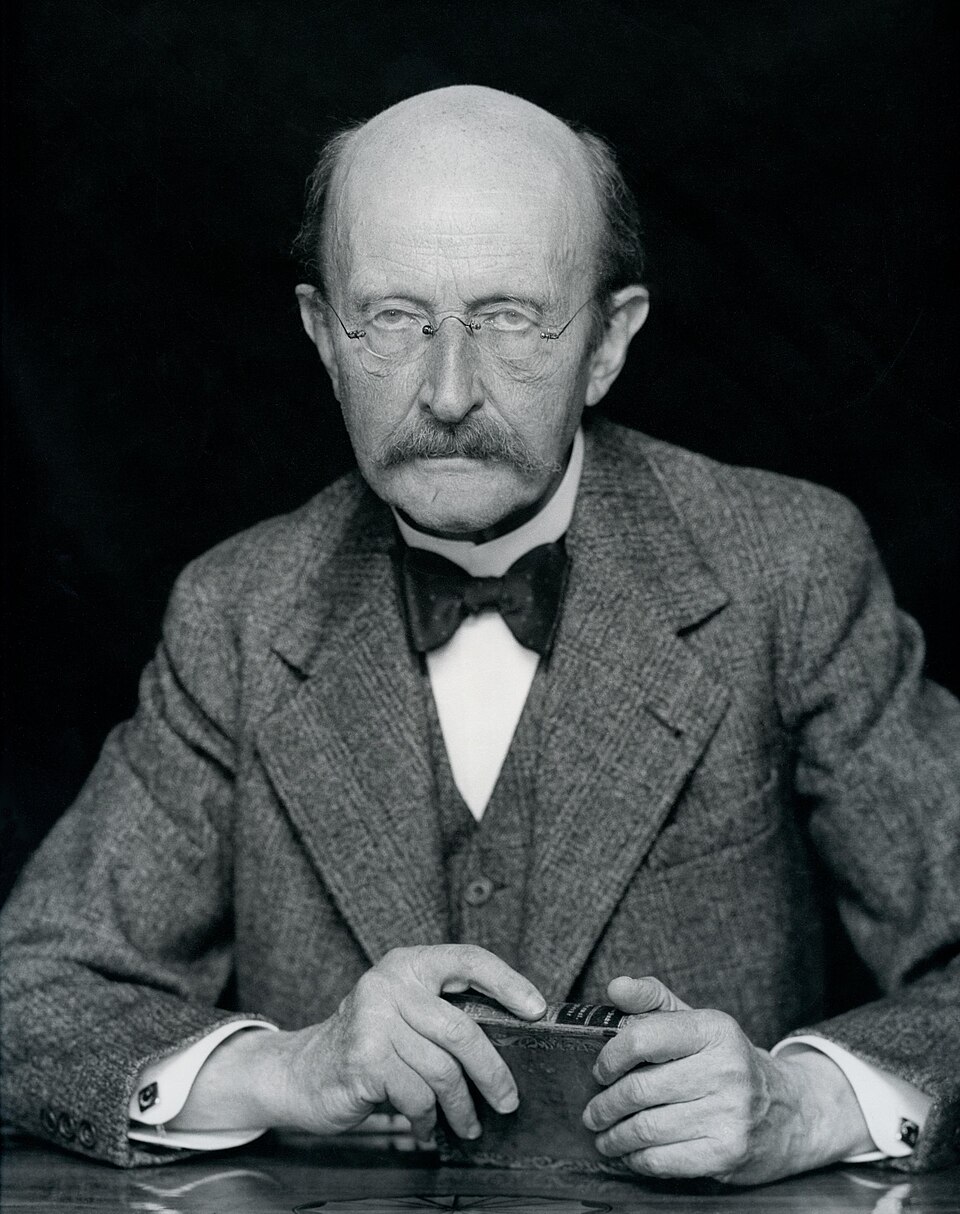
Göttingen, autumn 1946. In a living room lent by friends, far from the ruins of Berlin, an old man of eighty-eight receives us, his back straight despite everything, a pince-nez on his nose. Max Planck has lost everything — his house, his manuscripts, his children — but his voice, measured and precise, has yielded nothing.
—What really happened on December 14, 1900, before the Berlin Physical Society?
I presented a formula, and I didn't quite believe it myself. That's the truth few dare to tell. For six years, I had been struggling against black body radiation without obtaining anything coherent. So I admitted, almost reluctantly, that the energy of a resonator must consist of an integer number of equal parts — and I had to introduce that little constant h, which I imagined temporary, a mathematical crutch that classical physics would eventually sweep away. It was an act of despair, I wrote without gloss: by nature I am peaceful and shrink from dubious adventures. But I had to find an explanation at all costs. That evening, at the Berlin Physical Society, I thought I was saving thermodynamics. In reality, I was opening a door that I would never again have the power to close.
I thought I was saving thermodynamics. In reality, I was opening a door that I would never again have the power to close.
—You speak of "six years of struggle." What exactly were you struggling against?
Against my own convictions, above all. I had built my entire career on the continuity of things — heat, energy, flowing like a river without jolts. That's what I taught in my Vorlesungen über Thermodynamik, that textbook generations of German students had opened. And yet the radiation measurements, made by my colleagues in Berlin, stubbornly refused to conform to the beautiful continuous equations. I turned the problem over for entire nights, before a blackboard covered in chalk. When my formula finally fit the data, I understood that it demanded a terrible price: that energy be discrete, delivered in small packets. To renounce continuity, for a physicist of my generation, was almost to renounce reason itself.
—For laypeople, what was that famous "black body" that occupied you so much?
Imagine a closed cavity pierced with a tiny opening. Any ray that enters through this hole never comes out: it bounces, is absorbed, re-emitted, until the cavity is filled with perfectly pure radiation, depending only on temperature. That is the black body, the simplest and most tyrannical object in physics. It is studied with a prism spectrometer, which decomposes its light like unfolding a fan. The scandal is that classical physics predicted an absurdity for this body: infinite energy at high frequencies, what was called the ultraviolet catastrophe. An ordinary lamp should have blasted us with blue light. Nature does nothing of the sort. It is in seeking why that one is forced to invent the quanta.
An ordinary lamp should have blasted us with blue light.
—How would you explain to a child this idea of energy that is no longer continuous?
I would say this: think of a staircase rather than a ramp. On a ramp, you can stop at any height; on a staircase, only on the steps. Energy, at the scale of the smallest things, resembles that staircase — it takes only certain separate values, never those between steps. That is what I recorded in my Theory of Thermal Radiation, where this natural constant h appears, so tiny as to be dizzying. In our everyday world, the steps are so close that we think we are walking on a smooth ramp: that is why no one had ever noticed. It took descending to the grain of energy, where the step becomes visible, for the staircase to reveal itself.
Energy resembles a staircase: it takes only certain values, never those between the steps.
—You are said to be an accomplished musician. What place did music hold in your life?
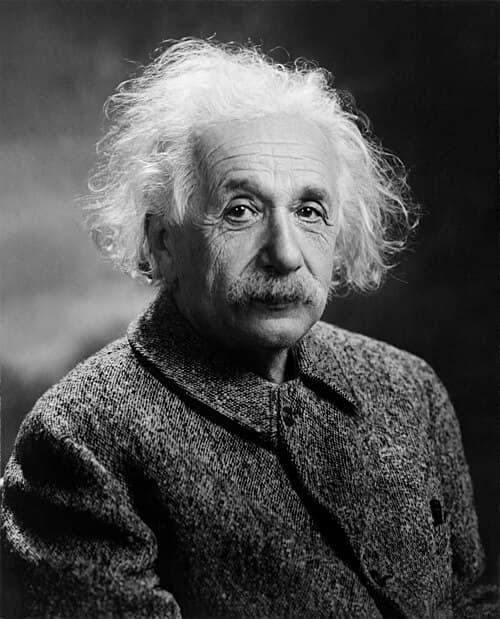
A place as vital as equations. In my house in Grunewald, I had a grand piano, and many evenings ended in chamber music. I sometimes played with Albert Einstein, he on violin, I at the keyboard — two men who didn't need to speak to be in tune. Music imposes the same rigor as physics: a wrong note is heard as a wrong equation is seen. But it offers what calculation refuses, immediate consolation. After a day spent battling stubborn integrals, sitting at the keyboard set the world right again. And in the evening, before going to bed early, I often read Kant — for deep down, musical harmony, the order of numbers, and moral laws seemed to me to proceed from the same source.
A wrong note is heard as a wrong equation is seen.
—What was an ordinary day like in your life as a professor in Berlin?
With almost monastic regularity. I rose early and began with a walk — I kept this habit into old age, in all weather. Then a frugal breakfast, and reading scientific correspondence, those letters from Vienna, Cambridge, Copenhagen that circulated ideas faster than journals. The afternoon belonged to my lectures at the University of Berlin, where I taught theoretical physics for nearly forty years, then to the students who filed through my office cluttered with calculation sheets. I invariably wore a dark suit, starched white collar, the pince-nez of a Prussian professor. This external discipline was not vanity: a mind that wants to probe the disorder of nature needs, around it, an order without flaw.
—The Nobel Prize was awarded to you in 1918. What memory do you have of it?
A bittersweet memory, like everything that came to me in those years. It was given for the discovery of energy quanta, and in my speech I stated my conviction: there exists in nature a fundamental discrete quantity, that constant h, which sets a limit to the indivisibility of physical processes. The gold medal, I received with gravity. But the prize money, I invested — out of patriotism, out of naivety — in German war bonds. The defeat of 1918 reduced them to nothing. Thus I experienced this cruel irony: crowned by the whole world for having found one of the most solid constants of the universe, and ruined because I had believed in the solidity of my own country.
Crowned for having found a constant of the universe, and ruined for having believed in the solidity of my country.
—You mention irony. Would you say recognition brought you serenity?
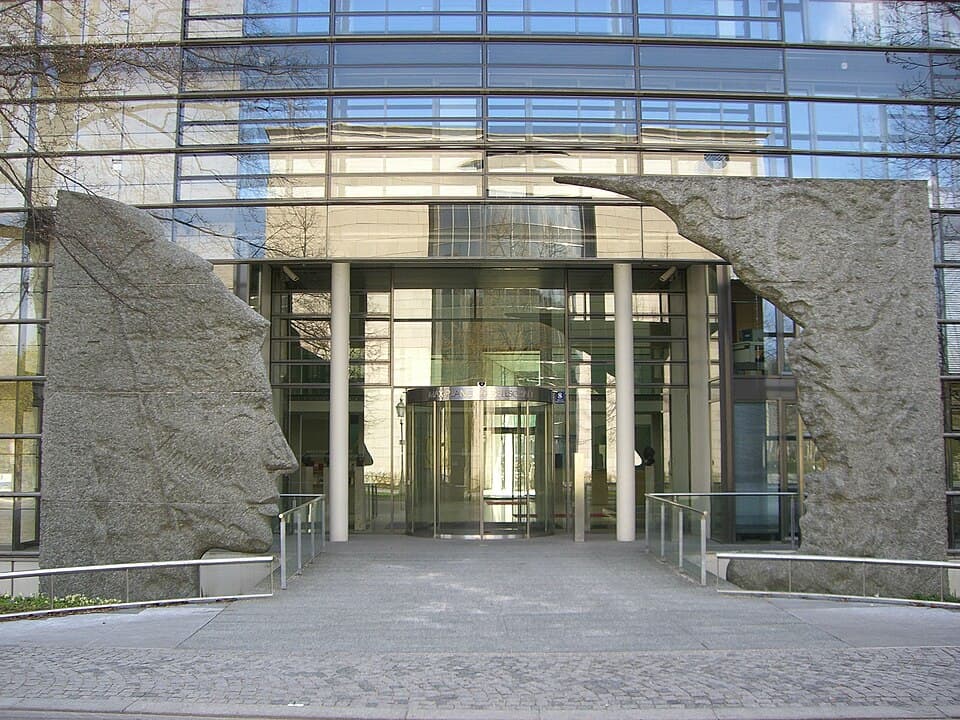
Recognition does not nourish, you see. It honors, it does not console. In Berlin, I was loaded with honors: the presidency of the Kaiser Wilhelm Society, that great institution that coordinated all German research. They will end up, it seems, giving it my name. A fine posthumous revenge for a man who spent his last years without a roof. For while my name was being engraved on plaques, I saw everything dear to me collapsing. The truth I learned is harsh: a scientist can build a work that centuries will not undo, and have no hold over the fate of those he loves. Scientific glory and a man's happiness inhabit two worlds that never touch.
—Your country's history struck you to the core. Do you remember what the war cost your family?
How could I forget. My eldest son Karl fell at the front in 1916, in that first war I had initially supported, like so many others blinded. Then my twin daughters died in childbirth, one in 1917, the other in 1919 — twice the same pain, two years apart, as if fate repeated itself out of cruelty. I returned to my blackboard because I knew nothing else to do with grief. Equations, at least, do not lie and do not die. People thought me insensitive because I continued to work. It was the opposite: work was the only dam I could erect against an inner collapse that no one should have seen.
Equations, at least, do not lie and do not die.
—Under Hitler's regime, you tried to intervene. What could an old scientist do against such power?
Very little, I measured bitterly. In 1933, I requested an interview to plead the cause of my Jewish colleagues who were being driven from universities — irreplaceable minds thrown out by sheer ideological madness. I came out of that meeting with the certainty that no rational argument had any hold on that man. It was the humiliation of my public life. And the worst was yet to come: my son Erwin, involved in the plot against Hitler, was executed in 1945. In 1944, a bombing had already razed my house in Grunewald — my books, my manuscripts, my memories, all reduced to ashes. At eighty-six, I understood that a life of order and knowledge protects against nothing when barbarism takes hold.
A life of order and knowledge protects against nothing when barbarism takes hold.
—In hindsight, do you regret opening that quantum "door" you found so strange?
Regret has no meaning before truth. What I had taken for a trick, young Einstein took seriously as early as 1905, turning my quanta into real grains of light. Then Bohr, from 1913 onward, built his atom on the same idea. For a long time I hoped that all this would be reconciled with good old continuous physics; I had to face the evidence. A new truth does not triumph by convincing its opponents, but because they eventually die and a new generation grows up familiar with it from the start. I was, despite myself, the man of the passage — a classical physicist forced to give birth to the modern world. No, I do not regret. One does not regret having seen correctly, even against oneself.
I was, despite myself, the man of the passage: a classical physicist forced to give birth to the modern world.
This imaginary interview was generated by artificial intelligence from sources documented in Max Planck's profile. It dramatises what the figure might have said based on what we know about them, but does not constitute attested historical testimony. For primary sources and factual documentation, refer to the full profile.