Kids interview Mehmet II
by Charactorium · Mehmet II (1432 — 1481) · Politics · 5 min read
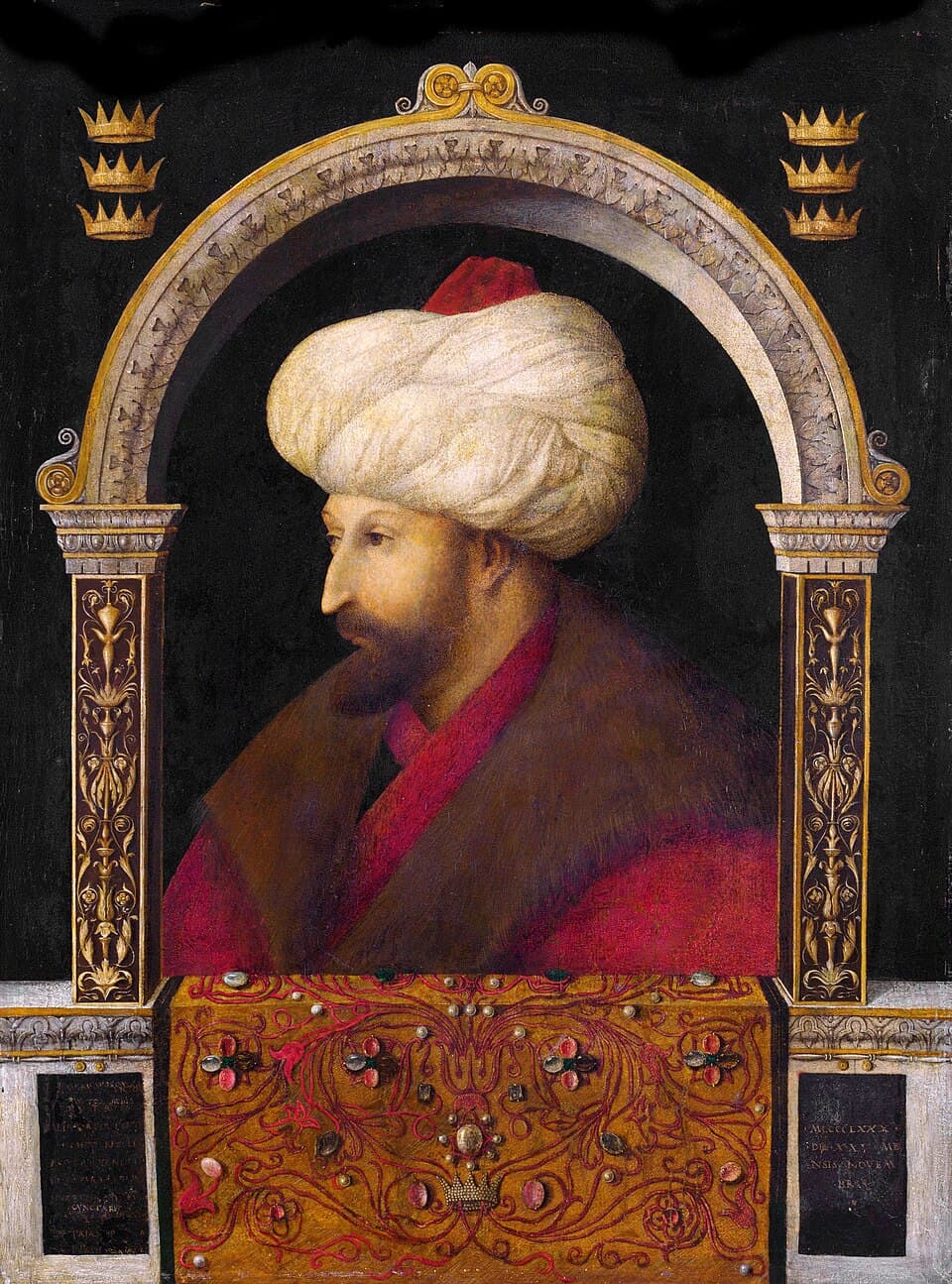
Two twelve-year-old visitors push open the heavy door of an Ottoman campaign tent. Before them, seated on a Persian rug, a sultan in a large white turban invites them to sit. He smiles: he is rarely asked about anything other than his cannons.
—They say you moved ships over hills. Is that true?
Yes, my child, it is entirely true. Imagine a harbor blocked by a huge iron chain stretched across the water. That harbor was called the Golden Horn — a long arm of the sea that protected the city. My ships could not enter. So I had a crazy idea. One night, I had logs greased with fat laid on the hill. And we dragged the ships over land, for several kilometers, by the strength of men and oxen. By morning, the defenders saw my fleet where there had never been water. They could not believe their eyes.
We made my ships sail on land, over a hill.
—And the people in the city, were they scared when they saw that?
Very scared, yes. Put yourself in their place. You think you are protected by the sea and your great chain. You sleep peacefully. And at dawn, the enemy has entered where it was impossible. That breaks something in the heart, that kind of surprise. That is the real weapon: not just force, but astonishment. In my time, they said a city is taken as much by the mind as by its walls. When the enemy thinks “he cannot do that,” and you do it anyway, then half the battle is already won. Constantinople had been impregnable for a thousand years. Not for much longer.
A city is taken as much by the mind as by its walls.
—How old were you when you had your huge cannon built?
I was twenty-one years old, my boy. An engineer from Hungary, called Urban, came to see me. He knew how to cast bronze. I asked him for the largest cannon ever built. A bombard — a big machine that fires stone balls. But enormous balls: more than five hundred kilos! Imagine a heavy stone as heavy as ten men, hurled against a wall. The city walls had been reputed indestructible since forever. Yet with each shot, whole chunks fell. They said the roar could be heard hours away on foot. That is when I understood: the world had just changed.
A single cannonball weighed more than ten men combined.
—That must have made a terrible noise. What was it like during the siege?
Terrible, yes. A sailor from Venice, Nicolo Barbaro, recounted that my cannons fired day and night, never stopping. Imagine: you no longer sleep, the ground trembles under your feet, the dust of broken stones floats everywhere. To tightly encircle the city, I also had a fortress built on the Bosphorus, Rumeli Hisar, in just four months. It cut off all supply by sea. You see, I did not just strike. I first suffocated the city, slowly, like tightening a knot. The cannon was only the last step of a long patience.
I first suffocated the city, slowly, like tightening a knot.
—People imagine you only as a warrior. But is it true you read many languages?
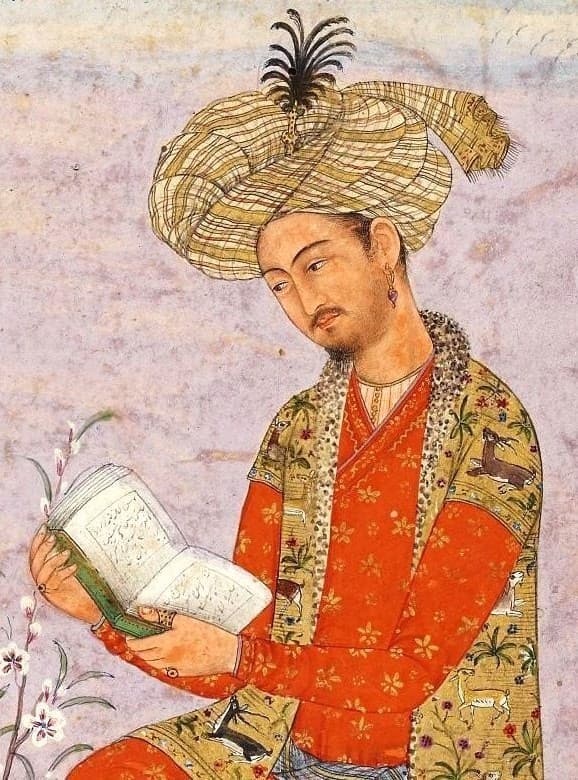
That surprises you, doesn't it? Yet it is true. In the morning, after my prayer, I loved to read. History, geography. And I read Greek, Latin, Arabic, and Persian. In the evening, sometimes, I wrote my own poems in Persian, under another name: Avnî. A conqueror who writes verses — doesn't that seem a bit strange to you? To me, it was natural. Holding a sword did not prevent me from holding a book. I wanted to understand the peoples I ruled: their stories, their wise men, their ancients. One does not rule well what one does not seek to know.
Holding a sword never prevented me from holding a book.
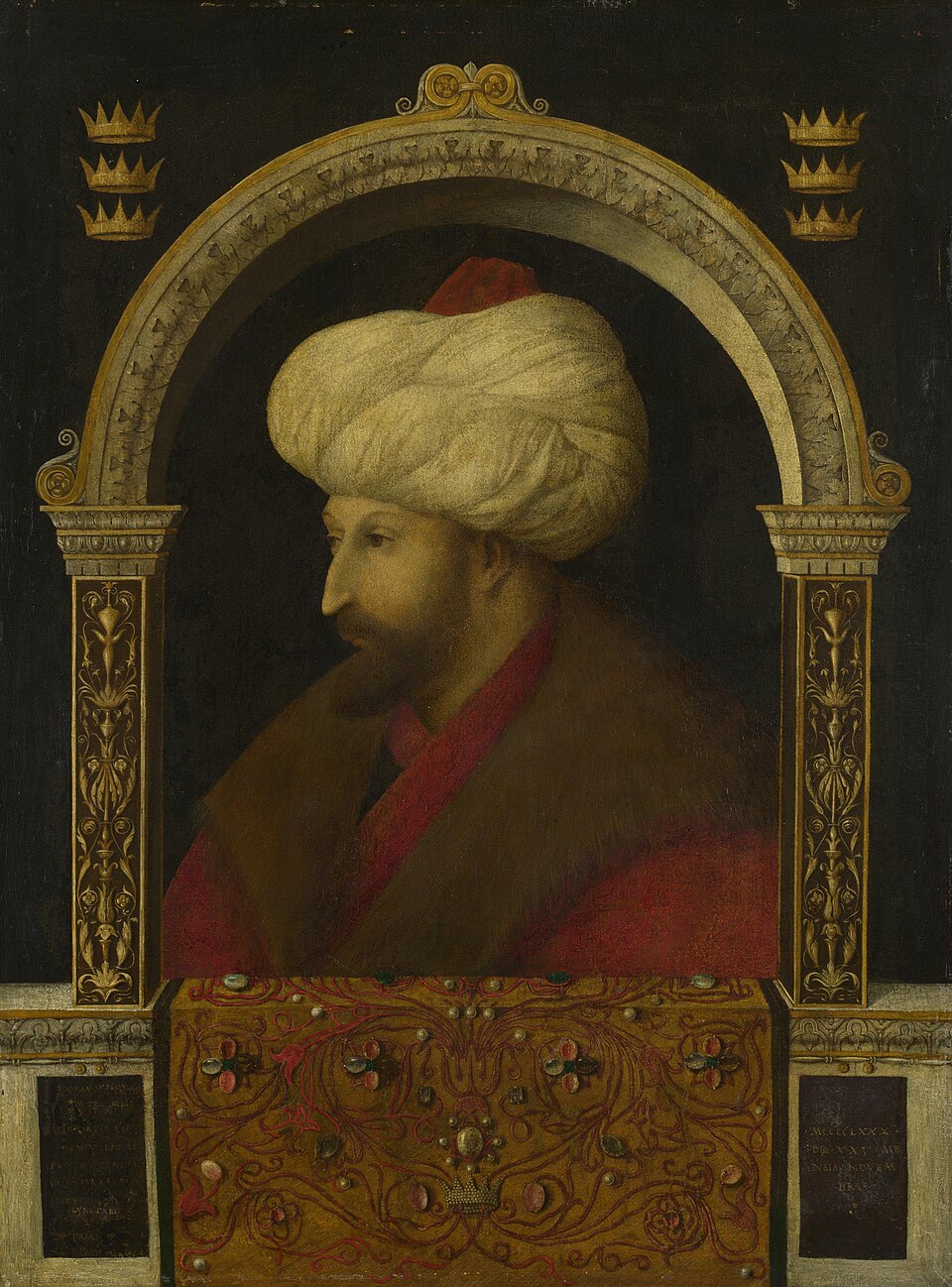
—Why did you have a painter come from Venice to draw you?
Because his hand was the best, simply. In 1479, I summoned a Venetian painter, Gentile Bellini. Venice and I had long been at war. And here, at peace, I welcomed one of their artists to my court! I liked to be shown as I was, without flattery. That portrait still exists today, very far from here. You know, many think a conqueror hates the foreigner. It is the opposite. I invited Greek, Italian, Persian scholars to my table. A court is like a great banquet: the farther the guests come from, the richer the conversation.
The farther the guests come from, the richer the conversation.
—Is it true there was a law that said the sultan must kill his own brothers?
Yes. And I understand that chills your blood. Myself, it is nothing joyful. I had a great collection of laws drawn up, the Kanunname — a kanun is a law decided by the sovereign, alongside religious law. And I wrote in it a very harsh rule: whichever of my sons would ascend the throne could have his brothers put to death. Why such a cold thing? Because I had seen empires torn apart by wars between brothers, entire families killing each other for a throne. I wanted to spare my people that. A pain in the family, to avoid the blood of thousands.
A pain in one family, to spare the blood of thousands.
—But how can you write such a harsh law without feeling bad?
You ask the real question, the one that hurts. I will not lie to you: ruling is not always being a good man. It is sometimes choosing between two misfortunes. When I put my seal, my tuğra, at the bottom of that text, I knew families would weep. But in my time, a poorly defended throne meant civil war, burned villages, lost harvests, starving children like you. A sovereign must bear those choices, alone, without showing them. That is the weight of the crown. You see the turban covered with jewels; you never see what it weighs on the head of the one who wears it.
You see the turban covered with jewels; never what it weighs on the head.
—After taking the city, what did you feel when you entered it?
A strange mix, my child. Pride, but also a sudden sadness. I entered the great church, Hagia Sophia, and prayed there. It was the most beautiful I had ever seen. Then I walked in the old palace of the emperors, empty, in ruins, full of dust. And there, seeing that abandoned splendor, I thought that even the greatest empires eventually fall. A spider was weaving its web in the palace of the Caesars. You see, that day, I was not only a victor. I was also a man who understands that everything passes, even glory.
Even the greatest empires eventually fall into dust.
—And afterwards, how did you fill a half-empty city?
Patiently, street by street. The city was nearly empty, damaged by the siege. So I rebuilt it. I had mosques, covered markets, schools built there. And above all, I brought back inhabitants from everywhere: Muslims, but also Greeks, Armenians, Jews. I allowed them to keep their religion and their leaders, through a system called the millet. Each community lived according to its own religious laws. A city, you see, is not just stones. It is people, languages, noisy markets, smells of bread. I turned a dead city into a capital that breathed again.
A city is not just stones: it is people, languages, markets.
This imaginary interview was generated by artificial intelligence from sources documented in Mehmet II's profile. It dramatises what the figure might have said based on what we know about them, but does not constitute attested historical testimony. For primary sources and factual documentation, refer to the full profile.