Imaginary interview with Mehmet II
by Charactorium · Mehmet II (1432 — 1481) · Politics · 5 min read
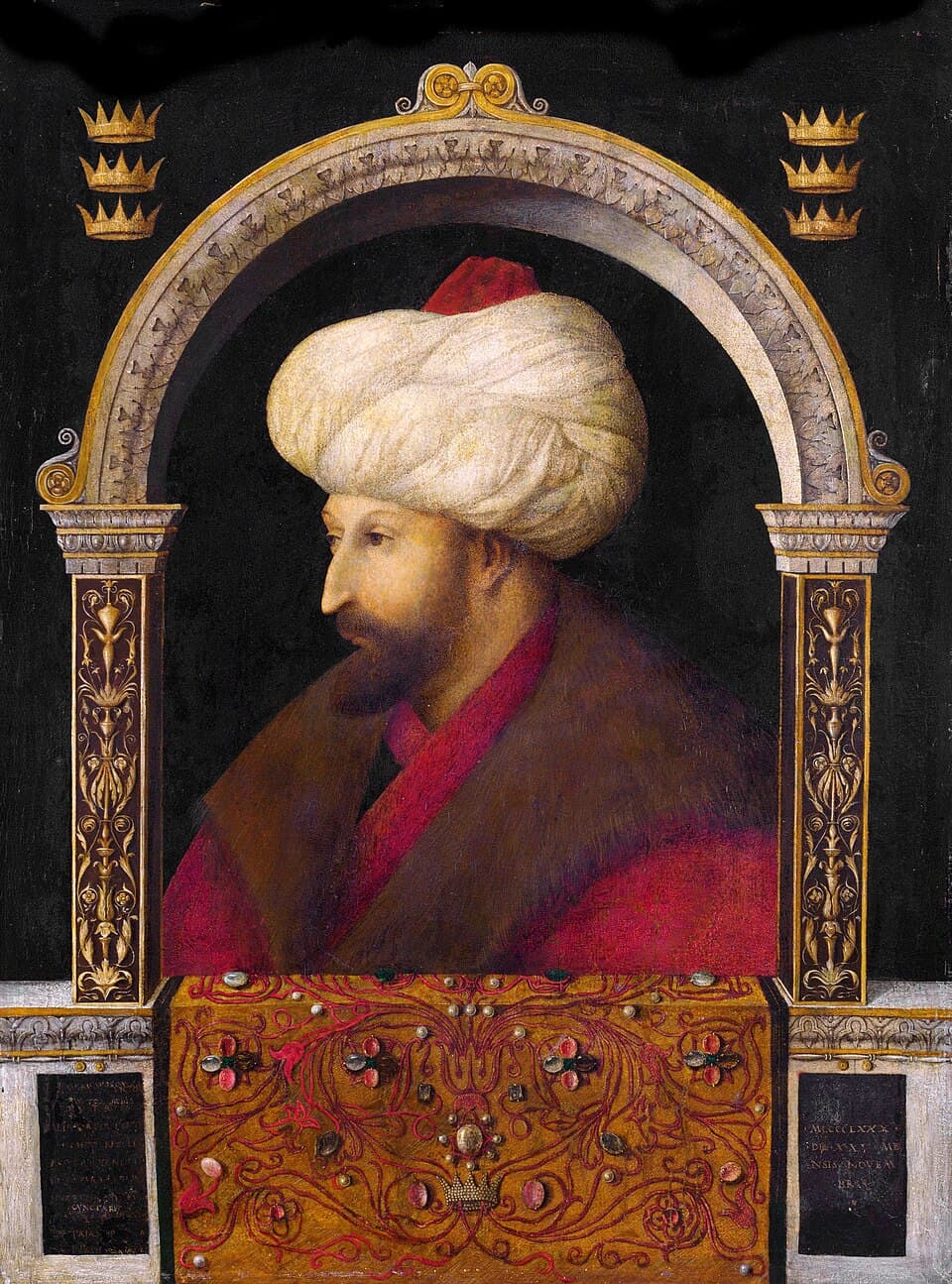
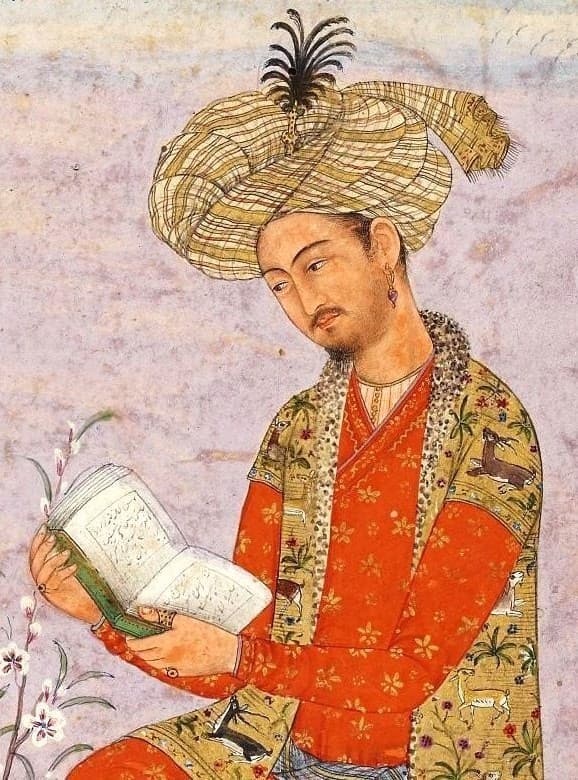
Istanbul, late summer 1480. On the high terrace of the new Topkapi Palace, where the Bosphorus merges with the Golden Horn, the Conqueror receives, draped in a crimson caftan, a Greek book open on his lap. He speaks softly, weighing each word, like a man who has learned that walls and empires always eventually yield.
—How did you solve the obstacle of the chain that closed the Golden Horn during the siege of the city?
The Golden Horn, that Haliç the Greeks believed impassable, was barred by an iron chain stretched from one shore to the other. Forcing the iron would have cost me my men for nothing. So I did what no one expected: over the hills, I had a path laid of greased logs, and in a single night my galleys slid over land like beasts led to water. At dawn, the defenders saw my fleet floating in their enclosed waters. A wise man does not break the lock when he can go through the roof. It was not the chain I conquered that night, but the Romans' certainty of being protected by water.
A wise man does not break the lock when he can go through the roof.
—People speak of a monstrous bombard in your arsenal. What did it represent for you?
The walls of Theodosius had stood for a thousand years; no ram, no ladder had ever bent them. I was twenty-one and I wanted a voice stronger than stone. The founder Urban, who came from Hungary, cast me a bronze bombard capable of hurling a five-hundred-pound ball. Day and night, without respite, my cannons battered the wall, and where they struck, the stone opened in breaches that no man's hand could close fast enough. The Latin chroniclers themselves, who camped behind the ramparts, wrote that the ground trembled with each shot. Gunpowder did what a thousand horsemen could not: it made old what seemed eternal.
Gunpowder did what a thousand horsemen could not: it made old what seemed eternal.
—What happened inside you the day you entered Hagia Sophia?
On May 29, 1453, when the city was taken, I ordered the pillaging to stop: a dead city feeds no one. Then I went alone to the great church of Hagia Sophia, whose dome seemed suspended by angels. I prayed there according to the law of Islam, and under my palms the basilica of the Caesars became a mosque. I presented myself as a ghazi, fighter of the faith, and I held this conquest as a holy duty. But entering as a victor is nothing; ruling is everything. Treading the worn flagstones of a dead empire, I understood that the glory of men lodges in walls that others will come to pray in differently.
Entering as a victor is nothing; ruling is everything.
—You had conquered Eastern Christendom. Why did you leave the Greeks and Armenians their own institutions?
An empire is not governed like a raid. I had conquered tens of thousands of Greeks, Armenians, and Jews, and a sovereign who wants to populate his capital cannot empty it of its artisans and merchants. So I instituted the millet: let each community keep its faith, its religious leader, its courts, provided it recognizes my authority and pays its tribute. I confirmed a Greek patriarch in his office, under my seal. Many are surprised that a ghazi protects the cross he has just struck down. But the order of the world requires that the shepherd not shear the flock to the blood. Force takes a city; only justice keeps it.
Force takes a city; only justice keeps it.
—Your code of laws coldly provides for the execution of the sultan's brothers. How do you justify such a provision?
I had my laws compiled in the Kanunname, a kanun that does not derive from sacred law but from the reason of the throne. I am especially reproached for the article that allows whichever of my sons reigns to have his brothers put to death. Let me be understood: I have seen with my own eyes what a disputed succession costs. My own father had to retake power from the hands of rebellious children and janissaries. A war between brothers bloodies entire provinces and delivers the empire to its enemies. Most of the ulama approved this measure. One death, however hard, is better than a thousand deaths in discord. I do not legislate for my own peace, but for the order of the world.
One death, however hard, is better than a thousand deaths in discord.
—Why did you want to put in writing the hierarchy of the state and the rules of the court?
An empire that rests on the sole will of one man dies with that man. Around 1477, I had the rank of each vizier, the place of each in my Divan, the customs of my court, and the rules of succession set down in the Kanunname. The firman sealed with my tuğra carries my word to the borders, but the kanun makes it lasting beyond me. Sacred law governs the soul and prayer; a prince's law was needed to govern tax, army, and hierarchy. My grand vizier himself holds his authority from this text. I built stone walls at Rumelia; the Kanunname is a wall of words, and it will protect my heirs when I am no longer there to uphold it.
The Kanunname is a wall of words, and it will protect my heirs.
—Even before besieging the city, you built a fortress on the Bosphorus. What was your intention?
In 1452, on the European shore, at the narrowest point of the Bosphorus, I had the fortress of Rumelihisarı erected. In four months, no more, my masons raised it, each tower entrusted to one of my viziers who vied in zeal. With the castle built earlier on the other shore, I held the strait in my hand like one grips a throat. No ship of grain or soldiers could come down to Constantinople without my leave. The city was already half taken before the first bombard had thundered. To build quickly and build in the right place: that is sometimes a surer weapon than the sword. Stone, when placed where it must be, is worth an entire army.
Stone, when placed where it must be, is worth an entire army.
—You had a new palace built overlooking the sea. What vision did you have in raising Topkapi?
The old palace of the Greek emperors was falling into ruin, and a sultan does not lodge in the rubble of another. As early as 1459, on the promontory overlooking the Bosphorus and the Golden Horn, I had the plans of Topkapi drawn: courtyards, pavilions, gardens terraced toward the sea. I wanted my apartments to be clad in Iznik tiles, Persian carpets, wood inlaid with mother-of-pearl — not out of vanity, but because a capital must declare its grandeur to those who approach it. Around it, I sowed mosques, bazaars, and medreses to repopulate a half-empty city. Constantinople was a shell; I remade it a heart. A sovereign is judged less by what he tears down than by what he raises up.
Constantinople was a shell; I remade it a heart.
—You are said to be a reader and poet as much as a conqueror. How do you live this taste for letters?
Before council and arms, at dawn, after the fajr prayer, I devote my first hours to books: ancient histories, geographies, writings of philosophers, which I read in Greek, Arabic, Persian, Latin, depending on what comes to hand. When evening comes, after the scholars and poets I invite to my table have retired, I sometimes compose verses myself in Persian, signing them with the name Avnî. People are surprised that a ghazi wields the pen. But he who would command men must first know their souls, and the ancients have left more than any vizier could tell me. One more language is one more door into another's mind.
One more language is one more door into another's mind.
—You summoned a painter from Venice to capture your features. What did you expect from an artist of your former enemies?
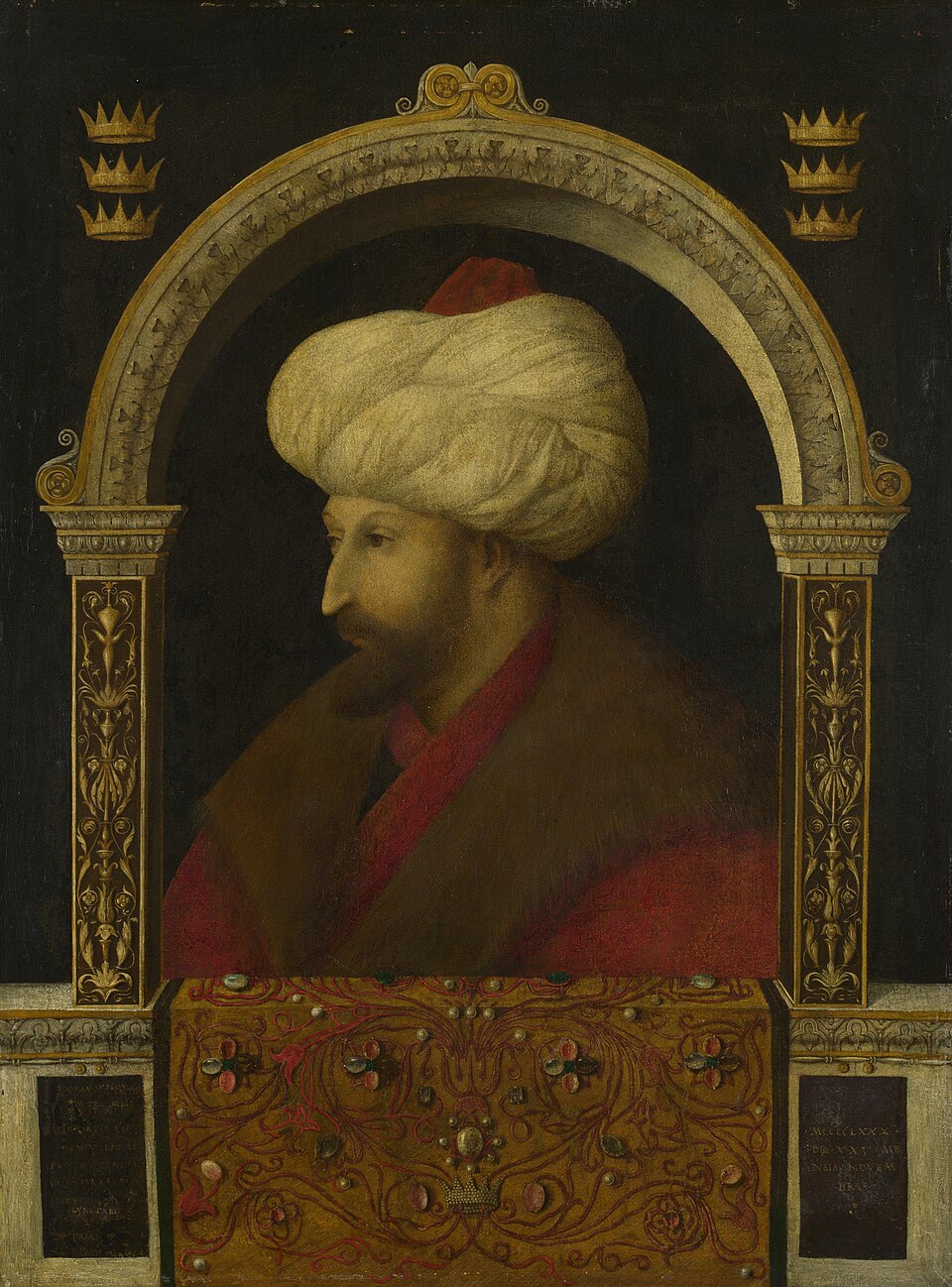
In 1479, peace concluded with Venice, I asked the Serenissima to send me its best painter. Gentile Bellini came to Istanbul and fixed my face on canvas, in the Latin manner, which renders flesh and gaze as none of our illuminators do. Many among my people find it strange that a sultan should have his portrait made by a Frank. But curiosity has no homeland, and the art of the enemy remains art. One day, wandering through a ruined Greek palace, I thought of that verse where the spider weaves its web in the palace of the Caesars: empires pass, faces fade, and it is not vain to entrust one's own to a skillful hand before oblivion does its work.
Curiosity has no homeland, and the art of the enemy remains art.
This imaginary interview was generated by artificial intelligence from sources documented in Mehmet II's profile. It dramatises what the figure might have said based on what we know about them, but does not constitute attested historical testimony. For primary sources and factual documentation, refer to the full profile.