Imaginary interview with Mercedes Sosa
by Charactorium · Mercedes Sosa (1935 — 2009) · Music · Society · 6 min read
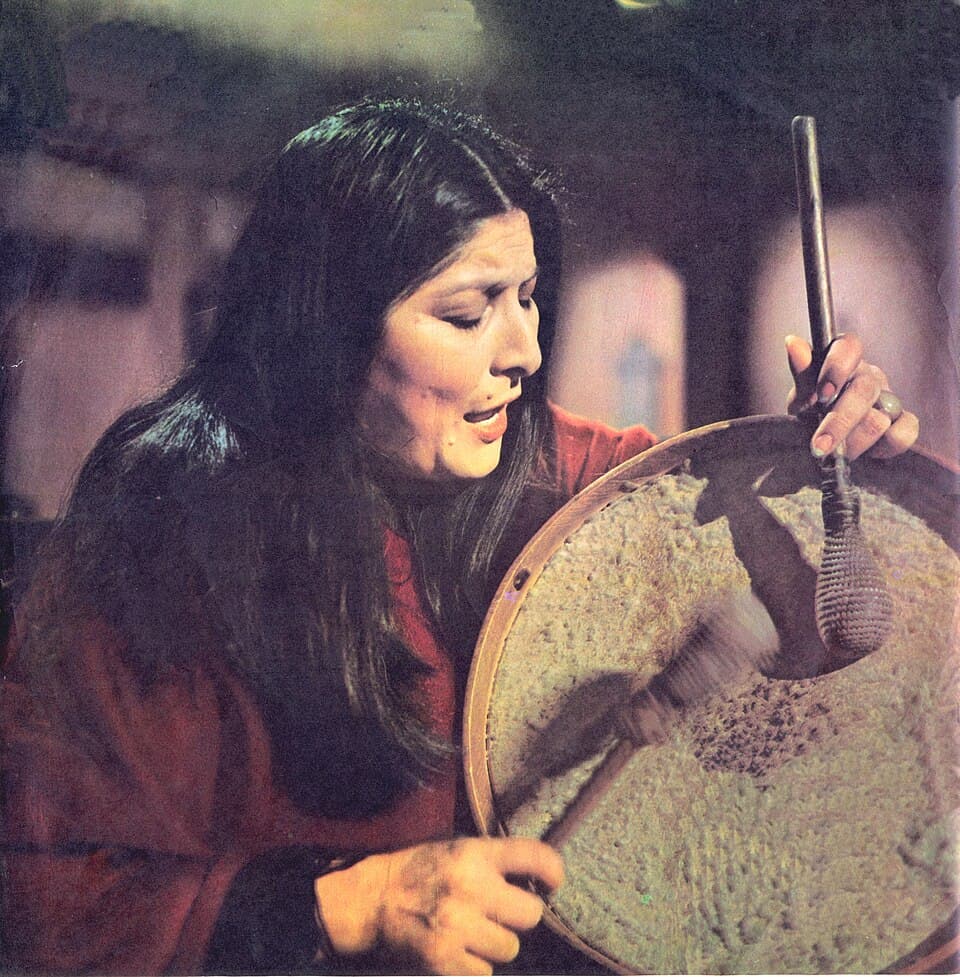
Buenos Aires, a winter afternoon in a Palermo apartment cluttered with records and sheet music. On the coffee table, a gourd of maté cools beside a bombo legüero leaning against the wall. La Negra greets us with a deep voice, the one that crossed dictatorships; she speaks slowly, like one tuning a guitar.
—How did a little girl from a working-class family in Tucumán become a singer?
By trickery, to be honest. I was fifteen, in 1950, in San Miguel de Tucumán, and a local radio station was holding a singing contest. Too young to enter officially, I signed up under a false name, Gladys Osorio. I won. That voice that came out of me — I hadn't chosen it; it came from the kitchen, from the maté we shared, bitter as in all the northwest, from the coplas the women hummed while kneading empanadas. At home we didn't talk about art; we talked about work. So when I realized this gift could last, I felt as much fear as joy. The bombo legüero was already beating in my chest before I knew how to put a word to it.
That voice that came out of me — I hadn't chosen it; it came from the kitchen.
—What did those popular roots imprint on your way of singing?
A loyalty, almost a debt. I come from a world where we owned nothing except songs, and I never wanted to stray from that. On stage I wore ponchos with Andean patterns, not for costume, but because my skin remembers being mixed-race, indigenous, from the continent below. When I recorded Canciones con fundamento in 1965, with works by Atahualpa Yupanqui, I wasn't inventing anything: I was giving back to the people what they had given me. Folklore, for a folklorista, is not a museum. It's living water that you draw and return a little clearer. That's why, even accompanied by full orchestras, I always kept the guitarra criolla close: it reminded me where the voice came from.
—You've often been called a political singer. Do you recognize that word?
“Yo no me considero una cantante política. Soy una artista que canta la realidad de su pueblo, y esa realidad, en nuestra América, siempre fue dura.” That's what I still answered at the end of my life. The word 'political' was stuck on me like a label on a crate of fruit. But I sing el pueblo — that word which means both the people and the village, those who have no voice in assemblies. The Nueva Canción, born at the Santiago festival in 1964, was not a party; it was a way of listening to the oppressed. If speaking of hunger, exile, a son's disappearance is politics, then so be it. But I prefer to say I sing the truth, and in Latin America truth has always disturbed the powerful.
The word 'political' was stuck on me like a label on a crate of fruit.
—Is there a song where that communion with the people felt complete?
Gracias a la vida, without hesitation. It was Violeta Parra, the great Chilean, who wrote it, and I covered it on my Homenaje a Violeta Parra in 1971. Every time I began it, a silence fell over the hall — one of those silences that are not empty but full of all the dead we carry. Violeta thanked life for giving her eyes, ears, a voice — and that thank you, on a continent where people were being disappeared, became almost unbearable. I often said that singing only makes sense when there are people who need it. That song — it wasn't me singing; it was the whole hall breathing through my mouth.
—Do you remember that night in 1979, in La Plata?
You don't forget it. It was a concert like any other, in La Plata, and suddenly the military police came onto the stage, mid-song. They arrested me, but also the entire audience — about two hundred people, accused of 'subversive activities.' Imagine: they take away an entire hall because it's listening to music. We were held for hours. When they released me, something had broken; I knew I could no longer sing at home without risking the lives of those who came to hear me. It was that night that pushed me into exilio, first Paris, then Madrid. During that time, my concerts continued to circulate in Argentina on clandestine cassettes — those little plastic boxes passed from hand to hand like relics.
They take away an entire hall because it's listening to music.
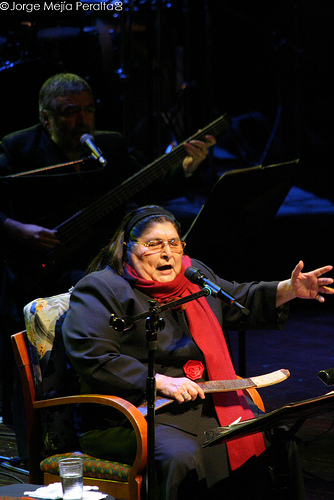
—How does one live in exile when you are a voice torn from your country?
“El exilio no me mató, pero me enseñó que la patria no es solamente el suelo sino sobre todo la gente que uno lleva adentro.” Exile didn't kill me, but it taught me that. In Paris, then Madrid, I lived in apartments lent by friends, surrounded by other Latin Americans whom the juntas militares had thrown out of their homes. We gathered, shared maté, talked about the desaparecidos — those thirty thousand faces we could no longer name back there. I sang for those mourning communities, and each concert was a letter sent to a country I could no longer see. The wound of exile is not leaving; it's knowing that others stay and pay for you.
—What did that return to the Teatro Ópera in 1982 mean to you?
The greatest vertigo of my life. In October 1982, after three years away, I went back on stage at the Teatro Ópera in Buenos Aires. Tickets sold out in hours; people had queued for days. The first night, from the first notes, the hall began to cry — not from sadness, but from reunion. On the liner notes of the album we made from it, Mercedes Sosa en Argentina, I wrote: “Volver es también una forma de lucha.” Returning is also a form of struggle. That record doesn't belong to me alone; it belongs to all those who stayed and all those who had to leave.
Returning is also a form of struggle.
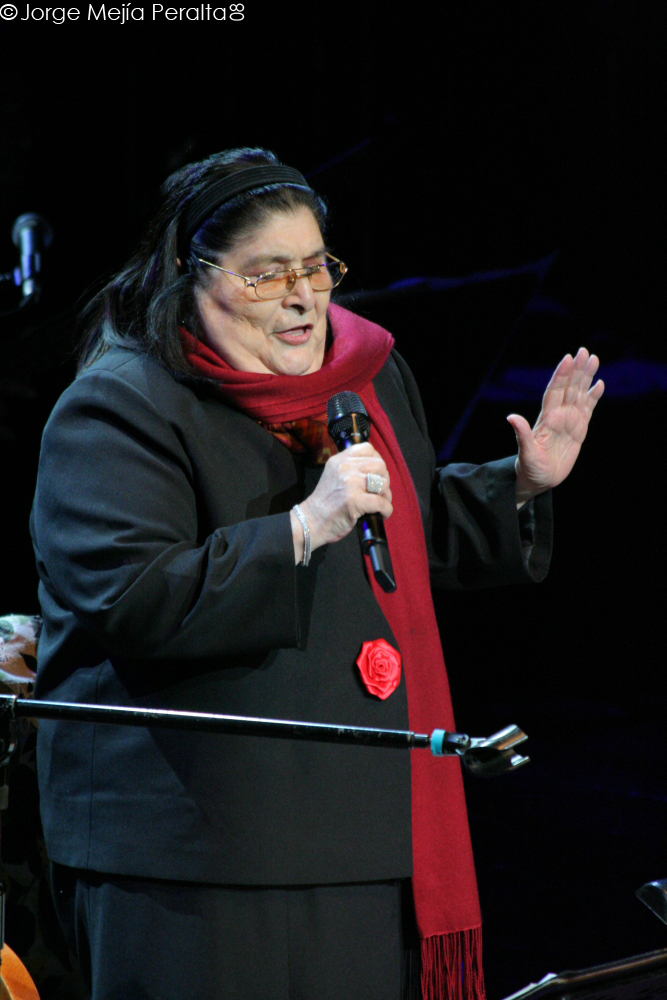
—That live album is often considered the peak of your work. Do you see it that way?
I don't judge my records, but that one — yes, it carries something no other has. Mercedes Sosa en Argentina is not a beautiful recording; it's a document of collective emotion, a nation catching its breath. The dictatorship hadn't fallen yet — we would have to wait until 1983 and the election of Alfonsín — but in that hall, that night, fear had momentarily fled. You can hear on the tape the audience singing with me, sometimes louder than me. That's what I wanted to capture: not my voice, but theirs returning. When an entire people starts singing out loud again after years of silence, believe me, it's no longer music — it's a resurrection.
—In 2009, ill, you recorded Cantora. Why that project at that time?
Because I had one thing left to do: reach out. Cantora, in two volumes, is an album of duets, and I invited people who had nothing in common — Shakira, Caetano Veloso, Serrat, young Gustavo Cerati, Fito Páez. Generations and genres that, on paper, have nothing to say to each other. But I believe an old voice only makes sense if it knows how to dialogue with the young. My health was failing, I knew it, and yet the voice held. I sang those duets like writing a will: without bitterness, bringing together. It was a few weeks before my end. I wanted to leave proof that a song, if true, knows no border of age or fashion.
An old voice only makes sense if it knows how to dialogue with the young.
—What would you like to remain of you, when your voice has fallen silent?
Not a statue, certainly not. If I could imagine being listened to a century from now, I would like it to be not for my person, but for what it carried: the coplas of the north, the bombo legüero, the shared maté, the memory of the desaparecidos that no decree will erase. I used to say that singing only makes sense when there are people who need it — art is not a luxury, it's a necessity of the collective soul. So if my records still help an oppressed person stand tall, a hall cry together, a youth not forget what fear cost, then La Negra will have been useful. The rest — the tributes, the national mourning — belongs to the living, not to me.
Art is not a luxury, it's a necessity of the collective soul.
This imaginary interview was generated by artificial intelligence from sources documented in Mercedes Sosa's profile. It dramatises what the figure might have said based on what we know about them, but does not constitute attested historical testimony. For primary sources and factual documentation, refer to the full profile.