Kids interview Mother Teresa
by Charactorium · Mother Teresa (1910 — 1997) · Spirituality · 5 min read
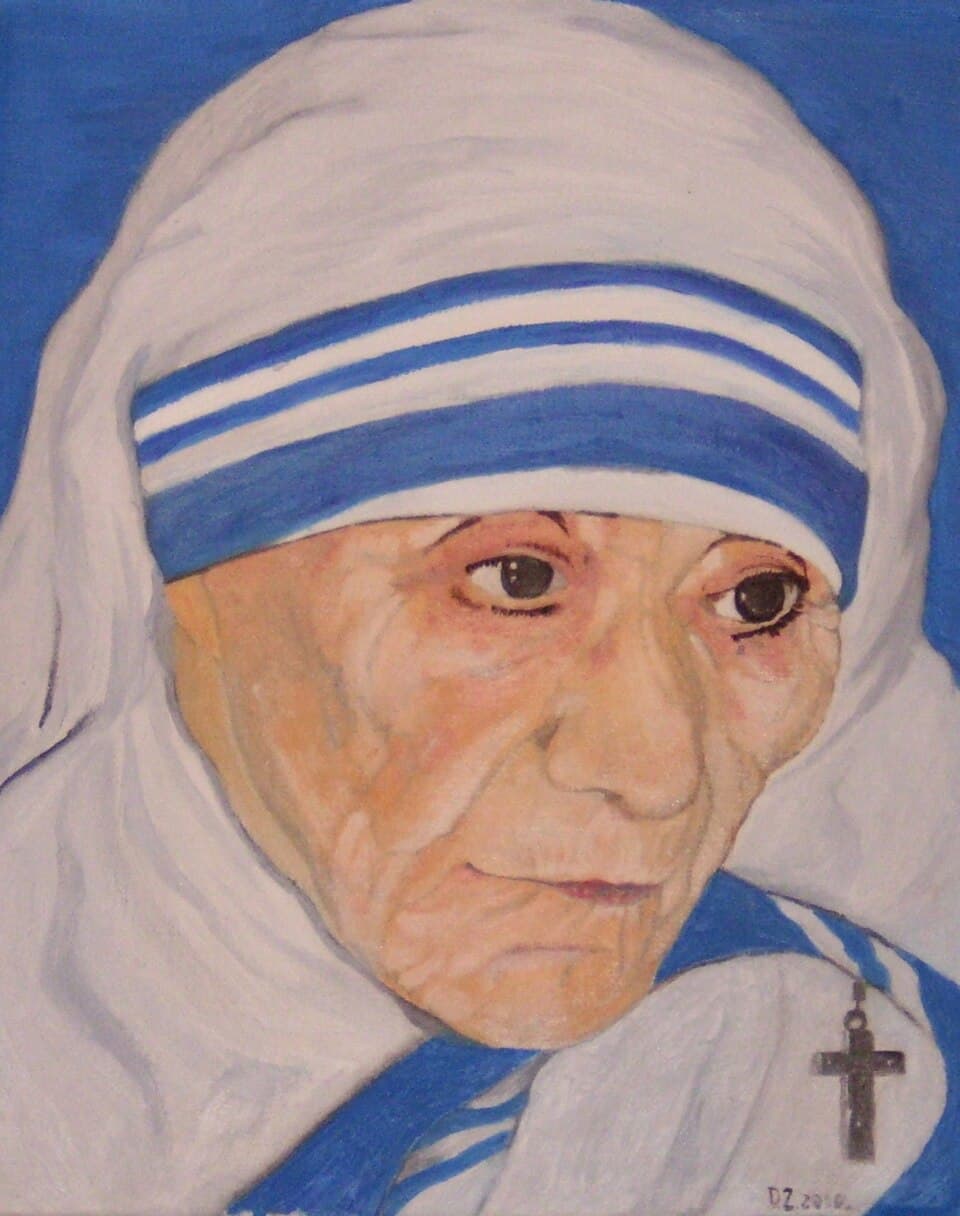
Two twelve-year-old students, on a field trip, pushed open the door of a very simple little room. An old lady in a white sari was waiting for them, her hands outstretched. She smiled: “Sit close to me, my children, and ask your questions.”
—Is it true that one day, on a train, you heard a voice?
Yes, my child, and I remember it as if it were yesterday. We were in 1946, the train was climbing toward Darjeeling, in the mountains. Imagine a shaking carriage, the cool air, the hills rolling by. I had been teaching young girls for almost seventeen years, I was at peace. And then, deep inside me, I felt like an order. A request to leave my convent and go live with the poorest. I called it the call within the call. You know, when something calls you so strongly that you can't pretend not to hear? That was it. I could never say no.
When a call is so strong, you cannot pretend not to hear it.
—And after that, what did you do to get permission to leave?
Ah, I couldn't leave right away! A nun doesn't do whatever she wants. I had to ask permission. So I wrote, again and again, to the Archbishop of Calcutta. I told him one simple thing: let me go into the streets to serve the poorest of the poor. Imagine you want to do something with all your might, and you have to wait almost two years for an adult to say “yes.” It was long. But in 1948, finally, the door was opened for me. I left the convent with almost nothing, and I walked toward the slums.
—Why did you open a home just for people who are dying?
Because of a woman, my child. One day in 1952, I found her lying on a sidewalk in Calcutta. She was dying, and the rats and ants were already devouring her. I tried to carry her to a hospital, but they refused her, everywhere. Can you imagine? No one wanted her. So I understood: there needed to be a place where these people could die like human beings, washed, held by the hand. The city lent me a large hall next to a temple. We called it Nirmal Hriday, “the Pure Heart.” Thousands of people have died there, but in peace.
No one should die alone, devoured on a sidewalk.
—What did you actually do for those people in the home?
Very small things, my child. We washed bodies covered in dust. We fed them, with a spoon, from a simple enameled metal bowl — nothing fancy, just rice, a little lentils. We changed the bandages of the sick, we held the hand of those who were leaving. Imagine a large room where dozens of people lie down, and where, perhaps for the first time in their lives, they are looked at with gentleness. I told my sisters: it's not the quantity that matters, it's the love we put into the smallest gesture. Wiping a forehead can change everything.
It is not the quantity that matters, but the love we put into the smallest gesture.
—Why did you always wear the same white habit with blue stripes?
You have a sharp eye! I chose this white sari with three blue stripes in 1948. White is simplicity; blue is my tenderness for the Virgin Mary, whom I have loved since I was very small. But above all, it was the sari of the poorest women in Bengal, those I lived among. I wanted to dress like them, not above them. And you know what? I owned only two. One to wear, one to wash. Nothing else. This is called the vow of poverty: we renounce owning things. When you have so little, your heart is freer for others.
When you own so little, the heart is freer for others.
—Did you have any other belongings besides your saris?
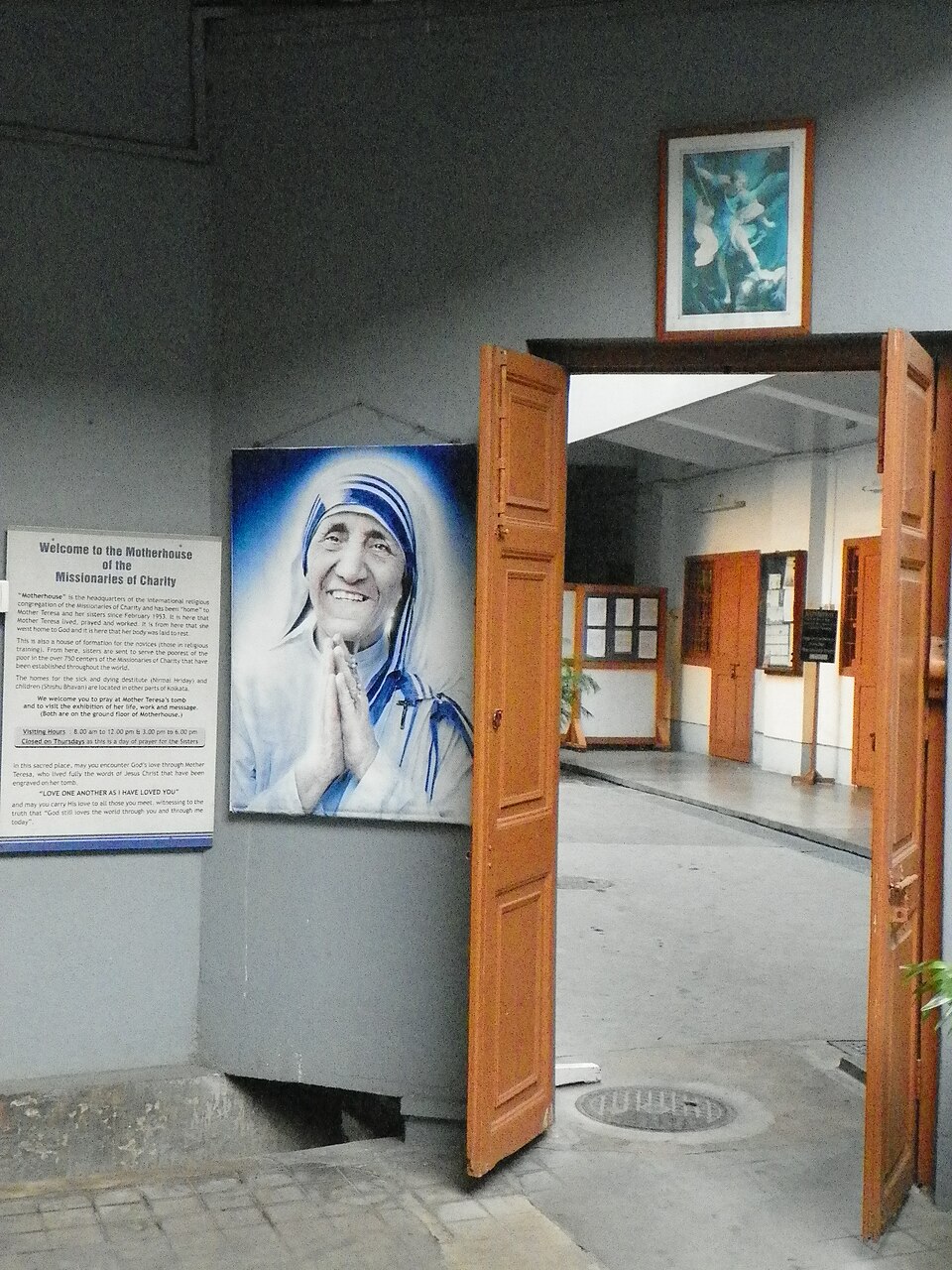
Almost nothing, my child. A rosary, always, in my hand or on my wrist. It is a string of beads that you slide between your fingers while praying. I recited it every day; it was my weapon, my real strength. I also had a small medal of the Virgin pinned on my sari, and worn leather sandals, like those of poor Indian women. My room? A wooden bed, a cross on the wall, nothing more. No fan in the heat of Calcutta. Imagine living exactly like those you want to help, without any extra comfort. That was my rule: never be above the poor.
—What was it like when you received the great Nobel Prize?
It was in Oslo, Norway, in 1979. It was cold, very cold for an old lady used to India! I was being awarded the Nobel Peace Prize, the greatest honor in the world. Usually, a grand banquet is held for the laureate. I said no, thank you. I asked that all the money from the meal — nearly 192,000 kroner — be taken and given to the poor of Calcutta. Why eat fine things while children are hungry? Imagine the faces of the elegant guests! But for me, it was obvious. That money already belonged to the poor.
Why a banquet, when that money already belongs to the poor?
—Did becoming famous worldwide change anything for you?
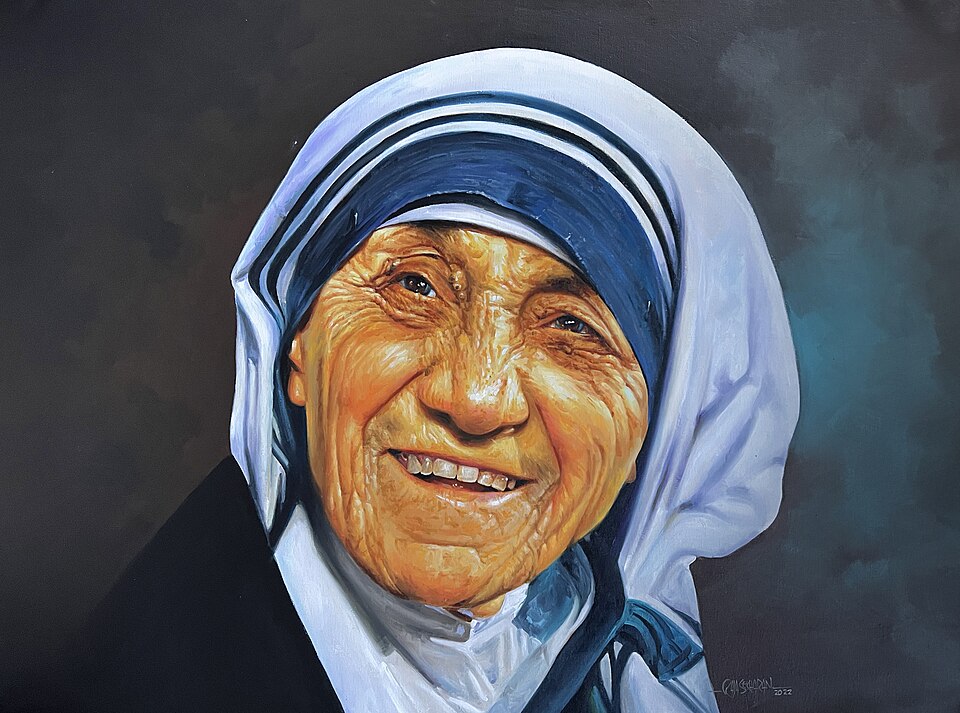
Nothing, my child, and that is the truth. The day after the prize, I still got up at 4:40 a.m. to pray, as every day. I put on my old sari, I went back to care for the dying. Fame, you see, is like the wind: it passes and does not nourish you. What interested me was the face in front of me, the one no one looks at. Of course, being known helped me: I could ask for help, open homes in many countries. But in my heart, I remained the little sister who picks up people from the street. A prize does not change who you really are.
Fame is like the wind: it passes and does not nourish you.
—Were you always sure that God was with you?
Ah... that is a brave question, my child. And I will answer you honestly: no. For almost fifty years, I felt a great silence. As if God, whom I loved so much, was no longer there, no longer answering me. The wise call this the dark night of the soul: a long time when you feel alone in the dark. Imagine you call out very loudly to someone you love, and no one answers. That was it, every day. I wrote it in letters, which were only read after my death. No one knew. In front of others, I smiled, and I continued to serve.
—But then how did you manage to keep going if you were sad?
That is the whole mystery, my child. I kept going because I had said “yes” one day, on that train, and a “yes” cannot be taken back. Even when I felt nothing, I decided to love anyway. You see, people think you have to feel strong to do good. That is false. You can have a heavy heart and feed a child at the same time. The smile I gave to the dying, I also gave when, inside, it was night. Those letters, published in Come Be My Light, surprised the whole world. But they say one thing: you can love in doubt.
You can have a heavy heart and feed a child at the same time.
This imaginary interview was generated by artificial intelligence from sources documented in Mother Teresa's profile. It dramatises what the figure might have said based on what we know about them, but does not constitute attested historical testimony. For primary sources and factual documentation, refer to the full profile.