Imaginary dialogue between Jean-Paul Sartre and Nathalie Sarraute
by Charactorium · Nathalie Sarraute (1900 — 1999) · Literature · 5 min read
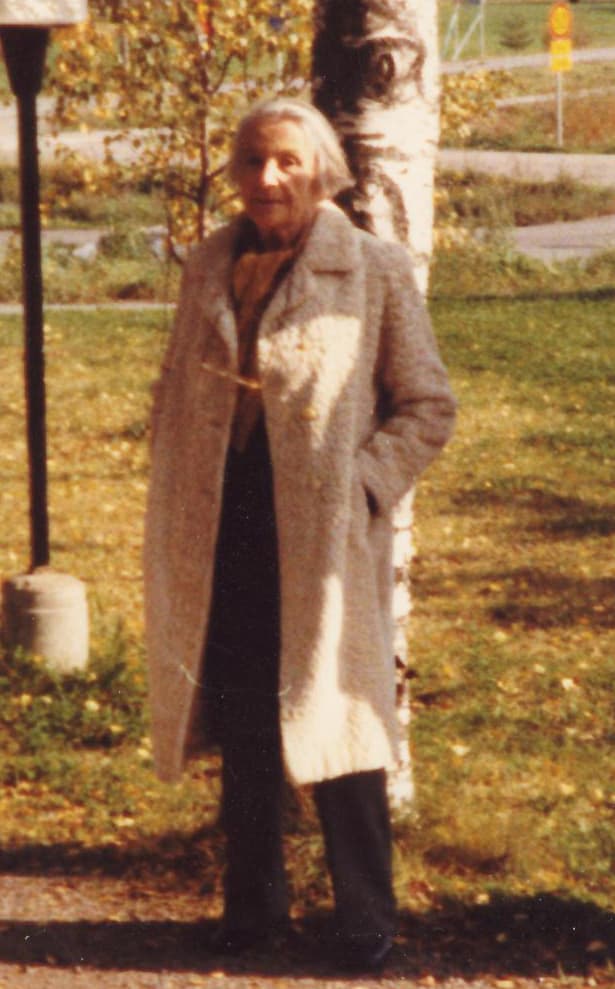
It is in the apartment in the 16th arrondissement, cluttered with books and manuscripts, that Jean-Paul Sartre comes to visit Nathalie Sarraute one gray autumn afternoon in 1956. A cup of tea cools on the desk, near the typewriter. They have known each other since he prefaced her Portrait of a Man Unknown eight years earlier, coining for her the term "anti-novel." He has come, that day, to question her about The Age of Suspicion, which has just been published and whose title, already, is causing a scandal.
—Nathalie, even before I read you, there were those Tropisms from 1939. Where did you get this word borrowed from the scientists?
You know, Sartre, I took this word from biologists almost by breaking and entering. Tropism is the movement by which a plant turns toward the light, without willing it, without knowing it. I felt that there exist in us similar movements, infinitesimal, that stir us beneath our words and gestures. I began to note them down as early as 1932, in notebooks, fragments caught on the fly in a conversation, a wait, a glance. The book appeared in 1939, printed in a few hundred copies, and it fell into almost total silence. That saddened me, but I knew I had found my material, the only one that would ever interest me.
Tropism is the movement by which a plant turns toward the light, without willing it, without knowing it.
—People forget that you were a lawyer. Admitted to the bar in 1925. Why did you leave the law for that uncertain thing, writing?
The law gave me something I have never lost: a taste for precision, the art of dismantling an argument piece by piece. I kept my law books, you can see them there. But the Faculty, the bar, all that kept me on the surface of beings, in their visible conflicts, their declared interests. Yet what burned in me was the invisible, what quivers beneath the words we exchange. I married Raymond, a lawyer too, and little by little I deserted the courthouses for the silence of my desk. One does not really give up a rigor: I now turn it against consciousness itself.
One does not really give up a rigor: I now turn it against consciousness itself.
—Let us come to us. In 1948, I prefaced your Portrait of a Man Unknown calling it an "anti-novel." This word, did you accept it wholeheartedly?
You who coined it, you know how much it both served and embarrassed me. Served, because it gave a name to what I was attempting, and without your preface this book would have remained even more invisible than Tropisms. Embarrassed, because "anti-novel" suggests that I am against something, that I destroy. But I do not destroy: I seek another truth, deeper than that of well-drawn characters and well-knit plots. Remember, I wrote it during the Occupation, in hiding, under another identity, because my origins threatened me. That narrator who spies on a father and daughter without ever penetrating them, it was perhaps my own way of surviving through the gaze.
I do not destroy: I seek another truth, deeper than that of well-drawn characters.
—Your The Age of Suspicion has just been published. You say that the reader no longer believes in characters. Isn't that a declaration of war on the novel?
A declaration of lucidity, rather. Today's reader has become wary; he has read too much to still take on faith the settings and figures the novelist offers him. This suspicion, I did not invent it, I observe it. After Proust, after Joyce, after what war taught us about men, one can no longer write like Balzac. I only plead that the novel descend to where nothing yet has a name, into those preverbal layers where everything is decided before speech. Lindon, at Éditions de Minuit, understands this better than anyone—he gathers around him those who share this refusal of the conventional.
I plead that the novel descend to where nothing yet has a name, before speech.
—What you call "sub-conversation" intrigues me. When two people speak, do you claim to hear something other than their words?
Exactly that. The words exchanged are only the tip of the iceberg. Beneath runs a continuous flow of impulses, fears, small aggressions, withdrawals—a whole underground life that polite sentences barely cover. A tone, an intonation, a word let slip, and suddenly this magma surfaces and shatters an old friendship. That is what I want to restore: not the dialogue, but what quivers beneath it. Think of the telephone, that so banal object: one says "how are you" and whole dramas are played out, through the sole play of silences and inflections. My work consists in making audible that murmur we all pretend not to hear.
The words exchanged are only the tip of the iceberg. Beneath runs an underground life.
—You talk about the novel, but don't these tropisms one day call for the stage, for living voices to carry them?
You touch on something, and I sometimes think about it. Theater would be the natural place for sub-conversation, because everything is played out on a tone, on a word. Imagine a scene where nothing happens—two friends, an innocuous phrase—and where, through that single ill-received phrase, a certain tone, the whole edifice of their affection cracks. The drama would come not from a murder or a betrayal, but from almost nothing, from a "that's nice, that" said with a hint of condescension. It is in the infinitesimal that true violence between beings resides. The novel still suffices for me, but I feel that those voices, one day, will want to leave the page.
The drama would come not from a murder, but from almost nothing, from a word ill-received.
—And criticism, literary judgment—that comedy of salons where one decrees what is admirable—don't you feel like painting it?
Ah, that is a terrain I observe with relish. You know those dinners where a book is passed around like a password: "have you read…? it's remarkable, truly remarkable," and everyone chimes in without knowing if they mean what they say. Literary fashion is a collective tropism: we align, we fear being left out, we adopt an enthusiasm that is only disguised fear. One day I would like to write the entire life of a fictional book, its glory and fall, seen through those conversations where no one admits what they truly feel. That would be a way of holding a mirror to this little world whose rituals you and I know only too well.
Literary fashion is a collective tropism: we align, we fear being left out.
—You were born Natacha Tcherniak, in Russia, and childhood made you travel between two languages. What remains of that sharing?
Everything, perhaps. I was born in Ivanovo, and childhood was a series of back-and-forths between Paris and St. Petersburg, between Russian and French, until I settled here at age eight. When one moves from one language to another like that, one stops believing that words stick to things; one sees them float, slip, betray. I think my sensitivity to silences, to the unspoken, comes from there—from those moments when one understands without understanding, when one senses the family storm beneath sentences one only half grasps. This cup of tea I served you, it is still a bit of that Russia that never quite left me.
When one moves from one language to another, one stops believing that words stick to things.
—Do you believe that one day you will dare to turn back to that childhood, write it in your own name, you who flee confession so much?
That both terrifies and attracts me. Turning back to those memories would risk freezing them in a beautiful smooth narrative, whereas they come back to me in fragments, uncertain, contradictory. If I do it one day, it will not be to tell my story, but to question the very matter of memory—perhaps by dialoguing with an inner voice that would endlessly ask me: is that really what you felt, or are you inventing it now? Words that seem to capture so well what one wanted to render, when you look at them closely, they slip away. You know me, Sartre: I prefer true uncertainty to the lie of narratives too sure of themselves.
I prefer true uncertainty to the lie of narratives too sure of themselves.
—One last thing, Nathalie. How do you work, concretely, to capture things as elusive as these tropisms?
With a lot of patience and a little despair. I first note down by hand, in notebooks, the fragments I glean—a retort, a discomfort glimpsed in a salon, a movement of recoil. Then I move to the typewriter, and there begins the real work: redoing the sentence twenty times, digging into it, tightening it, until it exactly matches the inner quiver I am pursuing. Especially in the morning, when the house is still silent, I feel I can go deeper. It is a goldsmith's labor on the impalpable. Often I fail; sometimes, a sentence holds, and I know I have captured, for an instant, what ordinarily no one consents to look at.
It is a goldsmith's labor on the impalpable. Often I fail; sometimes, a sentence holds.
This imaginary interview was generated by artificial intelligence from sources documented in Nathalie Sarraute's profile. It dramatises what the figure might have said based on what we know about them, but does not constitute attested historical testimony. For primary sources and factual documentation, refer to the full profile.