Imaginary dialogue between Robert Ross and Oscar Wilde
by Charactorium · Oscar Wilde (1854 — 1900) · Literature · 6 min read
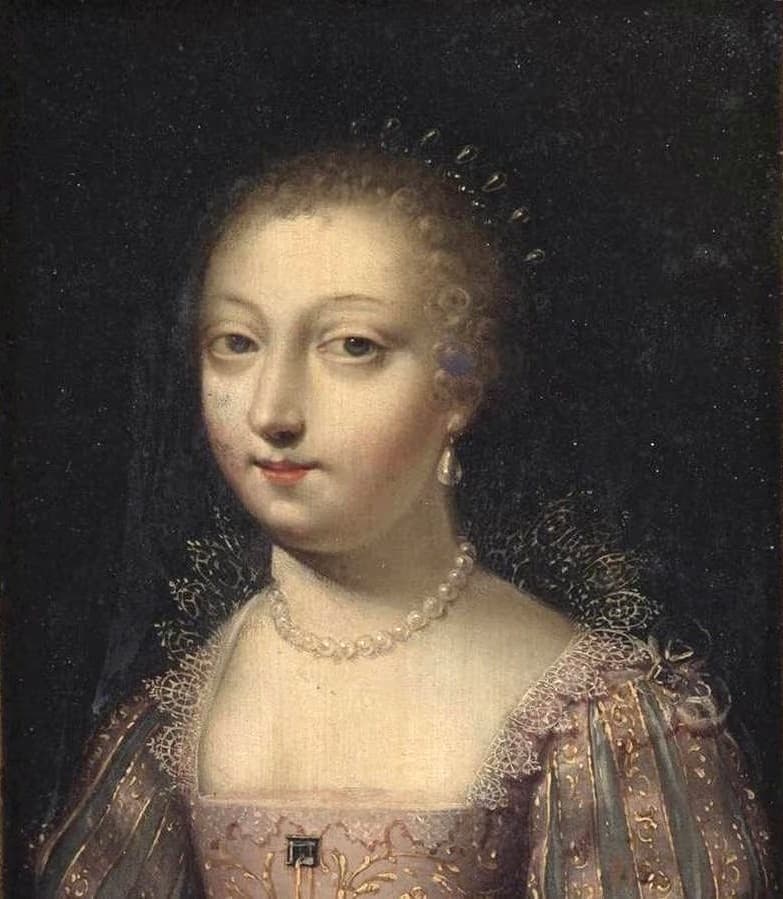
It is in the narrow room of the Hôtel d'Alsace, rue des Beaux-Arts in Paris, that Robert Ross finds his old friend this autumn of 1900. The faded wallpaper peels at the corners; a smell of stale tobacco and withered flowers hangs in the dimness. They have known each other for nearly twenty years, and it was to Robert that Wilde entrusted, upon leaving Reading, the manuscript of De Profundis. The faithful friend comes today not for the public legend, but to hear the man speak, one last time, of all he has loved and lost.
—Oscar, do you remember our first meetings: already that flower in your buttonhole, that velvet. Why did you stage yourself like that in the streets of London?
My dear Robbie, you knew me when I still wore my velvet breeches and my lily as others wear a sword. People thought I was disguising myself; in truth, I was inventing myself. I always believed that the first of all works of art a man can produce is his own existence — and that costume is its first sentence. A sunflower in the buttonhole said more about aestheticism than ten lectures. They took me for an eccentric; I was simply consistent. To display beauty gratuitously, without utility, without morality: that is what scandalised the bourgeois. You know better than anyone that I never separated art from the way of living.
People thought I was disguising myself; in truth, I was inventing myself.
—When you were writing Dorian Gray, you read me pages. That idea of a portrait that ages in place of the man — where did it come from?
You were there, indeed, among the few to whom I read before the printer profaned my sentences. The Picture of Dorian Gray is not a moral fable, whatever the indignant pastors said. It is a meditation on what beauty costs when you take it as your only god. I wanted a face to remain pure while the soul, on the canvas, becomes corrupt — for sin always leaves its mark somewhere. In my Preface, I wrote that the aim of art is to reveal art and conceal the artist. They searched Dorian to find me; they found only symbols. All art is surface and symbol, Robbie, and those who go beneath the surface do so at their peril.
Sin always leaves its mark somewhere.
—At the premiere of The Importance of Being Earnest in 1895, the audience laughed so much they interrupted the actors. How do you create that laughter?
Ah, that evening! You were in the audience, and you told me afterwards that the actors had to wait for the audience to catch its breath. The secret is simple and no one wants to believe it: I tell the truth, but backwards. The audience laughs because it recognises itself in the reversed mirror of its own hypocrisies. The Importance of Being Earnest, like Lady Windermere's Fan, is merely a comedy of manners where every epigram is a needle slipped into Victorian lace. 'The truth is rarely pure and never simple' — that is the kind of phrase that makes you laugh at night and think the next day. Paradox is my way of being serious without seeming so. They think I am joking; I have only ever said what everyone knows and no one dares.
I tell the truth, but backwards.
—You were often reproached for your witticisms, as if they were frivolous. Do you feel misunderstood behind the mask of the brilliant talker?
The mask, my friend, always says more than the face. They took me for a maker of bon mots because I refused to weep in public. Yet the epigram is as demanding a discipline as the sonnet: you must enclose an entire thought in the space of a sigh. At the dinners at the Café Royal, I spent hours on a single formula, like a goldsmith on a clasp. Fools thought it was improvisation; you saw me work. Victorian society does not forgive being amused while being instructed — it prefers the sermon that bores to the paradox that awakens. I wanted to make thought light so that it would penetrate more deeply. It is a charity for which they made me pay dearly.
The mask always says more than the face.
—I must ask you, Oscar: in that same year 1895, after the double triumph, came the arrest. Did you see the fall coming?
I saw it, Robbie, and I did nothing to avoid it — that is my true trial. I was at the summit: two plays running, London at my feet, and I walked toward the precipice with the elegance of a man going down to dinner. They convicted me for 'gross indecency,' those clerkly words that the Criminal Law Amendment Act had forged in 1885. But what they were judging, at bottom, was not an act: it was a way of being in the world, too free for a century that believed itself virtuous. I had built my life as a work of art; it took only a trial to drag it through the mud. Pride ruined me as much as the law. I accuse no one — I wanted everything, and one only has everything in order to lose it.
I walked toward the precipice with the elegance of a man going down to dinner.
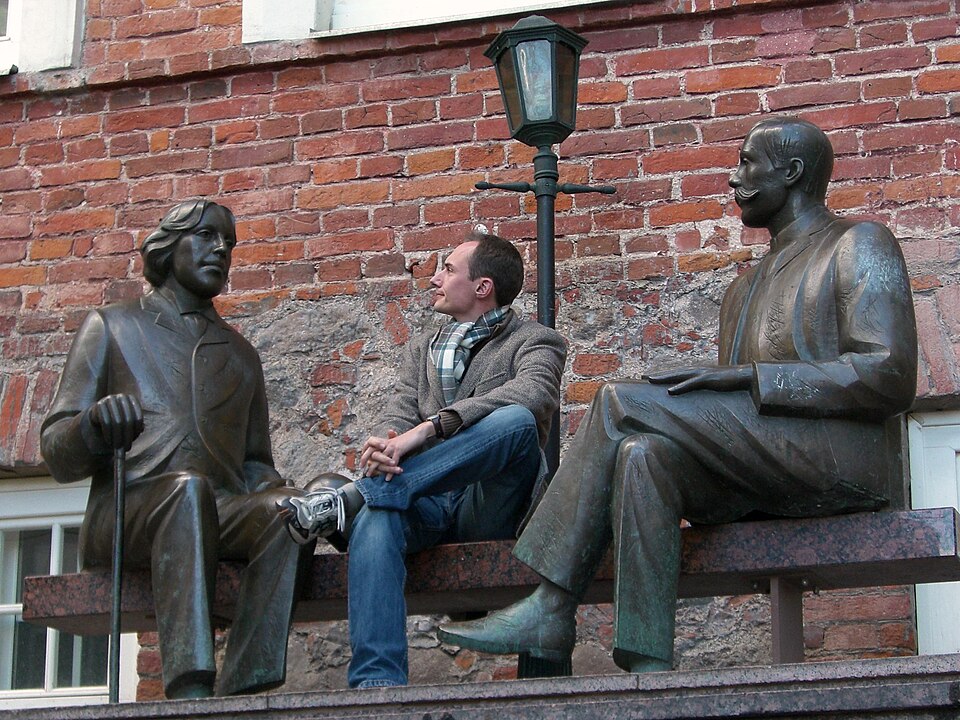
—At Reading, you were subjected to hard labour, to that wheel one turns without purpose. What remains of a man after that?
What remains is what suffering could not destroy, and that is strangely little and much at once. Turning that wheel that grinds nothing, breaking stones that build nothing — that is the invention of a society that believes it punishes by stupefying. It broke my body, it is true. But it also stripped me of everything that was artificial. Before, I believed that pain was ugly; in prison I learned that it is the only ground on which the soul stands upright. From those walls came my last two texts, De Profundis and The Ballad of Reading Gaol. I understood then that life must be held as an art, not as a series of experiences. You who received that manuscript from my hands know that I never wrote anything truer.
In prison I learned that pain is the only ground on which the soul stands upright.
—That Ballad, you wrote it after the execution of a fellow prisoner. Why did humour, your great weapon, finally give way there?
Because there are mornings when a man is hanged, and before the gallows the spirit falls silent out of decency. I saw a soldier walk to the gibbet who had killed the woman he loved, and I understood that his fate was ours all. For each man kills the thing he loves, the coward with a kiss, the brave man with a sword. All my life I had danced on paradoxes; there, I no longer felt like dancing. The Ballad came out of me like a cry held back for two years. For the first time, I was no longer writing to dazzle a salon but for the men in grey who turned the wheel beside me. Wit amuses the living; only pity speaks to the condemned.
All my life I had danced on paradoxes; there, I no longer felt like dancing.
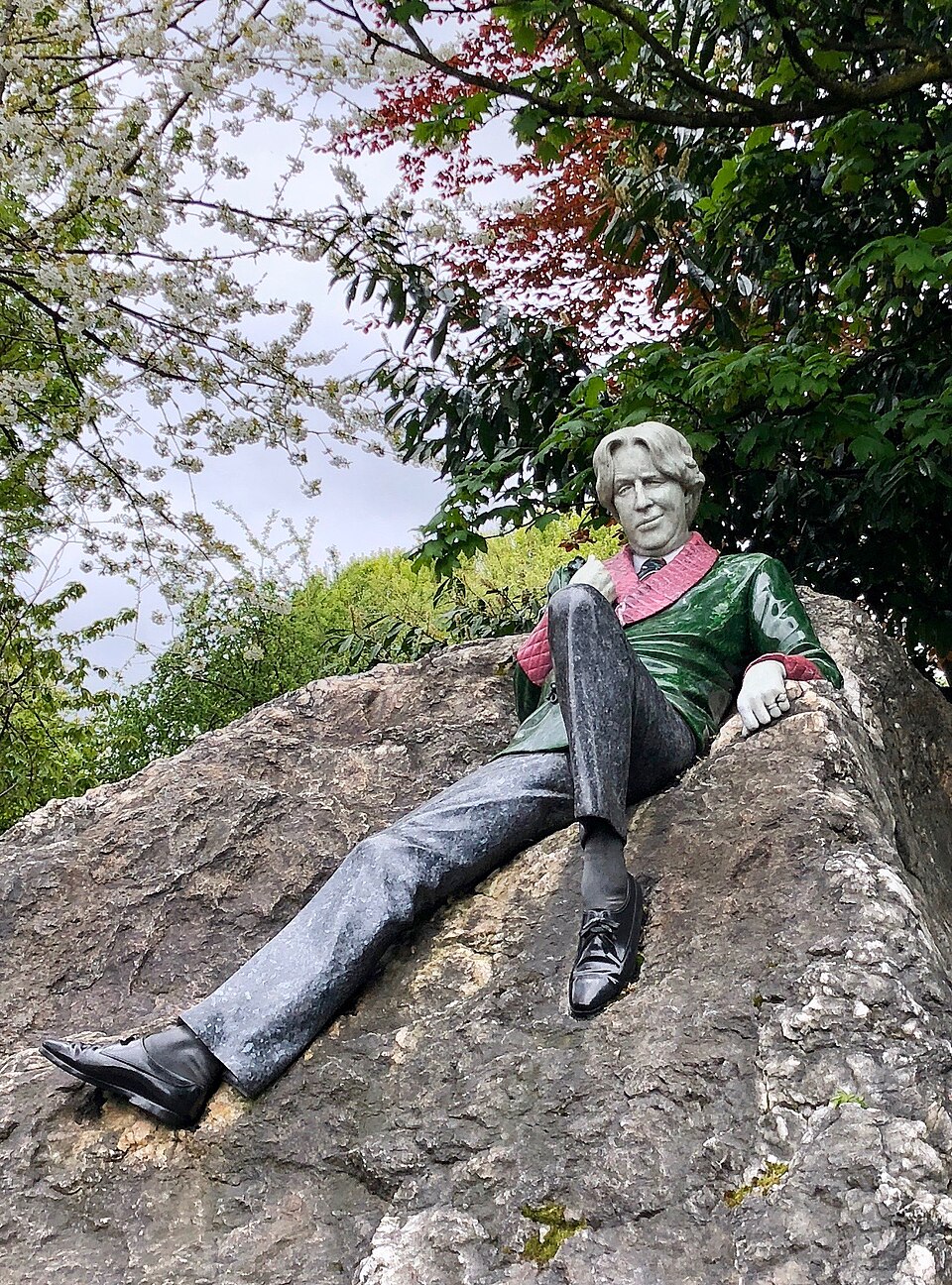
—You always defended art for art's sake. After all you have been through, do you still believe that art should serve no purpose?
More than ever, and yet differently. Young, I proclaimed that art has no end but its own beauty, and I maintain it: as soon as you ask it to be useful, it lies or preaches. But I learned something my youth ignored — that the useless can save. Those verses I wrote in a cell served no purpose, and they kept me alive. Beauty does not teach, it does not correct, it does not even fully console; it merely exists, and that is how it is divine. Dorian Gray already said it in its own way: the surface is everything, provided you put the whole soul into it. Art for art's sake, yes — but I now know what it costs the artist.
The useless can save.
—When I once received you for dinner, you said that living was the rarest of arts. Do you still think so, here, in this room?
I do, Robbie, even between these walls where the wallpaper insults me daily. Living is the rarest of arts because most men are content to exist — they breathe without ever composing themselves. I wanted to make each day a well-turned sentence: the morning for correspondence and laziness, which is the highest of occupations, the afternoon for slow writing, the evening for conversation, which is the only literature that does not lie. They will say I wasted my life. I reply that I lived it fully, which is different and harder. Glory and gaol, velvet and sackcloth: I have worn everything, and one cannot say that I was bored.
Most men are content to exist; they breathe without ever composing themselves.
—You live here under the name of Sebastian Melmoth, far from London. Why that pseudonym, and why Paris as a final refuge?
Because a fallen man must at least choose his mask, and this one suits me — Melmoth the wanderer, that damned soul who crosses the centuries without finding rest. England drove me out; I will not give it the alms of my return. Paris, for its part, always understood me: it is here that I wrote Salomé in your language, here that they take the artist seriously even when he is ruined. I have nothing left — no money, no home, no name that is spoken without lowering the voice. But I have this city, the mediocre wine of this neighbourhood, and a few faithful friends like you who climb these stairs. The rest I owe to my genius, and genius is the only thing creditors cannot seize. To live or to die matters little; it is only a matter of doing it with style.
A fallen man must at least choose his mask.
This imaginary interview was generated by artificial intelligence from sources documented in Oscar Wilde's profile. It dramatises what the figure might have said based on what we know about them, but does not constitute attested historical testimony. For primary sources and factual documentation, refer to the full profile.