Imaginary interview with Oscar Wilde
by Charactorium · Oscar Wilde (1854 — 1900) · Literature · 6 min read
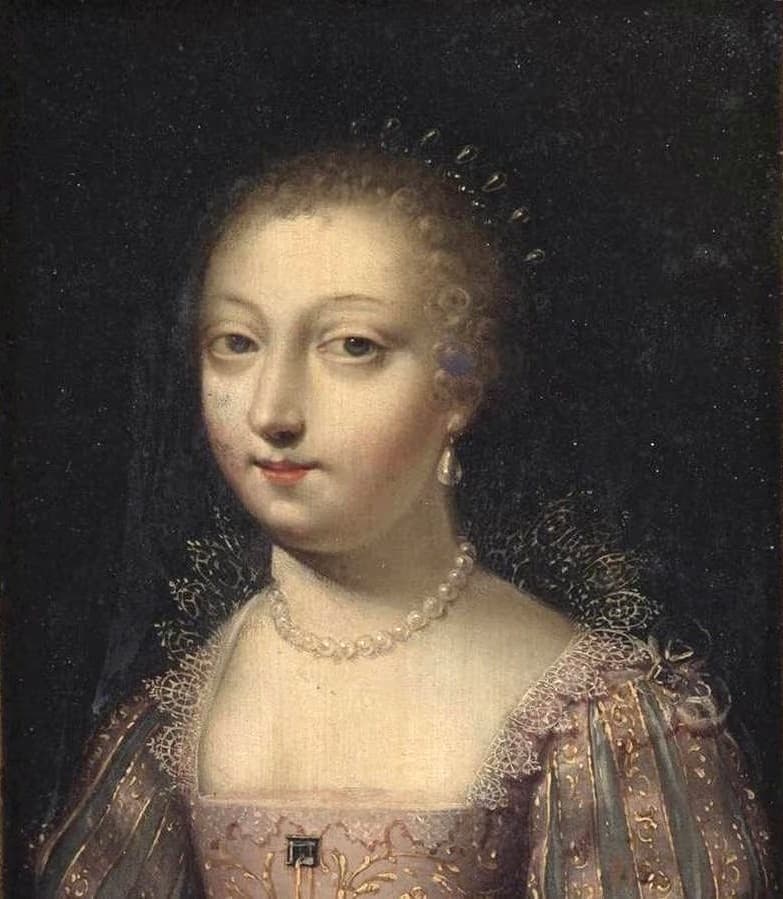
Paris, November 1900. In a cramped room at the Hôtel d'Alsace, rue des Beaux-Arts, an emaciated man receives visitors, draped in a threadbare dressing gown, his smile intact despite ruin. Under the pseudonym Sebastian Melmoth, Oscar Wilde grants one last interview, between fits of coughing and a glass of lukewarm champagne.
—How did you come to parade velvet breeches and a sunflower through the streets of London?
You see, I decided very early that the greatest masterpiece I would compose would be neither a play nor a novel, but myself. From my days at Magdalen College, I adopted velvet, silk stockings, and that flower — lily or sunflower — in my buttonhole, because a well-dressed man is already a protest against mediocrity. Upon my arrival at New York Customs in 1882, I was asked what I had to declare, and I replied that I had nothing to declare except my genius. The bourgeois thought it insolence; it was a profession of faith. Life itself can be shaped like a work of art, and it would be unforgivable to leave it unfinished out of tailor's laziness.
The greatest masterpiece I would compose would be neither a play nor a novel, but myself.
—Why did you make paradox and epigram your weapons of choice?
Because the truth, my friend, is rarely pure and never simple — and one must serve it with a little salt to make it digestible. The epigram is the only form of violence permitted to a gentleman: you kill a piece of foolishness with a phrase, and the victim thanks you with a laugh. Victorian society loves to believe itself virtuous; my job is to turn its certainties inside out, like a glove, to show the lining. In The Importance of Being Earnest, I did nothing but take trivialities seriously and treat serious matters with perfect lightness. The public thought they were watching a comedy; they were watching their own trial, and they laughed heartily, not recognizing themselves.
The epigram is the only form of violence permitted to a gentleman.
—Do you remember the opening night of that comedy, in 1895?
Ah, that February evening at the St James's! I remember an audience laughing so hard, in waves, that the actors had to stop and wait, motionless, for the house to catch its breath. There is no more intoxicating music in the world than the laughter of eight hundred people who think themselves witty because they understood they were being mocked. I was at my peak then: two plays running, London at my feet, my gold-tipped cigarette between my fingers. I did not know — how could I? — that the same week the city laughed at my words, a man was preparing in the shadows to make me weep for two years. Comedy and catastrophe often share the same date.
Comedy and catastrophe often share the same date.
—What did you want to prove by writing your only novel, the story of that portrait that ages in a man's place?
That all art is both surface and symbol, and that those who go beneath the surface do so at their peril — I wrote it at the head of the book, as a warning that is never read. Dorian Gray was born of this fixed idea: what if beauty could be a mask that never fades, while the soul secretly rots in an attic? I wanted a Faustian tale without a visible devil, where the pact is signed out of pure vanity. I was accused of immorality; but a book is neither moral nor immoral, it is well written or badly written, that is all. The portrait speaks the truth that the face refuses — and that is precisely why it had to be hidden.
A book is neither moral nor immoral, it is well written or badly written, that is all.
—You often speak of 'art for art's sake': what do you mean by that?
That the aim of art is to reveal art and conceal the artist. A rose is not useful, and that is why it is perfect; it serves only to be beautiful, and the world is grateful for it. That is the Aestheticism I received at Oxford from Walter Pater and John Ruskin, then pushed to its ultimate consequences. People want art to teach morality, console the widow, edify the apprentice; nonsense. Art proves nothing, not even its own existence, and that is its sovereignty. When I wrote my preface to Dorian Gray, I was not defending a book; I was defending beauty's right to have no purpose. The symbol is worth more than the lesson, because it leaves the reader the honor of understanding alone.
A rose is not useful, and that is why it is perfect.
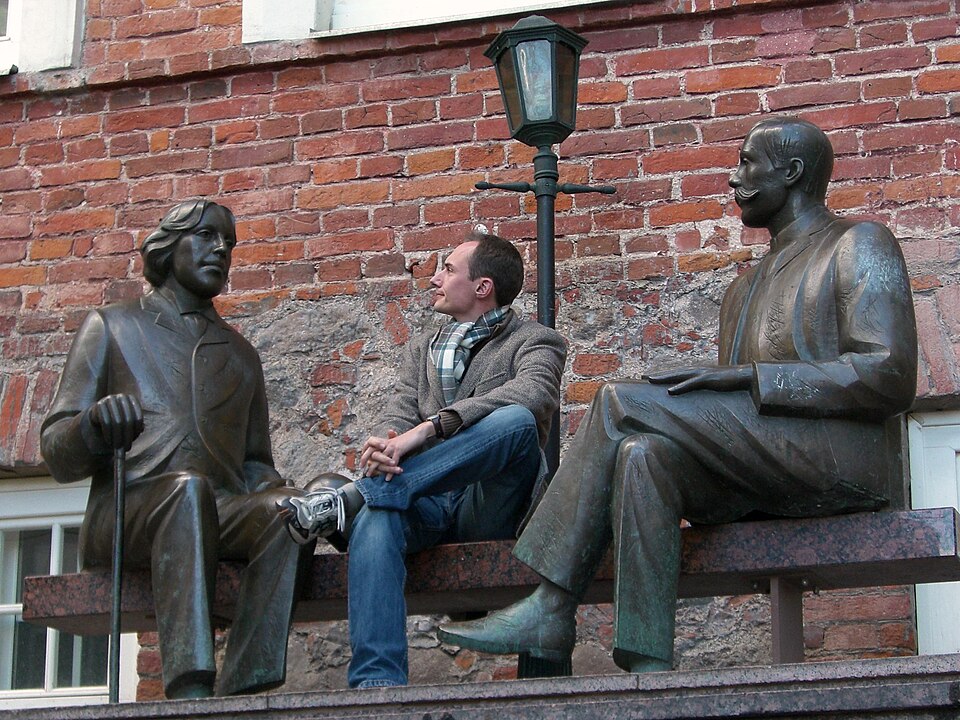
—How would you describe the shock of your arrest, at the height of your glory?
Imagine a man dining at the Café Royal, champagne in hand, who finds himself a few weeks later on the dock of a courtroom, accused of 'gross indecency' under a law passed in 1885. That was my fall, as abrupt as a change of scenery in a theater. I had been acclaimed; I was sentenced to two years of hard labor. To those who asked me to justify myself, I spoke of that love that dare not speak its name, that great affection of an older man for a younger, such as Plato made the basis of his philosophy. The room shuddered, then fell silent. I believe that day I delivered the finest of my speeches — and lost the most important of my trials.
I had been acclaimed; I was sentenced to two years of hard labor.
—What remains of a dandy after two years in Reading Prison?
They put me on the wheel, that treadmill one turns for hours without it grinding anything — the perfect cruelty being uselessness. The velvet and the gold-tipped cigarette belonged to another, to a dead man I was mourning. But I will surprise you: prison taught me what glory had hidden. I had forgotten that every small action of daily life makes or unmakes character, and that one must therefore understand life as an art, not as a series of experiences. It was in that cell that I wrote De Profundis, that long letter to the one who had ruined me. Suffering, I discovered, is the only ground on which one does not cheat. One does not wear a buttonhole there.
Suffering is the only ground on which one does not cheat.
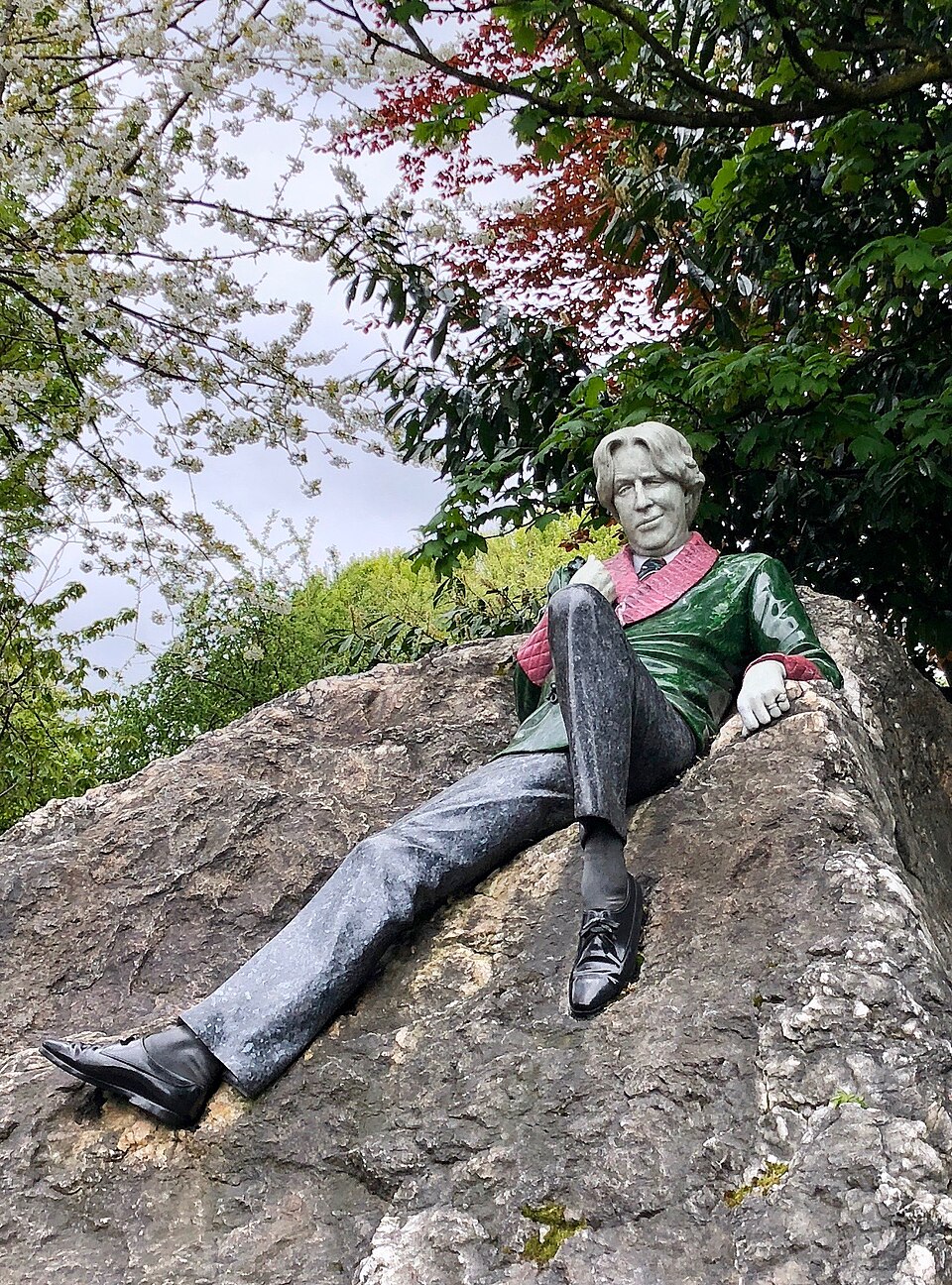
—Why did you draw a poem from the execution of a fellow prisoner?
Because one morning at Reading, they hanged a man who had killed the woman he loved, and I understood, watching him walk to the gallows, that we were all brothers. For each man kills the thing he loves, let everyone hear it clearly: the coward does it with a kiss, the brave man with a sword. That is the heart of The Ballad of Reading Gaol. I had spent my life chiseling epigrams to make drawing rooms laugh; it took a rope and a sheet of quicklime for my pen to stop joking. For the first time, I was not writing to shine, but because I could not do otherwise. That is, I believe, the only sincere thing I have ever published.
For each man kills the thing he loves: the coward does it with a kiss, the brave man with a sword.
—Why do you now live under a false name, far from England?
Because Oscar Wilde is a name no longer spoken in London without lowering one's voice, and a ruined man must at least afford himself the luxury of a fine pseudonym. Sebastian Melmoth — Melmoth like the cursed wanderer of my great-uncle Maturin's novel, condemned to roam from century to century. The costume suits me, don't you think? I live here, in Paris, in this room where the wallpaper and I are waging a death struggle; one of us must go. I no longer have my house on Tite Street, nor my dinners, nor Constance, nor my sons. I have left irony, which is the politeness of despair, and a few faithful friends like Robert Ross. One survives anything, you see — except, perhaps, the decoration of this room.
The wallpaper and I are waging a death struggle; one of us must go.
—Imagine you are still read a century from now: what would you like to remain of you?
What a dangerous question to ask a man who has never been able to resist anything except temptation! If I could believe that I would be read in the year 2000, I would want them to laugh first — to smile at my paradoxes, as they smiled at the St James's — and then to stop, troubled, upon rereading the Ballad. I will no doubt be buried here, in some corner of Paris, under a stone that no one will visit; or perhaps, who knows, under a monument that strangers will come to kiss. Posterity has such whims. An artist should expect nothing from it, except that it finally confuses the man and the work in the same forgiveness. I put my talent into my books and my genius into my life: it is the latter, I fear, that will be reproached to me the longest.
I put my talent into my books and my genius into my life.
This imaginary interview was generated by artificial intelligence from sources documented in Oscar Wilde's profile. It dramatises what the figure might have said based on what we know about them, but does not constitute attested historical testimony. For primary sources and factual documentation, refer to the full profile.