Imaginary interview with Pablo Picasso
by Charactorium · Pablo Picasso (1881 — 1973) · Visual Arts · 6 min read
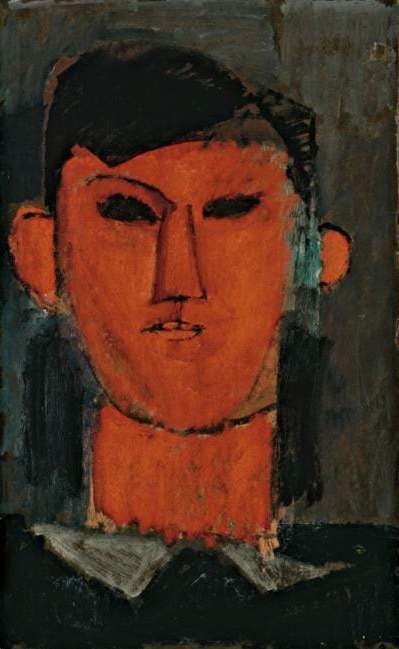
Mougins, winter 1972. The master receives us at the villa Notre-Dame-de-Vie, between a table covered with Vallauris ceramics and a barely begun canvas. At ninety-one, his eye remains that of a curious wild beast; he speaks quickly, mixing French and Spanish, never letting go of the brush.
—How do you remember your very first steps, having grown up with a painter father?
My father taught drawing, and I drew before I spoke. In Barcelona, in 1895, I was made to take the exam for the Llotja: candidates were given a month; I finished everything in one day. My father looked at my boards, handed me his brushes and palette, and never took them back. You understand, it wasn't pride on my part — it was an almost cruel certainty. They say I was a child prodigy; I would rather say I never knew how to be a child. Very young I painted like Raphael; it took me a whole life to learn to paint like a child. Perhaps that is my real exam, and I did not pass it in one day.
Very young I painted like Raphael; it took me a whole life to learn to paint like a child.
—What happened in 1907, before that canvas that your friends initially rejected?
Les Demoiselles d'Avignon. I had wandered into the Trocadéro museum, before those dusty African masks, and something broke in me — in the good sense. Those faces imitated nothing; they conjured. So I undid my women, gave them faces of wood and angles. When I showed the canvas, the silence was awful. Braque came, looked for a long time, and finally told me that I wanted him to drink petroleum so he would spit fire. Even my friends thought I had lost my mind. But painting is not a polished window: it is a weapon against the lazy eye. That day, I did not paint a picture; I opened a door that no one could close.
Painting is not a polished window: it is a weapon against the lazy eye.
—The word 'Cubism' was often thrown as a mockery. How would you define it, you who invented it with Braque?
Cubism! A word from a hasty critic, who thought he saw little cubes. With Braque, we were like two climbers roped together; we almost stopped signing, our canvases were so alike. With Ma Jolie, in 1911, I shattered the guitar into facets until the motif became almost untraceable — and yet the title came from a song refrain, from the street, from the sidewalk. You see, I paint objects as I think them, not as I see them. Later we pasted real newspaper onto the canvas, a piece of reality torn and stitched back. They accused us of destroying form. But every act of creation is first an act of destruction: you must break the jug to understand how the water was held inside.
You must break the jug to understand how the water was held inside.
—Do you remember the moment when the Spanish Civil War entered your studio?
April 26, 1937. Guernica, a small Basque town, crushed on market day by the bombs of the Condor Legion. The Republican government had commissioned a work for the Paris Exposition; I had hesitated, and suddenly I hesitated no longer. I painted in black, white, and gray — no red blood, pain has no color, it has the tint of an old newspaper. Seven meters seventy-six of screams: the disemboweled horse, the mother, the lamp like an eye of an absent God. I said then, and I maintain, my horror of the military caste that plunged Spain into an ocean of pain and death. A painting does not stop bombs. But it ensures that no one can ever say they did not know.
No red blood: pain has no color, it has the tint of an old newspaper.
—There is a story about a meeting with a German officer during the Occupation. What was said that day?
While the Nazis occupied Paris, they barely tolerated me — my art was for them entartete Kunst, 'degenerate art,' banned in Germany. I did not leave France; I continued painting, and I was watched. An officer came to the studio. He saw a reproduction of Guernica on my table, picked it up, and asked, 'Did you do that?' I replied, 'No, you did.' There is nothing more to add. Staying, in those years, was already painting; not fleeing was one more canvas. People think a painter's courage lies in his colors; sometimes it lies only in not lowering his eyes.
'Did you do that?' — 'No, you did.'
—Why did you choose to publicly join the Communist Party in 1944?
At the Liberation of Paris, in 1944, I took my party card for the Communist Party, and I have never blushed for it. People were amazed: a rich, famous painter, why? I read L'Humanité in the morning in bed, before even getting up, as one gets news from family. I said, before the peace partisans, that my painting was communist — not that I painted slogans, but that the brush and pencil were my weapons to penetrate ever deeper into the knowledge of men. I had seen my country bleed, I had seen the Occupation. Joining was not a salon fashion; it was taking my place alongside those who had resisted in the shadows while I painted in mine.
The brush and pencil were my weapons to penetrate ever deeper into the knowledge of men.
—How did a simple dove become, in 1949, an emblem for the whole world?
In 1949, I was asked for an image for the World Peace Movement. I drew a white dove, wings open, on a lithograph — a stone technique that allows thousands of copies, thus putting the image in every hand. My father painted pigeons; I saw them flutter all through my childhood; I only gave the bird back its old mission. The next day, my dove was on walls, in marches, in countries I would never see. It is strange: Guernica required seven meters of canvas, and peace fit into a line. A true image does not need to be large; it needs to be naked, like a cry one has finally learned to speak in silence.
Guernica required seven meters of canvas, and peace fit into a line.
—At nearly seventy, what did you seek in earth and fire, in Vallauris?
Vallauris, on the French Riviera, an old potters' village half asleep. I arrived there in 1946, and the earth took me like a new fever. The potter's wheel turned, and under my fingers a vase became a woman, a dove, an owl — more than four thousand pieces, they say, I never counted. People asked why the great painter was playing with kitchen clay. But ceramics is painting you can hold in your hands, and that goes through fire to know if it has lied. I even covered the walls of an old chapel with War and Peace. Changing materials, you see, is my way of not aging: each new craft gives me back my youth.
Ceramics is painting you can hold in your hands, and that goes through fire to know if it has lied.
—Why continue working every day, at over ninety, when glory has long been achieved?
Glory! It is a coat put on a man's back to keep him less cold at his own death. I get up, and I paint. They say I have left over twenty thousand works — canvases, engravings, terracottas; it is because I never knew how to stop, because stopping would frighten me. I am superstitious, I keep old shoes, a baby tooth of my son, locks of hair; destroying one of my canvases would bring me bad luck. So everything remains, everything piles up around me in Mougins like an endless studio. Working is not a duty for me; it is my breathing. The day I put down the brush, it will not be laziness — it will be death, and I intend to make it wait.
Glory is a coat put on a man's back to keep him less cold at his own death.
—You have so often revisited the old masters. What were you seeking, for example, in Velázquez?
In 1957, I locked myself in with Velázquez. Las Meninas — I made fifty-eight variations in a few months, like a man circling a cathedral to see it at every hour of the day. People think copying a master is bowing; for me it is a fight, almost hand-to-hand. I took his light, his little infanta, and put them through the mill of my eye. The old masters are not behind us like tombs: they are ahead, waiting around the corner to see if we dare. I have always painted what I think, not what I see — and what I think of Velázquez is that he is still alive, and that he watched me paint over my shoulder.
The old masters are not behind us like tombs: they are ahead, waiting around the corner.
This imaginary interview was generated by artificial intelligence from sources documented in Pablo Picasso's profile. It dramatises what the figure might have said based on what we know about them, but does not constitute attested historical testimony. For primary sources and factual documentation, refer to the full profile.