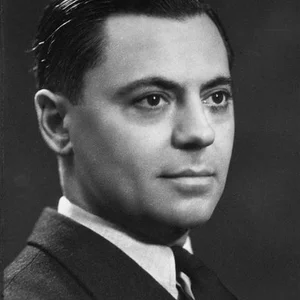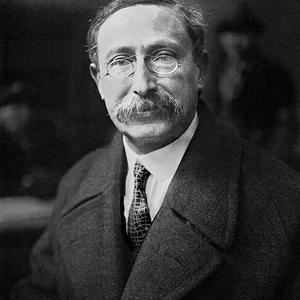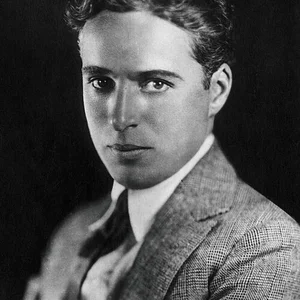

British actor, director and composer (1889-1977), pioneer of silent cinema. Creator of the iconic Tramp character, he shaped film history through his comedic genius and social commentary, most notably in The Great Dictator (1940).
Charlie Chaplin(1889 — 1977)
Charlie Chaplin
Royaume-Uni, Royaume-Uni de Grande-Bretagne et d'Irlande
7 min read
Frequently asked questions
Key Facts
- 1914: Film debut and creation of the Tramp character
- 1921: Release of The Kid, considered a masterpiece of silent cinema
- 1931: Direction of Modern Times, a critique of industrialization and assembly-line labor
- 1940: Direction and performance in The Great Dictator, a fierce satire of Nazism and Adolf Hitler
- 1952: Exile to Switzerland following political controversies
Works & Achievements
Chaplin's first feature film, blending comedy and emotion. This autobiographical film about a tramp taking in an orphan revolutionized cinema by proving that a single film could make audiences laugh and cry.
A masterpiece of silent cinema in which the Tramp seeks his fortune in the Klondike. Contains scenes that have become iconic, such as the dinner roll dance and the shoe-eating meal.
A silent film released at the height of the talkie era, considered one of the greatest films of all time. The love story between the Tramp and a blind flower girl delivers a devastatingly moving ending.
A satire of industrialization and assembly-line labor. The Tramp, a factory worker crushed by the machine, embodies the resistance of the individual against the dehumanization of the modern world.
Chaplin's first fully talking picture and the first major cinematic satire of Hitler. The final speech — a stirring call for peace and humanity — remains one of the most celebrated moments in film history.
A largely autobiographical film about an aging comedian in the music-hall world of London. Chaplin also composed the score, including the main theme, which won an Academy Award in 1973.
Anecdotes
As a child, Charlie Chaplin grew up in extreme poverty in London. At the age of seven, he was placed in a workhouse along with his brother Sydney, an experience that would profoundly shape his work and his sensitivity to social injustice.
The character of the Tramp was born almost by accident in 1914 at the Keystone studios. Chaplin recounted having improvised the costume — baggy trousers, a tight jacket, a bowler hat, a cane, and a moustache — by rummaging through other actors' wardrobes, and that the character imposed itself on him the moment he put the outfit on.
At the premiere of The Great Dictator in 1940, Chaplin was one of the few artists to dare publicly ridicule Hitler. The two men had been born four days apart in April 1889, and Chaplin exploited the physical resemblance created by the moustache to craft a biting satire of Nazism.
In 1952, as he was leaving the United States to promote his film Limelight, the FBI banned him from returning to American soil at the height of McCarthyism. Chaplin then settled in Switzerland with his family and would not return to the United States until 1972, to receive an honorary Oscar to a twelve-minute standing ovation.
Chaplin was an obsessive perfectionist. For a scene in The Gold Rush in which he eats a shoe, he had the prop made from licorice and shot the sequence so many times that several actors suffered from nausea. Some scenes in his films required more than 200 takes.
Primary Sources
I was hardly aware of a crisis because we lived in a crisis of poverty all our lives. It was father's death that obligated the parish to take care of us. I was hardly seven years old when I entered the Lambeth workhouse.
I'm sorry, but I don't want to be an emperor. That's not my business. I don't want to rule or conquer anyone. I should like to help everyone, if possible — Jew, Gentile, black man, white.
Nobody but Chaplin could have made Modern Times. It has his signature on every frame. The little tramp, bewildered by the machinery of modern life, is as eloquent as ever in his pantomime protest against the age of the machine.
The Tramp is a gentleman, a poet, a dreamer, a lonely fellow, always hopeful of romance and adventure. He would have you believe he is a scientist, a musician, a duke, a polo player. However, he is not above picking up cigarette butts.
Key Places
A working-class neighbourhood in south London where Chaplin grew up in poverty. It was there that he discovered music hall and the stage from childhood.
Chaplin built his own studios here in 1917 on La Brea Avenue, where he filmed the majority of his masterworks while maintaining total control over his production.
The estate where Chaplin settled with his family after his exile from the United States in 1952. He lived there for the last 25 years of his life. The manor now houses the Chaplin's World museum.
The company with which Chaplin signed a record-breaking contract in 1916. His twelve Mutual short films are considered among the pinnacles of slapstick comedy.
The venue where Chaplin received his Honorary Academy Award in 1972, welcomed by a twelve-minute standing ovation, one of the longest in the ceremony's history.
Typical Objects

Iconic accessory of the Tramp character, always slightly too small, it contributes to the immediately recognizable comic silhouette.

Inseparable from the Tramp, it is used as a comic prop, twirled with elegance to give the vagabond the air of a gentleman.

Chaplin's earliest works were filmed with these manual cameras from the Keystone and Essanay studios, typical of silent cinema in the 1910s.

The small square mustache, originally a fake, became the trademark of the Tramp and was also used to parody Hitler in The Great Dictator.

Chaplin wore disproportionately large shoes, put on the wrong feet (left on right), to create the duck-footed walk so characteristic of the Tramp.

Chaplin edited his own films with obsessive care. The 35 mm film reels were the central object of his work in the editing room.
School Curriculum
Vocabulary & Tags
Key Vocabulary
Tags
Concept
Daily Life
Morning
Chaplin often woke up late, having worked until the early hours the night before. He would have a light breakfast — tea, toast, and eggs — while reviewing his directing notes. From the morning onwards, he would begin rehearsing gags in front of a mirror, perfecting every facial expression.
Afternoon
The afternoon was devoted to filming at his studios on La Brea Avenue. Chaplin directed, performed, and supervised every detail, tirelessly reshooting scenes until he achieved perfection. He improvised a great deal on set, testing comic ideas with his actors.
Evening
In the evening, Chaplin would retire to the editing room to review the day's rushes. He also composed music on the piano or violin, instruments he played self-taught. He occasionally frequented Hollywood social circles but more often preferred creative solitude.
Food
Chaplin appreciated the simple British cuisine of his childhood — fish, boiled vegetables, puddings — but also adopted Californian habits with salads and fresh fruit. He was known for his frugality at the table, a legacy of his years of poverty in London.
Clothing
Off set, Chaplin dressed with understated elegance: well-tailored suits, white shirts, and plain ties. This contrast with the Tramp's rags was deliberate — he was keen to distinguish himself from his character in private life.
Housing
In Hollywood, Chaplin lived in several luxurious Beverly Hills mansions, surrounded by gardens and tennis courts. After 1952, he settled at the Manoir de Ban in Corsier-sur-Vevey, a vast estate overlooking Lake Geneva, with views of the Swiss Alps.
Historical Timeline
Period Vocabulary
Visual Style
Un style visuel en noir et blanc inspiré de l'esthétique du cinéma muet des années 1920, avec des contrastes dramatiques, des textures de pellicule argentique et la silhouette iconique de Charlot.
Sound Ambience
L'univers sonore de Chaplin mêle le cliquetis mécanique des projecteurs du cinéma muet, les mélodies de piano accompagnant les projections, et l'ambiance animée des studios hollywoodiens des années 1920.
Liens externes & ressources
Références
Œuvres
Modern Times (Les Temps modernes)
1936