Imaginary dialogue between Athena and Perseus
by Charactorium · Perseus · Mythology · 6 min read
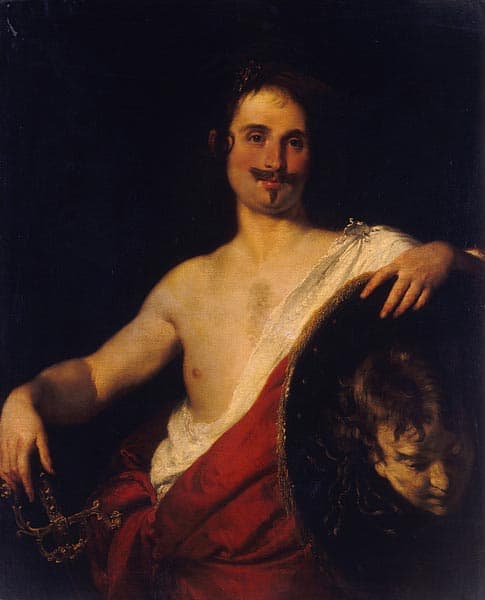
It is in the great hall of the newly raised citadel of Mycenae — stones still warm from the builders' fires, the smell of fresh mortar mixing with sacrificial smoke — that Athena finds Perseus in the weeks after his return from Ethiopia. The polished bronze shield she gave him stands upright against the wall between them, its surface catching the afternoon light like still water. The goddess and the hero know each other in a way that requires no ceremony: she equipped him, watched every step of his quest, and guided his hand more than once without his knowing. Today she comes not to direct, but to understand.
—Perseus, when Polydectes named Medusa's head as your price, did you see his scheme at once, or did the task still feel like a genuine challenge?
Not at once, Athena — I was proud, and young, and the name of Medusa sounded like destiny rather than a trap. It was only far out at sea, with Hermes flying beside me for the first time, that I began to understand: Polydectes never believed I would return. He wanted me gone so he could claim my mother Danaë without interference. The quest that gave me everything I now have — my name, my city, my wife — began as another man's plan to be rid of me. I have spent years deciding whether to be grateful for that irony, and I have never quite resolved the question.
The quest that gave me everything began as another man's plan to be rid of me.
—I placed my shield in your hands and Hermes gave you the harpe. What did it feel like, holding gifts from the gods?
The talaria lifted me before I had finished strapping them — they had their own intention, like a horse that already knows the road. The harpe was lighter than any blade I had trained with, and its edge seemed to hum against the air. But your shield, Athena — that was different. When I held it and saw my own face in its polish, I did not feel power. I felt weight, the kind that belongs to responsibility rather than to metal. Each gift said the same thing without speaking: divine assistance and divine protection are not the same thing. The hand that acts must still be mine. I understood that before I had taken a single step toward Libya.
—I told you never to look at Medusa directly. In that desert moment, raising my shield — did you trust my counsel, or only your fear?
Both, and you deserve the honest answer, you who gave me the very mirror I used. When I finally crept over the Gorgons while they slept, your shield was cold in my left hand, its surface showing me Medusa's form in reverse — small, contained, as if the reflection could hold the danger at a safe distance. Fear was there: the hiss of her hair, the smell of stone and dried blood. But your counsel was steadier than my fear. You had taught me, though never in so many words, that clarity of mind is a sharper weapon than strength of arm. Looking at the reflection rather than the face was not timidity. It was the only kind of courage that works against something whose weapon is the gaze itself.
Clarity of mind is a sharper weapon than strength of arm.
—You carried the harpe, my shield, the talaria, and the helm of darkness. Did any of those gifts feel uncertain in your hands — as if it might not hold?
The helm of invisibility troubled me most. The talaria I had learned quickly — they respond to intention like a good horse responds to the knee. Your shield had already proved itself, and the harpe asked only to be swung true. But the helm of Hades was borrowed equipment, passed through many hands before mine, and I was never certain it fitted a living head the way it must fit a shade. I kept thinking: what if Medusa could smell what she could not see? The gifts of the gods are generous, Athena, but they carry no guarantee. A mortal who trusts them entirely becomes careless; one who distrusts them becomes paralyzed. The only way through is to treat them as tools and hold the judgment yourself.
—You were flying home with Medusa's head already in your satchel when you saw Andromeda. What made you stop and descend?
I was already composing in my mind what I would say to Polydectes when I looked down and saw her — chains, a cliff above a churning sea, the shadow of Ketos circling beneath the surface. I will not pretend the sight of Andromeda was purely moral outrage; she was beautiful, and I was young, and those things cannot be separated entirely. But there was something else underneath. A girl chained to a rock as an offering to a monster is an injustice so plain that only a coward sails past it. I had just cut off a monster's head. I had, it turned out, one more monster's worth of courage remaining in me that afternoon. I was glad to discover it.
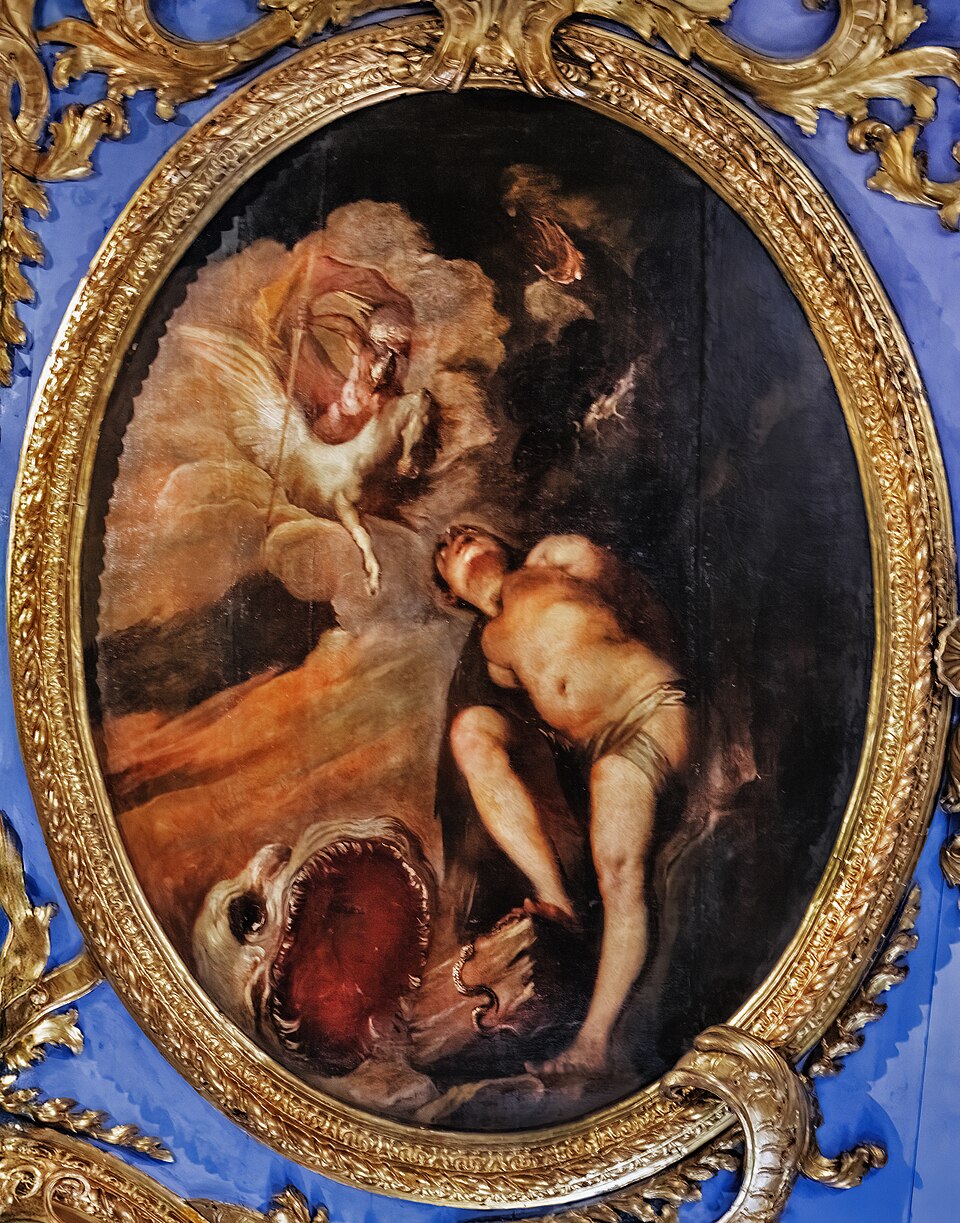
—From rescuing Andromeda to founding Mycenae — how did a hero become a king? Was kingship ever part of your intention?
Never. I grew up on Sériphos watching fishermen haul nets. When Cepheus asked what I wanted in exchange for his daughter's life, I named her hand because nothing else seemed worth more in that moment. The question of where to live afterward was harder. Argos was my birthplace, but my grandfather Acrisius had imprisoned my mother there — I could not return as a conqueror to the city that had cast us out without becoming the very thing the oracle warned of. Mycenae gave me what Argos could not: a foundation I could make my own rather than one I would inherit through blood and old grief. A hero who builds a city is planting something that outlasts the next monster.
—The oracle of Acrisius named you before you were born. You tried to avoid fulfilling it. How did it come to pass regardless?
I knew the prophecy — everyone did. I spent years at a careful distance from Argos and from any gathering where old men might be present. Then the funeral games at Larissa: I threw a discus, the wind shifted, or I misjudged the angle, and a man in the crowd fell. He was Acrisius. He died, I am told, before he knew whose hand had thrown it. I had not sought him out, had not known he was there, had not known he had traveled to Larissa at all. The oracle required none of my cooperation. It simply waited until I stopped watching for it.
The oracle required none of my cooperation. It simply waited until I stopped watching for it.
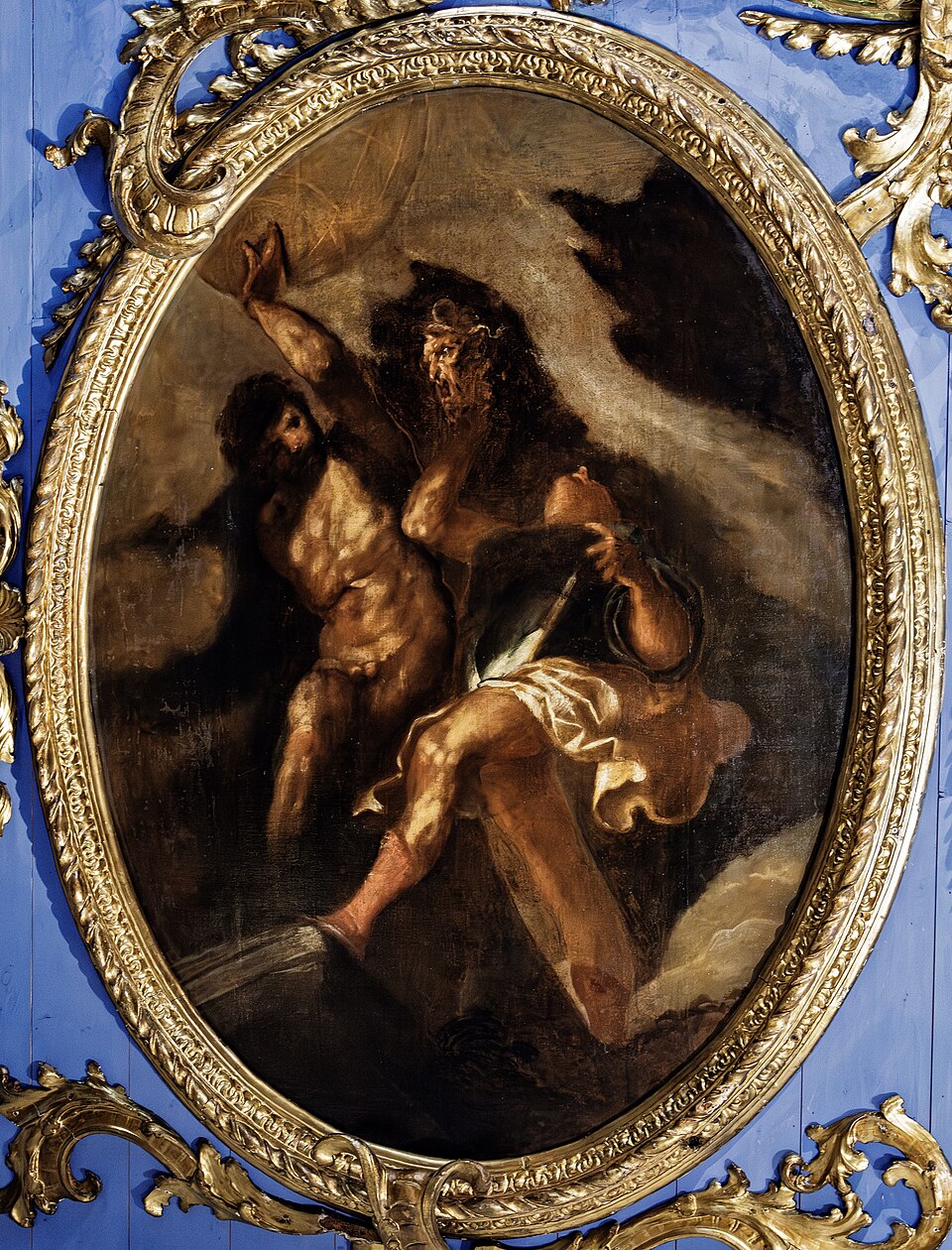
—You are a son of Zeus, armed by me, favored above most mortals — and still the oracle claimed you. Was that not unjust?
Justice is a word for the assembly and the law court, Athena — not for the workings of fate. The gods move in patterns, not verdicts. I was the pattern: the child born to undo the father who fears him, the grandson the prophecy named before Danaë was ever imprisoned. I have made my peace with it, though it took years. Acrisius spent his whole life running from the oracle and died of it anyway, afraid and far from home. I stopped running and built Mycenae instead. The oracle was precise about the death. It said nothing at all about how I should spend the rest of my life — that part was mine to decide, and I decided it with open eyes.
—You returned to Sériphos with Medusa's head and turned Polydectes to stone. What did you feel, looking at what you had made of him?
Less than I expected. I had been telling myself for months that I would feel something large — relief, or triumph, or perhaps the satisfaction of a debt settled. What I felt was tired, and then quietly glad when I found my mother Danaë unharmed. The stone figures standing around the hall, frozen mid-expression, were only evidence that the task was over. Polydectes had tried to use me as an instrument of his own desire, and in the end I had become an instrument of something else entirely — something I still cannot name precisely. You cannot make a life out of the image of your enemies turned to rock. You can only turn and begin building.
—When you returned my shield and Hermes reclaimed the talaria — what was it like, becoming a man who walks on the ground again?
You were there when I placed your shield back in your hands, Athena, and I believe you already know what my face showed. There was relief, and underneath it something harder to name — a grief for a way of moving through the world that was suddenly no longer mine. Flying changes how you think about distance and obstruction; I had come to assume I could simply rise above obstacles rather than walk around them. But Andromeda was waiting, and Mycenae was being built stone by stone, and sons were arriving. The gifts were instruments for a task, and the task was done. What I kept was what they had taught me: that the right instrument changes what is possible, and that the clearest vision of a dangerous thing is sometimes its reflection, not the thing itself.
This imaginary interview was generated by artificial intelligence from sources documented in Perseus's profile. It dramatises what the figure might have said based on what we know about them, but does not constitute attested historical testimony. For primary sources and factual documentation, refer to the full profile.