Imaginary interview with Perseus
by Charactorium · Perseus · Mythology · 7 min read
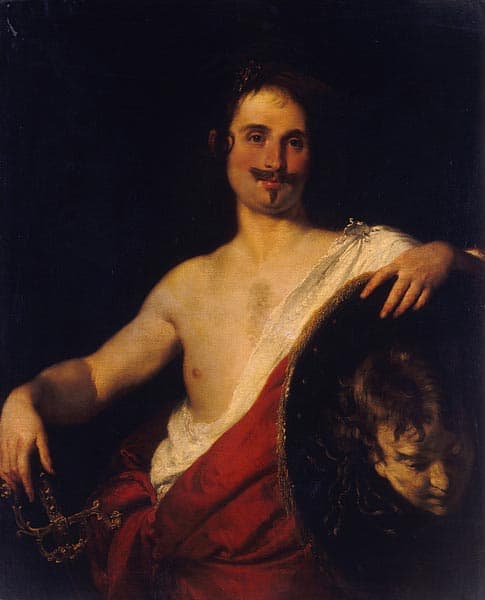
We meet Perseus not in a palace hall but at the edge of the sea, at the rocky coastline of Ethiopia, where salt air still carries — if you listen — the faint echo of chains against stone. He arrives without announcement, the talaria still faintly trembling at his heels, the kibisis slung at his hip. He is the son of Zeus, the slayer of Medusa, the founder of Mycenae: yet what strikes you first, before he has said a word, is how matter-of-factly he speaks of borrowed things.
—You were raised on the island of Seriphos, far from your birthplace of Argos. How did you come to understand that King Polydectes was not testing your courage but simply trying to be rid of you?
I was not blind to it. Polydectes had wanted my mother Danaé from the first year we landed on Seriphos, and I had stood between them as long as my arms were strong enough to matter. When he summoned me and named his price — the head of the Gorgon Medusa — he delivered the request with the ease of a man who already considers the problem solved. He expected me to sail, die quietly somewhere over Libya, and leave Danaé undefended. What he had not calculated was that the gods sometimes take a personal interest in the sons they father. I did not leave in anger; anger is short and makes you careless. I left with something colder — a clear understanding that the task had to be completed exactly because it had been designed to be impossible. A trap, once named, is half undone.
—When you stood before the sleeping Medusa in her cave, you chose to look at her only through the polished surface of Athena's shield. What goes through a man's mind when he must fight something he cannot face directly?
The shield Athena gave me was polished to a brightness that held the whole cave in its surface — the stone walls, the other Gorgons breathing in sleep, and Medusa herself, her serpent-crown coiled and still. I had practised looking at the reflection until the copy felt more solid than the thing it showed. It is a strange discipline, to train your eyes to trust a surface rather than the source — but it is the only kind of wisdom that keeps you alive in the presence of something that turns seeing itself into stone. Force would have done nothing. Even the greatest warrior cannot strike what he cannot look at. The adamantine harpe cut clean because my hand knew exactly where to strike. The eyes stayed on the bronze. That is not cowardice; that is the precise opposite of it.
The eyes stayed on the bronze. That is not cowardice; that is the precise opposite of it.
—Hermes gave you the talaria and the adamantine blade, Athena her shield, and the Graeae's helmet made you invisible to the world. Of all these borrowed powers, which sat most uneasily in your hands?
The helmet of invisibility — the pétase of Hades — was the one that troubled me most. The talaria felt joyful; the harpe felt purposeful; even the shield felt like a conversation between me and Athena, her polished surface holding my reflection alongside hers. But invisibility is a different kind of loan entirely. When no one can see you, you discover very quickly whether you are the person you believed yourself to be. I moved through the camp of the Gorgons unseen, past their breathing and their serpent-crowns, and I understood clearly: the helmet did not make me brave — it simply removed the audience. There is no glory in what no one witnesses. I wore it to survive, not to feel powerful. I returned it the moment the task was done, and I will admit I was glad to be visible again.
—Shield, blade, sandals, helmet — all lent, all returned. What does a hero owe the gods who arm him, beyond simply giving back the tools intact?
Every object I carried on that journey bore the weight of a god's intention as well as the weight of iron or leather. The talaria let me fly; they also meant that Hermes was watching my path. The Aegis turned back the Gorgons in pursuit; it also meant that Athena had judged this mission worthy of her involvement. A hero does not borrow lightly. The obligation is not merely to return the object intact — it is to use it rightly, so that the god who lent it does not look down and regret the loan. When I placed Medusa's head upon the shield afterward, I was not decorating a trophy. I was completing a form of accounting. The power passed through me toward a purpose larger than my own reputation. That is what separates a hero from a brigand who happens to be strong.
—When you first saw Andromeda chained to the rock on the Ethiopian coast, you were returning from killing Medusa — carrying a severed head, far from home. What did you feel in that moment?
I was flying low over the coast of Ethiopia, the kibisis heavy at my side, and I saw what I first took for carved marble — pale against dark rock. Then I saw her move. Andromeda was chained at the wrists and ankles, her hair loose in the salt wind, and she looked up at me with an expression I had not encountered before: not hope exactly, not fear, but the particular exhaustion of someone who has been terrified for so long that the terror has become a kind of stillness. I did not speak first. I circled once, studied the black shape moving beneath the surface of the sea below her, and then I descended. The decision to fight was not the difficult part. The harder thing was meeting her eyes and understanding that saving her would mean staying.
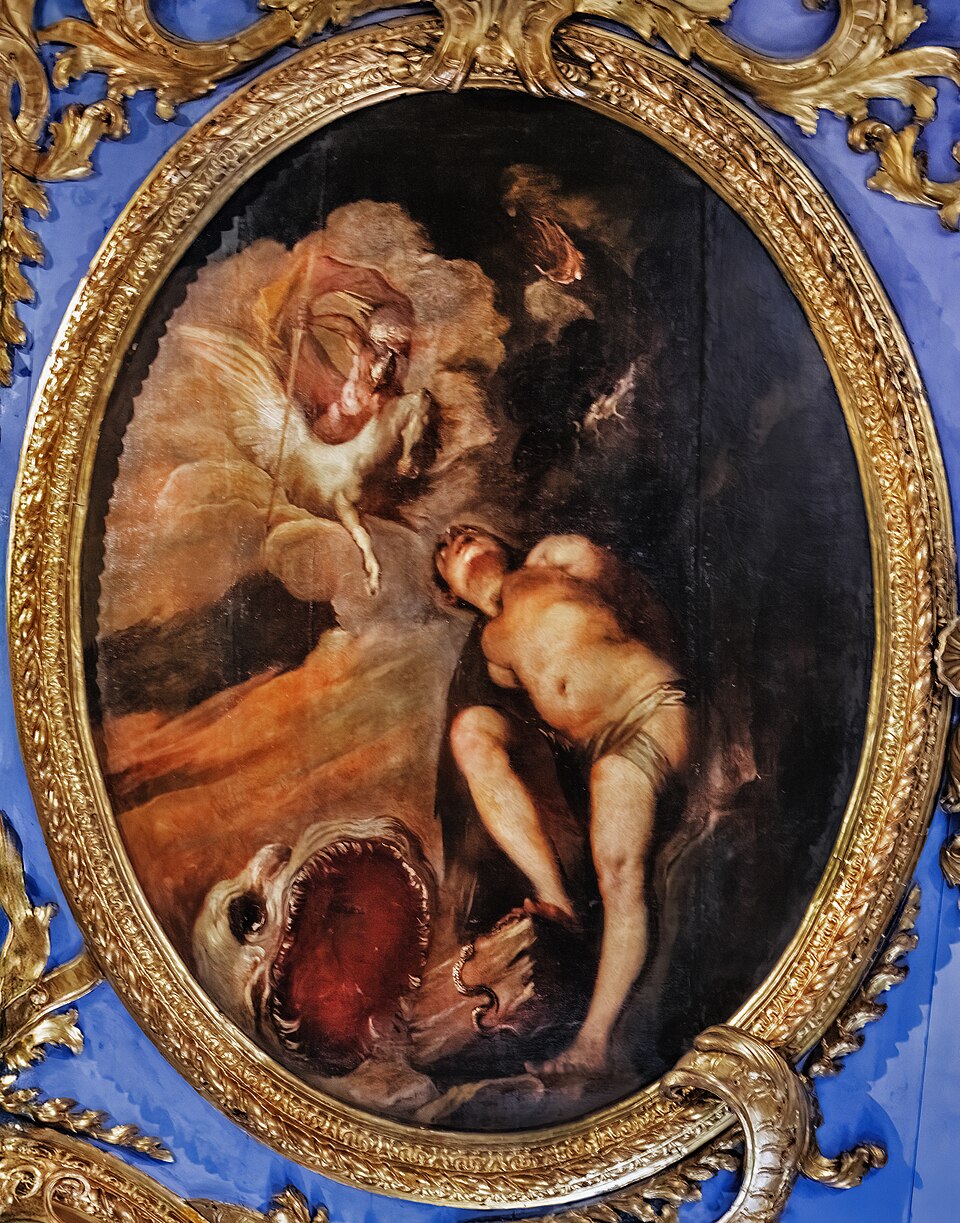
—You killed the sea-monster by showing it Medusa's face — spending the power you had carried across half the known world for your own protection. How did that choice arrive?
There was no careful deliberation. The kibisis was already in my hands and the Ketos was rising from the sea, and I knew in one instant that the harpe alone would not be sufficient against something that size moving through water toward a chained girl. I had used the head sparingly until then — a final defense, not a routine weapon. But Andromeda was still at the rock and the monster's shadow was already across her. I drew out the head and held it toward the wave. The Ketos turned. For a moment it seemed to consider what it was seeing. Then it stopped moving. Stone takes longer with something that large — you watch it set from the outer edges inward, the scales hardening one by one. She saw all of it from the rock. I think that is why, when I freed her, she did not thank me immediately. She was still watching the stone.
Stone takes longer with something that large — you watch it set from the outer edges inward.
—Before your birth, the oracle told your grandfather Acrisius that his daughter's son would kill him. He sealed Danaé in a tower of bronze to prevent it. How does a man live inside a fate decreed before he existed?
Acrisius spent years building walls against a future that had already been set in place before I drew a first breath. The bronze tower, the sealed chest cast into the sea — each measure was a door locked against inevitability. I grew up on Seriphos not knowing the oracle's content; I learned it the way you learn that a road you have already travelled was once considered impassable. The destin written at Argos was not a punishment for anything I had done — it was simply the shape my life was going to take. I say this without pleasure. Acrisius was not a monster; he was a man who received terrible news and responded with the only instrument available to him: confinement. What neither of us could alter was the geometry of it. I did not throw the discus at my grandfather. I threw it into the air at the games, and the wind did the rest.
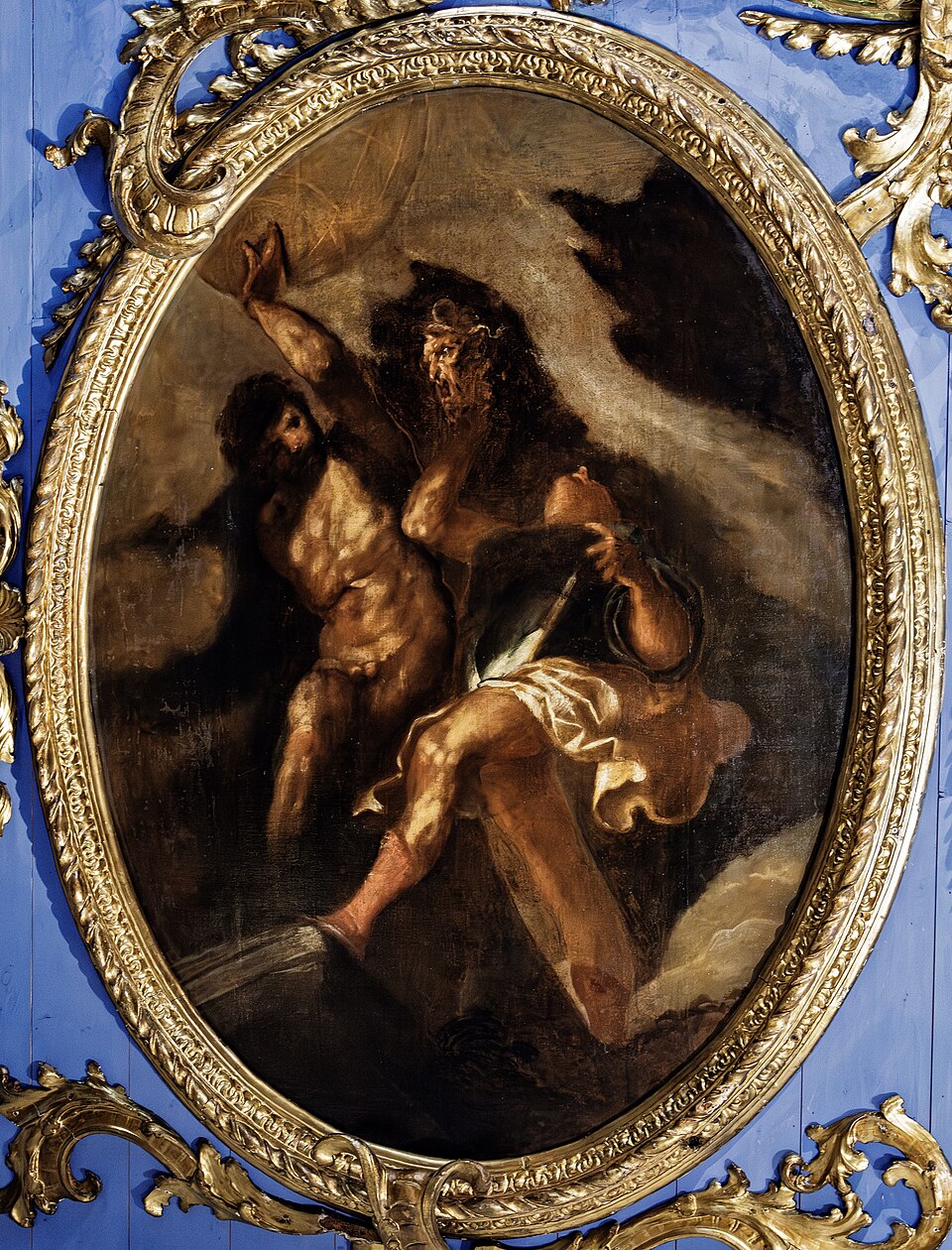
—You founded Mycenae after your grandfather's death — a city that would outlast your own story. What does a man build when he builds a city, and what were you trying to establish?
I had the blood of Zeus in me and no rightful place to stand. Seriphos was not mine — it was the island of Polydectes, whom I had turned to stone, and you cannot build a dynasty on a man you petrified. Argos I could not enter without becoming the man who had killed its king, however unintentionally. So I built something new. Mycenae was chosen for its position — high, defensible, commanding the roads of Argolid. But more than geography, it was a declaration: that the line of the Perseids would have a fixed point in the world, traceable through stone and not only through story. A city is the longest argument a man can make. Every wall said: this happened, it mattered, and the people who descend from it will carry that forward. Heracles would come from this line. I did not yet know his name, but I knew the line needed to hold.
—Hesiod wrote of Medusa before you, Ovid transformed your story centuries later, Apollodorus catalogued your every artifact with the precision of a general's inventory. Do you recognize yourself in what the poets made of you?
Hesiod had Medusa already dying in the Theogony before he gave much thought to the man who killed her. Apollodorus was thorough but clinical — he listed the talaria, the harpe, the kibisis as though making a soldier's accounting of equipment. And Ovid, whose voice reaches me from a distance I cannot quite measure, turned the moment I saw Andromeda into something that reads more like a lyric than a military engagement. I recognize the facts in all of them. What varies is which pause, which look, which decision receives the light. That is perhaps inevitable in any tradition long enough to pass through many hands. A story told only once is a memory; told a hundred times, it becomes a shape that different hands can hold.
A story told only once is a memory; told a hundred times, it becomes a shape that different hands can hold.
—The sculptors of the fifth century carved your image into the temples of Athena — Perseus mid-strike, Medusa falling. What would you want those images to carry forward that stone cannot show?
The sculptors tend to choose the moment of the blow: arm raised, blade mid-arc, the serpents already wild with dying. It is a clear image — violent, legible, satisfying to look at. But what the stone cannot capture is the second before: eyes averted, the polished Aegis held at precisely the right angle, the reflection found and trusted above the real. The entire victory lived in that invisible act of not-looking. If I could have one thing cut into Athena's stone, it would not be the kill — it would be the moment a young man decides that the only way through something that destroys by being seen is to look at it sideways. Not that the hero was stronger than the monster, but that he was careful enough to find the angle the monster had not anticipated. That is the lesson worth cutting in marble for the Greeks to pass forward.
This imaginary interview was generated by artificial intelligence from sources documented in Perseus's profile. It dramatises what the figure might have said based on what we know about them, but does not constitute attested historical testimony. For primary sources and factual documentation, refer to the full profile.