Kids interview Perseus
by Charactorium · Perseus · Mythology · 6 min read
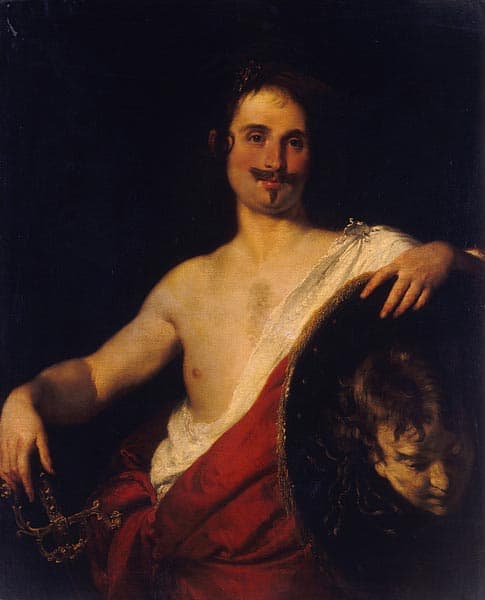
Two twelve-year-olds from a school visit stand before a great carved relief of Perseus — winged sandals on his feet, curved blade raised high. Their teacher has stepped away for a moment. The stone eyes of the hero seem to shift toward them. Quietly, almost afraid to break the spell, they begin to ask their questions.
—Why did you go looking for Medusa? It sounds like a trap.
You are sharper than many grown-ups, child — it was a trap. I was living on the island of Sériphos with my mother Danaé, and the king there, Polydectes, wanted her for himself. I was in the way. So he asked me, as a supposed gift to him, to bring back the head of the Gorgone Méduse — a monster whose gaze turns men to stone. He was certain I would die trying. It was his way of clearing the path. Imagine someone sending you on an errand they fully expect you never to return from. That was the errand. But I came back. And when Polydectes saw what I was carrying, it was he who stopped moving — forever.
—What was it like growing up on Sériphos with your mother?
Simple, mostly. Sériphos is a small rocky island, bright, with the sea close on every side. My mother Danaé and I had arrived there as strangers, and a fisherman of the island took us in with kindness. We lived quietly. I learned to run, to fish, to wrestle other boys on the beach. But I always knew that King Polydectes watched my mother with unwanted eyes, and that a shadow hung over our life there. I kept that shadow in the corner of my eye as I grew — it made me careful. And careful, I discovered, is a very good thing to be when you are growing into a hero.
—How do you kill a monster when even looking at her kills you?
That is the question! You use her enemy — her own reflection. Athéna gave me a shield polished so smooth it worked like still water. I held it up and watched Méduse in the surface — the way you might look at a fire reflected in a pool without the heat touching your face. I crept forward slowly, eyes fixed only on the reflection, never on her face directly. Then I raised the adamantine harpe — the curved blade Hermès had given me, forged from a metal nothing can break — and struck. One clean cut. The trick was not how strong my arm was. It was how carefully I refused to look where I was not supposed to look.
The trick was not how strong my arm was — it was how carefully I refused to look where I was not supposed to.
—What were the magic gifts from the gods? Were they heavy to carry?
Not heavy at all — that was what astonished me most. The talaria, Hermès's winged sandals, weighed almost nothing. The moment I buckled them on, the ground stopped pulling at my feet. I rose like a swallow leaving a branch. There was also the pétase — a helmet that made me invisible. I put it on and vanished even from my own shadow. And the curved adamantine harpe could cut through anything ever made. Imagine having three gifts at once: the power to fly, the power to disappear, and a blade nothing could resist. The gods did not want me to fail. They simply asked me to be brave enough to begin.
—Were you scared inside the cave where Medusa was sleeping?
Yes — and I am glad you ask that, because I think it matters to say so. The cave of the Gorgones was dark and completely silent except for the sound of slow breathing. Along its walls were shapes frozen in place — men, animals, all turned to stone by a single wrong glance. I moved with tiny steps, shield raised, looking only at the reflected image. My hands were steady but my heart was loud. I was afraid. Every hero I have ever known was afraid at least once. A hero is not someone who never fears. A hero is someone who keeps moving even when his heart is hammering against his ribs.
A hero is not someone who never fears. A hero is someone who keeps moving anyway.
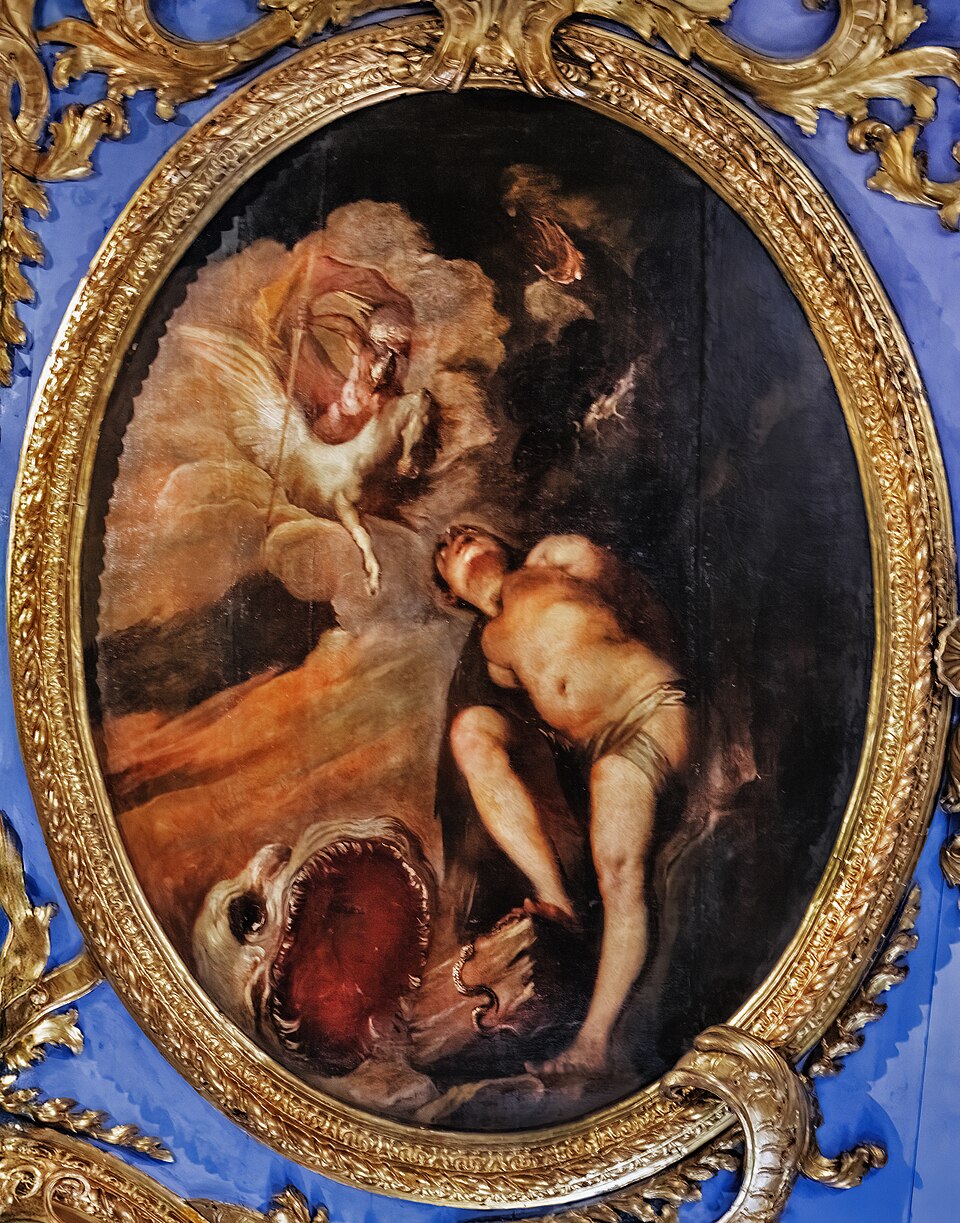
—What did you feel when you first saw Andromeda chained to a rock?
I was flying high above the coastline of what they called Éthiopie, heading home with the head of Méduse in my bag, when I spotted her. A young woman alone on a cliff, chained in iron, perfectly still. I thought at first she was a stone figure — an offering to some god. Then she lifted her head. Then I understood: she had been left there as a sacrifice to a sea monster, a punishment sent by Poséidon. I came down lower to look. Later, the poet Ovide wrote that I fell in love before I even spoke to her. I will not argue with that. But first — there was a monster to deal with.
—How did you actually defeat the sea monster?
The creature was enormous — a great Ketos, a beast of the deep. It burst from the waves with a sound like a cliff collapsing. I flew above it, high enough that its jaws could not reach me. Then I reached into my bag and drew out the head of Méduse. Even severed from the body, those serpent-crowned eyes still held their power. I turned it toward the beast. The monster looked — it could not help itself. Its great scales began to harden. Its body slowed. Then it was utterly still, solid as cliff stone. I dropped down beside Andromède, drew the adamantine harpe, and broke her chains.
—How did your grandfather Acrisios die? Was it truly an accident?
It was the most painful kind of accident — one that an oracle had announced long before it happened. My grandfather Acrisios, king of Argos, had been told by a prophet that his daughter's son would one day kill him. That son was me. He locked my mother Danaé away to prevent it. He exiled himself from Argos in the end, fleeing to a distant land. And yet — years later, at athletic games, I threw a discus. The wind shifted at the wrong moment. The disc curved off its path and struck an old man watching from the crowd. That old man was Acrisios. I did not know it until afterward.
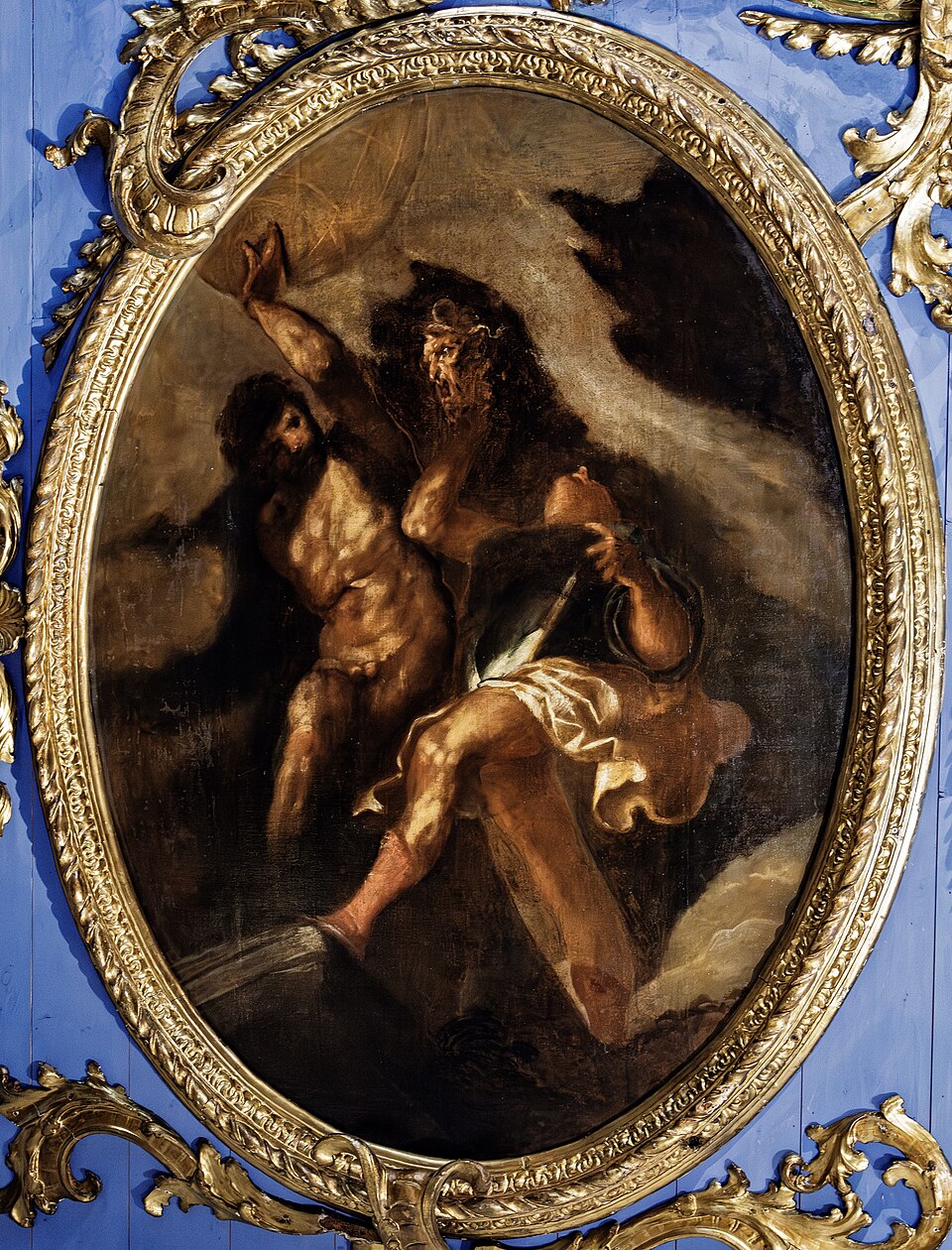
—Did you feel guilty? You didn't mean to hurt him.
I felt something heavier than guilt. Guilt, at least, comes from a choice made badly. I made no choice — I threw a discus as I had done a hundred times before. But I was the cause. He was dead. The Greeks had a word for this weight: destin — fate. A force written into the world from the beginning, that no one — not kings, not heroes, not even the gods themselves — can erase. My grandfather Acrisios spent his entire life running from that oracle. He built walls. He crossed the sea. He moved to a foreign land. Fate did not chase him. It simply waited at the end of every road he tried.
Fate does not chase you. It simply waits at the end of every road you try.
—What was it like to build a whole city like Mycènes?
Different from any battle I had ever fought — and harder in a way. There is no enemy to outwit with a mirror, no monster to turn to stone with a single gesture. You must convince people — craftsmen, farmers, soldiers — to trust you, to stay, to lay stone beside stone. I chose the hill carefully: strong sight lines, a spring nearby, rock that could be quarried close at hand. Mycènes, in the region called Argolide, grew into one of the mightiest cities in all of Greece. But what I remember most is the first stone I placed with my own hands on the very first morning. Everything else rose from that single stone.
—Is it true that Heracles came from your family?
Yes — and that may be the thing I am most proud of, more even than any monster I ever defeated. Héraclès is my great-grandson, through the line of the Perséides, the dynasty I founded at Mycènes. He accomplished his twelve travaux — twelve impossible labours — and is still called the greatest hero who ever lived. He carried in his blood the line of Persée and the blessing of Zeus. When I think of that, I understand something I did not understand as a young man: the longest adventure a hero can begin is not the one he fights with a blade. It is the one he starts with a city, a family, and children who will go further than he ever did.
The longest adventure is not the one you fight — it is the one you begin for those who come after.
This imaginary interview was generated by artificial intelligence from sources documented in Perseus's profile. It dramatises what the figure might have said based on what we know about them, but does not constitute attested historical testimony. For primary sources and factual documentation, refer to the full profile.