Imaginary dialogue between Richard Cœur de Lion and Philippe Auguste
by Charactorium · Philippe Auguste (1165 — 1223) · Politics · 5 min read
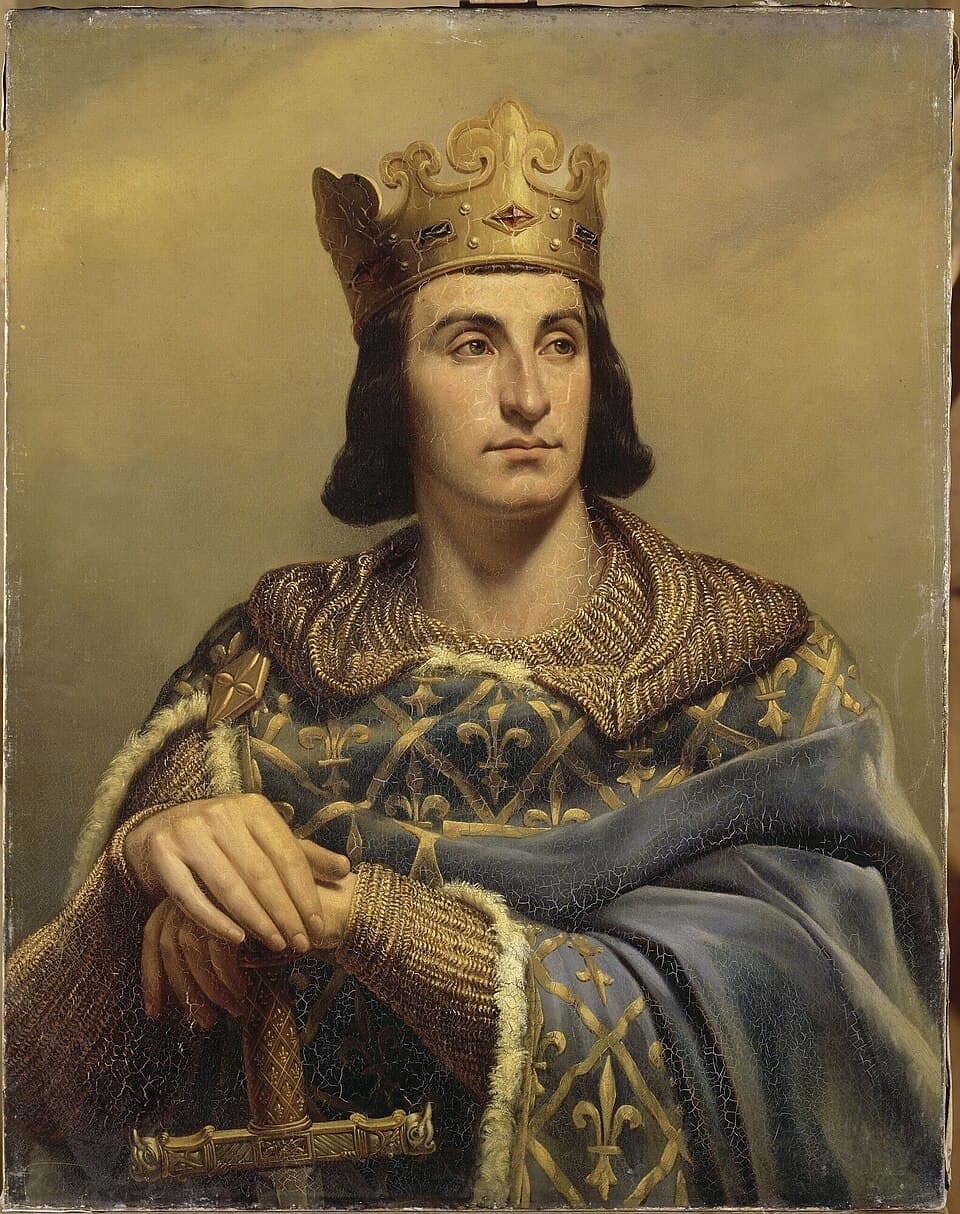
It is on the banks of the Seine, in Norman Vexin, that one day during a truce in the year 1199 the two kings meet within sight of the brand-new fortress of Château-Gaillard, whose pale stone still dominates the river. They have known each other since the age of the first feudal oaths, took the cross together as far as Acre, and have since waged merciless war. Richard the Lionheart, with a harsh voice and mocking eye, comes this time unarmed — only with his questions. Amid the lapping of water and the flapping of banners, he presses Philip to explain himself.
—Do you remember Acre, Philip — after the siege, you left in haste. What drove you away from the Holy Land like that?
You know better than anyone, Richard — the fever had eaten me to the bone at Acre, and my hair and nails were falling out. But I will not lie to you: it was not only my body that brought me back. A king without a kingdom is nothing, and mine remained masterless while we squabbled over a throne of Jerusalem that neither you nor I truly held. I took the city at your side, then I saw clearly: my place was in my domain, not under the Syrian sun. You thought me a coward for returning. I thought myself wise. The future will tell which of us was right to choose his war.
You thought me a coward for returning. I thought myself wise.
—It is whispered that no sooner had you married your Danish princess than you sent her away the next day. What demon seized you, cousin?
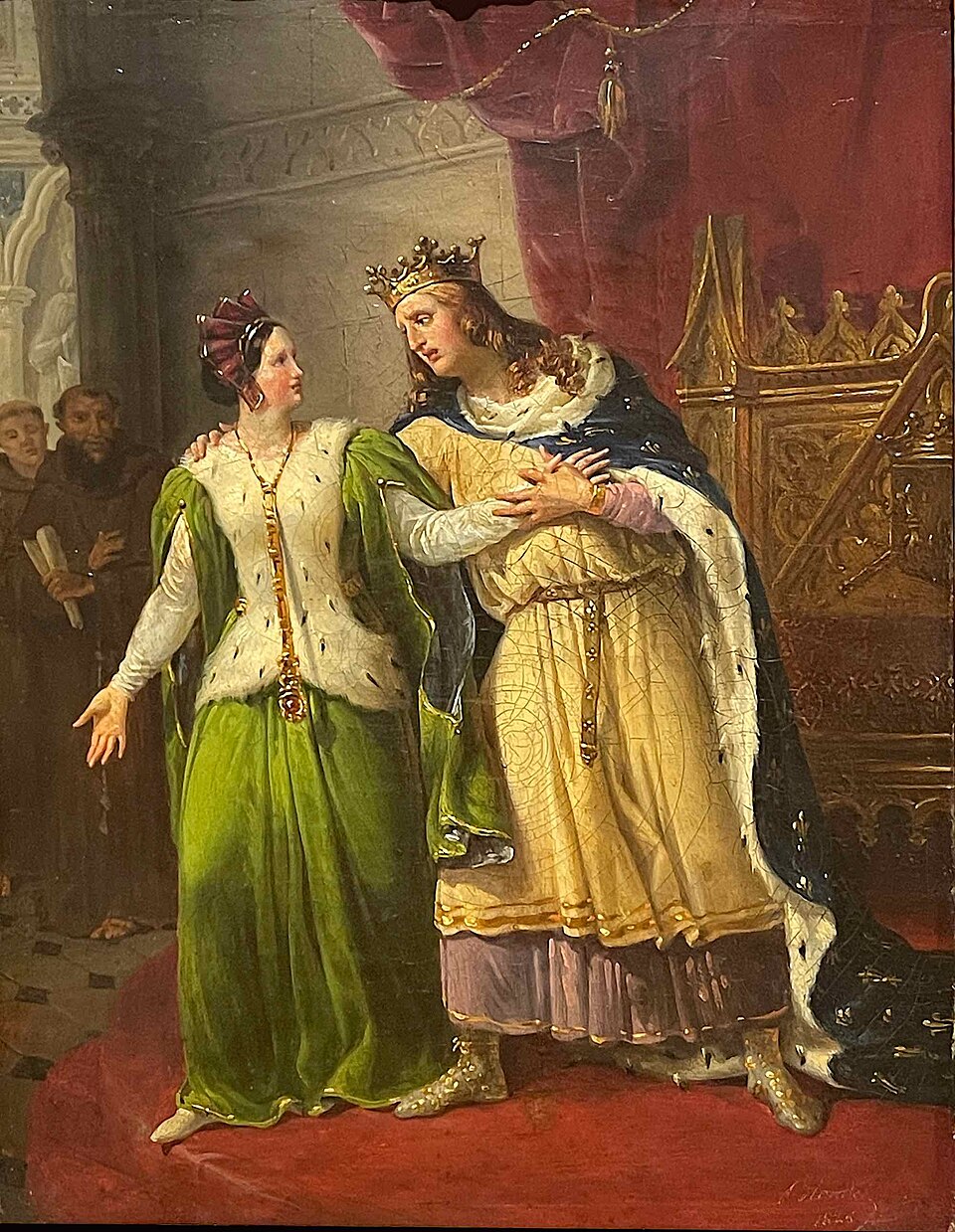
There, cousin, you touch a wound that no confessor has been able to heal. I married Ingeborg of Denmark in 1193, and the very next day I could not bear the sight of her — why, I have told no one, and I will not tell you either. The pope presses me, threatens my kingdom with interdict, and I hold firm as one holds a siege. You find that unreasonable, you who know full well that a king hardly belongs to himself. I am married for alliances, then reproached for undoing what the Church has tied. Let us say that my bed, at least, is a field where I claim to reign alone — even against Rome.
—At Fréteval, I took your coffers and your parchments. What did you do so that a king would never again lose his archives?
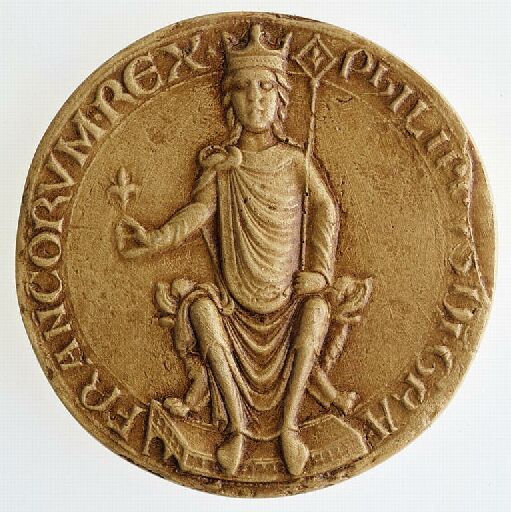
Ah, Fréteval! You remind me without mercy — in 1194 you fell upon my convoy and carried off my seal, my accounts, even the titles to my domain. That day, I understood that a king who loses his parchments loses his memory and his right. So I ordered that permanent registers be kept, a Treasury of Charters that never leaves. My baillis must account each year, at Candlemas, for their revenues and their justice. You took my archives once, Richard; you will not take my kingdom again, for it now rests as much in writing as in the sword.
A king who loses his parchments loses his memory and his right.
—Your City stinks of mud, they say, while my Rouen breathes clean. Why do you labor so over Paris with your walls and paving stones?
Laugh at my mud, you who delight in your Touraine castles! It is true that the stench rose from the streets of the City up to my palace, turning the stomach. I had the main roads paved with hard stones to drive out the stink — brother Rigord would confirm it. And all around, I am raising a stone wall over five thousand paces long, on both banks of the river. A capital is measured not only by its victories: it is measured by what one breathes there and by what protects it. When my walls are closed, Paris will no longer be a city among others — it will be the king's city.
—That great round tower you are raising west of Paris — admit it: it is me you fear behind your moats?
You have guessed rightly, and I do not hide it. That keep I am building to the west, on the banks of the Seine, with its deep moats — it is your shadow, and that of your Normans, that it watches. As long as Normandy is yours, Paris must keep its flank covered on this side. But do not think I build out of fear alone: this tower tells everyone, peasants and barons, that the king watches and that his hand holds the key to the river. You build for war, Richard; I build also so that I may be known to be present, even when I am not.
—For Normandy and Anjou, you claim I am your man. How can a king be the vassal of another king?
Therein lies the whole quarrel between us, and you know it well. For your duchy of Normandy, your Anjou, your Maine, you are not king: you are my man, you hold those fiefs from me and owe me faith and service. That a man wears a crown elsewhere does not release him from the homage he renders me here. Now a vassal who fails his suzerain may see his fiefs forfeited, that is, confiscated according to law. I invent nothing: it is feudal custom, the very one you invoke when it serves you. The day the court of France judges that you have failed, I will be within my rights to take back what you hold from my hand.
For Normandy, you are not king: you are my man.
—Look at my Château-Gaillard on the Seine, built in a year. Do you truly believe you can ever take it?
Fine work, I admit — you raised it in a year on its rock, and it shames my engineers. But do not trust too much in stone, Richard: no wall has ever stopped the patience of a determined king. I have taken places deemed impregnable, and time, hunger, and sapping bring down what assault spares. You think to protect Normandy with this fortress; I see only a lock, and every lock can be forced. Enjoy your Rock while it is new. One day, perhaps, I will sit in your great hall — and not as a guest.
—You pray more than you strike, they say. If a coalition rose against you, would you dare to fight in the thick of the fray?
You mock my prayers, but it is on bended knee that one earns the right to strike standing. If one day the Emperor, the Count of Flanders, and your English heirs should league against me, I would not stay safe while my men's blood is shed. I would have the oriflamme of Saint-Denis carried before me, that red banner with golden flames, sign that God marches with the kingdom. And I would ride into the fray, the hauberk on my back. A king who dares not die with his knights has no right to send them to die. That is what the crusade taught me — and you too, deep down, know it.
—Under the helm, one can no longer tell king from knight. Do you remember, in the Holy Land, how death brushed our crowns?
I remember all too well. There, under the sun of the Holy Land, I saw arrows pass a finger from our heads, and under the cylindrical helm no one could have told who was king. It is a strange and terrible thing, Richard: the crown weighs nothing in the dust of battle, and a blade does not ask the rank of the man it opens. I wore the mail hauberk like the humblest of my sergeants. If ever I am unhorsed and seized by my clothes, I know my life will hang on the valor of those around me, not on my title. A king is a man whom death does not flatter.
The crown weighs nothing in the dust of battle.
—You who file everything in registers, Philip — what does a king truly leave behind, once the earth is yielded?
You mock my registers, but think. The sword cuts one day and rusts the next; a man dies, even the bravest. What endures is the enlarged domain, the baillis who judge in the king's name even in his absence, the walls of a capital, the charters that outlive the hand that sealed them. You dream of glory and songs; I want that after me the kingdom stands on its own, without needing a hero every generation. That is the true conquest, Richard — not the land one takes, but the order one leaves behind. The trouvères will sing of your bravery; my parchments, they will still govern.
Not the land one takes, but the order one leaves behind.

This imaginary interview was generated by artificial intelligence from sources documented in Philippe Auguste's profile. It dramatises what the figure might have said based on what we know about them, but does not constitute attested historical testimony. For primary sources and factual documentation, refer to the full profile.