Imaginary interview with Philippe Auguste
by Charactorium · Philippe Auguste (1165 — 1223) · Politics · 5 min read
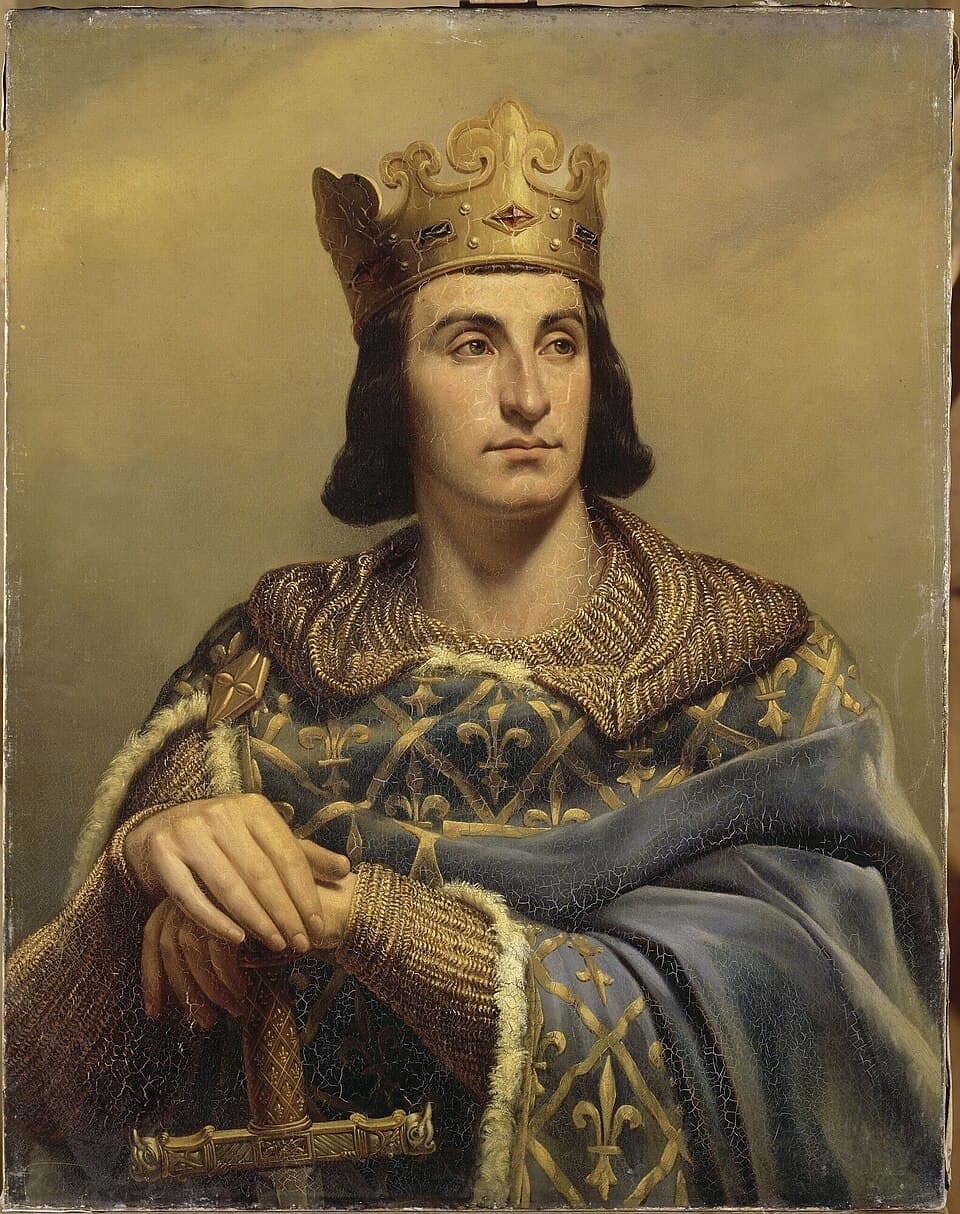
Palais de la Cité, on the island at the heart of the Seine. King Philip, the second of that name, surnamed Augustus, receives us in a great vaulted hall where the wax of seals is still drying. Outside, workers are completing the stone wall that now encircles Paris; the old monarch, his voice weary but his eye sharp, agrees to look back on forty-three years of reign.
—How did you experience the moment at Bouvines when you nearly perished under enemy blows?
That Sunday in July 1214, I first dismounted, knelt in the dust, and commended my soul to God, for no one gives battle without heaven's grace. Then the melee turned against us: Flemish foot soldiers seized me by the skirts of my tunic, tore me from my saddle, and I felt the soil of Flanders rise to my face. My knights rushed upon me like an iron wall; they lifted me up, and the oriflamme of Saint-Denis still flew red above our lances. I understood that day that a king is nothing without the arms of his faithful, and that victory belongs to Him who kept me alive.
Foot soldiers seized me by the skirts of my tunic, and I felt the soil of Flanders rise to my face.
—What did that day at Bouvines mean for the kingdom, once the coalition was broken?
They had leagued against me — the German emperor, the count of Flanders, and the gold of John Lackland of England — three heads for a single kingdom. When their line broke and I took up my dented helm, I knew that no prince of the West would dare rise again soon. On the return, commoners strewed the roads with branches and sang all the way to Paris; never had a king of France known such rejoicing. My clerks at Saint-Denis recorded that day in the Gesta so that none might forget that by divine grace the banner of France remained standing. A single battle had made my kingdom the first among realms.
Three heads for a single kingdom, and it was my banner that remained standing.
—Why did you dare to confiscate the lands of John Lackland, though he was crowned king in England?
Therein lies all the cunning of feudal law: across the sea John was king, but on this side, for Normandy, Anjou, and Maine, he was only my vassal, bound to answer to my court like any liege man. When he refused to appear in 1202, I pronounced the forfeiture of his fiefs: the law of men, not my whim, stripped him. I had only to take what his treachery abandoned to me. A suzerain who is despised ceases to be suzerain; I could not suffer that a duke, even a king across the Channel, should hold my justice in contempt.
Across the sea he was king; on this side, he was only my vassal.
—Do you remember the capture of Château-Gaillard, that fortress reputed to be impregnable?
Richard the Lionheart, my rival, had built that eagle's nest above the Seine and boasted he would hold it even if it were made of butter. He had since died, and his brother was not worth its walls. All winter 1203 my siege engines battered the stone, my miners dug beneath the moats, and in the spring of 1204 the stronghold fell. The road to Rouen lay open: within months the royal domain doubled, the Plantagenet inheritance came to me fief by fief. I had wrested from England the finest duchy in Christendom without a single great battle being fought; patient sieges are often worth more than glorious charges.
He boasted he would hold Château-Gaillard even if it were made of butter.
—How did you manage to govern such a vast kingdom from this single palace?
A king who does not see his provinces is a blind man seated on a throne. So I instituted the bailiffs, men of mine, without lands in the country they govern, going from town to town to dispense justice and collect my revenues in my name. Each year at Candlemas, they must come to render account of their receipts and judgments, so that my treasury and my justice are exactly known. Thus the king's power reaches the smallest village, where once provosts grew fat in the shadows. These are invisible bonds, stronger than any wall, that hold a kingdom upright.
A king who does not see his provinces is a blind man seated on a throne.
—What did the loss of your archives at Fréteval in 1194 teach you?
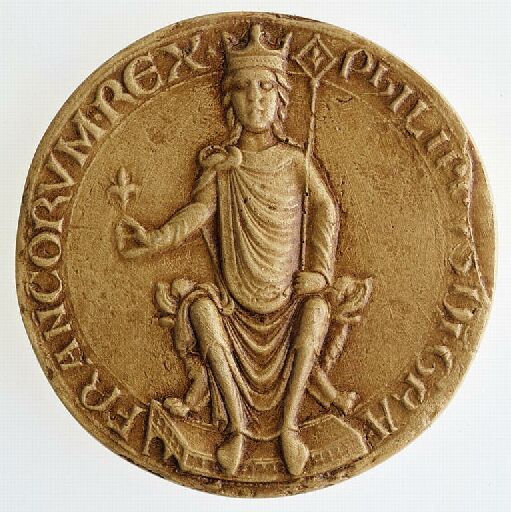
It was a bitter lesson. Fleeing Richard near Fréteval, I abandoned my coffers, and with them the charters, the accounts, the written memory of my kingdom. A king without his parchments is like a man who has lost the memory of his oaths. I swore I would never be taken thus again: I had permanent registers drawn up, each act sealed with my great royal seal copied and preserved. That treasury of charters, my clerks constantly enrich at the Palais de la Cité. Speech takes wing, but parchment remains and bears witness; a state that does not write down its rights sees them fade like foam.
A king without his parchments is like a man who has lost the memory of his oaths.
—Why did you encircle Paris with such a stone wall?
Paris is the head of my kingdom, and a head without a helmet tempts the enemy. I had more than five thousand paces of wall raised on both banks of the Seine, and to the west planted the fortress of the Louvre, its round donjon surrounded by moats, a stone sentinel watching over the city when I wage war afar. Henceforth no Norman, no routier could surprise my capital. These walls tell everyone, from merchant to prince, that Paris is no longer a city like others: it is the king's city, and whoever touches it touches the crown of France.
Paris is the head of my kingdom, and a head without a helmet tempts the enemy.
—It is said that you had the streets of Paris paved: what drove you to do that?
The truth is less glorious than my battles, but just as true. One morning, at my window in the Palais de la Cité, a stench of mud and filth rose from the streets up to my apartments, unbearable even to a king accustomed to camps. So I ordered the main roads paved with hard, solid stones, to remove that foul odor that dishonored my capital. The monk Rigord at Saint-Denis noted the matter in his chronicle. People think me wholly occupied with conquests, but a city worthy of the most powerful kingdom in the West is also measured by the cleanliness of its paving stones and the air one breathes there.
A stench of mud rose up to my apartments, unbearable even to a king.
—What would you say about your rift with Richard the Lionheart during the crusade to the Holy Land?
We had set out together in 1190, two crusader kings swearing brotherhood under the cross, and we took Acre side by side after a long siege, in heat and thirst. But Richard wanted everything — the booty, the choice of the king of Jerusalem, the entire glory; between two prides there is no peace. As early as August 1191, ill and weary of his arrogance, I took ship back to France, leaving him alone to pursue the holy enterprise. I have been reproached for abandoning the crusade; but my kingdom without a king was a prey laid open, and a prince must first guard the land God has entrusted to him.
Between two prides there is no peace.
—Your marriage to Ingeborg of Denmark sparked twenty years of conflict with Rome: what do you have to say about it?
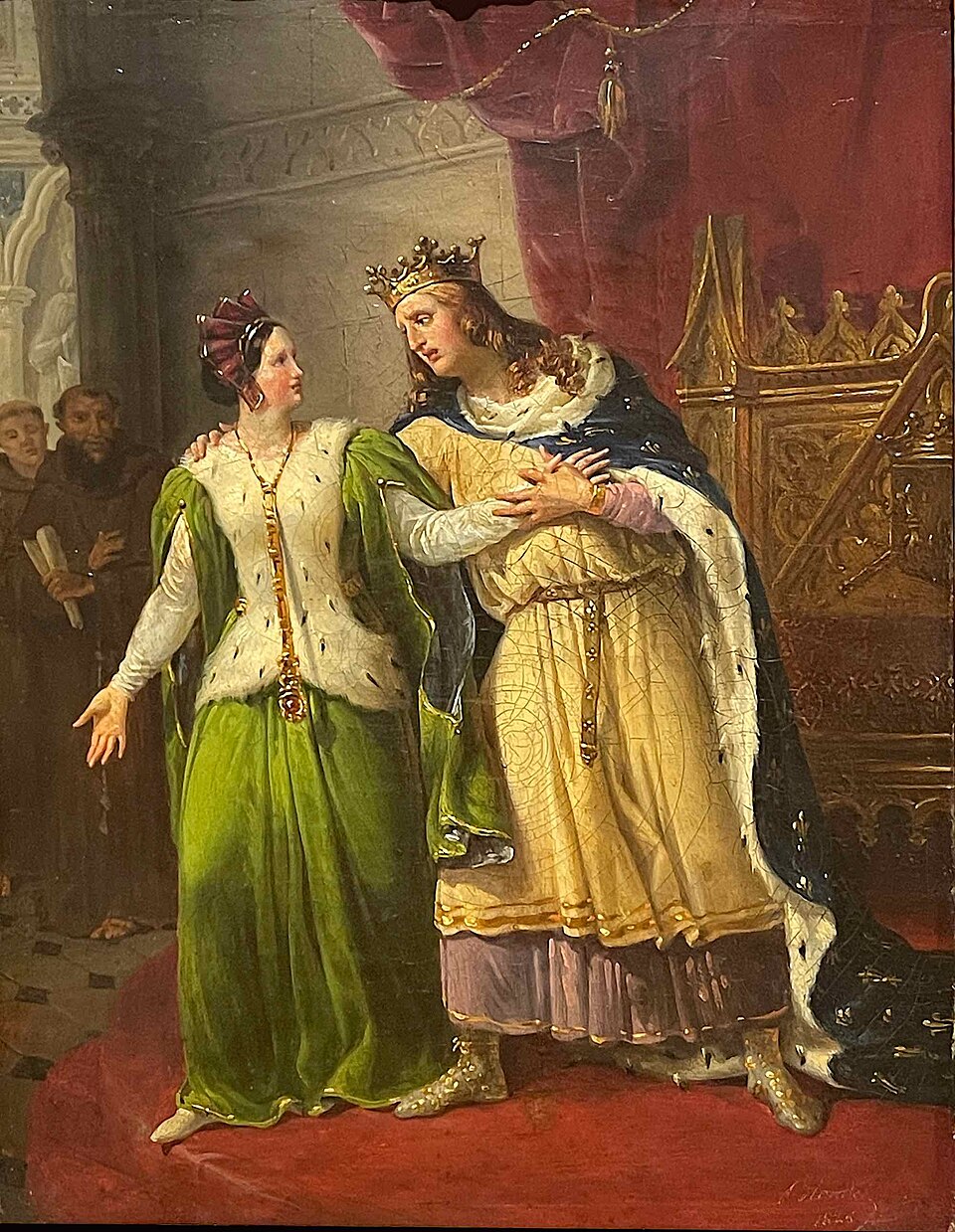
I will tell you no more than I told the pope's legates, for there are things a king keeps to himself. I married Ingeborg of Denmark in 1193, and from the day after the wedding a repugnance I cannot name turned me from her forever. Rome intervened, the sovereign pontiff threatened my kingdom with interdict, and this dispute lasted more than twenty years, more stubborn than any siege. A king may bend Normandy and break a coalition at Bouvines, but before the Church and before his own heart, he finds himself as weak as the least of his subjects. That, perhaps, is the only war I never won.
Before the Church and before his own heart, a king finds himself as weak as the least of his subjects.


This imaginary interview was generated by artificial intelligence from sources documented in Philippe Auguste's profile. It dramatises what the figure might have said based on what we know about them, but does not constitute attested historical testimony. For primary sources and factual documentation, refer to the full profile.