Kids interview Philippe Auguste
by Charactorium · Philippe Auguste (1165 — 1223) · Politics · 5 min read
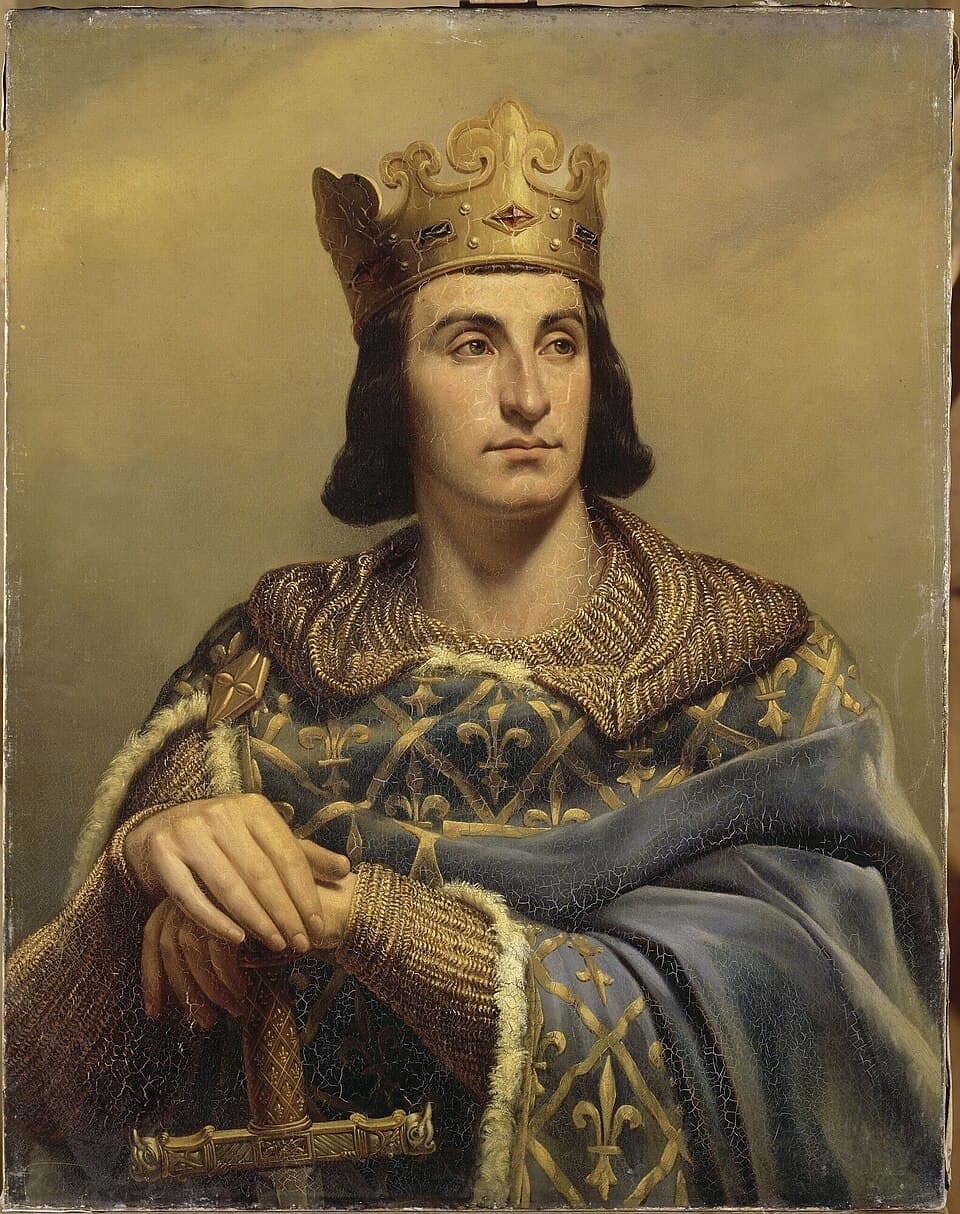
Two seventh-graders on a field trip push open the door of a large vaulted room in the heart of old Paris. There, by a narrow window, a king with a keen and tired gaze awaits them. Philip Augustus motions them to sit close: he has seven hundred years of stories to share with them.
—How old were you when you became king of France?
You know, my child, I was barely 15 years old. It was in 1180, my father Louis VII had just died. Imagine a boy almost your age having a heavy crown placed on his head. I was afraid, yes. The kingdom I received was very small: a few lands around Paris, what was called the royal domain. Around me, great lords looked down on me. Especially the kings of England, who held Normandy and Anjou. They were my vassals, they owed me loyalty, but they were far richer than me. That day, I swore one thing to myself: this little kingdom, I would make it great.
—What did the streets of your city smell like?
Ah, don't remind me! Paris smelled of mud and filth. When it rained, the streets became rivers of mire. A foul stench rose all the way to my Palais de la Cité, on the island in the middle of the Seine. One day, unable to bear it any longer, I ordered the main streets paved with good hard stones. The monk Rigord, who wrote my chronicle, noted it himself. Imagine: before, you walked ankle-deep in sludge; after, on solid, clean ground. It may seem like a small detail to you. But a capital worthy of a king, you see, begins with streets you can walk on.
—Why did you build such great walls around Paris?
Because a city without walls is like a house without a door. I had a stone enclosure built over five kilometers long, on both banks of the Seine. From 1190 to 1215, stones were piled without rest. And to the west, where the city was most vulnerable, I built a fortress: the Louvre. A great round keep, surrounded by water-filled moats. Imagine a tower so tall it could be seen from far away, and that told everyone: here reigns the king of France. When I went off to war, I slept soundly: my city was guarded behind its stones.
—Why did you take all of John Lackland's lands?
Because he was my vassal, and a vassal must obey his lord. John Lackland, king of England, held Normandy and Anjou as fiefs received from me. But he misbehaved, and I had the right, as suzerain, to take those lands from him. In 1202, I confiscated them. Then I took city after city, castle after castle. In two years, from 1202 to 1204, my royal domain doubled! Imagine being given twice as much garden as you ever had. That's what happened to the kingdom of France.
A vassal must obey his lord, even if he is king of England.
—Was it difficult to take the castle of Château-Gaillard?
Oh yes, terribly! Château-Gaillard was the finest fortress of my time. Richard the Lionheart had built it on a rock, above the Seine, expressly to block my way into Normandy. Thick walls, round towers, moats carved from living rock. We besieged it for months on end. My men dug, sapped the walls, waited in cold and hunger. And one day, in 1204, it fell. Imagine our joy! After that reputedly impregnable castle, nothing could stop me. All of Normandy became French.
—How did you manage to command such a large kingdom?
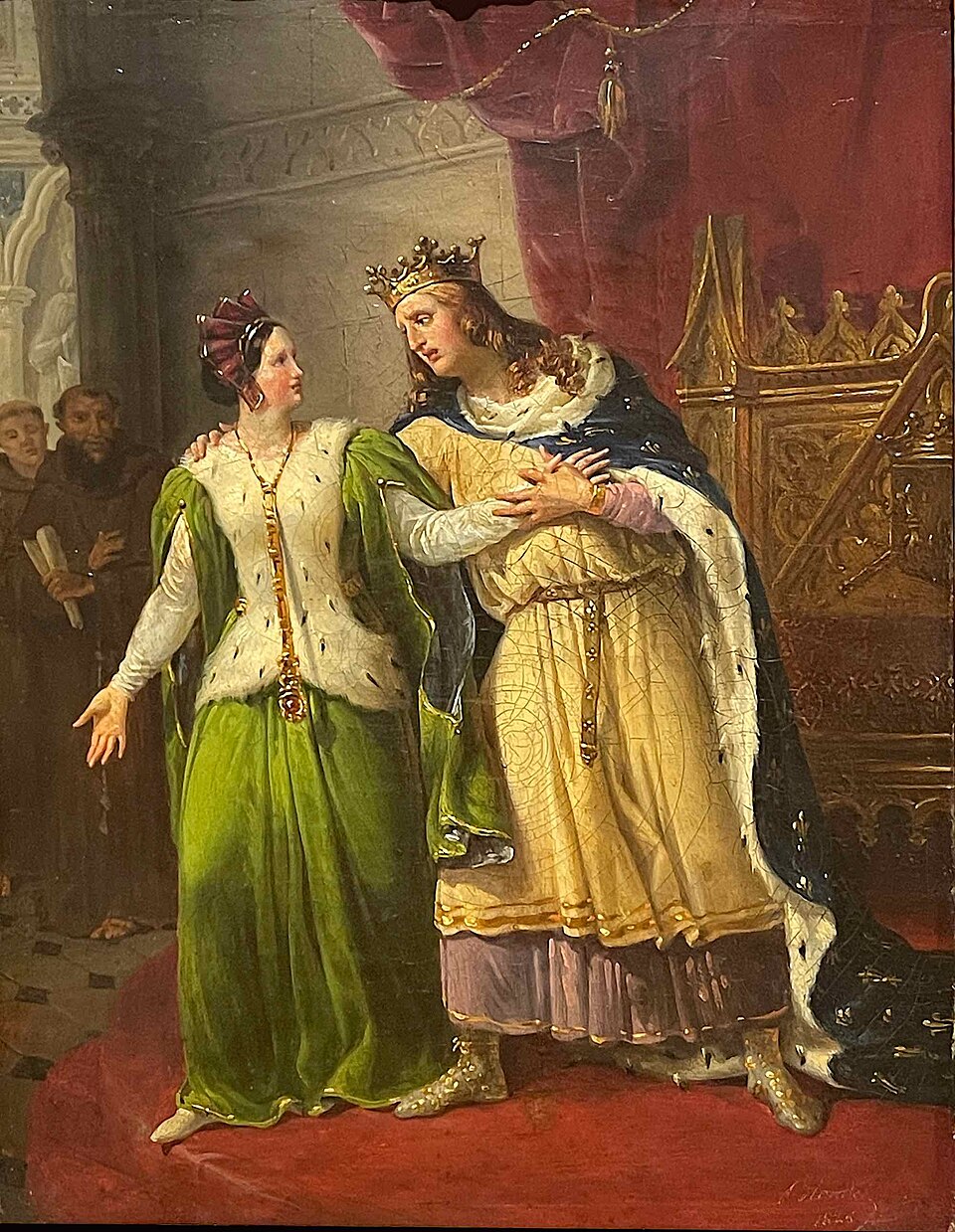
Good question, my child! A king cannot be everywhere at once. So I invented men to represent me: the bailiffs. A bailiff is an agent I sent to the provinces to dispense justice and collect taxes in my name. Before them, local lords often robbed the people without fear. My bailiffs, on the other hand, had to give me an account each year, at Candlemas. Imagine a master who sends faithful messengers to watch over his house when he is away. That is how I kept my kingdom firmly in hand, even from afar.
A king cannot be everywhere: so I sent my bailiffs in my place.
—Is it true that you once lost all your papers?
Alas yes, and I was deeply ashamed of it. In 1194, I fought against Richard the Lionheart near Fréteval. I lost the battle, and worse, I lost my archives! All my deeds, my treaties, my accounts, carried off or destroyed on the road. For a king, it's like losing your memory all at once. So I swore: never again. I had every important document copied and carefully kept, in what was called the Treasury of Charters. Imagine a great chest where you store everything that must never be lost. Those old parchments are the ancestors of our archives.
—Were you friends with Richard the Lionheart on the crusade?
Friends... that's putting it mildly, my child! In 1190, we set out together on the Third Crusade, that great war journey to Jerusalem. Side by side, we besieged the city of Acre, over there in the Holy Land, and we finally took it. But after the victory, everything turned sour. We argued over the division of the spoils, over everything, constantly. Richard was proud, and I was stubborn as a mule. So, as early as 1191, I returned alone to France, leaving him to continue without me. You see, you can fight shoulder to shoulder and not like each other at all.
—Is it true that you left your wife the day after the wedding?
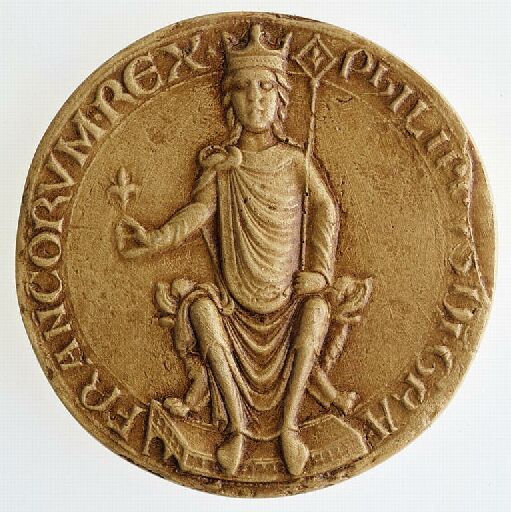
It's true, and I'm not proud of that story. In 1193, I married Ingeborg of Denmark, a princess from afar. And the very day after the wedding, I repudiated her, sent her away, without ever telling anyone why. Even I would be hard pressed to explain it clearly. This sparked a terrible quarrel with the pope, who defended that poor woman. Twenty years of conflict! The pope even threatened to punish my entire kingdom. You see, my child, even a powerful king makes mistakes that haunt him for a long time. This one I dragged along almost all my life.
—Were you afraid before the great battle of Bouvines?
Yes, I was afraid, and I didn't hide it. That day in 1214, at Bouvines, almost all of Europe had leagued against me: England, Flanders, the German emperor. Before the fight, I dismounted, knelt in the grass, and prayed at length. Before me flew the Oriflamme, the red silk banner of Saint-Denis. Then the melee erupted. Enemies seized me by my clothes and threw me to the ground! I thought my last hour had come. My knights rushed to me and pulled me up just in time. When I got back on my feet, victory was already ours.
Before the battle I prayed on my knees; during it, my knights pulled me from the mud.
—What would you like to be remembered for today?
What to remember? Not just Bouvines, my child, even if it was my finest day. Remember rather this: I received a small trembling kingdom, and I left a strong France. Walls around Paris, bailiffs in the provinces, well-guarded archives, a royal domain twice as large. I was nicknamed Augustus, like a great Roman emperor of old, because I had enlarged my country. But I did not build it all alone. Imagine a cathedral: a king lays one stone, his son lays another on top. I mainly made sure to lay good, solid stones.


This imaginary interview was generated by artificial intelligence from sources documented in Philippe Auguste's profile. It dramatises what the figure might have said based on what we know about them, but does not constitute attested historical testimony. For primary sources and factual documentation, refer to the full profile.