Imaginary dialogue between Marc Aurèle and Ptolemy
by Charactorium · Ptolemy (250 — 350) · Sciences · 5 min read
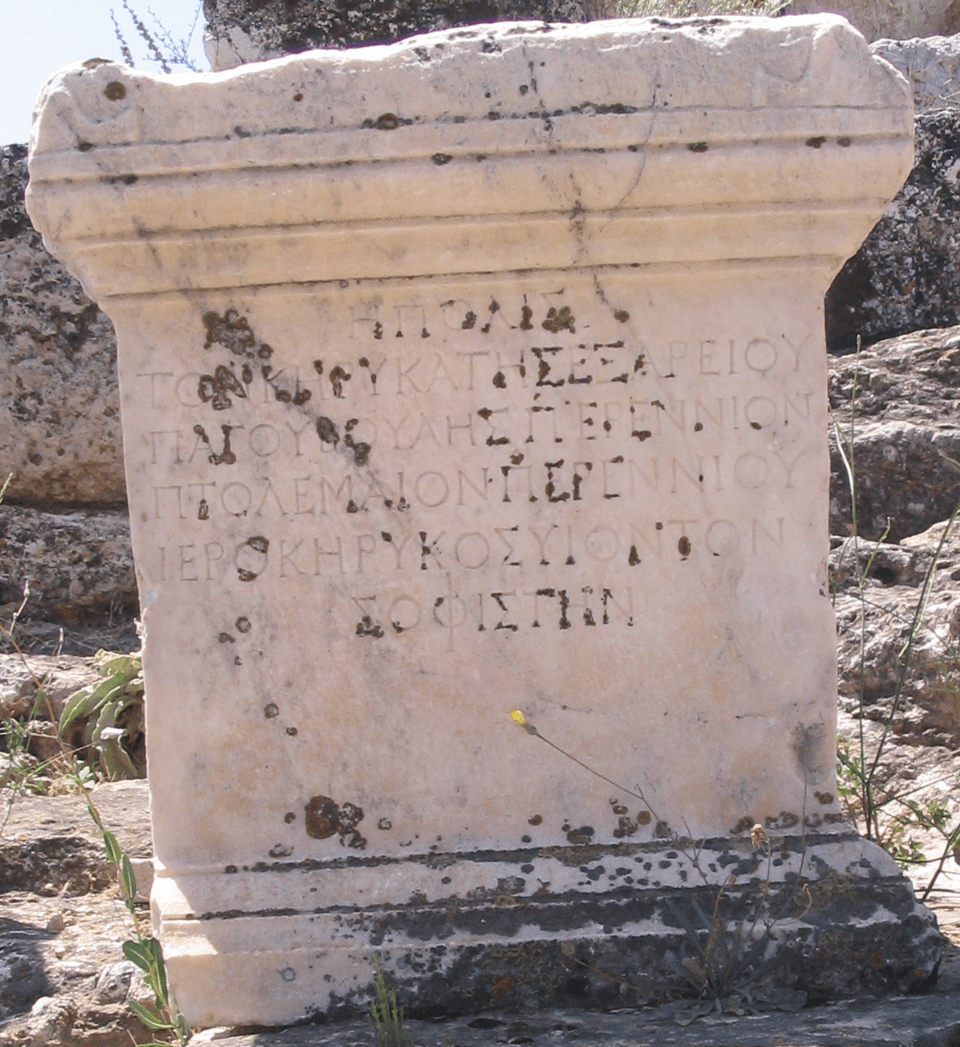
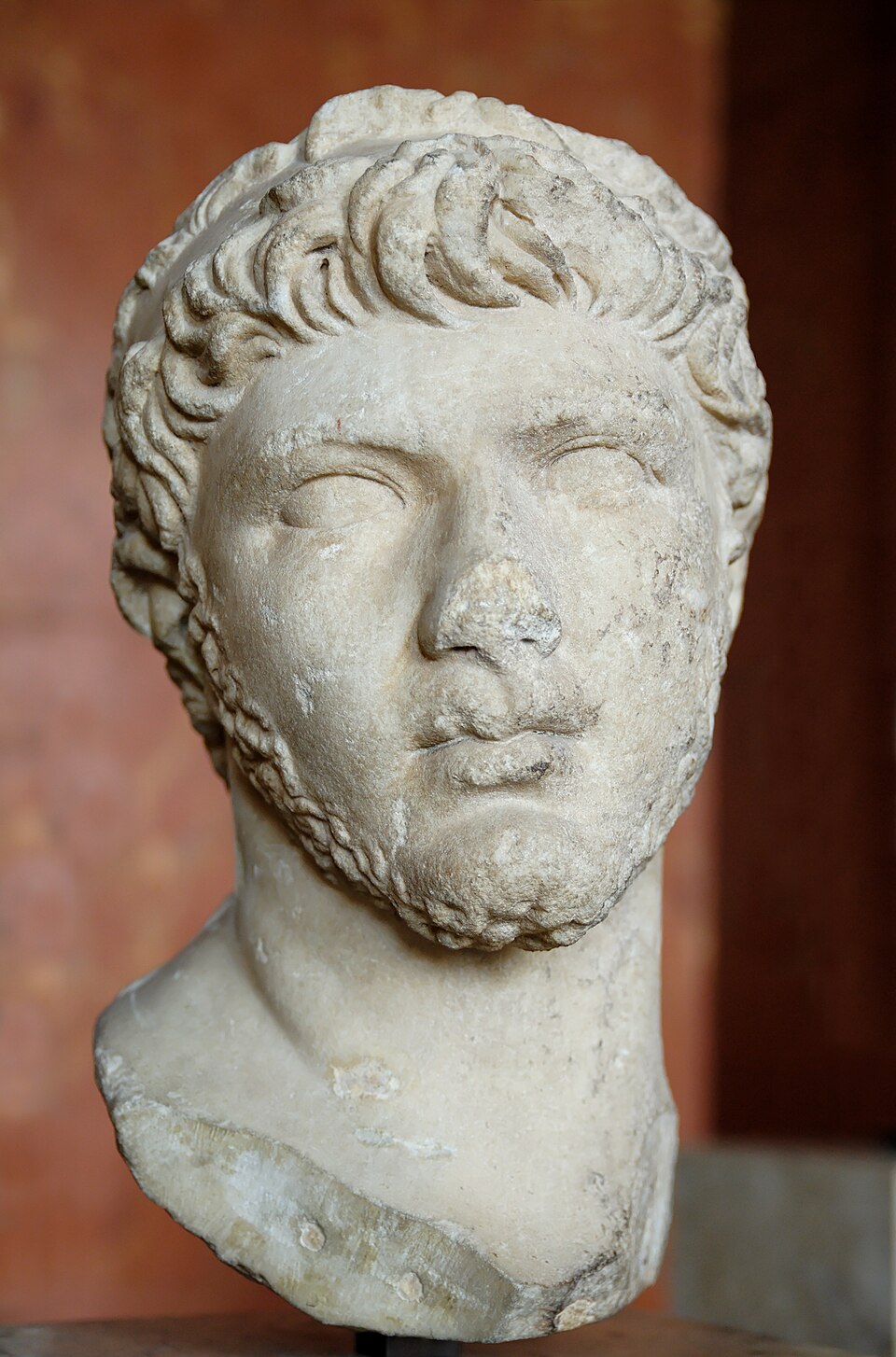
It is under the portico of the Mouseion of Alexandria, a summer evening around 165, that Marcus Aurelius, passing through the East, meets Claudius Ptolemy. The slanting light lengthens the shadow of the gnomon planted in the courtyard, and the smell of dried papyrus floats among the scrolls. The emperor and the scholar had already spoken last year, in this same courtyard, about man's place beneath the stars; Marcus Aurelius returns this evening, not as a sovereign, but as a philosopher anxious to understand the order of the heavens.
—Claudius, when you received me here last year, you showed me your observation tablets. How was this Syntax born on these rooftops?
It was born from my nights, Marcus Aurelius, as much as from those of others. From my first observations, around my thirtieth year, I climbed onto the terraces of Alexandria to note the passages of the planets at the meridian. I recorded a lunar eclipse, measured the height of the stars with the armilla, checked each position against the old records. From all this, I wanted to draw not a heap of notes, but an edifice: thirteen books where each motion of the sky follows from the previous one. I first assume that the heavens are spherical and rotate as a sphere, and that the Earth, also spherical, stands at the center of the heavens like a center. The rest is only consequence, demonstrated chord by chord.
The Earth, also spherical, stands at the center of the heavens like a center.
—You speak of epicycles, those small circles within the great one. Is this not a contrivance to save a stationary Earth that you hold in advance?
One can see it that way, and the objection is fair. But consider what the eye sees: a planet that advances, slows, retreats, then resumes its course. If the Earth is at the center and stationary, how to account for these caprices without betraying it? So I assumed a small circle, the epicycle, that the star describes around a point which itself turns around us. I added an equant point, from which the speed appears equal. These gears are geometric, not material — they are reasons, not bronze gears. The judge, you who seek the order of the world, is prediction: with them, I calculate where Mars will be in ten years, and the eclipse comes on the appointed day.
These gears are geometric, not material — they are reasons, not bronze gears.
—In the courtyard, you keep the records of Hipparchus of Nicaea. What remains of him in your work, and what do you owe to yourself alone?
I will not hide my debt, and you are right to name it. Hipparchus was the greatest before me: it was he who discovered the precession of the fixed stars, he who bequeathed me three centuries of observations that I could not have obtained otherwise. Without the Library where his tables lie, my work would not exist. I took up his measurements, yes, correcting them for the discrepancies that the passage of time revealed, and I built upon them. Where he was lacking, I observed myself; where he was silent, I demonstrated. No single man remakes the heavens: he adds his stone to a wall begun before him. I stand on his shoulders, and I do not blush for it.
No single man remakes the heavens: he adds his stone to a wall begun before him.
—Some in Rome murmur that compiling the ancients in this way without citing them at every line amounts to borrowing. Does that trouble you?
The reproach reaches me, and I weigh it. But what is expected of a treatise, Marcus Aurelius? Not that it list its sources like a clerk, but that it offer the reader coherent and verifiable knowledge. When I omit the name of a predecessor, it is never to adorn myself with his work: it is because the demonstration, once redone and confirmed by my own measurements, belongs to me as much as to him. The line is narrow, I confess, between assembling and appropriating. You who govern by weighing every act know that a man is judged by his intention. Mine was to transmit intact what would have been lost, not to crown myself with it.
The line is narrow between assembling and appropriating.
—You have also undertaken to map the entire Earth. How does one lay a globe on a flat sheet without betraying it?
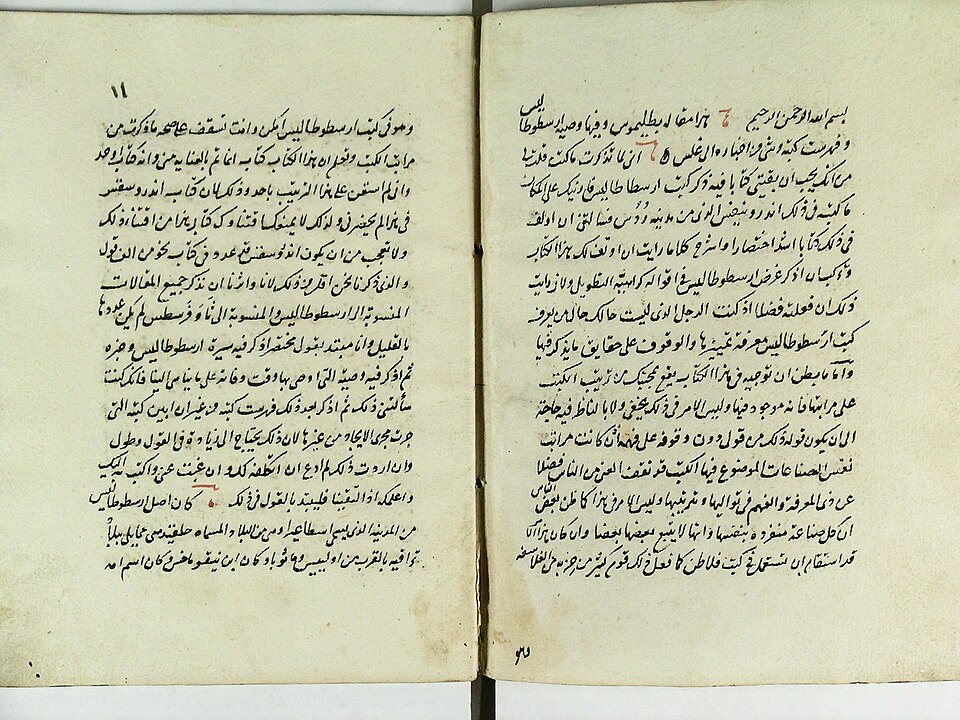
That is the great embarrassment of the geographer, and I devoted my Geography to it. The Earth is round — no scholar has doubted it for long — but papyrus is flat. Every drawing therefore distorts something: distances, or directions, or areas. I proposed to curve the meridians and parallels, as if the eye contemplated the globe from very high, so that the image best preserves the proportions of reality. To every known place I assigned two numbers, its longitude and latitude, so that it could be relocated without being seen. And I distinguish my art from chorography: the latter paints the detail of a province, I aim for the great regions of the inhabited world.
—You thus fix the extent of the known world. But how are you sure of its size, where no Roman has ever walked?
I am not, and that is the admission every honest man must make. Where the steps of merchants and soldiers stop, I must rely on tales, days of travel, estimates of navigators — uncertain matter. I calculated the circumference of the globe from these testimonies and from the measurements of the geometers who preceded me; I fear I made it smaller than it is. At the edges of the East and beyond the Pillars of Hercules, my map becomes conjecture. I point this out, for a map that concealed its ignorance would deceive those who trust it. The scholar must mark the limits of his knowledge as clearly as the coasts he draws.
A map that concealed its ignorance would deceive those who trust it.
—I am told you have written on music. You who measure the stars, what business have you with the chords of the lute?
More than you think, for it is the same quest. In my Harmonics, I sought why certain intervals please the ear and others wound it. The Pythagoreans say: all is number, and the ear has nothing to judge. The disciples of Aristoxenus reply: trust only hearing, leave your ratios aside. Both err by excess. The true criterion, Marcus Aurelius, is the combination of hearing and reason: the ear perceives, reason accounts for what it perceives. A consonance is beautiful only if a simple ratio founds it, and a ratio is true only if the ear confirms it. That is my method in the heavens as on the stretched string.
The true criterion is the combination of hearing and reason.
—This middle path between calculation and sense — do you follow it also when you question the stars?
Always, for without it I would be but a dreamer or a copyist. If I trusted only reason, I would build an elegant but false heaven, which would not account for what the eye sees at the meridian. If I trusted only observation, I would have but a jumble of points without law. Truth is born from their encounter: I observe an eclipse with the armilla, then I seek the geometric figure that accounts for it, and I submit it again to the test of another night. The eye corrects calculation, calculation guides the eye. That is, I believe, the only honest way to know anything of the world — and you practice it yourself, in the examination you make each evening of your actions.
—Before you climb again onto that roof, tell me: what does a day of your work look like, from dawn to night?
It follows the very course of the Sun I observe. I rise at dawn, in the coolness, to fix on papyrus the positions noted during the night, while they are still fresh in my mind. The rising light helps me write. In the afternoon, I retire to calculations: surrounded by my scrolls, the ruler and compass, I draw the chords of my tables and deduce the motions. At evening, after a frugal meal — bread, olives, fish from the port, a little wine mixed with water — I orient the armilla and the gnomon toward the sky. And at night, I watch, my eye on the passage of the planets. My life consists of this rhythm, Marcus Aurelius: observe, calculate, observe again.
—You live here, in the shadow of the Mouseion and its great Library. What does this place give you that no palace in Rome could offer?
It gives me the past, Marcus Aurelius, and that is the rarest of treasures. Within these walls lie the observations of three centuries, the tables of Hipparchus, the measurements of Aristarchus, without which I would be blind. Elsewhere a man begins alone; here, I begin where the dead have ended. I live nearby, in the Greek quarter, and it suffices to cross the courtyard to consult a scroll two hundred years old. The Mouseion has its gardens, its halls, its scholars with whom to debate. Your palace commands the present world; this house keeps the knowledge of the absent. For one who wants to measure the heavens, which change so slowly, it is the memory of the ancients that is worth an empire.
Your palace commands the present world; this house keeps the knowledge of the absent.
Read further
This imaginary interview was generated by artificial intelligence from sources documented in Ptolemy's profile. It dramatises what the figure might have said based on what we know about them, but does not constitute attested historical testimony. For primary sources and factual documentation, refer to the full profile.