Kids interview Pythagoras
by Charactorium · Pythagoras (582 av. J.-C. — 490 av. J.-C.) · Sciences · Philosophy · 5 min read
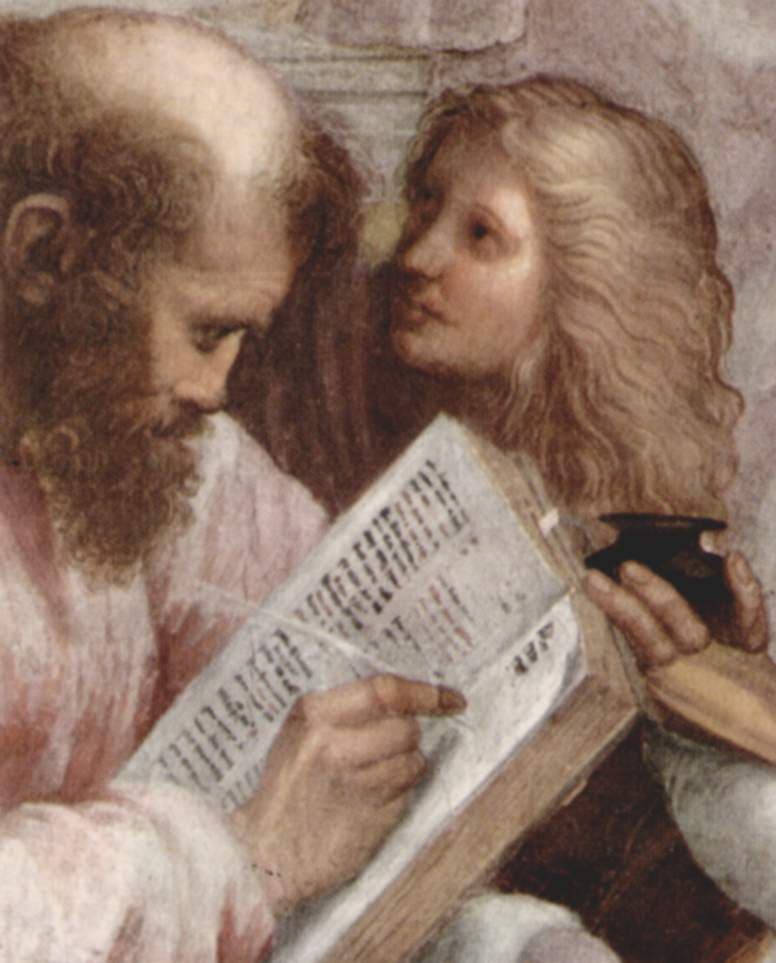
Two young visitors, barely twelve years old, crossed the city of Croton on a school field trip. At the end of a garden, an old sage in a white cloak awaited them, seated near a lyre. He smiled: few children still come to ask him questions.
—What was it like in the morning at your school in Croton?
You know, my child, we got up before the sun. Imagine a silent beach, just the sound of the waves, not a cart, not a horse. We walked without speaking, to gently awaken the memory. Then we recited aloud everything we had learned the day before. Here in Croton, we lived together: we shared our belongings, like one big family. The evening meal was simple — bread, vegetables, honey, never meat. The morning belonged to the mind. Calculation and music came with the first light of day.
The morning belongs to the mind, before even the sun.
—Is it true that your students weren't allowed to eat beans?
It's true, and I can see it makes you smile! We called these rules acusmata — phrases we learned by listening to the master, because akouein in Greek means 'to hear.' There were strange ones: do not eat beans, do not touch a white rooster, do not walk on the main roads. Why beans? No one is entirely sure, even today. Some of these rules hid a lesson of wisdom. Others were ancient rituals. Imagine a family secret half-forgotten: it remains mysterious, but you still respect it.
—How did you discover the link between music and numbers?
Ah, that's my favorite! They say I was passing by a forge. You know, the workshop where they strike hot metal. The hammers were hitting, and some sounds went so well together! I understood: the heavy and light hammers followed simple proportions. So I stretched strings, like on a lyre, and I measured. A string twice as short gives the same note, higher: that's the octave, two to one. That's what harmonia is: the idea that the order of the world hides in very simple numbers. The beauty you hear, you can also count.
The beauty you hear, you can also count.
—Does that mean beautiful music is just math?
Gently, it's not 'just'! But yes, behind every chord there is a number. Imagine two strings on my lyre. If one measures three parts and the other two, you get a sound that delights the ear: it's called the fifth, three to two. The fourth is four to three. These aren't random numbers, they are small, orderly numbers. For my disciples and me, it was overwhelming: if music obeys numbers, perhaps the whole sky does too. The stars, the day, the seasons. The entire world seemed to us like a great hidden song.
—The theorem with a²+b²=c², did you really invent it all by yourself?
You are honest to ask, and I will be honest too. No. The Babylonians and Egyptians already knew this secret of the right triangle, long before me. When I was young, I traveled to Memphis, in Egypt. There, the priests drew perfect angles for their temples and fields. They knew how to do it, but without always explaining why. My work, with my disciples, was to demonstrate it: to prove it is true for every right triangle, always, without exception. Knowing that something works is good. Understanding why it works is becoming a mathematician.
Knowing that something works is good. Understanding why is everything.
—Why is it important to prove it if you already know it works?
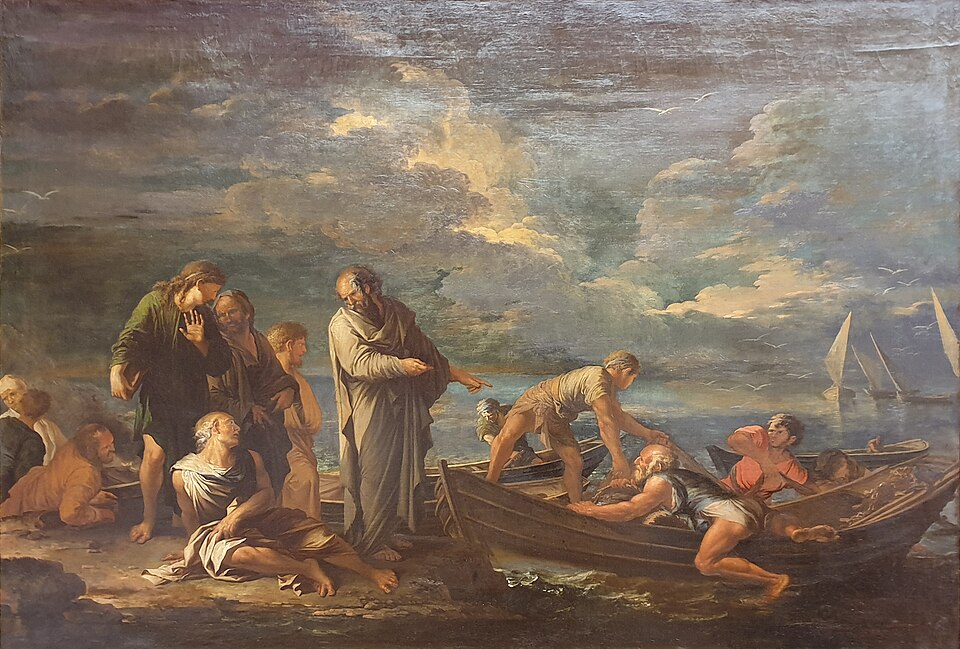
Good question, really! Imagine you draw ten triangles in the sand and each time the calculation is correct. You might think, 'It always works.' But how can you be sure about the eleventh? The thousandth? A triangle no one has ever drawn? A proof is a demonstration that holds for all triangles at once, even those that don't exist yet. My disciples drew their figures on wax or in the sand, with ruler and compass. And in the end, they no longer said 'I believe.' They said 'I know.' That is the gift of mathematics.
—Is it true that you thought you remembered your past lives?
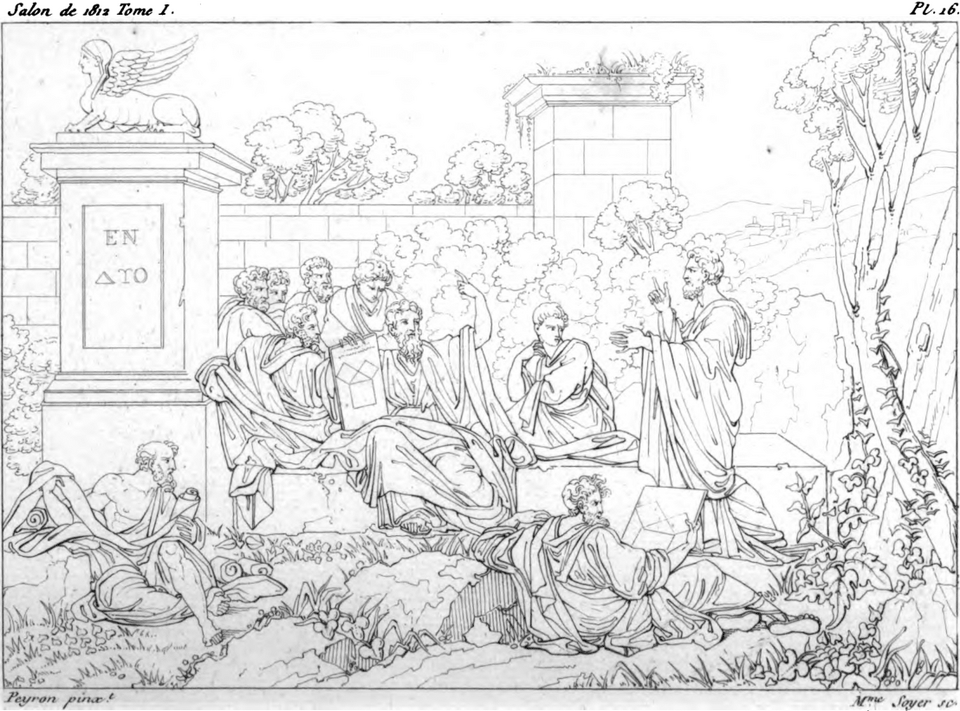
Yes, my child, and I know it seems strange. I believed the soul never dies. When the body dies, it passes into another body. This is called metempsychosis — a big word for a simple idea: the soul travels. I claimed to remember having been Euphorbus, a warrior of the Trojan War, then a fisherman, before being born in Samos. Real lives or dreams? I don't ask you to believe me. But understand this: for me, every living being perhaps carries an already ancient soul. That changes the way you look at the world.
The soul does not die; it travels from body to body.
—Is that why you didn't eat meat?
Exactly, you've understood everything! If the soul passes from one body to another, then that animal before you might hide the soul of a human being. Eating its flesh would be... you can imagine the discomfort. So among us, the meal was always without meat: grains, fruits, vegetables, honey. That was new, in my time, to refuse to kill for food. My disciples respected all living things. It was not just a rule of cooking, you see. It was a way of saying that all life deserves respect. Even the smallest, even the one that does not speak.
—What books did you write so that we know your ideas?
Now I will surprise you: none. I left no book, not a line from my hand. Everything you know about me comes from my disciples, or from authors born centuries later. A certain Diogenes Laërtius wrote my life more than seven hundred years after my death! Imagine someone telling your childhood a very, very long time from now, without having known you: there would be truth, and much invention. That is my case. Between the real Pythagoras and the legendary Pythagoras, even today's scholars struggle to decide. I have become somewhat of a story.
I wrote nothing — and yet they still speak of me.
—Does it bother you that we don't know what you really said?
At first, perhaps. But listen. The word philosopher, they say I chose it. It means 'friend of wisdom.' I did not want to be called 'sage' — that was too pretentious. Just someone who seeks, who loves to seek. So if my ideas have traveled, changed, grown in the mouths of others, it means they were alive. The theorem bears my name, but thousands of children today prove it better than I did. And you, this morning, came to ask questions. That, you see, is my true school continuing. Much more solid than a book.
I am not a sage: just a friend of wisdom.
Read further
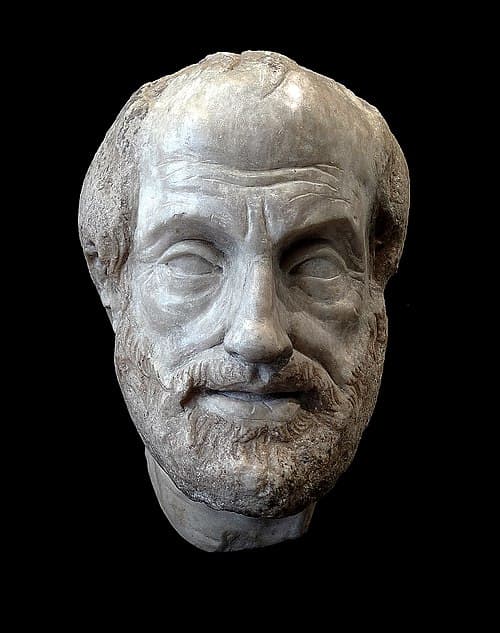

This imaginary interview was generated by artificial intelligence from sources documented in Pythagoras's profile. It dramatises what the figure might have said based on what we know about them, but does not constitute attested historical testimony. For primary sources and factual documentation, refer to the full profile.