Imaginary dialogue between Polycrate de Samos and Pythagoras
by Charactorium · Pythagoras (582 av. J.-C. — 490 av. J.-C.) · Sciences · Philosophy · 5 min read
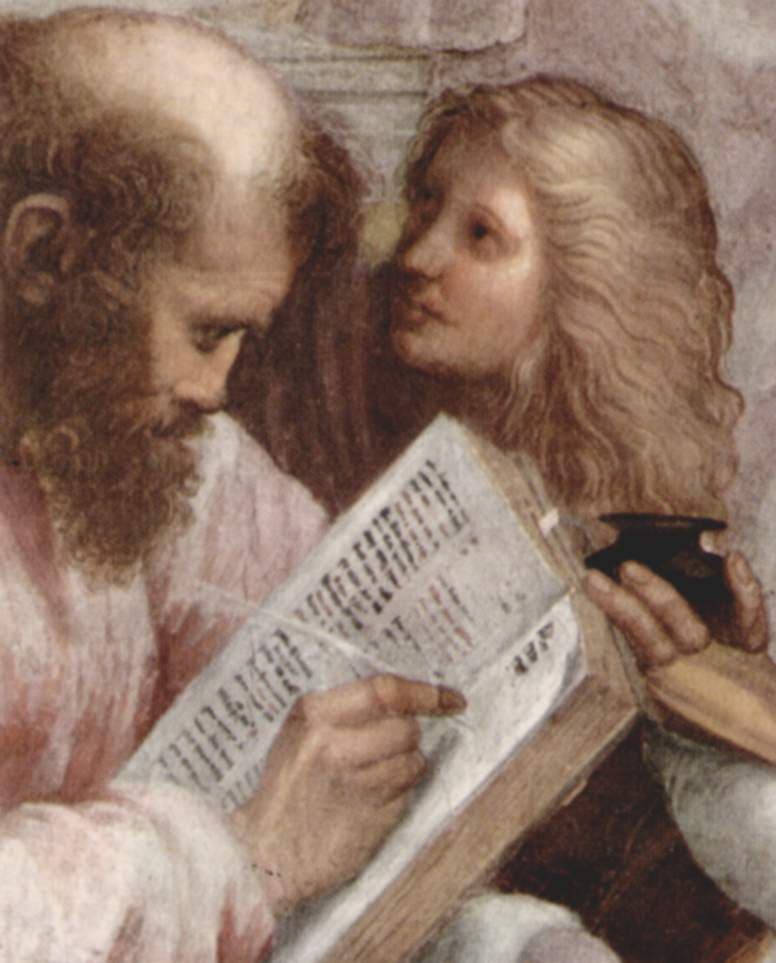
It is in the palace overlooking the port of Samos, around 535 BC, that Polycrates, master of the island, summons Pythagoras, son of Mnesarchus. Through the open windows rises the din of the shipyards: the tyrant is building a breakwater and piercing the mountain with a tunnel, and the whole island labors for his glory. The two men have known each other for a long time, and Pythagoras has just returned from a long stay with the priests of Egypt. Polycrates knows this: this sage who speaks of numbers and souls is thinking of leaving Samos — and he intends to find out why.
—I am told, Pythagoras, that passing by a forge you discovered the secret of sounds in the clash of hammers. Tell me how.
You remember, Polycrates, the din of the forges in our port, where the bronze of your ships is beaten? One day, passing by one of them, I heard that some hammers were in tune and others clashed. I weighed the masses: the pleasing sounds came from weights linked by simple ratios. Back home, I stretched equal strings and hung similar weights. Thus I found that the octave corresponds to the ratio two to one, the fifth to three to two, the fourth to four to three. Do you understand what this means? What charms the ear is not a whim: it is number made audible. Beauty obeys measure, and measure can be counted.
What charms the ear is not a whim: it is number made audible.
—At my court, your fingers on the lyre soothe my guests. But you claim that this instrument hides more than mere entertainment?
When I play before you, Polycrates, you hear only a pleasant sound; I touch an order. Shorten a string by half, it sings the octave; by two-thirds, it gives the fifth. The hand that plucks merely obeys proportions that the ear recognizes without knowing how to name them. I call this harmonia: the accord, but also the hidden order that holds together dissimilar things. And if a string obeys number, why should the heavens escape it? The stars that revolve above your breakwater perhaps follow intervals like mine. The lyre is not a toy: it is the smallest model of the world, one that can be held in one's arms.
—You return from Egypt with your head full of calculations. But what is the use of counting, Pythagoras, if not to measure my lands and my taxes?
You measure lands; I seek what lands themselves are made of. Count with me: one point, then two, then three, then four. Arrange them in a triangle, you get ten, the perfect number. We call it tetractys, and my disciples hold it sacred. The One, the monad, is the source of all; from it are born the line, the surface, the solid. Numbers are not only for counting your coins, Polycrates: they are the very principles of things. The even and the odd, the limited and the unlimited — these are the true foundations, more solid than the stone of your breakwater. He who knows number knows the fabric of reality.
Numbers are not only for counting your coins: they are the very principles of things.
—Your disciples recognize each other, it is said, by a five-pointed star traced in secret. Why this sign rather than another, my friend?
You are well informed, Polycrates — a tyrant has ears everywhere. Yes, the five-pointed star is our sign of recognition, for it hides admirable proportions: each line cuts another according to a ratio that repeats infinitely. To know how to read the harmony in it is already to be one of us. And this word I use to designate the whole — kosmos — I take it to mean order, adornment. The world is not chaos: it is an arrangement, beautiful because measured. Where the common man sees only a jumble of stars, I see a city governed by number, without revolt or flattery.
—Strange things are whispered about you, Pythagoras: that the soul does not die with the body. You who have traveled so much, what do you know of it?
What the priests of Egypt kept to themselves, I tell you plainly: the soul does not perish. When the body falls, it passes into another — man, beast, perhaps plant. This is what we call metempsychosis. Think what that changes, Polycrates: death is only a threshold, not an end. The slave you make toil on your breakwater may carry the soul that was once a king; and yours, tomorrow, will travel elsewhere. That is why I do not fear leaving Samos: wherever I go, my soul follows me and keeps memory. True exile is not changing islands, but forgetting what one has been.
Death is only a threshold, not an end.
—My cooks complain: you refuse the meat of my feasts. Is it true that you remember having lived other lives?
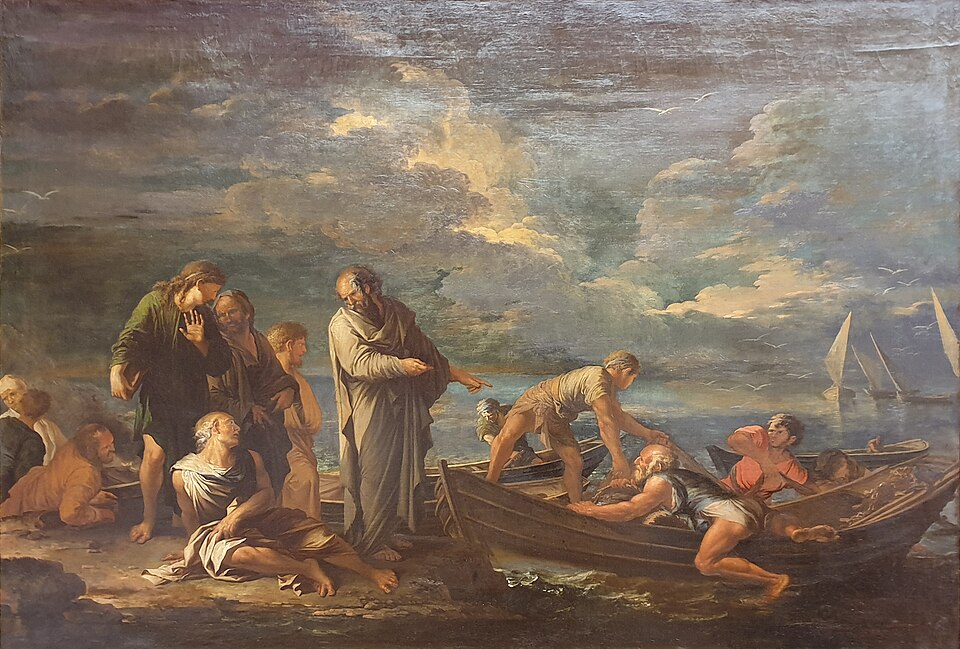
You mock me, Polycrates, but listen. I remember what others forget when reborn: I was Euphorbus, the Trojan warrior who once fell under the blows of Menelaus, then a fisherman, then still others, before being born son of Mnesarchus. If the soul passes from one body to another, how could I bring to my mouth the flesh of an animal? I might be devouring the soul of a relative, a friend, a host I once loved. That is why, at your table, I content myself with bread, honey, vegetables, and fruits. It is not disdain for your hospitality: it is respect for the living. He who believes the soul immortal cannot treat any being as mere meat.
—I want you in Samos, near me. Yet you look toward Italy: what city do you think to found there that cannot be built here?
You honor me by wanting to keep me, and I do not forget it. But what I seek, Polycrates, cannot be born in the shadow of a single all-powerful man — forgive my frankness. I dream of a community, over there, perhaps in Croton, where one would live according to a single rule: goods held in common, silence imposed on newcomers, days shared between the study of numbers, music, and self-examination. In the morning, walk and remember; in the afternoon, trace figures in the sand; in the evening, a frugal meal and confession of one's faults. Not a court, but a brotherhood of seekers. Here, everything serves your glory; there, I want everything to serve wisdom.
—I am told of your bizarre rules: not to eat beans, not to touch a white rooster. Are you mocking me, or are you serious?
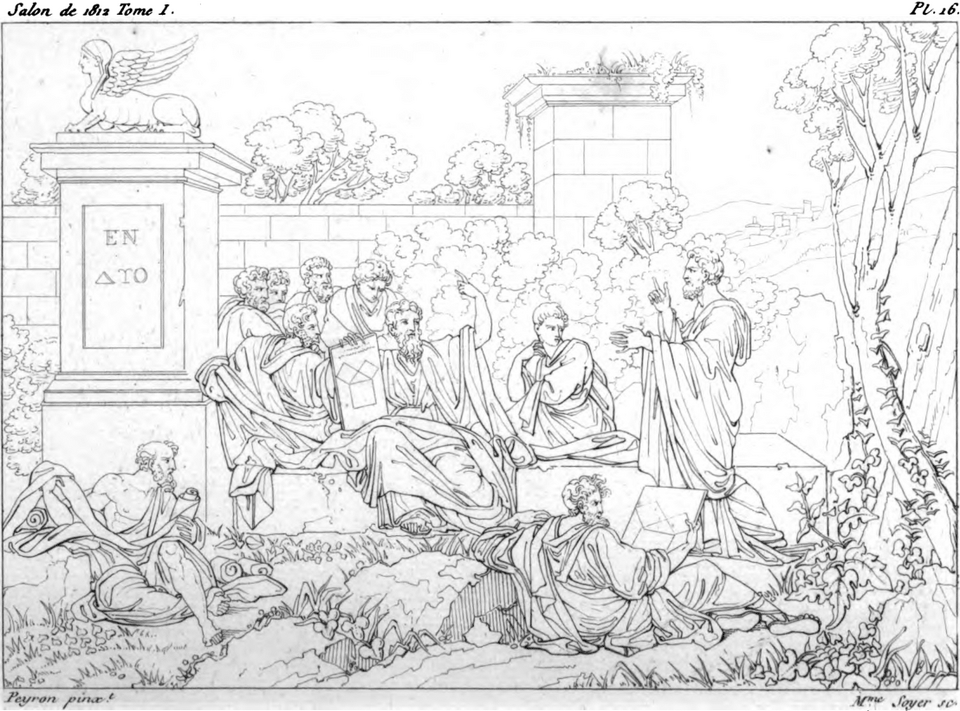
I am very serious, even though I know how much it amuses you. We call these precepts acusmata — things heard, things listened to from the mouth of the master. Yes, I forbid my disciples beans, contact with a white rooster, and many other things. You ask me the reason? Not all can be told to one who has not yet learned to be silent and obey. Some regulate the body, others the soul, others keep a hidden meaning that only time reveals. Do you think, Polycrates, that a man incapable of mastering what he eats will ever know how to master his thoughts? Discipline in small things prepares for the science of great things.
—These prohibitions, Pythagoras — would you go so far as to sacrifice your life for them? Must a sage really die for a field of beans?
You ask a harsh question, and I will not dodge it. A rule that bends as soon as danger appears is merely fair-weather ornament. If my enemies pursued me one day — and a sage who disturbs always makes them — and a field of beans blocked my escape, I believe I would stop rather than cross it. You find this senseless? Yet think: what good is it to save a body by betraying what made it worth saving? The soul, for its part, will continue its journey. Better to die faithful than to survive perjured. You who command by force, Polycrates, perhaps know that a man who cannot be made to recant is the freest of all.
Better to die faithful than to survive perjured.
—Be frank, Pythagoras: if you really leave, is it my way of governing Samos that you flee?
You ask me the truth, I owe it to you. You have made Samos a powerful island: your fleet rules the sea, your breakwater defies the waves, your tunnel pierces the mountain. No one denies it. But free thought breathes poorly under a single master, however skillful. Where one man decides everything, the rest fall silent or flatter — and wisdom grows neither in the silence of fear nor in the noise of courtiers. I do not leave out of hatred for you, Polycrates; I leave because a school of measure cannot live where everything depends on the whim of one. Remember me without rancor: I take from Samos more than I leave behind.
Read further
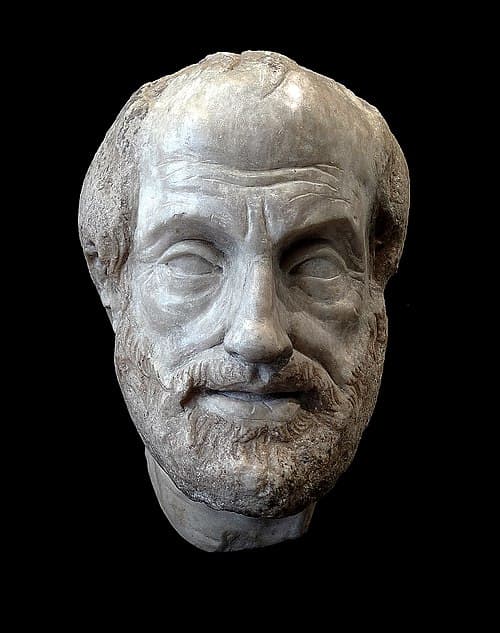

This imaginary interview was generated by artificial intelligence from sources documented in Pythagoras's profile. It dramatises what the figure might have said based on what we know about them, but does not constitute attested historical testimony. For primary sources and factual documentation, refer to the full profile.