Imaginary interview with Pythagoras
by Charactorium · Pythagoras (582 av. J.-C. — 490 av. J.-C.) · Sciences · Philosophy · 6 min read
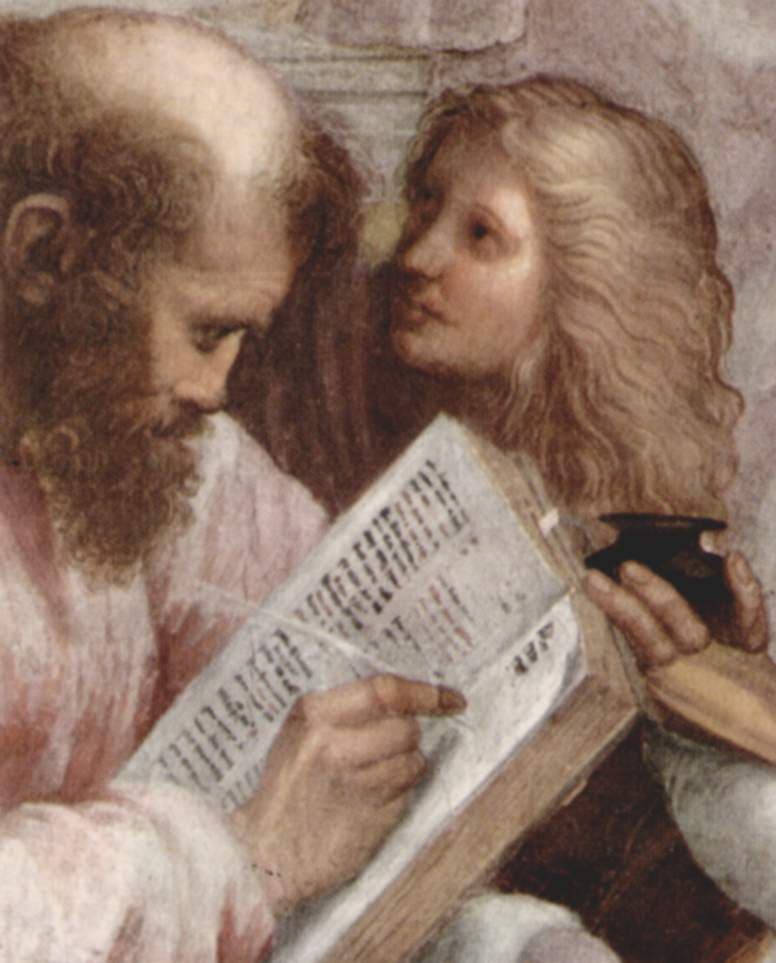
On the heights of Croton, in a courtyard open to the sea where the sand still bears traces of a figure drawn with the tip of a stick, an old man draped in white receives us in silence. He waits for the sun to clear the wall before speaking, because according to him nothing just is said before the light. Here is Pythagoras, son of Mnesarchus, as one imagines him in the evening of his life.
—How did you come to Croton, you who were born so far from here?
I was born on Samos, under the shadow of Polycrates. A tyrant feeds his artisans and his poets well, but he stifles those who seek the order of things, because order frightens him. I took the sea westward, toward this Magna Graecia where new cities still let a man breathe. At Croton, I found robust people, proud of their athletes, ready to hear that a healthy body is nothing without a tuned soul. There I built not a school, but a common life: one shared one's goods, one ate at the same table, one remained silent for years before having the right to speak. A city within the city, that is what I wanted — a place where number would reign before men.
A tyrant feeds his poets, but he stifles those who seek the order of things.
—It is said that you discovered harmony while passing a forge. What really happened that day?
I was walking past a blacksmith's workshop, my mind elsewhere, when the hammers stopped me. They struck the iron together, yet some sang in tune, others quarreled. I entered. I weighed the masses. What made the accord was neither the man's arm nor the heat of the coals: it was the weight, the ratio of one number to another. Back home, I stretched strings and suspended weights equal to those of the hammers. The half-length string gave the octave, two to one; the three-quarters, the fourth. On my lyre, suddenly, I was no longer touching sounds but fractions. The world had let me hear, by chance at a forge, that it was made of proportions.
I was no longer touching sounds on my lyre, but fractions.
—You repeat that all is number. How can a number be anything other than a tool for counting oxen and amphorae?
You count your amphorae, and you believe number is at your service. Reverse the idea: without number, your amphorae would not hold together, nor the seasons, nor the strings of my lyre. Look at the tetractys, these ten points arranged in four lines — one, two, three, four. In this small pyramid lies the point, the line, the surface, the volume: the whole world rises from unity, from the monad. When my disciples draw a square on the sand of this courtyard, they are not drawing, they are praying. Later they will say of us, I think, that we held the principles of number to be the principles of all things. That is correct. I even gave a name to this ordered whole: kosmos, because a well-ordered universe is as beautiful as a face.
When my disciples draw a square on the sand, they are not drawing, they are praying.
—Let us speak of that theorem which even merchants know. What did you add to what the Egyptians already knew?
The priests of Memphis stretched knotted cords to survey their fields after the flood, and their triangles stood upright without them knowing why. That troubled me: knowledge that works without knowing why is superstition dressed up as utility. Concerning the square of the hypotenuse, I wanted not a geometer's trick, but a necessity that no god could undo. The square erected on the long side weighs exactly as much as the other two combined — not sometimes, not often: always, and for this reason that it cannot be otherwise. That, you see, is the difference between the surveyor and the philosopher. One measures the earth, the other asks the earth to give an account.
Knowledge that works without knowing why is superstition dressed up as utility.
—Your disciples live under strange prohibitions. Why must one not touch a bean?
You smile, like all those outside. Not eating beans, not walking on main roads, not touching a white rooster: these are what we call our acusmata, the things heard. Some hide a health reason, others a reason of the soul, a few a meaning that even my oldest disciples can no longer decipher — and that is quite well. A rule understood too quickly, one bends to one's convenience; an obscure rule keeps the mind alert. As for the bean, I will only say that it resembles things a pure man must not swallow. The vulgar see a whim. My disciples see a discipline of the threshold: he who cannot refuse a bean will not know how to refuse an injustice.
He who cannot refuse a bean will not know how to refuse an injustice.
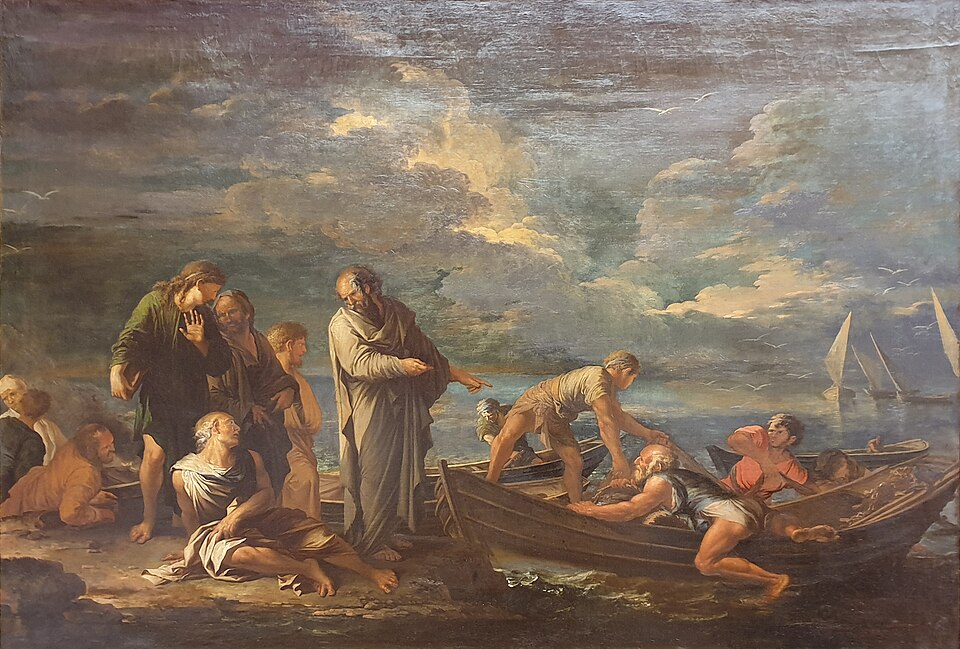
—You impose a meatless diet on everyone. Is it a matter of health or belief?
The two are one, but belief commands. We rise before dawn to walk in silence by the water, and the body we take on this walk must be light, washed, sober. At our evening table, we serve only bread, vegetables, fruits, honey — never the flesh of a breathing being. For if the soul passes from body to body, who tells you that this ox at the stall does not carry the soul of a man you loved? Eating an animal could be devouring a guest. In the evening, before sleep, each of us reviews the acts of his day: what have I done wrong, what have I forgotten to do right? The regimen of the belly is nothing without the regimen of memory.
The regimen of the belly is nothing without the regimen of memory.
—You claim to remember past lives. What do you say to those who take you for a fabulist?
I remember having been Euphorbus, under the walls of Troy, pierced by the spear of a Greek. Before him, I was still others, a fisherman, a nameless man. You may laugh; I do not ask to be believed, I say what I know. The soul is not born with the body and does not die with it: it enters, it dwells, it leaves, like a traveler changes inns without changing his road. This is what we call metempsychosis. Cicero will one day say, I imagine, that all souls proceed from a single universal nature of which number and harmony are the foundation — and he will have grasped the essential. If the soul endures, then my life is not a line that ends, but a point on a circle.
The soul enters, it dwells, it leaves, like a traveler changes inns without changing his road.
—Why attach so much importance to music, which for many is only a banquet entertainment?
Because music is the only thing the ear can touch of number. The banqueter hears a pleasant song; I hear the octave, the fifth, the fourth, that is, two to one, three to two, four to three — the same ratios that hold the stars in their course. The spheres of the sky, turning, produce an accord we no longer hear because it has sounded since our birth, just as the blacksmith no longer hears his forge. In the morning, I have my young ones play the lyre to tune their souls before study, just as one tunes the instrument before singing. Healing a troubled soul with a just melody is not magic: it is arithmetic applied to the living.
Music is the only thing the ear can touch of number.
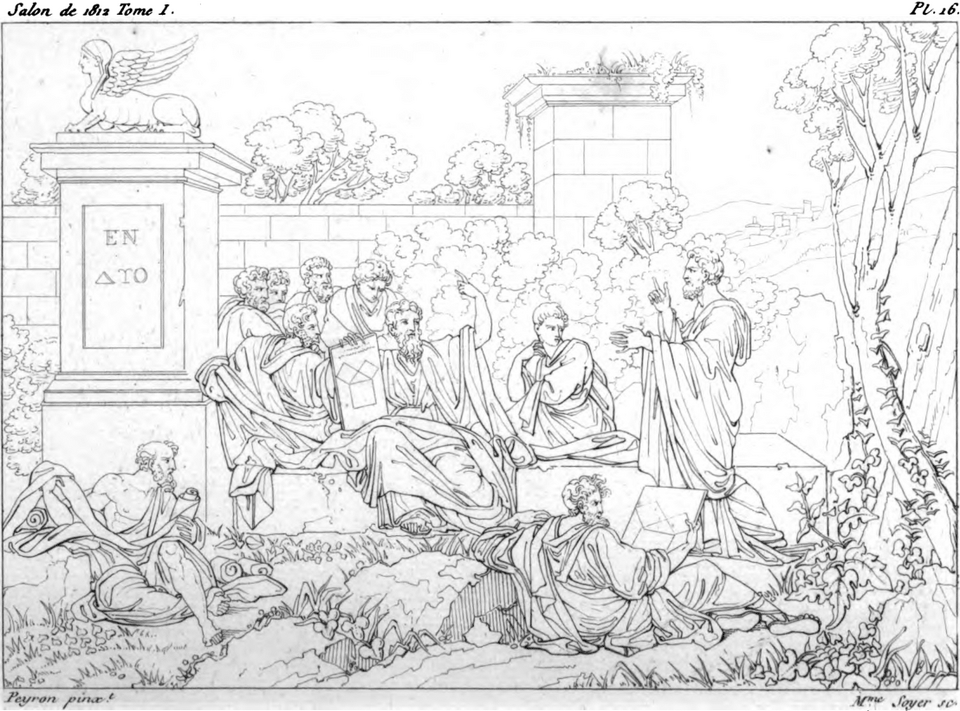
—What would you say to those who fear death, who do not have your certainty about the soul?
I would tell them to look at the pentagram that my disciples wear as a sign of recognition, this five-pointed star that closes on itself without end. Death is not a wall, it is a threshold: one lays down a worn-out body as one leaves a torn himation. What frightens me is not dying, it is dying out of tune, the soul encumbered with unexamined faults. That is why in the evening, each of us asks: have I transgressed the measure? The fear of death always comes from a life that has remained false, like a badly stretched string. Tune your life, day after day, and the last note will be only one more silence in a long harmony.
The fear of death always comes from a life that has remained false, like a badly stretched string.
—Your community is said to be increasingly powerful in Croton. Does this influence not attract enemies?
When men who keep silent and share everything become numerous, the ambitious outside fear them. We never sought office, but we were entrusted with the city's councils, because a man who has governed himself to the point of refusing a bean will know how to govern an assembly. This breeds jealousy. I already hear grumbling from those who have been set aside; I know that one day the common house may blaze, our tables overturned, and I may have to flee to Metapontum. A brotherhood of measure always disturbs the excess of others. They never forgive those who prove that another life was possible.
They never forgive those who prove that another life was possible.
—You refuse to be called a sage. Why this modesty?
Sage — sophos — is a word I leave to the gods and illustrious dead. A living man does not possess wisdom; at best, he desires it and pursues it as one pursues a figure one has not finished drawing in the sand. Therefore I prefer to call myself philosophos, a friend of wisdom, one who walks toward it without claiming to have attained it. See the tetractys again: even it, which contains so much, is only a threshold toward what I will never fully understand. He who thinks he has arrived stops seeking, and he who stops seeking closes himself like a fist. I am not a sage; I am a man who has not given up becoming one.
I am not a sage; I am a man who has not given up becoming one.
Read further

This imaginary interview was generated by artificial intelligence from sources documented in Pythagoras's profile. It dramatises what the figure might have said based on what we know about them, but does not constitute attested historical testimony. For primary sources and factual documentation, refer to the full profile.