Kids interview Rābiʿa al-ʿAdawiyya
by Charactorium · Rābiʿa al-ʿAdawiyya (vers 717 — 801) · Spirituality · 5 min read
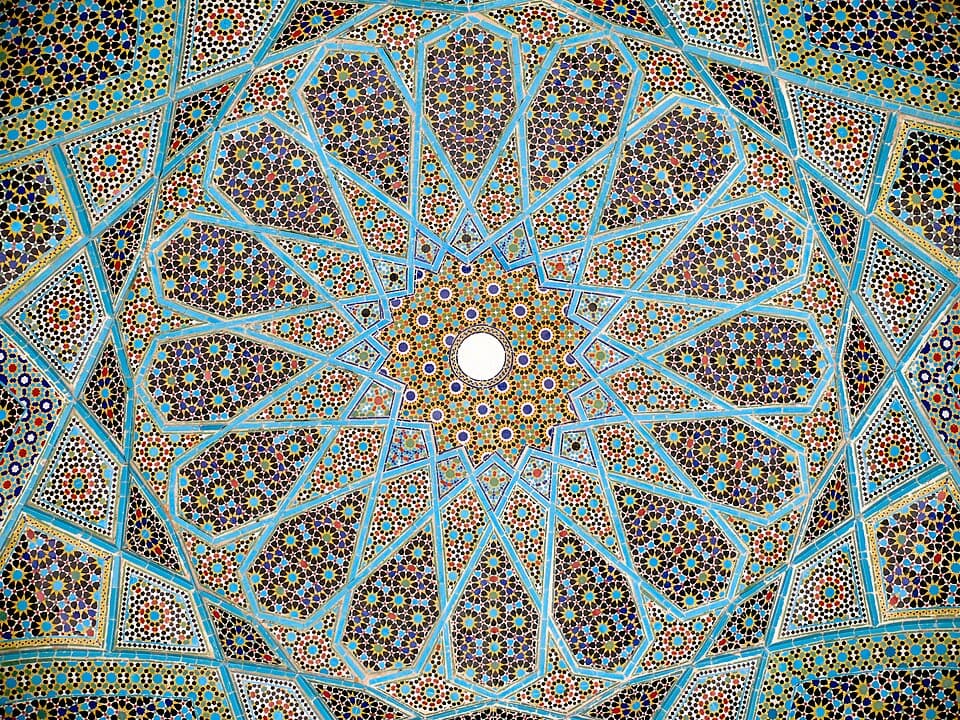
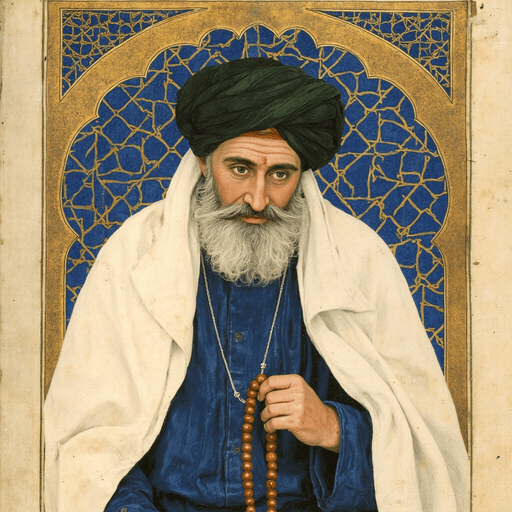
Two twelve-year-old visitors step through the door of a small mud-brick house in Basra. It is dark inside, almost empty: a mat, a lamp, a jug. A woman in grey wool greets them with a smile and invites them to sit down.
—Is it true you were born poor? Were you a slave as a child?
Yes, my child. I was born in Basra around the year 717, into a family that had almost nothing. When I was very small, I was sold. I belonged to a master, like an object. Imagine: you don't have the right to decide your own day, or even your rest. At night, though, I prayed. One time, my master woke up and saw a strange light around me while I was speaking to God. It moved him so much that in the morning, he freed me. That day, I became free — and I understood that I wanted to belong to God alone.
I was sold like an object, but my heart belonged to no one.
—Once you were free, where did you go? Weren't you scared alone?
I went into the desert, near the city. You're right, it was frightening. Imagine a place with no house lights, just wind and sand, and huge stars above. But for us seekers of God, the desert is not empty. It's the place where you strip away everything, where you remain alone facing something greater than yourself. I had no master, no rich family, nothing left to lose. So I was no longer afraid of people. I only had the desire to draw closer to God, like a thirsty person seeking a spring.
—What did your home smell like? What did you eat in the morning?
My home was very simple, my child: mud brick, almost empty. It smelled of lamp oil and a little dry dust. I had only a prayer mat, a water jug, and nothing else. In the morning, I ate very little: barley bread, sometimes a few dates, water. The food of the poorest in the city. Rich people brought me good dishes, but I refused. Why? Because I felt that loving food too much, or pretty things, clutters the heart. And I wanted to keep my heart light and free for God.
A heart too full of things has no room left for what matters.
—I heard a governor wanted to marry you. Why did you refuse?
It's true! Several important men asked for my hand, even the governor of Basra. Imagine, the most powerful man in the city! Many girls would have said yes to live in a big house. I said no, gently. I explained to them that I already belonged entirely to God. My heart was taken, there was no room left. This choice to live simply, without a husband, without wealth, without jewels, we call zuhd, renunciation. It's not about punishing yourself. It's about choosing one thing, the most precious, and letting go of everything else without regret.
My heart was already taken: there was no room left for anyone else.
—They say you ran through the streets with a torch and a bucket of water. What was that for?
Ah, that story! Yes, I was seen running through the alleys of Basra, a flaming torch in one hand, a bucket of water in the other. People looked at me like I was crazy. So I explained to them: with the fire, I wanted to burn Paradise; with the water, to extinguish Hell. Not for real, of course! It was a metaphor. I meant this: many people pray to God just out of fear of punishment, or to gain a reward. I dreamed of a world where we would love God for Himself. Just because He is beautiful. Without calculation, like loving a friend.
I wanted to burn Paradise and extinguish Hell, so that only love would remain.
—But that's weird, wanting to burn Paradise. Everyone wants to go there, right?
You're quite right to find that strange, my child! Yes, everyone dreams of Paradise. But think with me. If you are nice to a friend only so they'll give you a candy, do you really love them? Or do you love the candy? This pure love, without candy, we call maḥabba. Loving God not for what He gives, but for who He is. Paradise is beautiful, I won't deny it. But I didn't want fear or the desire for a reward to be the reason for my love. I wanted to love for love's sake.
If you are nice for a candy, it's the candy you love, not your friend.
—What were your nights like? Didn't you sleep?
My nights were my treasure, my child. In the evening, after the sunset prayer, I would shut myself in my room. I would unroll my mat and stay there, speaking to God, until dawn. These intimate conversations, alone in the night, we call munājāt. I often wept, not from sadness, but from emotion at being so close to Him. I slept very little, it's true. But imagine finally reuniting with your best friend after a long absence: you don't want to sleep, you want to talk all night. For me, that was every night.
When you find the one you love, you don't feel like sleeping.
—What did you say to God at night? Did you ask for things?
Very little, actually. I was even ashamed to ask Him for worldly things — a bit of money, comfort. I told myself: if I'm ashamed to beg that from a rich person, how dare I ask it from God? So I offered Him mostly my heart. One night, I said this to Him, and it was remembered: “If I worship You out of fear of Hell, burn me; if I worship You for Paradise, deprive me of it; but if I worship You for Yourself, do not deprive me of Your eternal beauty.” That is my whole prayer. Not a shopping list. Just the desire to see Him.
I did not offer a list of gifts to ask for: I offered my heart.
—There was a very famous scholar who came to see you. How did that make you feel?
Yes! They speak of Ḥasan al-Baṣrī, a great scholar and sage of the city, very respected. In my time, it was rare for a famous man to come listen to a woman, and a former slave at that! Yet he came to sit beside me to talk about God. He said that a single day spent with me taught him more about God than entire years in his books. Can you imagine my surprise? But you see, I took no pride in that. True knowledge of God, maʿrifa, is not learned only from books. It is lived, in the heart, by loving.
Knowledge of God is not stored in books: it is lived in the heart.
—Today, what would you like people to remember about you?
What a beautiful question to end with, my child. I was not seeking fame, you know. I lived poor, in grey wool, in an empty house, and that was my happiness. If you must remember one thing about the old woman of Basra, let it be this: we can love without expecting anything in return. Love God, but also love others, in the same way — without calculating, without demanding reward. It is the hardest and the most beautiful. Long after me, poets continued to sing of that love. And if today two children come to ask me questions with such heart, then my desire is not dead. It lives in you.
We can love without expecting anything in return: it is the hardest and the most beautiful.
This imaginary interview was generated by artificial intelligence from sources documented in Rābiʿa al-ʿAdawiyya's profile. It dramatises what the figure might have said based on what we know about them, but does not constitute attested historical testimony. For primary sources and factual documentation, refer to the full profile.