A figure of Yemeni Sufism, presented as a spiritual master (sheikh) connected to the mystical tradition of Islam. Reliable biographical sources about him are scarce, and his existence as well as his dates remain poorly documented.
Abdal Hayy ibn Mawlud
Abdal Hayy ibn Mawlud
5 min read
Frequently asked questions
Key Facts
- Connected to the Sufi tradition of Yemen, a region marked by the rise of mystical brotherhoods during the Middle Ages.
- Presented as a sheikh (master) transmitting an Islamic spiritual teaching.
- His dates of birth and death are not reliably attested in the available sources.
Works & Achievements
As a Sufi master, his main work is said to have been the training of disciples to whom he passed on spiritual practices.
Organizing collective sessions of invocation and recitation of the name of God, the heart of a brotherhood's life.
Spreading the Sufi ideal of detachment from material goods in favor of the inner quest for God.
Spiritual sayings that oral tradition ascribes to Sufi saints to guide believers.
Establishing a place of retreat and teaching where followers of the path would gather.
Anecdotes
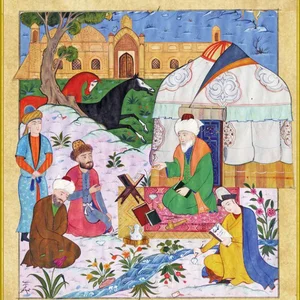
Abdal Hayy ibn Mawlud belongs to the memory of the Sufi brotherhoods of Yemen, a region that, in the Middle Ages, saw the flourishing of circles of mystics who passed on their teachings from master to disciple. Like many of these sheikhs, his memory was preserved above all through oral tradition and edifying stories rather than written records.
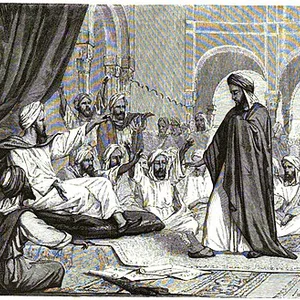
In the Sufi tradition, a master like him would have borne the title of “sheikh,” a sign that he guided disciples along the “way” (tariqa) leading to inner knowledge of God. This role of spiritual guide was considered just as important as that of a learned teacher.
The name “Abdal” refers, in Muslim mysticism, to the “abdal,” hidden saints who, according to tradition, secretly maintain the balance of the world. Being associated with this word was enough to surround a figure with an aura of legendary holiness.
Figures like Abdal Hayy ibn Mawlud are often honored through the visitation (ziyara) of their tomb, which becomes a place of prayer where the faithful seek a blessing (baraka). In Yemen, these mausoleums of Sufi saints set the rhythm of religious life in the villages.
Primary Sources
A biographical collection ranking the Sufi masters by generations, the model for the notices devoted to the sheikhs of the mystical path to which belongs the memory of figures such as Abdal Hayy ibn Mawlud.
A reference treatise on the doctrine and the spiritual stages of Sufism, transmitting the sayings and examples of the masters to instruct disciples on the path.
A biographical chronicle of the scholars and saints of Yemen, a genre in which the trace of the local Sufi sheikhs and their spiritual lineages is preserved.
Key Places
Medieval heartland of active Sufi brotherhoods, the presumed homeland of the sheikh.
Great scholarly city of medieval Yemen, a center of religious teaching and Sufi mysticism.
Trading port of Yemen where scholars, merchants, and Sufi brotherhoods passed through.
Holy city of Islam, destination of the pilgrimage that every believer aspires to make at least once.
The master's reputed tomb, which became a place of pious visitation and a quest for blessing among the faithful.
Typical Objects

A string of 99 beads used to recite the names of God and practice dhikr, the repeated invocation cherished by Sufis.

A coarse wool cloak handed to the disciple by his master, a symbol of entering the mystical path and of the spiritual lineage.

A copy of the sacred book of Islam, meditated upon and recited daily by the sheikh and his disciples.

Yemen is the birthplace of coffee drinking, which Sufis drank to stay awake during the long vigils of nightly prayer.

A small rug on which the believer performs his five daily prayers oriented toward Mecca.

The staff of the wandering dervish, companion of Sufis traveling from town to town to visit masters and holy tombs.
School Curriculum
Vocabulary & Tags
Key Vocabulary
Daily Life
Morning
The sheikh rises before dawn for the fajr prayer, followed by a long period of dhikr (invocation). The morning is divided between reading the Quran and welcoming the first disciples who come seeking counsel.
Afternoon
The afternoon is devoted to teaching: seated at the center of a circle, the master comments on spiritual texts and answers his followers' questions. He also observes the ritual prayers that punctuate the day.
Evening
After the evening prayer, a vigil (sama or collective dhikr) gathers the brotherhood to recite the names of God, sometimes late into the night. Yemeni coffee helps keep everyone awake through these long sessions.
Food
The diet is frugal, in keeping with the Sufi ideal of sobriety: bread, dates, lentils, and grain porridges. Voluntary fasting is frequent, and coffee holds a special place in nighttime practices.
Clothing
The master wears a simple long woolen tunic and a turban, sometimes the khirqa, a cloak symbolizing his spiritual rank. The modesty of his clothing reflects his renunciation of worldly riches.
Housing
He lives in a modest dwelling or a zawiya, a retreat that also serves as a teaching hall and a refuge for travelers. The furnishings are reduced to mats, cushions, and a few manuscripts.
Historical Timeline
Period Vocabulary
Liens externes & ressources
Références
Œuvres
Transmission orale de la voie (tariqa)
moyen-age
Cercles de dhikr
moyen-age
Enseignement de la pauvreté spirituelle (faqr)
moyen-age
Paroles et maximes attribuées
moyen-age
Fondation présumée d'une zaouïa
moyen-age