Imaginary interview with Rābiʿa al-ʿAdawiyya
by Charactorium · Rābiʿa al-ʿAdawiyya (vers 717 — 801) · Spirituality · 5 min read
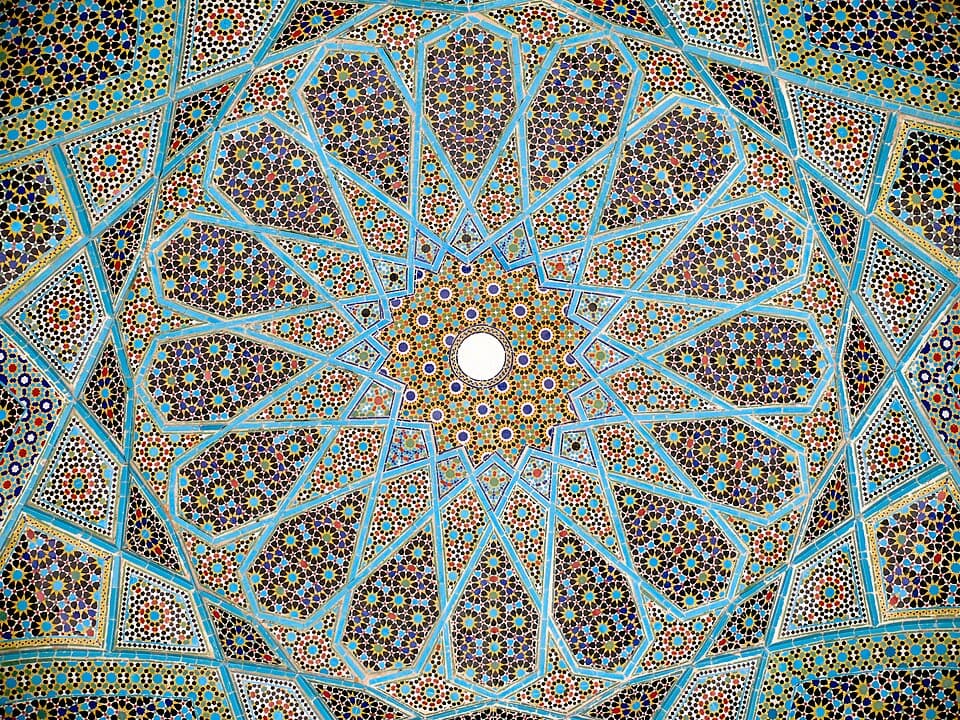
Basra, at the hour when the markets empty and the river reflects the last glimmers of daylight. In a mud-brick dwelling, almost bare, a woman in coarse woolen clothing receives us, her oil lamp already lit for the coming night. They say the city's scholars queue at her door; tonight, it is to us that she speaks.
—How did you go from being a slave to what people now call a friend of God?
I was born poor, into a family of the ʿAdawiyya tribe, and childhood sold me. I belonged to a master as the clay pitcher belongs to the hand that fills it. One night while I was praying, a radiance settled upon me without my doing anything—I was simply keeping vigil, as I have always done. My master, awakened, saw this light and trembled; in the morning he freed me. So I went out into the desert of Basra, where one sheds oneself like a cloak. Understand me: I did not conquer my freedom, I received it. One does not become a waliyya, a friend of God; one lets Him take hold of one.
One does not become a friend of God; one lets Him take hold of one.
—It is said that you were seen running through the streets with a torch in one hand and a bucket of water in the other. What were you trying to do?
You have heard of it, then, even in your country. I wanted to set fire to Paradise with this torch, and to drown Hell with this bucket of water. Let people stop at last! They pray as one haggles in the souk of Basra: so many prostrations for so much reward, so many fasts for the assurance of escaping the flames. It is still a trade, and trade has no place between the soul and its Lord. If Paradise no longer existed to entice, if Hell no longer threatened to frighten, who would remain to love God for His own sake? Those are my brothers. Maḥabba, true love, begins precisely where calculation ends.
They pray as one haggles in the souk: so many prostrations for so much reward.
—Many find this gesture scandalous. Are you not afraid of turning believers away from the fear of God, which keeps them upright?
Fear is a staff good for the child who does not yet know how to walk. I do not despise it—it has its place at the first step of the path. But would you want to die still holding the staff? Love, on the other hand, needs no threat. When I light my oil lamp in the evening, I do not light it for fear of the dark: I light it because the light is sweet to me. So it is with God. He who serves Him out of terror is really serving his own skin; he who serves Him out of hope is serving his own greed. As for me, I would have nothing remain between Him and me—not even concern for my own salvation.
Fear is a staff good for the child who does not yet know how to walk.
—You speak of loving God for Himself. How do you express that when you speak to Him in the night?
The night is my true hour. When the sun sets and Basra falls silent, I unroll my prayer rug and remain there until dawn whitens the threshold, weeping and supplicating. What I say to Him I have said a thousand times: if I worship You for fear of Hell, burn me in Hell; if I worship You for Paradise, deprive me of it; but if I worship You for Yourself alone, do not deprive me of Your eternal beauty. These words that my disciples call munājāt, intimate conversations, are not a poem I composed. They rise of their own accord, as water seeks the slope. By day, I receive people; by night, I receive only Him.
By day, I receive people; by night, I receive only Him.
—What happens inside you, exactly, during these long vigils?
I am told that a radiance sometimes lights my room during those hours—I do not see it myself, I am elsewhere. There comes a moment, in dhikr, when one has repeated the names of God until one is nothing but that breath, where the ḥijāb tears for an instant—that veil that separates the soul from His presence. Then I no longer know whether it is I who pray or He who prays in me. The Sufis call this fanāʾ, annihilation: the drop ceases to count itself when it falls into the sea. I ask for nothing in those moments. I am ashamed to ask God for the things of this world; how, then, would I ask anyone other than Him?
The drop ceases to count itself when it falls into the sea.
—Important men have asked for your hand in marriage, even the governor of Basra. Why did you turn them all away?
The governor himself, yes, and men of learning and virtue. I did not despise them; I asked them a single question, which none could answer: can you promise to live forever? For marriage binds two beings for the time of this life, and I am already bound, entirely, to Him who does not die. My contract is signed elsewhere. To take a husband is to share the heart, and mine has no second chamber in which to lodge another love. It is not disdain for men—it is that my heart is already full, and one does not pour into a full cup.
Can you promise to live forever? None could answer.
—You live in the most complete destitution and refuse gifts from the rich. Is this not a harshness you impose on yourself without need?
Look around you: a rug, a lamp, a pitcher, and nothing else. My bread is barley, my dates are counted, my water from the river—the food of the poorest in Basra, and it suffices me. People bring me dishes and fabrics; I send them back. What the Sufis call zuhd, renunciation, is not a mortification I inflict upon myself out of pride. It is a lightening. Every good I refuse is one less chain between Him and me. My rough woolen garment, the ṣūf from which we take our name, reminds me at every moment that I have no one to please. The voluntary poor person is the freest of people: he has nothing left to lose, therefore nothing left to fear.
Every good I refuse is one less chain between Him and me.
—The great Ḥasan al-Baṣrī used to consult you and acknowledged your spiritual superiority. How do you feel being listened to in this way, you, a woman?
Ḥasan is a venerable master, and that he crosses my threshold to sit and listen, I receive him as a brother on the path, not as a disciple at my feet. Before God there is neither man nor woman, neither scholar nor freed slave: there are only hearts, more or less turned toward Him. In the afternoon, my door opens; scholars, ascetics, seekers of truth come. I do not teach them from a book—I am not one of those who know God through pages. I am a ʿārifa, if you will: one who knows Him through experience, as one knows the taste of honey without being able to describe it to someone who has never tasted it.
One knows the taste of honey without being able to describe it to someone who has never tasted it.
—Basra is currently a great crossroads of scholars and debates. What do you think of all these doctors who dispute about the nature of God?
Our city is bubbling, it is true. Since the Abbasids moved the caliphate to Baghdad, the roads carry as many ideas as goods, and Basra fills with people who discuss God as one discusses the price of grain. I leave them to their subtleties. One can spend one's life debating the divine attributes without ever spending a night supplicating Him in tears. What use is it to prove the existence of the Beloved if one does not burn to join Him? The scholar who does not love is like a man who describes the sea perfectly without ever having wet his feet. I prefer a tear shed in the night to a thousand pages of controversy.
I prefer a tear shed in the night to a thousand pages of controversy.
—To conclude: if you knew that you would still be read in a century, in distant lands, what would you want to leave behind?
I do not write to endure; what I say rises toward Him, not toward posterity. But if, by some impossibility, my voice should travel through time—may it carry only one thing. Let people stop haggling with Heaven. The heart that loves and the tongue that praises are two gifts He has given me; what could I possibly offer Him that truly comes from me? Nothing, except to will Him Himself, and not His gardens or His rewards. If a single being, in a hundred years, learns through me to extinguish in himself fear and greed so as to love only eternal beauty, then my lamp will not have burned in vain.
Let people stop haggling with Heaven.
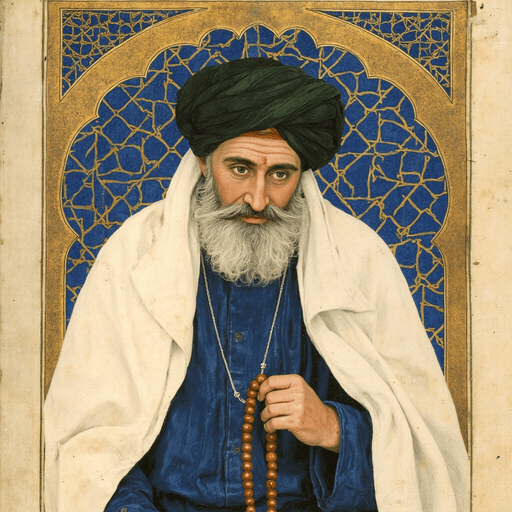
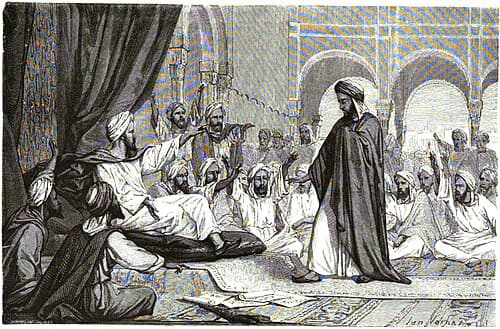

This imaginary interview was generated by artificial intelligence from sources documented in Rābiʿa al-ʿAdawiyya's profile. It dramatises what the figure might have said based on what we know about them, but does not constitute attested historical testimony. For primary sources and factual documentation, refer to the full profile.