Imaginary interview with Radia Perlman
by Charactorium · Radia Perlman (1951 — ?) · Technology · 5 min read
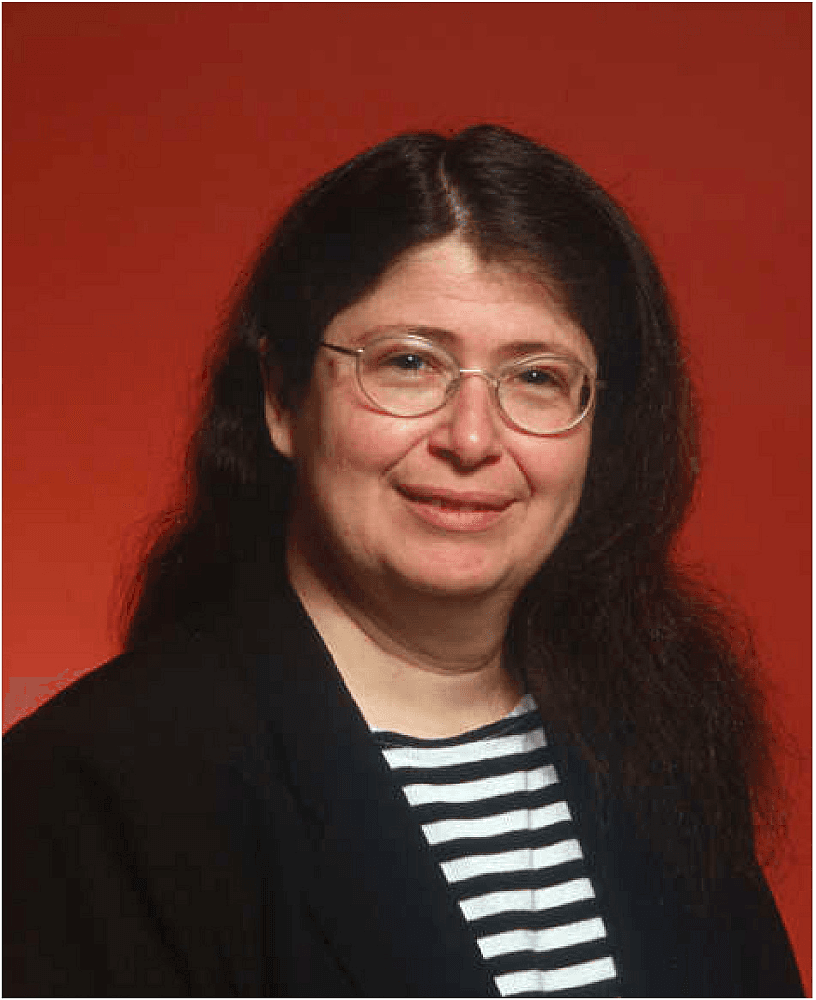
Somewhere in a Silicon Valley office, late 2000s, a whiteboard still covered with half-erased graphs. Radia Perlman, coffee in hand, pushes aside a stack of algorithm drafts to sit down. She talks fast, with the quiet irony of someone who has spent her life preventing machines from going in circles.
—Before protocols, there were children. How did you come to teach programming to kindergarteners?
It was at MIT, around 1976. I was given the slightly crazy idea of having very young children program in LOGO, that language where you command a turtle that draws on the screen. The problem was that the language as it stood was still too complex for five-year-olds who couldn't yet read fluently. So I trimmed it down, carved out a tiny subset, just a few commands, enough for a child to move their turtle and understand they were giving an order to a machine. I discovered something there that I never forgot: if you can't explain a system to a kindergartner, it's probably the system that's badly designed, not the child.
If you can't explain it to a five-year-old, it's the system that's badly designed, not the child.
—Let's talk about 1985. What were you trying to solve when you came up with Spanning Tree?
I was working at Digital Equipment Corporation, in Maynard, Massachusetts. I was given a very concrete problem: bridges, those little boxes that connected two network segments, became dangerous as soon as you used two for redundancy. Two paths between two points, and bam, packets would start going in circles, multiplying, until they flooded the entire network — what we called a broadcast storm. A storm, that's the right word: it paralyzed everything. I looked for a way for the boxes, without a conductor, to agree among themselves on a single loop-free skeleton. A few weeks later, I had the algorithm. The funniest thing is that it's still used in millions of switches.
Two paths between two points, and bam, packets would start going in circles until they flooded the entire network.
—You often emphasize the absence of a conductor. Why is that so important to you?
Because a network that depends on a central coordinator is fragile: one single point of failure and everything collapses. Spanning Tree is a distributed algorithm — each switch observes its neighbors, exchanges a few messages, and makes decisions locally. No one sees the entire tree, yet the tree emerges, clean and loop-free, from this conversation between machines. It's almost a philosophy: robustness comes not from an all-powerful brain, but from a multitude of modest little intelligences following the same rules. I've always preferred designing systems that repair themselves rather than systems that require constant monitoring.
The tree emerges from a conversation between machines, without anyone ever seeing its full shape.
—It's said you wrote a poem to explain this algorithm. Where did that idea come from?
When I wrote my specification, I thought a technical document deserved a little breathing room. I adapted Joyce Kilmer's famous poem about trees and wrote Algorhyme: "I think that I shall never see / A graph more lovely than a tree." A graph whose crucial property is being connected without any loop. It was half an engineer's joke, but it said the essential better than ten pages of equations. The image of the tree, you see, is not decorative: it's exactly the mathematical structure the algorithm builds. The poem ended up circulating throughout the networking community, and I think it taught topology to more people than many textbooks.
A technical document deserves a little breathing room; the poem said the essential better than ten pages of equations.
—This way of blending poetry and rigor — is it an essential part of your work?
I think so. People imagine the engineer hunched over her terminal, typing lines of code in austerity — and it's true, I've spent years that way. But the gesture that really counts often happens elsewhere: in front of a whiteboard, marker in hand, drawing graphs and trees until the right shape appears. Beauty is not a luxury in mathematics; an elegant solution is almost always a correct one, and an ugly one usually hides an error. Algorhyme wasn't a frill: it was my way of saying that a well-designed network topology has something as satisfying as a perfectly crafted verse.
An elegant solution is almost always a correct one; an ugly one usually hides an error.
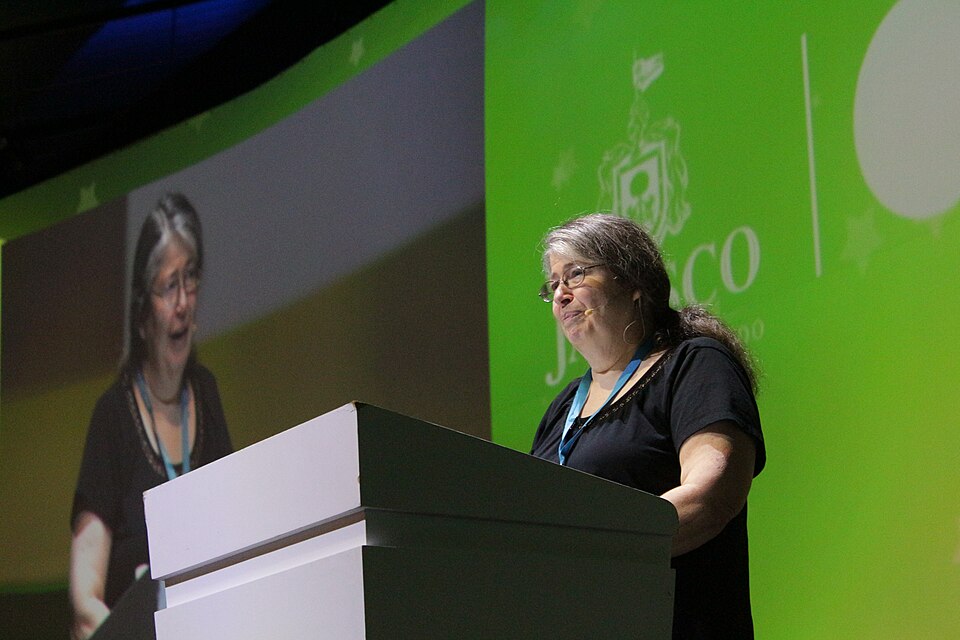
—You've been given the nickname "mother of the Internet." How do you feel about it?
With a slightly embarrassed smile, I admit. The Internet has no mother, nor a father for that matter: it's the collective work of thousands of anonymous engineers who stacked protocols on top of each other for decades. Attributing motherhood of all that to me is nicely said but deeply false, and it erases everyone else. I prefer that we talk precisely about what I did: Spanning Tree, routing protocols, security work. Grand titles make me uncomfortable. I've filed over a hundred patents, and not one bears the mention "mother of anything" — they describe concrete mechanisms, which suits me perfectly.
The Internet has no mother or father: it's the collective work of thousands of anonymous engineers.
—This discomfort with personal fame — where does it come from?
Probably from the profession itself. A successful protocol is one that is forgotten: no one thinks about Spanning Tree when their network works, they only think about it the day everything collapses. Our work is invisible by nature, and that's fine. When you write an RFC, that technical document that becomes an official Internet rule, you don't write your name in gold letters — you describe a mechanism as clearly as possible so others can implement, critique, and improve it. The recognition I seek is not from the public; it's from a fellow engineer who reads my specification and says: yes, that holds, it's correct. That's worth all the nicknames in the world.
A successful protocol is one that is forgotten: you only think about it the day everything collapses.
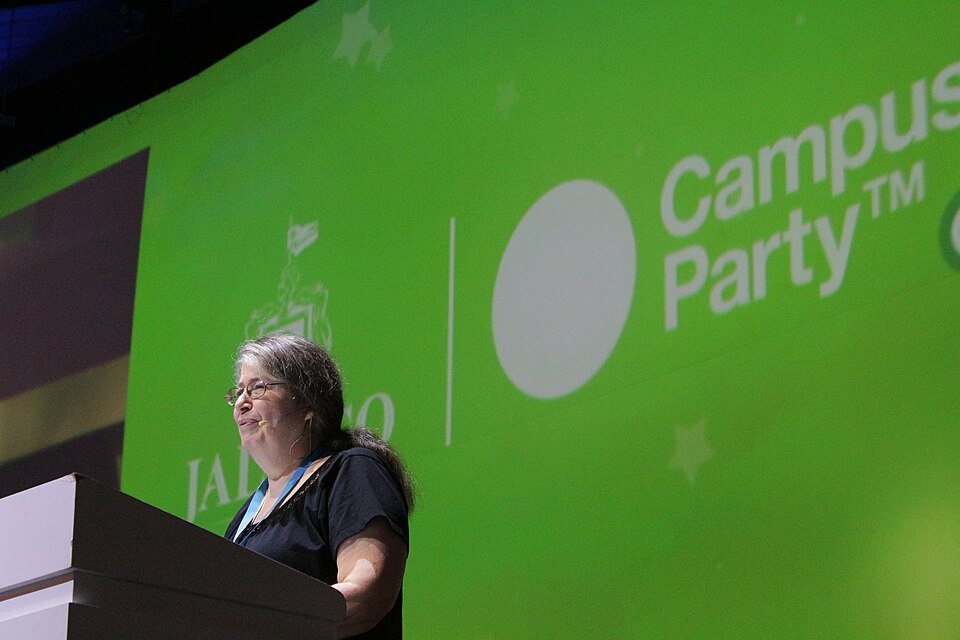
—Years later, you designed TRILL, meant to replace your own invention. Isn't it strange to surpass your own work?
Not at all — it's the greatest compliment you can pay an idea. Spanning Tree had a limitation accepted from the start: to avoid loops, it cuts redundant links, so it only ever uses one path and leaves the others dormant. In a modest 1980s network, that was perfect. But in today's massive data centers, wasting half the cables like that becomes absurd. So I designed TRILL, formalized in RFC 6325 in 2011, which allows using multiple paths simultaneously without ever falling back into loops. It's my main contribution of this century. Killing your own child to give birth to a better one — yes, but in engineering, that's an act of tenderness.
Killing your own invention to give birth to a better one: in engineering, that's an act of tenderness.
—You've also worked on network security for a long time. Why does this topic matter to you?
Because we first built the Internet among trusted people in laboratories, and we forgot to ask what would happen when the whole world connected. In 1999, I co-wrote with Charlie Kaufman and Mike Speciner Network Security: Private Communication in a Public World — the title says it all: how to talk privately in a public space. My obsession there is the same as for routing: there is no magic mechanism that solves everything. Security is built in layers, each correcting the weaknesses of the previous one, and above all you have to think very carefully about trust relationships and key distribution. It's a humbling task: you always design by imagining how an adversary will try to thwart you.
We built the Internet among trusted people, without asking what would happen when the whole world connected.
—Looking at your entire career, what connects the LOGO teacher to the protocol inventor?
The same stubbornness: making the complicated intelligible. Whether I'm tailoring a LOGO for a kindergartner at MIT, drawing a tree on a whiteboard at DEC, or writing a textbook like Interconnections for students worldwide, I'm always doing the same thing: taking a seemingly inextricable knot and finding the angle from which it becomes simple, almost obvious. The best inventions are not the most sophisticated; they are those that, once found, feel like they've always been there. Spanning Tree is like that: a child can understand that a tree has no loops. Maybe all my work comes down to that sentence.
The best inventions are those that, once found, feel like they've always been there.

This imaginary interview was generated by artificial intelligence from sources documented in Radia Perlman's profile. It dramatises what the figure might have said based on what we know about them, but does not constitute attested historical testimony. For primary sources and factual documentation, refer to the full profile.