Kids interview Radia Perlman
by Charactorium · Radia Perlman (1951 — ?) · Technology · 5 min read
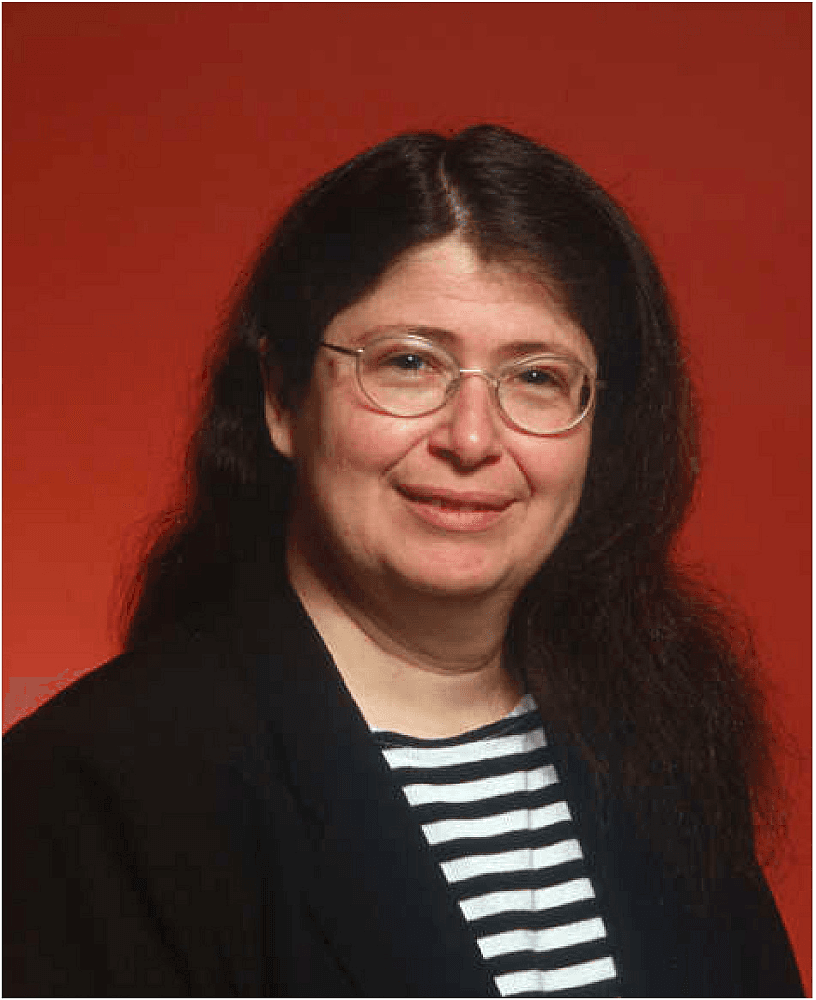
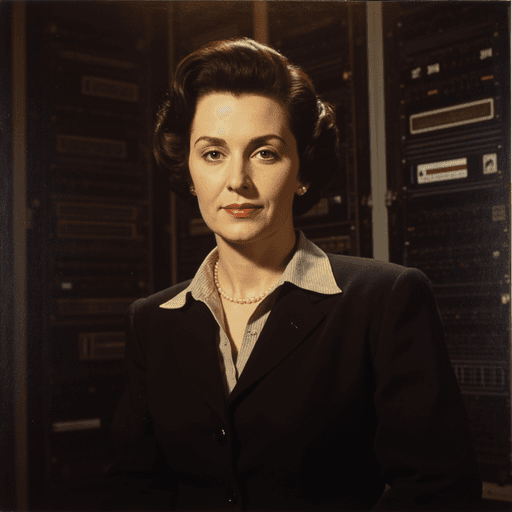
Two twelve-year-old students visit a computer lab with their class on a field trip. In front of a wall of blinking cables, a gray-haired woman waits for them with a smile. It's Radia Perlman, one of the great inventors of networking. She waves them to sit close by.
—How old were you when you first started working with computers?
I was a student at MIT in the 1970s. And you know what they asked me to do? Teach coding to kindergarten children! Imagine five-year-olds sitting on the floor, making a little turtle move across a screen using a language called LOGO. But the original LOGO was too complicated for them. So I made a very simple version just for the little ones. That was my first real challenge: making a complicated machine easy to understand. And deep down, my child, that's what I've done my whole life.
Making a complicated machine easy to understand — that's what I've done my whole life.
—What was it like teaching computer science to such young children?
It was wonderful, but not easy! A five-year-old doesn't want to listen to a long explanation. They want to touch, try, make mistakes, and start over. So I learned something important: if I couldn't explain an idea to a little child, it meant I didn't understand it well myself. The children were my best teachers. When the little turtle finally moved straight, they laughed with joy. And I took notes: which word stumped them, which gesture helped. That taught me to break down difficult things into simple pieces. A lesson I never forgot.
If you can't explain it to a child, you haven't understood it.
—Is it true you invented something super important in just a few weeks?
It's true, and it still surprises me! I was working at DEC, a big company near Boston, in 1985. The engineers had a big problem. When you connected several small networks together, messages would go around in circles, over and over, until everything jammed. We called it a broadcast storm. Imagine a room where everyone keeps repeating their neighbor's sentence endlessly — you can't hear anything anymore. They asked me to fix it. In a few weeks, I found a solution. My invention is called the Spanning Tree.
—But how do you stop messages from going in circles inside cables?
Good question! Imagine a maze of hallways, sometimes with two paths to the same place. If a message can take both, it might loop forever. My idea was to draw, within that mess, the shape of a tree. A tree goes up without ever coming back on itself: there's only one path between any two branches. My algorithm asks each device to politely close the extra hallways, on its own, without a boss. That's called a distributed algorithm: each decides locally, and together they form the tree. And if a cable breaks, they open another one. Magic, right?
A tree goes up without ever coming back on itself.
—I heard you wrote a poem about your invention. Is that true?
Yes! And I'm quite proud of it, I admit. To explain my Spanning Tree, I wrote a little poem in English. It begins: 'I think that I shall never see / A graph more lovely than a tree.' I called it Algorhyme, a mix of 'algorithm' and 'rhyme'. You know, many people find computer science cold and boring. I wanted to show that there's beauty in it. A little poetry helps ideas stick.
—Why a poem, instead of just a normal explanation?
Because people forget explanations, but they remember stories and rhymes! Remember my little children at MIT. With them, I learned that to get an idea into a head, you have to make it lively, beautiful, fun. A tree in a poem is easier to imagine than a formula full of symbols. And besides, engineers laugh a lot, you know. My poem made the whole networking world smile. Even today, engineers recite it. If you want an idea to travel far and long, give it wings. A rhyme is a pair of wings.
If you want an idea to travel far, give it wings.
—Did you really invent something to replace your own invention?
Yes, and it's a funny adventure! My Spanning Tree worked very well for years. But time passed, and networks grew huge. My tree kept only one path open; the others slept, unused. What a waste! So, years later, at Sun Microsystems then Oracle, I invented a new protocol. It's called TRILL, and it dates from 2011. It can use multiple paths at once, without ever creating a loop. It was a bit strange to critique my own invention. But a good engineer doesn't fall in love with their old ideas.
A good engineer doesn't fall in love with their old ideas.
—How does it feel to say your old work isn't good enough anymore?
It doesn't make me sad, quite the opposite! You see, when I created the Spanning Tree in 1985, networks were small. My invention was perfect for that world. But the world grows. Refusing to change would be like keeping baby shoes when you've grown up. With TRILL, I didn't throw away my old idea: I used it as a stepping stone to climb higher. Every invention raises a new question. And answering that question is already preparing the next invention. That's what makes my job exciting: you're never really finished.
You're never really finished: every invention prepares the next.
—Why don't you like being called 'the mother of the Internet'?
Ah, that nickname! It makes me smile, but it also bothers me. The Internet is not the work of a single person, you know. It's thousands of engineers, all over the world, each laying a small stone. I laid a few, like my Spanning Tree. But to call me its 'mother' would forget all the others. And that wouldn't be fair. I prefer people simply say: 'here is what she invented, precisely.' A too-bright title hides the real work. And the real work is what I'm proud of.
A too-bright title hides the real work.
—If someone met you on the street, what would they notice first?
Probably a very ordinary lady in jeans and a sweater, who doesn't look like a great inventor at all! I never liked the fancy suits of big bosses. I kept the simple spirit from my MIT years. And if you asked me a question, I'd likely answer by drawing. I've spent my life in front of a whiteboard, sketching trees and networks with markers. That's where ideas are born. So remember this, my child: you don't need to look important to do important things. Most of the time, it's the opposite.
You don't need to look important to do important things.
This imaginary interview was generated by artificial intelligence from sources documented in Radia Perlman's profile. It dramatises what the figure might have said based on what we know about them, but does not constitute attested historical testimony. For primary sources and factual documentation, refer to the full profile.