Imaginary dialogue between Vint Cerf and Radia Perlman
by Charactorium · Radia Perlman (1951 — ?) · Technology · 5 min read
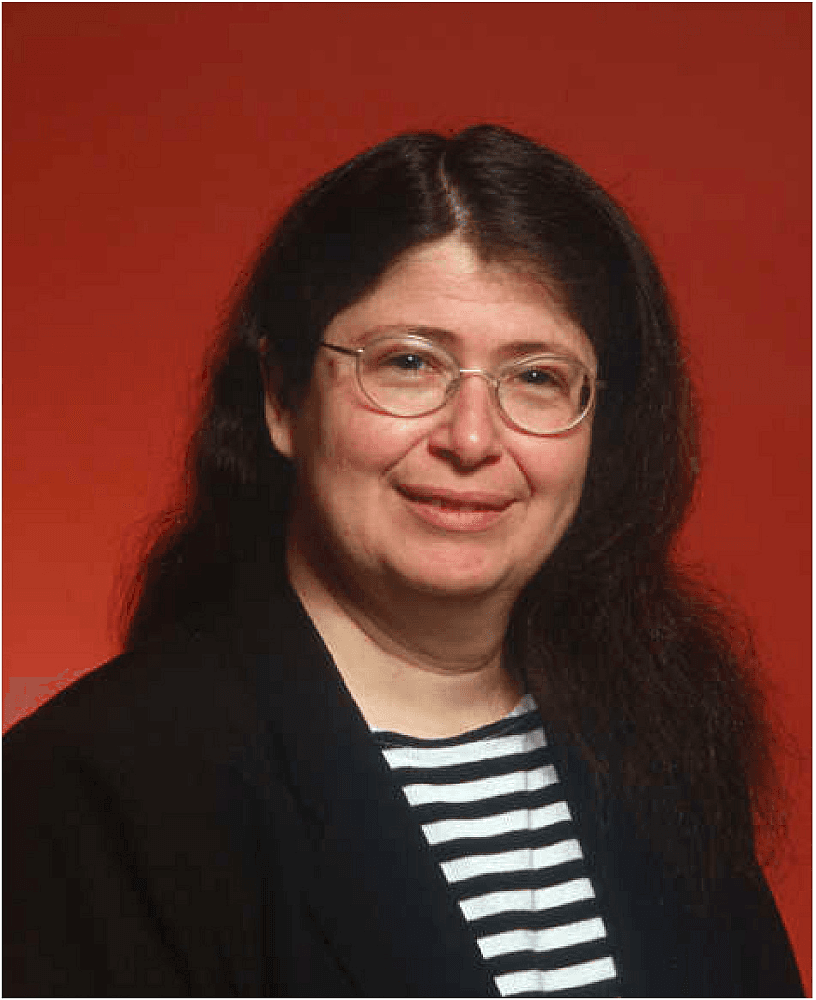
It's in a glass-walled meeting room of a hotel in Mountain View, on the sidelines of a gathering of network engineers, that Vint Cerf meets Radia Perlman one morning in 2017. On the table, two cups of lukewarm coffee and a notepad covered with small hand-drawn trees. They have known each other since the early days of protocols — he through TCP/IP, she through the world of bridges and switches. Cerf came without a journalist's microphone, simply with the curiosity of a peer who wants to understand how she, in her own way, held up the edifice they built together.
—Radia, you and I know how slowly a protocol can mature. They say you tamed loops in a few weeks at DEC. Is that true?
You're well placed to measure the irony, Vint: a problem that had paralyzed bridge networks for years, and the answer took just a few weeks. My colleagues in Maynard wanted to interconnect segments with redundant paths for reliability, but those loops triggered broadcast storms that saturated everything in an instant. Rather than forbid redundancy, I sought to make it invisible: each switch decides locally, and the whole builds a loop-free tree that covers the entire network. The redundant cable stays there, ready to take over if a link fails. It wasn't a flash of genius; it was the right way to frame the question. Once you see the network as a graph, the tree almost imposes itself.
Rather than forbid redundancy, I made it invisible: each switch decides locally.
—You did something I would never have dared: wrapped an algorithm in a poem. Where did you get the idea for Algorhyme?
I had to publish the algorithm's specification, and I needed a summary. Instead of an austere paragraph, I wrote a few lines: I think that I shall never see / A graph more lovely than a tree. It was a nod to Joyce Kilmer's poem, but also an honest way to say what I found beautiful in the structure: a tree whose crucial property is loop-free connectivity. Engineers remembered it better than any equation. You know this trade, Vint: you convey an idea when you touch both rigor and pleasure. A graph can be elegant, and there's no shame in saying so in verse.
Engineers remembered the poem better than any equation.
—Long before DEC, at MIT, you were already teaching. I'm told you taught programming to kindergarten children. How do you do that?
It was 1976, around the language LOGO. Very young children, far too young to read a regular keyboard. So I designed a subset of the language and a device adapted to their hands and way of thinking, so they could command a small graphic turtle and watch it draw. What struck me is that a child immediately understands an instruction when they see its effect on the screen. That's exactly the discipline I kept later: if I can't explain a protocol simply, then I haven't really understood it yet. Making computing accessible is not an extra touch; it's the heart of engineering work.
If I can't explain a protocol simply, then I haven't really understood it yet.
—You're given the title "Mother of the Internet". You who know how we built it with many hands, does that nickname suit you?
Frankly, Vint, that title makes me smile and also embarrasses me. The Internet has no mother or father: it's the fruit of thousands of engineers, you included, and you know that better than anyone. I prefer that we talk about my precise contributions rather than a flashy, inaccurate label. What touches me, however, is when recognition focuses on the work itself — the algorithm, the patents, the standards. I've filed over a hundred of them over the years, on routing and security. When I was inducted into the National Inventors Hall of Fame in 2016, I mostly heard that they were rewarding a useful idea, not a persona. That nuance matters to me.
The Internet has no mother or father: it's the fruit of thousands of engineers.
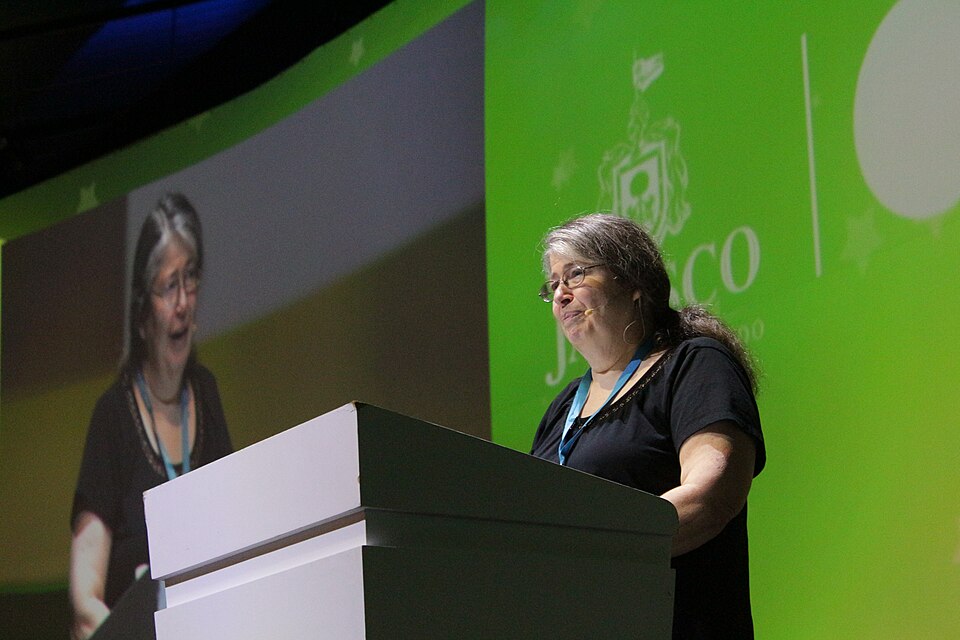
—Let's go back to that switch sitting in every server room. Do you realize that millions of them still run your tree?
I think about it sometimes, yes, and it's dizzying. Back then, I was solving a concrete problem for bridges connecting a few segments of a local network. I didn't imagine the algorithm would equip millions of switches, from the humblest offices to large machine rooms. What makes it durable, I think, is that it's distributed and autonomous: no central conductor, each device contributes to the global tree with local information. It's robust precisely because it's simple. But such longevity also has a downside, and that's where things got complicated — because what worked for a few links was no longer ideal when data centers exploded in size.
It's robust precisely because it's simple: no conductor, each device decides.
—Speaking of that downside, you ended up designing TRILL to surpass your own Spanning Tree. What was wrong?
Nothing was "wrong" in the strict sense — the Spanning Tree did exactly what I designed it for. But by pruning redundant links to break loops, you waste bandwidth: all traffic concentrates on a single path, while others remain unused. In modern large data centers, that's a luxury we can no longer afford. With TRILL, formalized in RFC 6325 in 2011, I aimed to combine the advantages of bridges and routers: RBridges that compute optimal paths and allow multipathing, for both unicast and multi-destination traffic. Correcting one's own invention is not humiliating, Vint; it's the finest compliment you can pay to an idea that lasted long enough to show its limits.
Correcting one's own invention is not humiliating: it's the finest compliment you can pay it.
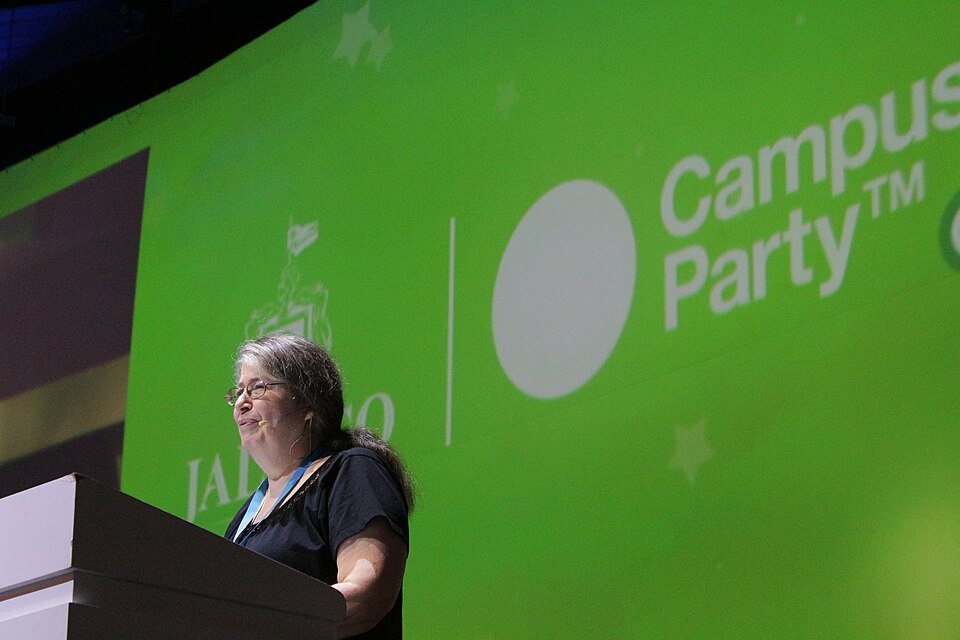
—When you write — Interconnections, for example — you always seem to seek the illuminating phrase. Is it the same reflex as your poem?
It's exactly the same reflex, yes. A poorly explained protocol is a poorly understood protocol, and therefore poorly implemented. In Interconnections, I wanted to tell why things are the way they are, not just how they work — bridges, routers, switches, placed back in the logic that connects them. Many universities adopted it as a textbook, and what pleases me most are the students who tell me they finally "saw" the tree in their head. Clarity is not cheap popularization: it's a technical requirement. If a reader closes the book knowing how to draw the topology on a blackboard, then I have succeeded far better than with an impeccable but unreadable demonstration.
A poorly explained protocol is a poorly understood protocol, and therefore poorly implemented.
—Over a hundred patents, textbooks, standards. When you look back, what makes you most proud, honestly?
Not a title, not a trophy. What makes me proud is that you can unplug a cable in a network and no one notices, because another path takes over without drama. That invisibility is my signature. Patents and honors are nice, but they poorly measure the essential: a successful protocol is one you forget because it never fails. I've always preferred quiet reliability to noisy prestige. And besides, Vint, we belong to a generation that saw a network of a few machines become a global nervous system. Having contributed, even modestly, to keeping it standing — that is enough for me.
A successful protocol is one you forget because it never fails.
—Last question, between us: after TRILL, what are you looking toward now? Security, as in your books?
Yes, that's increasingly where the future lies. When Charlie Kaufman, Mike Speciner, and I wrote Network Security in the late 1990s, we already said that no single mechanism protects a network: security must be thought in layers, around trust, keys, and the very design of protocols. Today these questions are central, and they occupy me as much as routing. I never believed in definitive ideas, Vint — you've known me long enough to know that. You solve one problem, it opens another, and that movement keeps me working. As long as there are networks to make safer and simpler, I think I won't know how to stop.
No single mechanism protects a network: security must be thought in layers.
This imaginary interview was generated by artificial intelligence from sources documented in Radia Perlman's profile. It dramatises what the figure might have said based on what we know about them, but does not constitute attested historical testimony. For primary sources and factual documentation, refer to the full profile.