Imaginary dialogue between Saladin (Salah ad-Din) and Richard the Lionheart
by Charactorium · Richard the Lionheart (1157 — 1199) · Politics · 6 min read
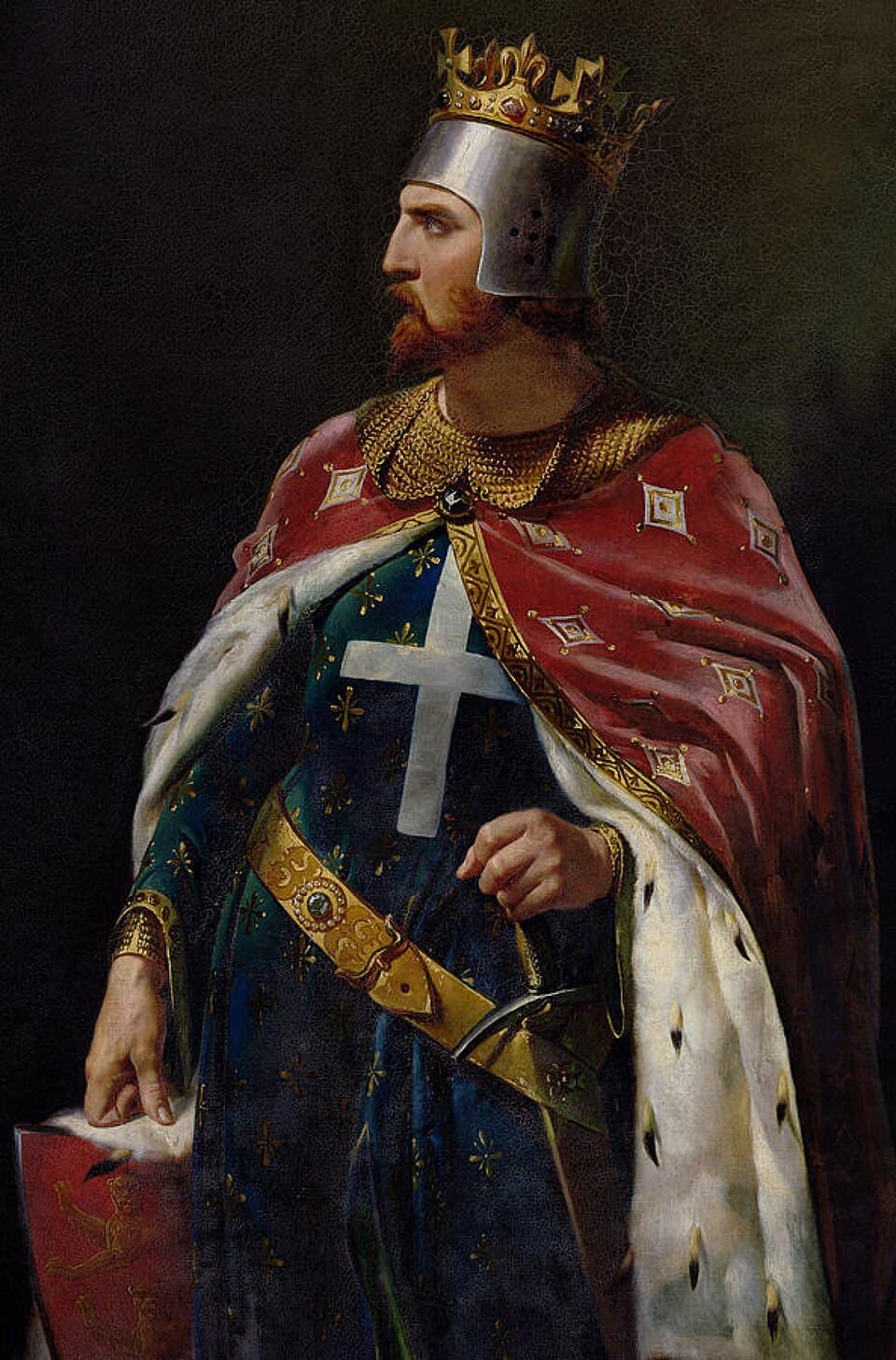
It is under a tent pitched on the dunes of Jaffa, in this month of September 1192, that Saladin comes to sit beside Richard, a few days after the treaty that seals their truce. The sea beats against the recaptured ramparts, the hot wind fills the air with smells of salt and wet leather. The two men have never faced each other in single combat, but three years of war have made them strangely close. The Sultan of Egypt has come without an armed escort, with the curiosity of an adversary who wants to understand, at last, the lion he has so long pursued.
—King Richard, when the fever laid you low before our lines, I had fresh fruit and the snow from my mountains brought to you. Do you remember?
How could I forget, Saladin? I lay burning, my mouth dry as the sand of this country, and then your horsemen crossed my outposts not to strike me, but to offer me pears and ice drawn from the peaks of your mountains. My barons cried treachery; I saw the hand of a prince. We had been at war for months, and you treated me like a sick guest rather than an enemy to be destroyed. I think that day I understood your faith better than through a hundred skirmishes. A man who feeds his weakened adversary knows a higher law than that of arms. I never had a better teacher in courtesy than a Saracen.
A man who feeds his weakened adversary knows a higher law than that of arms.
—I have been told that at the siege of Acre, too ill to stand, you still commanded. Is it true, or a tale from your poets?
My poets had nothing to embroider, Saladin. At Acre, in that year 1191, my body was ravaged by a fever that made my nails and hair fall out. But I would not let illness command in my place while my men died beneath your walls. I had myself carried to the foot of the ramparts on a litter, sheltered by a large silk shield. From there, with a crossbow on my knees, I shot at your defenders who showed themselves at the battlements. A leader does not hide in his tent while his men shed their blood. My barons begged me to rest; I told them I would rest in captured Acre. And we took it.
A leader does not hide in his tent while his men shed their blood.
—But at Acre, you had my prisoners beheaded, hundreds of bound men. How could the courteous man of the fruits and snow order that?
You touch where the wound still burns me, Saladin, and I will not lie to you. We had agreed on an exchange: your captives for ours, for the ransom and the True Cross. Days passed, the terms were not kept, and I held an army I could not feed indefinitely, ready to march south. I believed it was a ploy to hold me before Acre. So I cut, literally. It is the heaviest act I bear, and I know that another prince, more patient, might have waited longer. War makes butchers of us when it wants saints. I do not defend it as a glory — only as the decision of a man pressed by his troops' hunger and mistrust.
War makes butchers of us when it wants saints.
—At Arsuf, you held your lines against all my charges. Yet you never marched on Jerusalem. Why give up so close to the goal?
Because taking Jerusalem and keeping it are two different wars, Saladin, and you know that better than anyone. At Arsuf, I held my knights back until the last moment, refusing to let them charge in disorder, and when I unleashed the attack, your line broke: discipline overcame numbers. But then? I could have taken the Holy City at the cost of my army, and then you would have returned to besiege it as soon as my sails disappeared over the horizon. A cross planted for three months was not worth the blood it would cost. I preferred the treaty we have just sealed here: Christian pilgrims may pray at the Holy Sepulchre unarmed. A king must know how to win the peace he cannot hold by war. It is not a renunciation; it is a calculation.
Taking Jerusalem and keeping it are two different wars.
—Such a crusade, these fleets, these engines, these armies — where does a Western king get the gold to sustain such an enterprise so far from home?
From everywhere, Saladin, down to the last coin. Before leaving, in 1189, I sold what my father had left me: offices, titles, castles, sheriffdoms. Everything had its buyer. I am reproached for having pawned my kingdom; I usually answer that I would have sold London itself if I had found a buyer rich enough. Glory is not paid in prayers; it is paid in hard cash. I bled England to arm this crusade, and it will have to be bled again. A throne is not a chest to be kept locked: it is a spring to be drained for great works. My clerks groan over the accounts; I look at the port of Acre and know where that gold went.
I would have sold London itself if I had found a buyer rich enough.
—Soon you will return to your lands through countries that hate you. Duke Leopold, whom you humiliated beneath our walls, has forgotten nothing. Do you not fear anything?
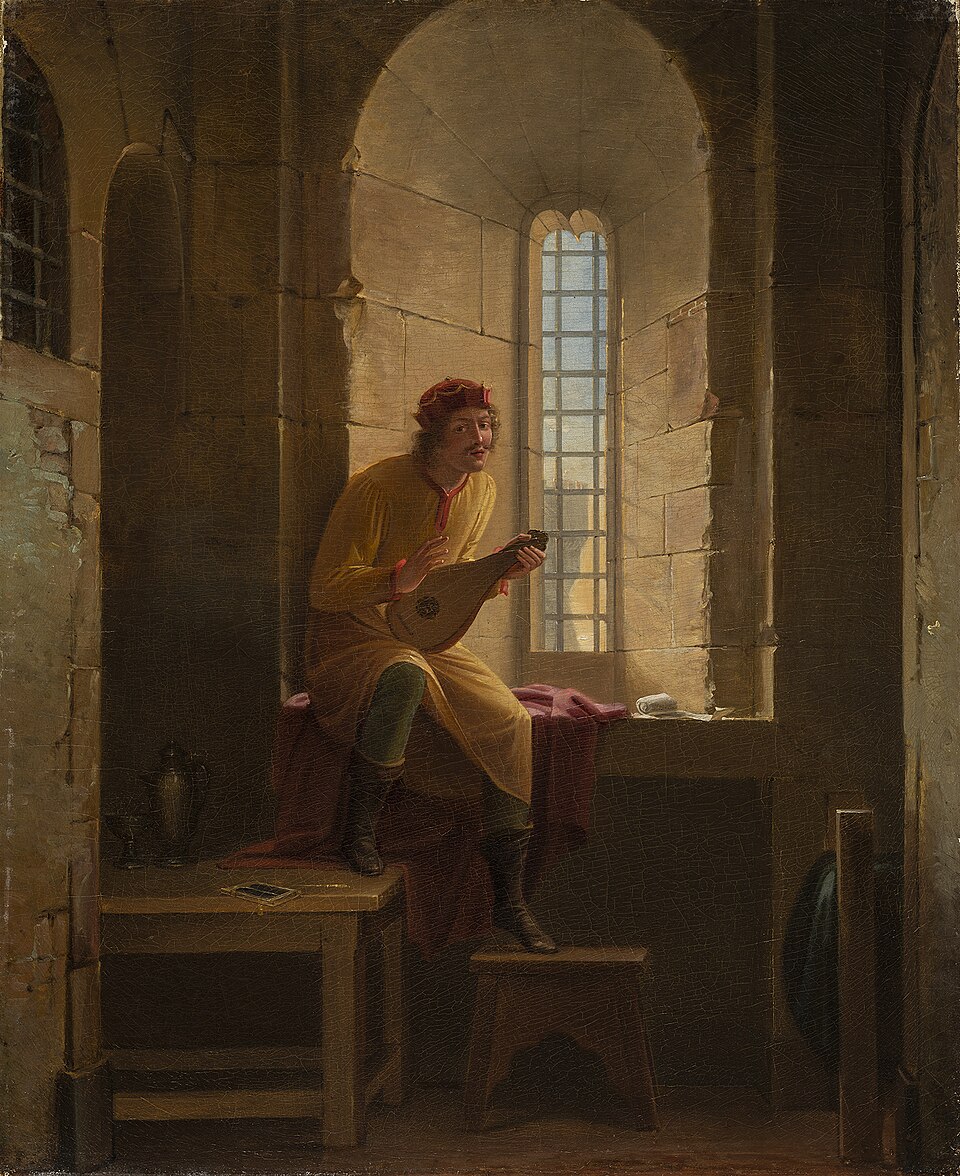
I would be a fool to fear nothing, Saladin. I threw Leopold's banner to the ground at Acre, and wounded pride is more patient than a blade. The road home crosses the Emperor's lands, and they do not love the king who thought himself first in the crusade. If I am taken, I will be held for a ransom that would ruin three kingdoms. But do you know what I would do, captive in some dungeon by a cold river? I would compose a song. I already have it in my heart: calling my vassals over the walls, reproaching them for leaving me to languish, telling them that a prisoner has no friends. I grew up at my mother's court, among the troubadours of Aquitaine. When the sword falls silent, the voice remains.
Captive in some dungeon, I would compose a song: when the sword falls silent, the voice remains.
—You ruled England and lived there so little. Does a king who always wars far away not abandon his people?
My kingdom is not a single island, Saladin — it stretches from the border of Scotland to the mountains that look toward Spain, and the language I prefer is that of the troubadours of the South, not that of London. I left England to trusted men and to my mother, who is worth more than many kings. It is true that I bled it for my wars and that a ransom will be needed if I fall captive. But by selling my offices, I also granted cities and barons freedoms they cherish. An absent prince who lets his subjects govern themselves is not always a bad master. I am called King of England; I am above all the son of Eleanor of Aquitaine, and it is as a knight, not a steward, that I wish to be remembered.
—Tell me, Lion of England: a warrior like you, how does he wish to end? In his bed, or with a blade in hand?
Not in a bed, Saladin, waiting for death to find me like an old woman. Let me rather be taken beneath the walls of some castle no one will remember, a crossbow bolt in the shoulder — the same weapon I used so often turned against me at last. There is a justice in that I do not shirk. And if the man who struck me fell into my hands, I would want the strength to forgive him before I expire. A knight who gives up his soul cursing his murderer has understood nothing of the oath he swore. To strike without hatred, to die without rancor: that is the only victory death cannot take from me. The rest, gangrene and oblivion, is merely a matter of flesh.
To strike without hatred, to die without rancor: that is the only victory death cannot take from me.
—We pray to gods that the other calls false, yet here I am under your tent without fear. Can two enemies be brothers in arms?
I believe so, Saladin, and our truce proves it. You lead your jihad, I my crusade; each swears heaven is on his side, and our priests would gladly damn each other. But between us, on this sand, there is a law that neither your imam nor my bishop wrote: respect the brave, keep one's word, spare the vanquished who fought well. You taught me with your fruits and snow; I learned it in combat against you. Our faiths separate us, but our calling unites us. If God — yours, mine — judges us one day, I believe He will weigh our kept oaths more than our prayers. I am not ashamed to say that my most worthy enemy was also my surest teacher of honor.
Our faiths separate us, but our calling unites us.
—Before I return to Cairo, tell me: from this entire crusade, what memory will you carry on your ships?
Not the capture of Acre, Saladin, nor even Arsuf, despite the pride I take in them. What I carry is the image of an enemy I never saw with my own eyes for three years, and whom I now discern to be more noble than most baptized princes I have known. I carry the fever of Acre and the shield under which I shot, because that day I knew how far I could go. I carry the regret of Jerusalem that I would not take for fear of losing it. And I carry this truce, fragile, signed here at Jaffa, which will restore the Holy Sepulchre to unarmed pilgrims. A man remembers less his victories than the adversaries he esteemed. On that point, I return richer than all the gold I spent.
A man remembers less his victories than the adversaries he esteemed.

This imaginary interview was generated by artificial intelligence from sources documented in Richard the Lionheart's profile. It dramatises what the figure might have said based on what we know about them, but does not constitute attested historical testimony. For primary sources and factual documentation, refer to the full profile.