Kids interview Richard the Lionheart
by Charactorium · Richard the Lionheart (1157 — 1199) · Politics · 5 min read
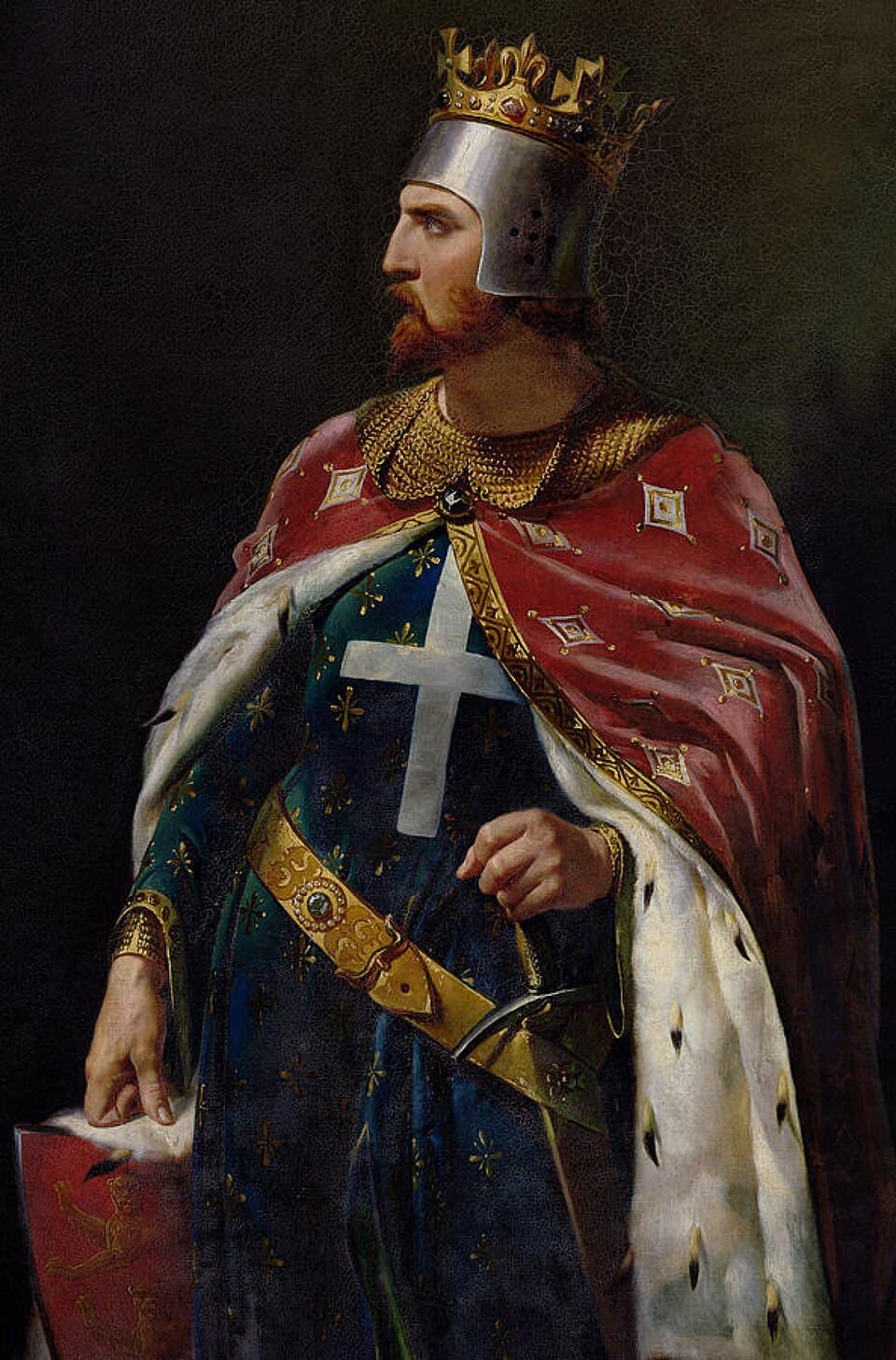
That morning, two twelve-year-old visitors pushed open the door of a great stone hall. At the far end, seated near the fire, a king in a red surcoat awaited them. He smiled: "Come closer, don't be afraid. They call me Lionheart."
—How old were you when you learned to make music?
You know, my child, I was very small. I grew up in the South, in Aquitaine, near my mother Eleanor. There, in the evenings, poets called troubadours sang of love and exploits. Imagine a great hall lit by torches, with no other sound than the strings of a vielle. I listened, I learned. Later, I composed my own songs, in Occitan and French. Many believe a warrior only knows how to strike. But in the morning I trained with the sword, and in the evening I laughed with the singers. The two hands of the king, you see: one for iron, one for the string.
The two hands of the king: one for iron, one for the string.
—What was an evening at home like when you were little?
Imagine a long wooden table, plates of roasted meat, game, white bread, wine. We ate with our fingers, and the grease ran. Around us, knights boasted of their battles. Then a troubadour would take his vielle, a stringed instrument you bow, and everyone fell silent. Sometimes we would challenge each other: who could invent the most beautiful verse? I loved that. You know, my court never stayed in one place: we traveled constantly, from castle to castle. So each evening was a new celebration, in a new place. That's what gave me a taste for words.
—What was your greatest adventure, really?
The Crusade, my child. A crusade is a great military and religious expedition to go all the way to Jerusalem, far away, in the Holy Land. In 1189, I took the cross and set out to sea. Imagine months on a ship, the burning sun, thirst. There was a great enemy leader, Saladin. We clashed at the Battle of Arsuf, and I won. But know this: it wasn't just blood. It was weeks of marching in the dust, fear, and friends who didn't come back. Glory, up close, mostly smells of sweat and hot iron.
Glory, up close, smells of sweat and hot iron.
—Is it true you were friends with your worst enemy?
Friends is saying a lot. But yes, Saladin and I respected each other. One day, I was sick in my tent, burning with fever. And he, my enemy, sent me fresh fruit and snow from the mountains to cool me down. Can you believe it? A gift from the very man I wanted to defeat! We could fight by day and still esteem each other. That's what they called chivalry: a code of honor among warriors. In the end, in 1192, we signed the Treaty of Jaffa. I didn't retake Jerusalem, but I obtained that pilgrims could pray there in peace. Sometimes you win without taking everything.
We could fight by day and still esteem each other.
—Did you ever do something terrible in war?
Yes, and I won't lie to you. After taking the city of Acre in 1191, I had enemy prisoners. The exchange didn't happen in time. So I had them executed. Many men. That's a hard thing to hear, and it was a hard thing to do. War, my child, is not a beautiful tale. The chroniclers of my time wrote it, and I don't hide it. A king makes terrible decisions, and he must carry them all his life. When someone tells you war is a great joyful adventure, beware: there is always blood they forget to show you.
War is not a beautiful tale: there is always blood they forget.
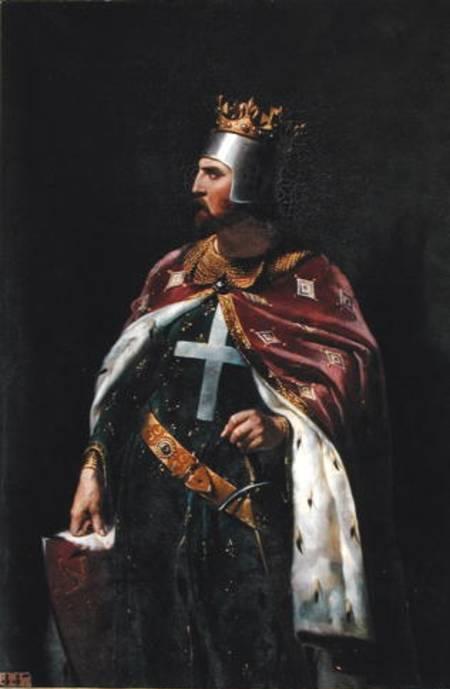
—They say you were imprisoned. Were you afraid?
On the way back from the Crusade, in 1192, I was captured. Duke Leopold of Austria, whom I had humiliated at Acre, had not forgiven me. I was locked up at Dürnstein Castle, a fortress on the banks of a great river. Imagine a cold stone tower, and you, a king, who can no longer leave. Afraid? Mostly of loneliness. I felt abandoned. So I did what I knew how to do: a song. I called it Ja nus hons pris, "No man who is a prisoner." In it, I said I had many friends, but their gifts were very poor. When you have nothing left, words remain.
When you have nothing left, words remain.
—How did you get out of prison?
I had to pay. A ransom is money demanded to free an important prisoner. And mine was enormous: 150,000 marks of silver! A crazy sum. Imagine an entire kingdom emptying its pockets to buy back its king. In England, taxes were levied on everyone, rich and poor. I was freed in 1194. But you see, it taught me a bitter lesson: a king thinks he is free, until one day he discovers he has a price, like a commodity. They also say that a loyal singer searched for me from castle to castle. That is surely a beautiful legend, but it still touches me.
A king thinks he is free, until the day he discovers he has a price.
—Did you build a castle? How do you do that?
Yes! My favorite is Château-Gaillard. I built it in Normandy, on high cliffs above the Seine River. And do you know how long it took me? Less than two years! That was very fast for the time. Imagine hundreds of workers, stones hoisted by rope, the sound of hammers from morning to night. I had learned the art of sieges in the Holy Land, so I knew where to place every wall, every tower. I called it "my gaillard castle," my strong and proud castle. It was to protect my lands against the King of France, Philip Augustus. A castle, you see, is a crown set on a rock.
A castle is a crown set on a rock.
—Why did you fight all the time against the King of France?
Because Philip Augustus wanted my lands! You must know a strange thing: I, King of England, also possessed vast domains in France, in Normandy and as far as the South. During my imprisonment, Philip had taken advantage to nibble away at my possessions. So, from 1194 until my death, I fought to take them back. That's why I set Château-Gaillard like a lock on the Seine. Imagine two neighbors constantly arguing over the same garden hedge, except the hedge was all of Normandy. I spent more time on horseback on my borders than quietly in a hall. A king of my time rarely slept twice in the same bed.
A king of my time rarely slept twice in the same bed.
—Is it true you died from a tiny wound?
Yes, and it's almost ridiculous for a king-knight. In 1199, I was besieging a small, unimportant castle, Châlus-Chabrol, in the Limousin. A very ordinary siege. And then, a young man on the rampart shot a crossbow, a weapon that fires a powerful iron bolt. The bolt struck me in the shoulder. Nothing serious, I thought. But the wound became infected, the flesh rotted — that's what they call gangrene. Eleven days later, I died. I, who had faced so many battles indifferent to arrows! You see, death does not choose great moments. Sometimes it comes through the smallest door.
Death does not choose great moments: it comes through the smallest door.
—And is it true you forgave the boy who killed you?
That's what they say, my child. Feeling I was about to die, I supposedly had the young shooter brought before me. He was surely trembling with fear. And instead of punishing him, I forgave him. Why? Because a knight must die as he lived: with honor. Taking revenge on a child while dying would be ugly. You know, I had spent almost all of England's gold on my wars. I am even credited with this quip: "I would have sold London itself if I could have found a buyer rich enough." I left an exhausted kingdom. But I wanted to leave forgiving. That is perhaps the only wealth no one can take from you.
Forgiving is the only wealth no one can take from you.


This imaginary interview was generated by artificial intelligence from sources documented in Richard the Lionheart's profile. It dramatises what the figure might have said based on what we know about them, but does not constitute attested historical testimony. For primary sources and factual documentation, refer to the full profile.