Imaginary interview with Richard the Lionheart
by Charactorium · Richard the Lionheart (1157 — 1199) · Politics · 6 min read
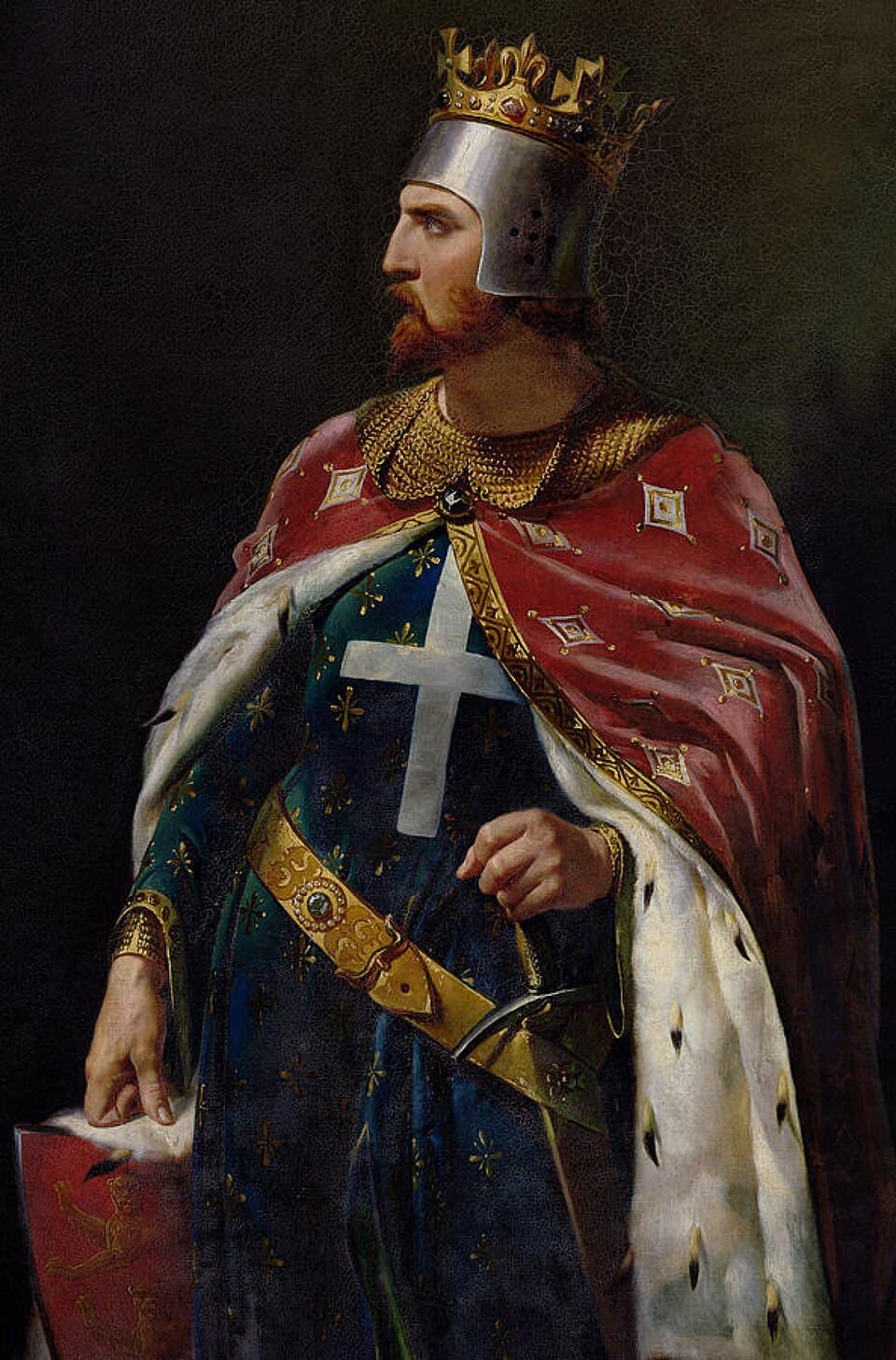
Under the royal tent pitched near the reconquered walls, on the eve of a new assault, the King of England receives us, his red surcoat still dusted with the powder of the roads. The sea of the Holy Land rumbles in the distance; he, with feverish eyes and a firm voice, agrees to speak of crusade, captivity, and glory. Here is Richard, called the Lionheart.
—They say that at Acre, in 1191, illness kept you bedridden and yet you still commanded. How did that happen?
The fever had taken me to the bone, and my men wanted to keep me lying down like a child. I told them that a king does not die in his litter if he can die before the walls. So they carried me as close as possible to the ramparts of Acre, and from there, with the crossbow on my knees, I aimed at those who showed themselves at the battlements. My arm trembled, the bolt flew straight. My knights saw their lord shooting under fever, and that was worth ten siege engines to them. The city fell in that year 1191, after a siege that reeked of plague and salt. One does not take a city by comfort; one takes it by the will that men read in their king's eyes.
A king does not die in his litter if he can die before the walls.
—After the fall of the city, the fate of the Saracen prisoners caused a great stir. What do you say to those who reproach you for it?
The agreements had been sworn: ransom and exchange within set deadlines. The deadline passed, the money did not come, and I held an army that was champing at the bit while the road to Jerusalem opened. War is not a courtly joust; it has its harsh accounts, and I settled them as a captain must. The clerics, such as Roger of Hoveden, noted that I had beheaded those who could not be exchanged. I neither hide it nor boast of it. God will judge the severity of the king as He judges the treachery of those who break their word. A leader who hesitates before the enemy betrays his own more surely than by the sword.
War is not a courtly joust; it has its harsh accounts.
—It is said that your adversary Saladin sent you gifts while you were ill. What did this enemy inspire in you?
Strange thing, holy war: it pits you against a man and teaches you to esteem him. While the fever burned me, Saladin sent me fresh fruits and snow brought down from the mountains to cool my drink. I held my sword against him and received his snow: that is the mystery of chivalry, which does not separate respect from combat. At Arsuf, that same year, my lines held against his until the charge broke his wing; we were loyal in iron as in gift. One can hate a man's cause and salute his heart. He was my enemy before God and, before men, the only prince worth crossing swords with.
I held my sword against him and received his snow: that is the mystery of chivalry.
—Jerusalem was not retaken. How did you accept the treaty concluded with Saladin?
Every knight dreams of praying at the Holy Sepulchre with his sword laid down; I came close, and the holy city remained closed to me. My barons were tearing each other apart, the King of France had left, and England was grumbling behind my back. A useful peace was better than a glorious defeat. In September 1192, we agreed at Jaffa that Christian pilgrims would have free access to the Holy Places, and that the truce would last three years, three months, and three days. I did not plant the cross on the walls, but I reopened the path for the humble who wished to kneel at Christ's tomb. Sometimes the service of God is measured less by what one conquers than by what one makes possible for the lowly.
—On the way back, you were taken prisoner. What becomes of a king when he is locked away far from his own?
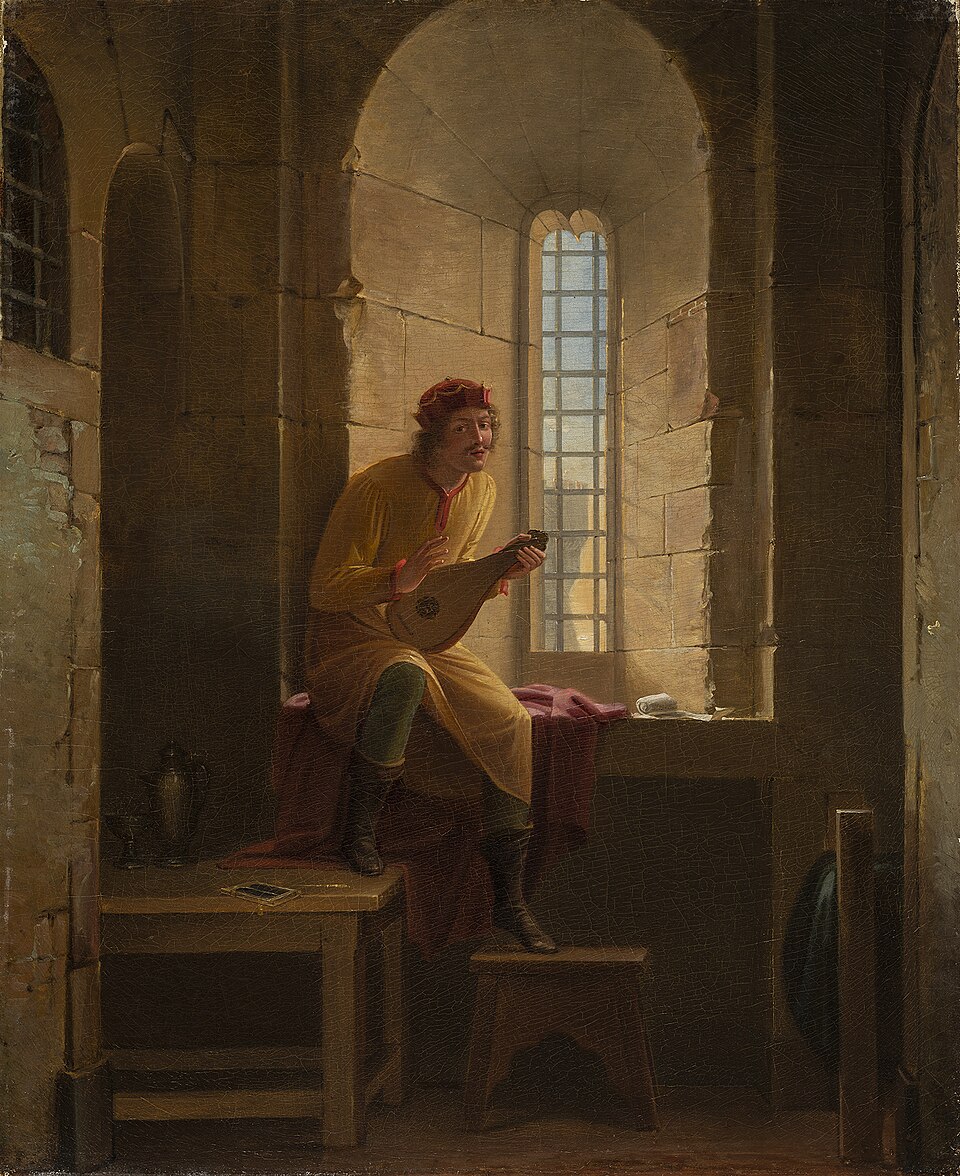
Duke Leopold of Austria, whom I had humiliated under the walls of Acre, took me as one takes a cornered stag. I was held at Dürnstein Castle, above the Danube, then handed over to the emperor. A captive king has no sword; he has only his voice. I had grown up in the court of Aquitaine with my mother, among the troubadours, the vielle, and the songs of the langue d'oc. So I did what a man of that land knows how to do: I composed. Ja nus hons pris was born of those walls, a lament of a prisoner measuring the value of his friends by the gifts they did not send. To sing one's distress is still to reign over something when everything has been taken from you.
A captive king has no sword; he has only his voice.
—That captivity song, Ja nus hons pris, seemed to reproach your vassals. What did you want to tell them?
I had, I said, many friends, but their gifts were very poor. A man in prison never speaks truly unless he speaks as a man afflicted; I knew that and I sang it so that it would be heard all the way to Aquitaine and Normandy. My barons delayed in raising my ransom while the King of France and my own brother were already dividing my lands in their minds. Legend has it that a faithful man, the minstrel Blondel, sought me from fortress to fortress, singing a tune known only to us two. I do not know if it should be believed, but it speaks true on one thing: a lord abandoned by his peers sometimes has only the loyalty of a songman to bring him back to the world.
—Before leaving on crusade, you sold offices, titles, and lands on a large scale. Why this way of doing things?
A crusade is not paid for with prayers, but with pennies, ships, bread, and crossbows. Upon my accession, in 1189, I put England up for sale like one empties a chest: sheriffs, charters, franchises to towns, everything that could ring in my coffers before I took the cross. I am often quoted for this quip I let slip: I would have sold London itself if I had found a rich enough buyer. I said it with gaiety, but the matter was serious. The curious thing is that these towns, freed for gold, gained liberties that no one ever took back. By ruining myself for God, I unwittingly enriched the burghers of my kingdom.
I would have sold London itself if I had found a rich enough buyer.
—Your release required an immense ransom. What burden did it place on your subjects?
One hundred and fifty thousand silver marks: such was my ransom, a sum to pale the accountants of Christendom. It was levied on England and all my Plantagenet lands; a quarter of revenues was taken, chalices were melted, the flocks of abbeys were shorn. My people paid for my freedom as they had paid for my crusade, bled twice for the glory of a king they scarcely saw. I do not ignore it and I do not deny it: a prince costs dearly to those who bear him. But an unpaid ransom is a kingdom without a head, delivered to the neighboring wolves. Better an empty chest and a king returned to his throne than a vacant throne and chests that would have been plundered anyway.
—Your end came at Châlus, from an almost ordinary wound. How does such a warrior welcome so banal a death?
What a mockery, after the walls of Acre and the sands of Arsuf, to fall under a paltry castle in Limousin! At the siege of Châlus-Chabrol, in that year 1199, a crossbow bolt lodged in my shoulder, and the wound, poorly treated, turned gangrenous. Death did not come in the crash of a great battle, but by a slow fire, in my tent, for eleven days. They say I had the archer who struck me brought in, a young man, and that I pardoned him before giving up the ghost. That is how a knight must depart: not by cursing chance, but by granting grace. God had given me the lion; He took me back with a boy's arrow. So be it. I did not bargain.
God had given me the lion; He took me back with a boy's arrow.
—You lie at Fontevraud Abbey, among your kin. What do you wish men to remember of your name?
My stone effigy awaits me at Fontevraud, in that land of Anjou where my house sleeps, near my father Henry and my mother Eleanor. I scarcely inhabited England; I lived in the saddle and under the tent, between Normandy and the Holy Land; my true castle was the itinerant court, my true roof the sky of the camps. Let them not remember me by ledgers or accounts, but let them say: he took the cross, he kept his word of arms, he sang his pain in prison and granted mercy to the one who killed him. If I am to be read in a century, let it be as a man who loved prowess more than rest. The rest I leave to the judgment of God.


This imaginary interview was generated by artificial intelligence from sources documented in Richard the Lionheart's profile. It dramatises what the figure might have said based on what we know about them, but does not constitute attested historical testimony. For primary sources and factual documentation, refer to the full profile.