Imaginary interview with Robert Schuman
by Charactorium · Robert Schuman (1886 — 1963) · Politics · 6 min read
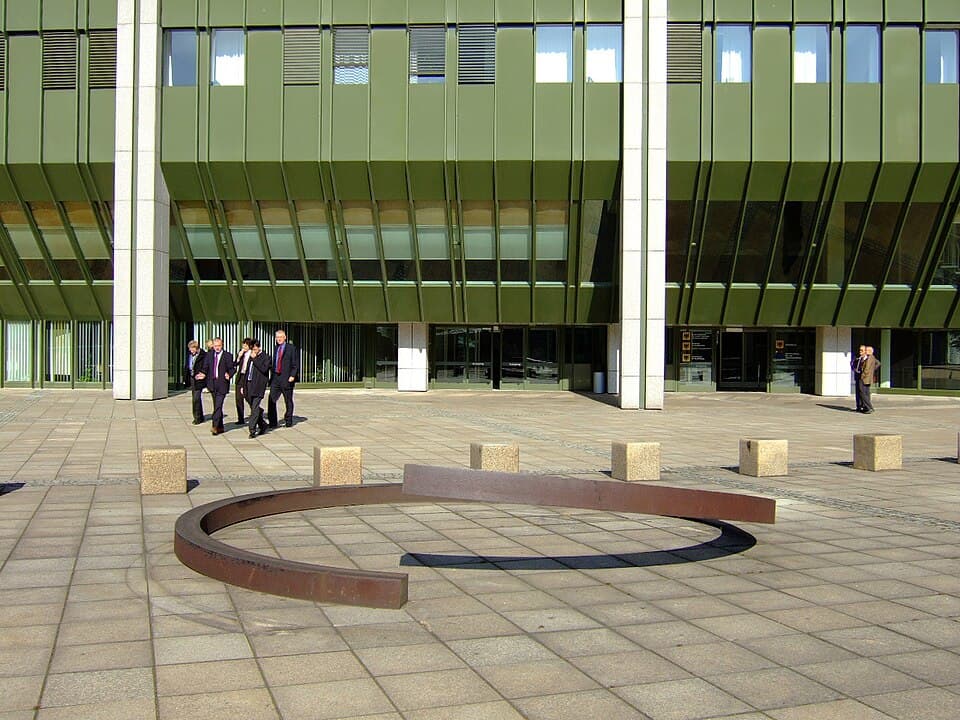
Scy-Chazelles, a morning in the autumn of 1962. In the small grey stone house where he has retired, Robert Schuman receives between his library cluttered with books in three languages and the window overlooking his Moselle garden. His voice is soft, his accent slightly Germanic; he answers calmly, as if reciting, without ever raising his voice.
—Let's start at the beginning: where were you born, and what did that place make of you?
I came into the world in 1886 in Clausen, a suburb of Luxembourg, in a Lorraine family that history had tossed between two flags. My mother was Luxembourgish, my father a Lorrainer who became German against his will after 1871. So I grew up among three languages, and I was always reproached for this slight accent you hear: I speak French like a man who first learned to think in German. For a long time I believed this inner border was a handicap. I later understood that it was an opportunity. When you have carried within yourself the two peoples who tore each other apart at Sedan, at Verdun, you can no longer frankly hate either one. You seek the bridge.
I was always reproached for this slight accent: I speak French like a man who first learned to think in German.
—Yet you became a French citizen quite late. How did that happen?
I was thirty-two years old when Lorraine returned to France, in 1918. Imagine: I was already a lawyer established in Metz, I had passed my doctorate in law at German universities, pleaded in German, and now in one treaty signature I changed nationality without changing house. Many in my situation lived this as a wrenching experience. I saw it as a deliverance and a mission. From 1919, my fellow citizens of Moselle sent me to sit in the Palais Bourbon, and I never left that seat for more than forty years. But I never forgot where I came from. A man of the marches understands better than others how much a border is a scar, never a natural wall.
A border is a scar, never a natural wall.
—Then came the war, and the Occupation. What happened to you in 1940?
The Gestapo came for me in September 1940. I had refused to collaborate, and a man who knows Germany so well disturbs more than an ordinary enemy. They took me to Neustadt, first under house arrest, then under a heavier threat. I prayed a lot, I admit, for I saw no human way out. In 1942, I managed to escape, and I lived hidden until the Liberation, moving from presbytery to monastery in the so-called free zone, under a false name, reading my breviary in the evening like a fugitive monk. It was in those years of hiding that my conviction hardened like steel in tempering: as long as nations remain sovereign enough to wage war, they will wage it.
—Would you say that these years of persecution changed your way of doing politics?
They changed everything, without renouncing anything. Before the war, I worked like a conscientious lawyer, case after case, in the Fourth Republic of tomorrow as in the Third of yesterday. After the hiding, after the fear, after seeing my country invaded twice in one man's lifetime, I could no longer be content with managing. When I returned, I joined the MRP, that party of Christian Democrats born of the Resistance, and I carried within me an almost stubborn certainty: peace is not decreed in circumstantial treaties, it is built in concrete things. Coal, steel, bread — what peoples quarrel over. As long as we had not pooled what they slaughter each other for, we had done nothing.
Peace is not decreed in circumstantial treaties, it is built in concrete things.
—Let's talk about May 9, 1950. How did that day actually unfold?
It was a conspirators' affair, I confess with a smile. Jean Monnet and his collaborators had drafted the project in the utmost secrecy, and we kept it under wraps until the last moment, for fear of leaks — a single word leaked and all the chancelleries would have strangled it in the cradle. I even had Chancellor Adenauer warned only a few hours before the announcement; he replied that it was, for him, the first sincere gesture of a Frenchman toward Germany since the war. Then, in the afternoon, in the Clock Room of the Quai d'Orsay, I read my text before the world press. My voice trembled a little. I knew I was proposing an unprecedented thing: that France and Germany, hereditary enemies, entrust their coal and steel to a common authority.
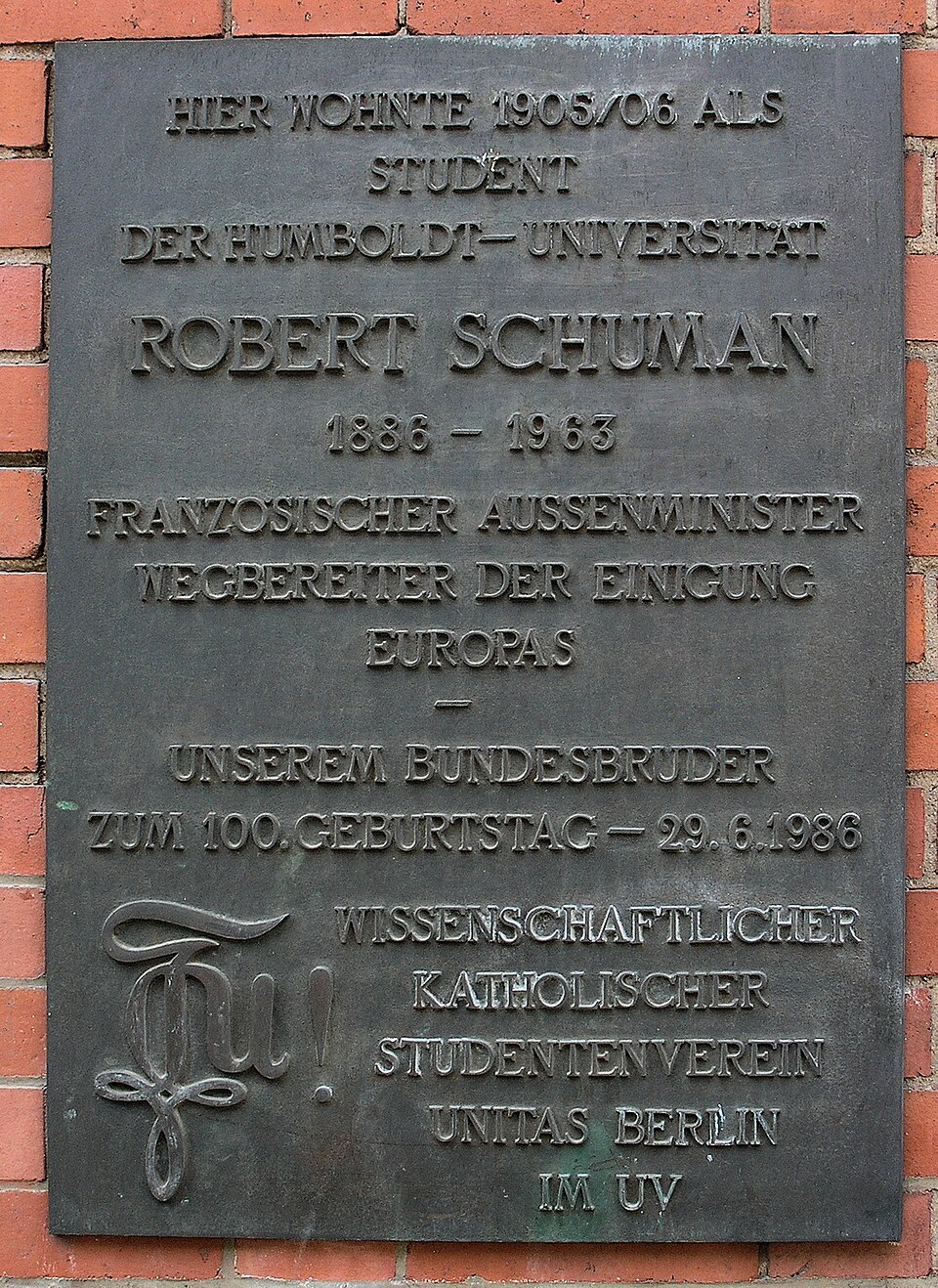
—One sentence from that declaration became famous. What exactly did you mean?
I said that day: “Europe will not be made all at once, nor in a single overall construction: it will be made through concrete achievements first creating a de facto solidarity.” There is my whole method in one line. I distrust great structures drawn in advance, federations proclaimed in enthusiasm and dead the next day. I believe in small steps that commit. Put two peoples to work the same mine together, share the same molten iron, and you will weave between them a thousand ties so tight that war will become not only unthinkable, but materially impossible. De facto solidarity precedes the friendship of hearts; it does not wait for it, it manufactures it.
War will become not only unthinkable, but materially impossible.
—How did you convince your compatriots to accept limiting France's sovereignty?
That was the hardest. Before the National Assembly, in July 1950, I was accused of handing France over to its former conqueror. I replied bluntly: “We ask Germany to accept limited sovereignty over its coal and steel resources, but we accept exactly the same limitations for France. This is an equality of rights and duties.” Therein lay the whole moral novelty of the matter. I did not impose on the vanquished what the victor refuses for himself — the mistake of Versailles, which had fueled the worst resentments. I placed both nations under the same rule, under the same High Authority. An authority above the states: that was the word that made people shudder, and yet it was the key to everything.
—This High Authority, this idea of supranationality — what was so revolutionary about it?
Until then, states only bound themselves while keeping the last word; each could always say no and take back its marbles. Supranationality broke with that. The High Authority of the ECSC, established by the Treaty of Paris in 1951 among six countries — France, Germany, Italy, Belgium, the Netherlands, Luxembourg — decided for all without requiring the unanimous agreement of each government. Nine independent men, accountable to no capital, managing in common the molten iron of an entire continent. That was unprecedented in history. Later, when I was honored to preside over the first European Parliamentary Assembly, I made sure that this new authority was not just a mechanism of technicians, but that it had elected representatives to look it in the eye. European integration without popular control would be just another bureaucracy.
—You are nicknamed the “monk of European politics.” Do you recognize yourself in that portrait?
The nickname makes me smile, but it is not entirely wrong. I never married, I live alone in this house in Scy-Chazelles, and every morning, before dispatches and ambassadors, I go to mass, whatever city I am in. In the evening, I walk in my garden reciting my rosary. My table is frugal — a soup, vegetables from the garden, a glass of Moselle wine — my suits are dark, and I shun the social events where so many of my colleagues exhaust themselves. This is not for show: it is because I sincerely believe that politics is a service, not a theater. One governs men better when one expects nothing from them for oneself.
Politics is a service, not a theater.
—At heart, this Europe you are building — is it an economic project or a faith?
The two are not separate in my mind. I spend my days talking about tons of coal, steel quotas, tariffs — the most down-to-earth matter there is. But behind every ton, I see men who will no longer kill each other. In the little book I would like to leave, For Europe, I wrote what is dearest to my heart: “Democracy must be fraternal or it will not be. It must be a politics of fraternity, otherwise it will become tyranny or anarchy.” The Europe I dream of is not an enlarged market; it is a community of peoples who finally recognize each other as brothers. Coal is only the beginning. Fraternity is the goal.
The Europe I dream of is not an enlarged market; it is a community of peoples who finally recognize each other as brothers.
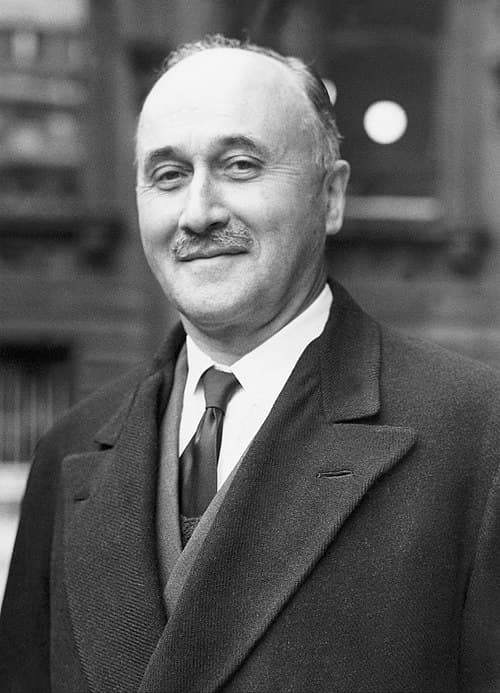
This imaginary interview was generated by artificial intelligence from sources documented in Robert Schuman's profile. It dramatises what the figure might have said based on what we know about them, but does not constitute attested historical testimony. For primary sources and factual documentation, refer to the full profile.