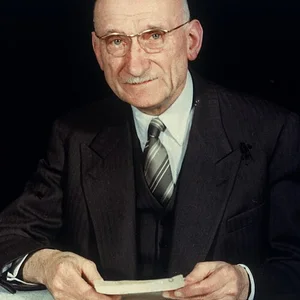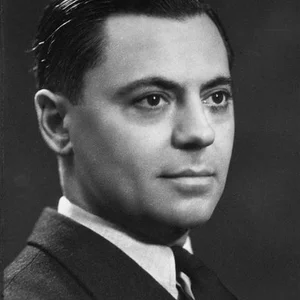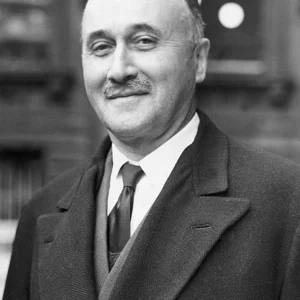

French statesman (1888–1979), Jean Monnet is regarded as one of the founding fathers of the European Union. He played a decisive role in the creation of the European Coal and Steel Community (ECSC) and championed the economic and political integration of Europe.
Jean Monnet(1888 — 1979)
Jean Monnet
France
7 min read
Frequently asked questions
Famous Quotes
« The sovereign nations of the past can no longer solve the problems of the present.»
« Europe will be built through concrete achievements which first create a de facto solidarity.»
« The only lasting changes are those that do not go through politics.»
Key Facts
- 1950: Presentation of the Monnet Plan (Schuman Plan), proposing Franco-German integration of coal and steel
- 1951: Founding of the European Coal and Steel Community (ECSC) with six member states
- 1955–1975: President of the Action Committee for the United States of Europe, a body promoting European integration
- 1957: Major influence on the creation of the European Economic Community (EEC) through the Treaty of Rome
- 1979: His death marks the end of a key period of institutional construction in Europe
Works & Achievements
France's first five-year economic reconstruction plan after the war, it enabled the modernization of French industry, transport, and energy. Monnet served as its Commissioner General and chief architect.
Monnet conceived and drafted the plan proposing the pooling of French and German coal and steel, presented by Minister Schuman on 9 May 1950. The ECSC, the first European supranational body, was its direct result.
Monnet was the first president of the ECSC High Authority in Luxembourg, the first supranational institution in European history. He resigned to devote himself to a more ambitious political integration project.
Organisation founded by Monnet bringing together political parties and trade unions from member countries around the European federal project. This committee played a decisive role in relaunching integration after the failure of the EDC.
Autobiographical work in which Monnet traces his journey and his vision of European construction. It is a major historical source on the behind-the-scenes story of the founding of European institutions.
Anecdotes
During the First World War, Jean Monnet, then a young man of 26, convinced French Prime Minister René Viviani to coordinate Allied supplies with Great Britain. Without a university degree or official title, he managed to secure meetings with the highest-ranking leaders through sheer persuasion and the clarity of his ideas.
In 1950, Monnet drafted the founding text of the Schuman Declaration in the utmost secrecy, from his house in Houjarray in the Rambouillet forest. He worked several nights in a row with a handful of collaborators, and Foreign Minister Robert Schuman announced the plan on 9 May 1950 with almost no one knowing that Monnet was its true architect.
Jean Monnet never held an elected office in his life. He systematically refused political mandates, believing he could exert far greater influence by remaining behind the scenes. General de Gaulle, though hardly generous toward him, acknowledged that he was 'the man of grand schemes' without ever having needed a title.
During the Second World War, Monnet played a key role in armament negotiations between France, Great Britain, and the United States. He was one of the architects of the American 'Victory Program', convincing Roosevelt to set colossal military production targets. Churchill said of him that he was worth several divisions on his own.
Toward the end of his life, Monnet founded the Action Committee for the United States of Europe in 1955, bringing together trade unions and political parties around a federal European project. He continued to campaign for political union well into old age, receiving heads of state from around the world at his modest country house in Houjarray.
Primary Sources
I have never doubted that the unity of the European peoples was the only way to overcome the conflicts that had torn our continent apart. The sovereign nations of the past are no longer able to ensure their own protection or to control their development.
Europe will not be made all at once, or according to a single plan: it will be built through concrete achievements which first create a de facto solidarity.
The pooling of coal and steel production will immediately ensure the establishment of common foundations for economic development, the first step towards the European Federation.
We are not forming coalitions of states, we are uniting people. What we are doing is not an alliance, it is the beginning of a peaceful revolution of minds.
Key Places
Jean Monnet's birthplace, where his family ran a cognac trading house. It was here that he learned the art of commerce and international negotiation from an early age.
Jean Monnet's country house in the Rambouillet Forest, where he drafted the Schuman Plan and received the world's greatest leaders for decades. This discreet residence is now a listed historic monument.
The city where Monnet established the High Authority of the ECSC in 1952 and served as its first president. Luxembourg thus became the first capital of a supranational European institution.
The city where Monnet spent many years during World War II, working with Roosevelt to organize Allied military production. His influence in Washington was decisive in securing the Allied victory.
The seat of the French Ministry of Foreign Affairs, where Robert Schuman announced on May 9, 1950 the plan conceived by Monnet. This site symbolizes the passage of Monnet's idea into the official declaration that founded Europe.
Typical Objects

Monnet worked extensively by telephone, weaving a network of transatlantic relationships with American, British, and European leaders. It was one of his favourite tools of persuasion, complementing his famous one-on-one meetings.

Monnet drafted his founding texts himself, covering countless pages with concise notes and pithy formulas. His collaborators recall that he could rewrite the same paragraph dozens of times to sharpen its clarity.

A seasoned traveller, Monnet crossed the Atlantic dozens of times during and after the wars. His briefcase symbolises the life of a behind-the-scenes operator moving between Paris, London, and Washington to negotiate in secret.

Monnet regularly used geographical and economic maps to illustrate his integration projects and visualise the flows of coal and steel between nations. The map of Europe was a central working tool in his meetings.

Originally from Cognac, Monnet first learned international trade as a teenager selling his family's cognac in England and Canada. The brandy from his home region represents his origins and his formation as a negotiator.

The Monnet Plan (1946–1952) was embodied in thick technocratic reports planning the economic modernisation of France. These documents symbolise his pragmatic and concrete approach to reconstruction.
School Curriculum
Vocabulary & Tags
Key Vocabulary
Tags
Concept
Daily Life
Morning
Monnet rose early and began his day by carefully reading the international press. He quickly dictated notes to his collaborators and spent his first hours preparing the texts and arguments he would refine throughout the day.
Afternoon
Afternoons were devoted to meetings and one-on-one encounters with political leaders, industrialists, or trade unionists. Monnet preferred small groups to large assemblies, convinced that important decisions were made through direct and intensive exchanges.
Evening
In the evenings, often at his house in Houjarray, Monnet would receive distinguished guests over a simple dinner. He continued working late into the night, rereading and correcting his texts by the light of a desk lamp, searching for the exact wording that would be persuasive.
Food
Monnet had a sober and regular diet, typical of the French provincial bourgeoisie. He appreciated classic French cuisine, without excess, and drank in moderation, even though his family was in the cognac trade.
Clothing
Jean Monnet wore dark, understated three-piece suits, characteristic of the European civil servant and diplomat of the 1940s–1960s. His dress was always neat without being ostentatious, reflecting a man who shunned personal notoriety.
Housing
He lived for a long time in his country house in Houjarray, in the Île-de-France region, surrounded by his books and archives. This rural and discreet setting contrasted with the scope of his political ambitions, symbolizing his preference for behind-the-scenes action over public life.
Historical Timeline
Period Vocabulary
Visual Style
Un style visuel ancré dans l'Europe des années 1950 : bureaux diplomatiques feutrés, photographies en noir et blanc, usines sidérurgiques et documents officiels de la reconstruction.
Sound Ambience
L'univers sonore de Monnet est celui des bureaux feutrés de l'Europe d'après-guerre : stylos, téléphones, machines à écrire et discussions diplomatiques en français et en anglais.
Liens externes & ressources
Références
Œuvres
Plan de modernisation et d'équipement de la France (Plan Monnet)
1946-1952
Plan Schuman et création de la CECA
1950-1951
Présidence de la Haute Autorité de la CECA
1952-1955
Comité d'action pour les États-Unis d'Europe
1955-1975