Imaginary interview with Romy Schneider
by Charactorium · Romy Schneider (1938 — 1982) · Performing Arts · Culture · 5 min read
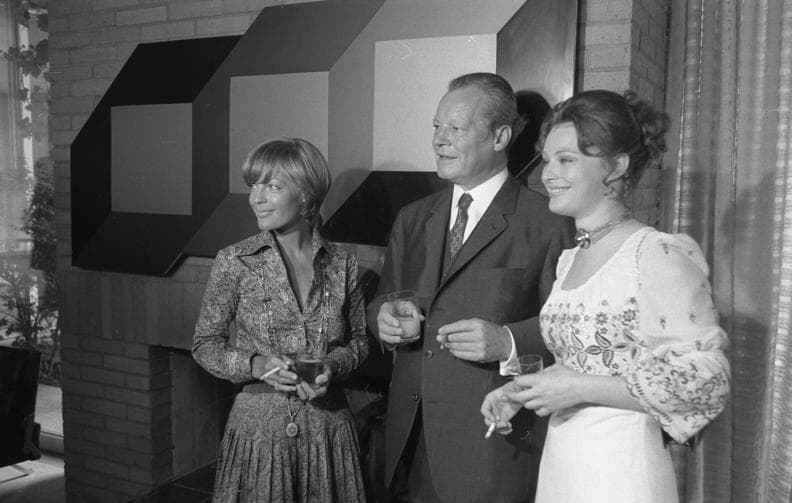
Paris, a gray afternoon in the late 1970s. Romy Schneider receives in her apartment in the 7th arrondissement, a cup of strong coffee already cold before her, an annotated script open on the coffee table. She lights a cigarette even before the first question, and the silence of the street merges with hers.
—How does a sixteen-year-old girl become, overnight, the most famous empress in Europe?
I was sixteen, and I think I didn't yet understand what was being asked of me. Ernst Marischka chose me partly because my mother, Magda Schneider, had already worn that crown in the thirties — it was almost a family affair. We shot at the Bavaria Studios, near Munich, in those court gowns so heavy that I had to be helped up between takes. The first Sissi came out in 1955 and, in one season, I no longer belonged to myself. All of German-speaking Europe had seen me young, graceful, smiling. What they didn't know is that I was already suffocating under that bodice.
All of Europe had seen me graceful and smiling; no one knew I was suffocating under that bodice.
—Did you struggle for a long time to be seen as anything other than that young empress?
For years. You know, a role like that doesn't fade away; it lodges in people's minds and stays there. I once told L'Express, and it's perhaps the truest thing I ever confided to a journalist: "I was Sissi for years without wanting to be, in people's minds. It took courage, tenacity, and good directors for them to finally see me differently." The court costume, the crown, the operetta smile — all of that had created an image I hadn't chosen. Breaking away from Germanic commercial cinema, leaving Germany — it wasn't a whim. It was a matter of survival as an actress.
—What happened at the Cannes Film Festival in 1958 that turned your life around?
Cannes, 1958. I arrived as a little German starlet, and I left as someone else. That's where I met Alain Delon. Our story became an event in newspapers all over Europe, but what the papers didn't understand is that it above all gave me a reason to leave everything behind. I broke my commitments in Germany, I settled in Paris, and I started from scratch in a language that wasn't quite mine. People always think I came to France for love. That's true, but I stayed out of ambition — the ambition for roles that the cinema across the Rhine would never offer me.
I came to France for love, but I stayed out of ambition.
—Why does La Piscine, in 1969, mark such a clear turning point in your French career?
Because, for the first time, the French public saw me as an adult woman, not as a young girl. Jacques Deray brought us together, Alain and me, ten years after Cannes, in that Midi light where the slightest tension becomes suffocating. I was playing something murky, restrained, where silence weighed more than the lines. La Piscine came out in 1969 and, suddenly, people no longer referred back to my Viennese bodice. It had taken me ten years to earn that simple right: to be seen as a woman, sensual and opaque, rather than as a postcard empress.
—How would you describe your way of working with Claude Sautet?
With Claude Sautet, I unlearned. I would arrive with my script covered in notes — I annotate everything, the psychology of each scene, every breath of a character — and he, patiently, would ask me to forget half of it. The day I received the César for Une histoire simple, I didn't talk about myself, I talked about him: "He taught me to act without acting, to be rather than to seem. This award is as much his as mine." That said it all. Since César et Rosalie, in 1972, he showed me that a modern woman, torn, ordinary, could carry an entire film without ever raising her voice. Naturalness in cinema is the most worked-at thing in the world.
Naturalness in cinema is the most worked-at thing in the world.
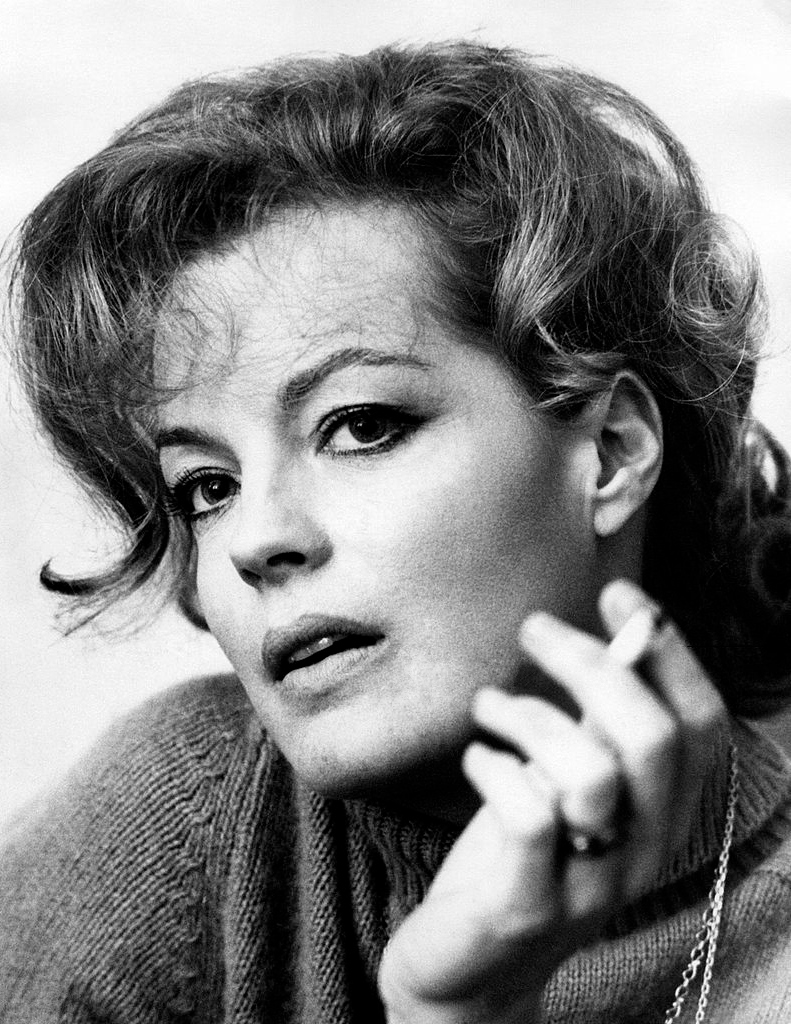
—What did the character of Une histoire simple, this woman who chooses to live alone, represent for you?
A freedom that few roles had offered me. This woman decides about her life, her body, her solitude, without a man dictating her behavior — and Sautet filmed her without judgment, with that slightly rough tenderness that is his. The César for Best Actress, in 1979, my first award, I received it for that silence, for that way of saying a lot by showing little. When I think back, I believe I spent my entire career fleeing the decorative woman to join this one: a woman who thinks, who doubts, and who stands tall. That's what I had been seeking ever since I left the German studios.
—Do you remember what Luchino Visconti allowed you, on the set of Ludwig?
Visconti gave me back the same empress Elisabeth as Sissi — but adult this time, disenchanted, tragic. He shot with almost cruel demandingness, in Rome and elsewhere, and he didn't protect me from anything. I once wrote to him what I still feel: "You gave me permission to be ugly, to be old, to be tragic. That is the most beautiful gift a director can give an actress." Do you understand the irony? The same character that had imprisoned me at sixteen freed me at thirty-four, because a great filmmaker had decided to watch her face age. Ludwig, in 1972, finally made me exist for international critics.
He gave me permission to be ugly, to be old, to be tragic.
—Are you afraid of roles that force you to touch the tragic, the painful?
No — I seek them. For a long time I was afraid of displeasing, afraid of breaking the porcelain of my image. Then Visconti, and later Andrzej Żuławski with L'Important c'est d'aimer in 1975, convinced me otherwise. With Żuławski, I played an actress on the edge, and I went there without a net, without concessions, even hurting myself. European critics talked about composition; I, above all, felt I was getting closer to the truth. An actress who refuses ugliness, fatigue, despair shows only half of the human being. I prefer to show the other half, even if it mars the portraits people like to paint of me.
—You were born in Vienna, you triumphed in Paris: which country do you really belong to?
To none, and that is perhaps my true homeland. I was born Rosemarie Albach in Vienna, in 1938, into a family of Austrian actors; I grew up in one language, and I built my career in another. I once told Der Spiegel what I have never formulated better since: "I am neither German nor French, I am both. This duality is my suffering and my strength." Here I am claimed as a national glory, there I am judged as a defector. Between the two, there is me, crossing borders with my accent and my suitcases. Cinema, deep down, is the only territory where I have ever felt at home.
I am neither German nor French: between the two, there is me.
—These coproductions between several countries, these shoots that take you from one culture to another: is it a tearing apart or an opportunity?
Both, always both. These Franco-German coproductions — and Italian, and many others — allowed me never to be locked into a single cinema, a single school, a single way of acting. I go from sets in Paris to those in Rome, from a Latin director to a Northern filmmaker, and each border crossed teaches me another silence, another light. Of course, it means living out of suitcases, without ever quite putting your head down somewhere. But when I think of the little Viennese girl who could have been only Sissi all her life, I tell myself that this vertigo was worth living.
This imaginary interview was generated by artificial intelligence from sources documented in Romy Schneider's profile. It dramatises what the figure might have said based on what we know about them, but does not constitute attested historical testimony. For primary sources and factual documentation, refer to the full profile.