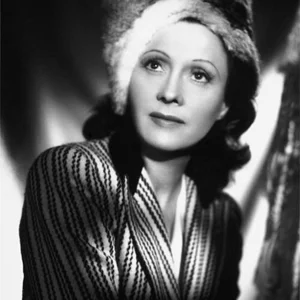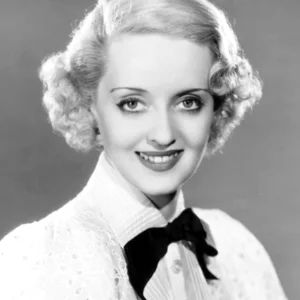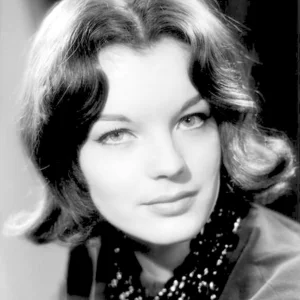

Franco-German actress (1938-1982), launched to fame by the Sissi trilogy, she went on to establish herself as one of the greatest European actresses under the direction of Visconti, Sautet, and Zurlini. An icon of auteur cinema, her career path illustrates the transformation of the European star system.
Romy Schneider(1938 — 1982)
Romy Schneider
Autriche, France, Allemagne
8 min read
Frequently asked questions
Famous Quotes
« I am not Sissi. Sissi is a fairy-tale character.»
« I am an actress, not a star. The difference is enormous.»
Key Facts
- 1938: Born in Vienna (Austria) into a family of actors
- 1955–1957: The Sissi trilogy, a hugely popular European success that made her famous at 17
- 1962: Collaboration with Luchino Visconti in Boccaccio '70, a decisive artistic turning point
- 1969–1982: French career with Claude Sautet (César and Rosalie, A Simple Story), earning critical acclaim
- 1982: Dies in Paris at 43, leaving behind a body of work spanning more than 60 films
Works & Achievements
Trilogy directed by Ernst Marischka in which Romy portrays the young Empress Elisabeth of Austria. These films, a massive popular success across Europe, brought her immediate celebrity — from which she would spend years trying to break free.
Film by Jacques Deray with Alain Delon and Maurice Ronet, marking Romy's true entry into French adult cinema. Her controlled performance and unsettling screen presence revealed her to an entirely new audience.
Historical epic by Luchino Visconti about King Ludwig II of Bavaria, in which Romy plays the adult Empress Elisabeth. This role, of tragic dramatic depth, established her talent with international critics.
Film by Claude Sautet that inaugurated a fruitful collaboration between the two artists. Romy portrays a modern woman torn between two men, in a naturalistic and intimate register that was widely celebrated in France.
Film by Andrzej Żuławski in which Romy plays a struggling actress. Her intense, unsparing performance earned her major critical recognition and cemented her reputation as a serious character actress.
Second collaboration with Claude Sautet: Romy plays a woman who chooses to live alone after an abortion. This role earned her the César Award for Best Actress in 1979, the first of her two wins.
Film by Francis Girod in which Romy portrays a self-made businesswoman in 1920s Paris. She received her second César Award for Best Actress in 1981, confirming her singular status in French cinema.
Anecdotes
At 16, Romy Schneider was cast as the young Empress Sissi in Ernst Marischka's trilogy (1955–1957), partly because her mother, Magda Schneider, had played the same character in the 1930s. The role made her an instant celebrity across the German-speaking world, but it would take her years to convince audiences that she was capable of far more.
In 1958, at the Cannes Film Festival, Romy Schneider met Alain Delon. Their love affair became a major European media event. She broke her commitments in Germany, moved to Paris, and deliberately reinvented herself as an actress, seeking roles with a psychological depth that commercial German cinema had never offered her.
Luchino Visconti, who directed her in Ludwig (1972), declared her one of the greatest actresses of her generation. He gave her a role of rare tragic depth, the polar opposite of her Sissi image. The collaboration proved a decisive turning point in her recognition by international critics.
Romy Schneider won two César Awards for Best Actress — for Une histoire simple in 1979 and La Banquière in 1981 — becoming the first actress to win the award twice since its creation in 1976. These honours marked her definitive place in French cinema.
In July 1981, her son David, aged 14, died in an accident in Paris. The tragedy shattered Romy Schneider, and she never recovered from the loss. She made a few more films, but her health declined rapidly. She died on 29 May 1982 in Paris, at the age of 43, from heart failure.
Primary Sources
Romy Schneider declares: “I am neither German nor French, I am both. This duality is my suffering and my strength. I don’t fully belong to any country, but cinema has given me a universal language.”
Romy Schneider pays tribute to Claude Sautet: “He taught me how to act without acting, to be rather than to seem. This award is as much his as it is mine.”
“I was Sissi for years without wanting to be, in people’s minds. It took courage, tenacity, and good directors for people to finally see me differently.”
Romy writes to Visconti: “You gave me permission to be ugly, to be old, to be tragic. That is the most beautiful gift a director can give an actress.”
Key Places
Birthplace of Romy Schneider, born on September 23, 1938. She grew up in an artistic environment, the daughter of two popular actors from Austrian and German interwar cinema.
It was at the Bavaria Studios, near Munich, that Romy filmed the Sissi trilogy between 1955 and 1957. The studios were then the heart of post-war German-language film production.
Romy settled in Paris in the early 1960s, first to be with Alain Delon, then permanently. She lived there until her death in 1982, making most of her French films in the city.
It was on the Croisette in 1958 that Romy met Alain Delon, an encounter that changed the course of her life and career. She returned to Cannes regularly throughout the 1960s and 1970s.
Romy stayed and filmed in Italy on several occasions, notably for *Ludwig* under the direction of Luchino Visconti. Rome was at the time one of the major centers of European art-house cinema.
Liens externes & ressources
Références
Œuvres
Une histoire simple
1978