Imaginary interview with Saladin
by Charactorium · Saladin (1138 — 1193) · Politics · 6 min read
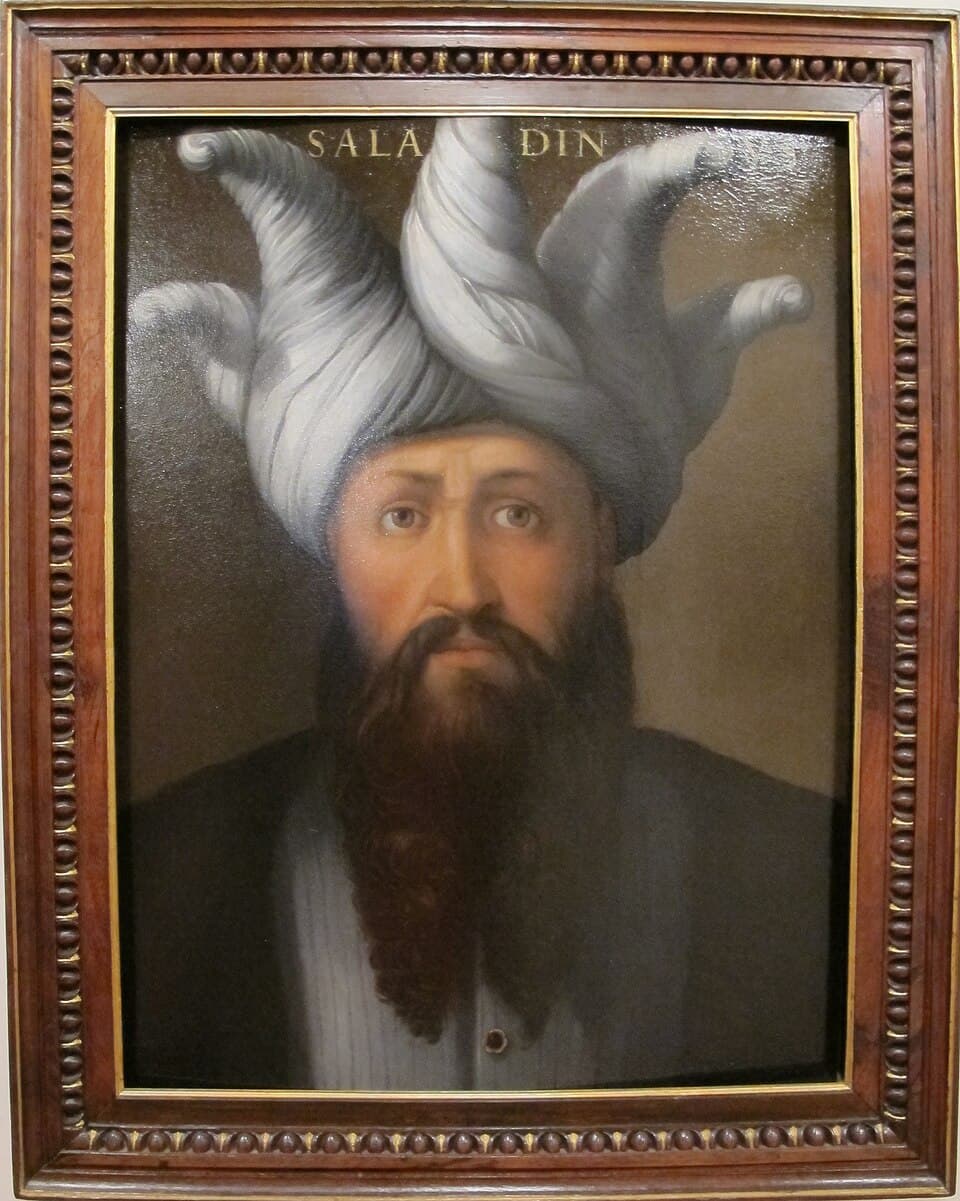
Under the command tent pitched near reconquered Jerusalem, in the autumn of 583 AH, the Sultan receives visitors. A bronze lamp illuminates an illuminated Qur'an placed on a chest, and the gold-and-black standard of the Ayyubids flaps softly at the entrance. Salah ad-Din speaks in a measured voice, that of a man who has ridden much and slept little.
—Before facing the Franks, you first gathered divided Muslim lands. How did this task begin?
People think I was born a general; I was born a servant. In Tikrit, in a Kurdish house of warriors, I learned that one commands only after long obedience. In 1169, God placed me as vizier of Egypt, and there I saw the truth: our princes were tearing each other apart while the Frankish banner flew over Jerusalem. Overthrowing the Fatimids in Cairo was not a whim of power, but a necessity—there had to be a single hand to hold the sword. Upon the death of Nur ad-Din, my master, in 1174, I carried this burden into Syria. Damascus, Aleppo, Mesopotamia: each city rallied was another prayer gathered under a single standard. Without this patiently stitched unity, Hattin would have been but a fool's dream.
There had to be a single hand to hold the sword.
—Why spend so many years conquering your own coreligionists rather than marching immediately against the crusaders?
He who strikes the enemy with a divided army strikes himself. My secretary Al-Qadi al-Fadil wrote in my name that the lands of Islam should align under a single banner to deliver the holy places from Frankish occupation—and this was not a chancellery formula, it was my obsession. Between 1174 and 1187, I had to extinguish rivalries, sometimes with the blood of Ayyubid princes, sometimes through marriages and oaths. The defeat at Montgisard in 1177 taught me humility: one does not triumph over a seasoned kingdom with poorly bound troops. The founding of my dynasty was not a family ambition; it was the skeleton that the jihad needed to stand upright.
He who strikes the enemy with a divided army strikes himself.
—Do you remember the day of Hattin, in 1187?
How could I forget it? The July heat weighed on the hills of Hattin like an anvil. I had cut the Frankish army off from water; a warrior without a source is a warrior already half-defeated. When the dust settled, they brought me King Guy of Lusignan, defeated, his throat dry, and they handed me what Christians called the True Cross, which they carried like an idol into battle. I had the king given water, for striking a man when he is down does not honor the victor. But that battle was not just another victory: that day, the Latin Kingdom of Jerusalem lost its army, and therefore its heart. The road to the Holy City opened, wide and silent.
A warrior without a source is a warrior already half-defeated.
—A few months later, you entered Jerusalem. What did this city represent for you?
In the year 583 of the Hijra, I entered Jerusalem not as a plunderer, but as a man returning something to its rightful owner. The Franks had taken it in 1099 in a river of blood; they still tell how the streets ran red up to the ankles. My chronicler Imad ad-Din wrote that the gates opened and the banner of Islam was raised on the walls—and I swear my heart trembled more with gratitude than pride. The Rock from which the Prophet, peace be upon him, was ascended, was again in our hands. Eighty-eight years of Muslim waiting were over. I did not conquer a city that day; I returned a mosque to its faithful.
I did not conquer a city; I returned a mosque to its faithful.
—Your clemency during the surrender of Jerusalem is praised. What held you back from the vengeance many expected?
My emirs urged me to return blood for blood, to do in 1187 what the crusaders had done in 1099. I refused. The reconquest had to cleanse the city, not further defile it. So I set a ransom, modest for those who could pay, and for the poor I often turned a blind eye and opened my purse, letting Christians go whom the law allowed me to enslave. Jihad is not hatred of the other; it is the effort to restore the order willed by God. A sultan who massacres supplicants does not magnify Islam, he diminishes it. I preferred that people say of Muslims that they knew how to forgive better than their enemies knew how to kill. Prestige is earned through moderation, never through carnage.
Prestige is earned through moderation, never through carnage.

—Did this generosity toward your adversaries not risk being seen as weakness?
Fools confuse harshness with strength. Believe me, it takes more firmness to restrain a thousand horsemen thirsting for plunder than to give free rein to their fury. In Jerusalem, I let Frankish women leave the city with their children and relics, and I was told that some came to plead for their captive husbands: I returned them. Such clemency does not weaken the arm that holds the Damascus sword; it makes it formidable, for the enemy then knows he has everything to lose by resisting me and everything to hope for by surrendering. Chivalry, which the Franks think belongs to them, has no homeland or religion. The honor of the victor is the most lasting of fortresses.
Fools confuse harshness with strength.
—Then came Richard the Lionheart and the Third Crusade. What memory do you keep of this adversary?
Richard is a lion, the name does not lie. When his crusade landed and Acre fell into his hands in 1191, I understood that I faced not a plunderer, but a king who knew war as a craftsman knows his trade. We fought hard on the Levantine coast, and neither of us could break the other. I sent fresh fruit and ice from the mountains to his camp when fever gripped him, and when his horse died, I had another brought to him—for humiliating a brave man diminishes you. One can esteem a man and desire his defeat; these are two things that easily lodge in the same heart. Respect between enemies is a form of prayer.
One can esteem a man and desire his defeat.
—The treaty of 1192 left Jerusalem to the Muslims while opening the city to Christian pilgrims. Why this arrangement?
Because an endless war is no one's victory. In 1192, my troops were weary, his too, and winter wears down empires more surely than battles. I accepted that the Franks keep a strip of coast, from Acre southward, and that they come to pray at the Holy Sepulchre unarmed, as pilgrims and not conquerors. Jerusalem, however, remained under the banner of Islam—that was my only immutable point. Granting them access to the places they venerate cost me nothing and spared rivers of blood. I wrote to Richard that we must recognize the reality willed by God and negotiate peace with honor. A good treaty, you see, is one where each party leaves believing he has not lost everything.
An endless war is no one's victory.
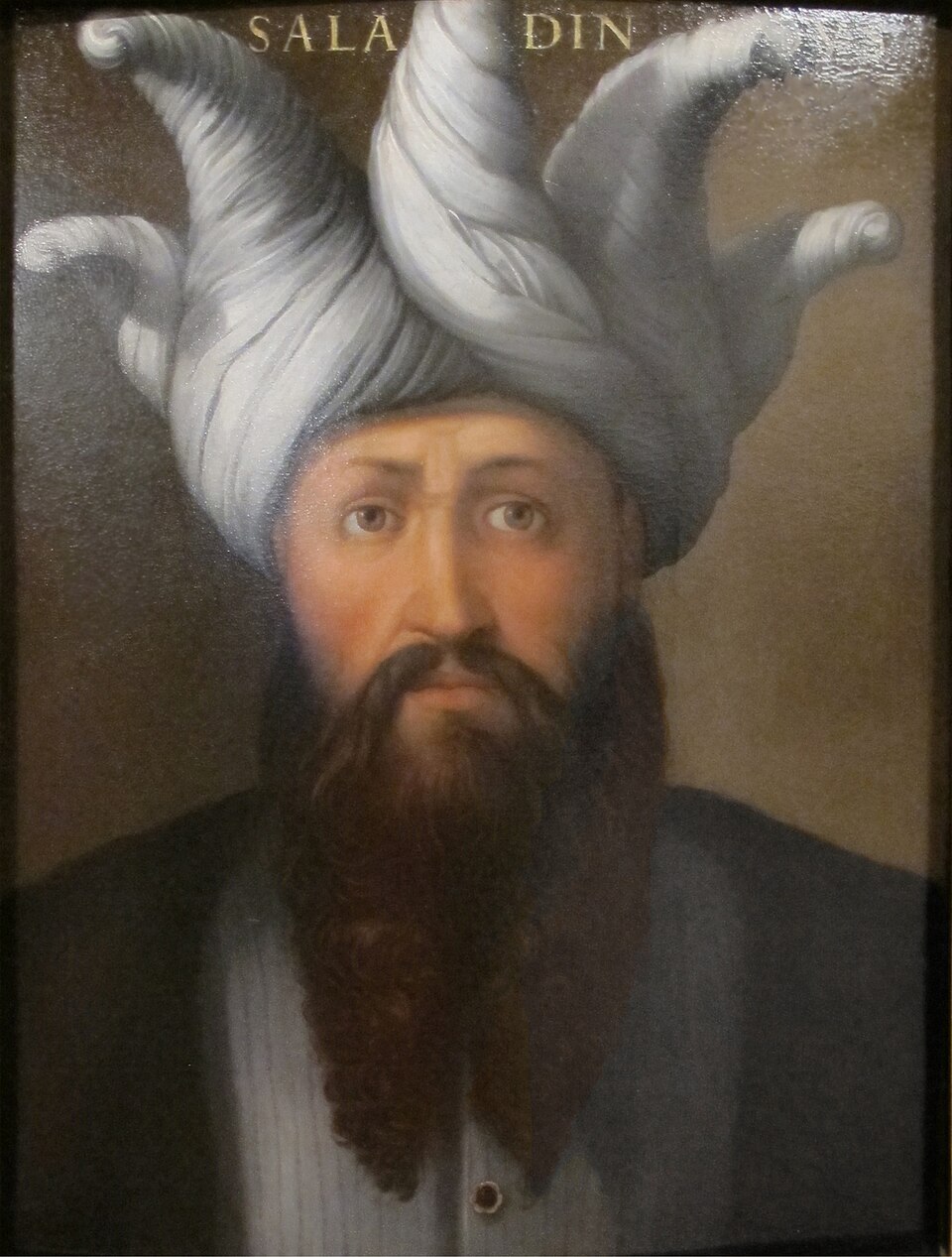
—What was one of your days like, between prayer and war council?
My day begins before the sky pales, with the obligatory prayer, for a man who governs without first bowing to God governs already astray. Then come my officers and advisers, under the command tent or in the citadel of Cairo, and we weigh supplies, routes, the movements of the Franks. In the afternoon, I dispense justice: a sultan who does not hear the complaint of the humblest of his subjects is merely a better-dressed bandit. In the evening, I share the meal with my close ones—bread, lamb, dried fruits, never wine—and I listen to readings of holy texts and chronicles of ancient kings. My sultanial seal then seals the orders for the next day. Then again the prayer, and the little sleep a leader can allow himself.
A sultan who does not hear the complaint of the humblest is merely a better-dressed bandit.
—You live under the tent more often than in your palaces of Damascus. What has this itinerant life taught you?
The palaces of Damascus and Cairo are beautiful, with their inner gardens and cool halls, but I sometimes feel a stranger there. It is under the leather of the command tent, amid the horses and the smoke of fires, that I recognize myself. Camp life teaches what no throne can: that a sultan gets cold like his soldiers, that hard bread tastes the same to the prince and the Kurdish archer. I have known emirs whom silk softened until they became useless. I wanted the Ayyubid standard visible from afar precisely so that my men would know where I sleep—not sheltered, but among them. Power that distances itself from those it commands begins to die.
Hard bread tastes the same to the prince and the archer.
—In the end, what would you like to be remembered for?
I possess neither amassed gold nor hidden treasure; what God entrusted to me, I spent for unity and the deliverance of the holy places. If anything is to be remembered, let it not be the conqueror of Hattin, but the man who returned Jerusalem without drowning it in blood. The dynasty I founded will bear my name, perhaps a century, perhaps longer—that belongs to God, not to me. I built coherence where discord reigned, and held a reconquest within the bounds of honor. If, many years hence, a traveler says of me that he was just with his enemies as with his own, then my seal will not have marked the wax in vain. The rest is but dust on the roads of the Levant.
Let them remember the man who returned Jerusalem without drowning it in blood.

This imaginary interview was generated by artificial intelligence from sources documented in Saladin's profile. It dramatises what the figure might have said based on what we know about them, but does not constitute attested historical testimony. For primary sources and factual documentation, refer to the full profile.