Kids interview Samson
by Charactorium · Samson (1117 av. J.-C. — 1077 av. J.-C.) · Mythology · 5 min read
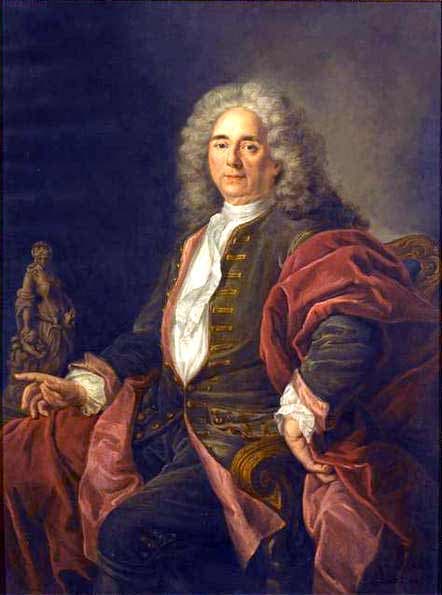
Two young visitors of twelve have come with their class to Zorah, in the territory of Dan. Sitting in the shade, a long-haired man greets them with a smile. It is Samson, the judge of Israel, who agrees to answer all their questions.
—Why do you have such long hair? Do you never cut it?
You have a sharp eye, my child. No, never. Even before my birth, a messenger of God came to see my mother. He told her that no razor would ever touch my head. That is called being a Nazirite: a child consecrated to God, who drinks no wine and does not cut his hair. Imagine a promise so strong it lasts a lifetime. My long hair is the visible sign of that promise. As long as it remains intact, immense strength dwells in my arms. It is not really my strength, you understand. It is a gift I carry on my head.
My hair is not a hairstyle. It is a promise made to God.
—What were you allowed to eat when you were little?
Good question, it matters a lot. Because of my Nazirite vow, I never touched wine, nor anything that came from it. In the morning, it was simple: barley bread, some dried fruit, a little honey. Ah, honey! One day, I found some in the carcass of a lion I had torn apart with my bare hands. Imagine the surprise: bees settled there, and golden honey in the hollow of the bone. I ate it as I walked. In the evening, I shared the meal with my family in Zorah. A simple life, my child, but every bite reminded me of whom I belonged to.
Every meal reminded me of whom I belonged to.
—Is it true you killed a lion all by yourself, without a weapon?
It is true, and I was young, barely older than you. I was walking to a wedding feast when a young lion sprang out roaring. I had nothing in my hands, not even a stick. And yet I tore it apart as one tears a young goat. The strength rose in me at once, like a river overflowing. At the time, I told no one, not even my parents. It was later, passing by the same place, that I found the honey in its body. From this story, I even made a riddle to challenge the Philistines at the feast.
The strength rose at once, like a river overflowing.
—How did you manage to beat a thousand soldiers with just a bone?
Can you picture the scene? A crowd of Philistines coming to capture me, and me alone. At my feet lay a fresh jawbone of an ass. I picked it up like one picks up a branch. And I struck, struck again, until a thousand enemies fell around me at Ramath-lehi. It was not rage, my child. It was the strength God put into my arm to defend my oppressed people. When it was all over, I was terribly thirsty, so much so that I thought I would die there, victorious and parched. That battle showed the tribes of Israel that they could resist.
Alone against a thousand, with only a bone picked up from the ground as a weapon.
—Why did you tie torches to foxes? That's weird!
Ha! It surprises, I know. But listen to the cunning. The Philistines lived off their wheat harvests. To weaken them without fighting them one by one, I captured three hundred foxes. I tied them together in pairs by the tail, with a blazing torch between them. Then I let them loose into the ripe fields. Imagine the panic: fire running everywhere, ears of grain blazing, smoke rising to the sky. In one night, their entire year's supply went up in ashes. Sometimes, my child, one protects one's people by a clever trick, not just by a punch.
Sometimes you defend your people by cunning, not just by strength.
—What was your real job? What did you do with your days?
They call me a warrior, but my true role was judge of Israel. For twenty years I held that office. A judge, in my time, is not only someone who fights. In the morning, in Zorah, people came to me to settle their disputes: a piece of land, a herd, a quarrel between neighbors. I listened and I decided. In the afternoon, I watched the borders against Philistine incursions. Imagine an older brother for an entire people: he protects, he comforts, he decides. That is what I was. Strength served to defend, but justice required patient ears above all.
A judge protects with his arms, but decides with his ears.
—Why were the Philistines so mean to your people?
You know, they were not monsters, but masters. The Philistines lived on the coast and possessed a fearsome thing: they knew how to work iron. Their weapons were stronger than ours. So they dominated the tribes of Israel, took the harvests, imposed their law. It was called oppression. Imagine living in your village knowing that a more armed people decides in your place. Around that time, their power was at its peak. It is against this weight that I rose up, again and again. Not for glory, my child, but so that my people could breathe a little more freely.
They dominated by iron; I resisted so that we could breathe.
—Were you in love with Delilah? Didn't you know she would betray you?
Ah, Delilah... That is the painful question. Yes, I loved her, in the valley of Sorek. And no, I did not want to see the danger. Three times she asked me the secret of my strength, three times I lied to her, and three times she tried to hand me over. I should have fled. But when you love, my child, you sometimes become blind long before you lose your eyes. By insisting day after day, she finally wore out my heart. And I spoke. My greatest battle, I did not lose against an army. I lost it against a soft word.
My greatest battle, I lost against a soft word.
—What happened when they cut your hair?
The worst moment of my life, I will tell you simply. While I slept on Delilah's lap, they cut my seven locks. When I woke up, I tried to struggle as before, to shake off my bonds. But nothing. My arm remained heavy, weak, like that of any man. My strength had left with my hair, because my promise to God was broken. Imagine waking up and not recognizing yourself. The Philistines seized me at once. That day, I understood that my strength had never been mine. It was a loan, and I had lost the right to keep it.
My strength was never mine: it was a loan.
—That's sad, did they hurt you after they caught you?
Yes, my child, and I will not hide it from you. After my capture, the Philistines gouged out my eyes. Then they bound me with bronze shackles and took me down to Gaza, the very place where I had once torn off the city gates. Can you imagine the contrast? The hero who carried gates on his back, now blind, turning a millstone like a beast. In the dark, in chains, I had time to think. And you know what? My hair, slowly, began to grow again. No one paid attention. In my night, a small hope grew with it.
In my blind night, a hope grew back with my hair.
—How did you die? They say you brought down a temple?
It is true, and it is my last story. The Philistines dragged me into the temple of their god Dagon in Gaza, to mock me during their festival. Thousands of people were there. I asked the young man who guided me to place me between the two great pillars. Then, in silence, I begged God to give me my strength one last time. I pushed the pillars with all my might. The roof collapsed on the crowd. That day, I defeated more enemies in dying than in all my life. My death was not an end, my child. It was a final gift for my people.
I defeated more enemies in dying than in all my life.
This imaginary interview was generated by artificial intelligence from sources documented in Samson's profile. It dramatises what the figure might have said based on what we know about them, but does not constitute attested historical testimony. For primary sources and factual documentation, refer to the full profile.