Imaginary dialogue between Lucilius and Seneca
by Charactorium · Seneca (4 av. J.-C. — 65) · Philosophy · 6 min read
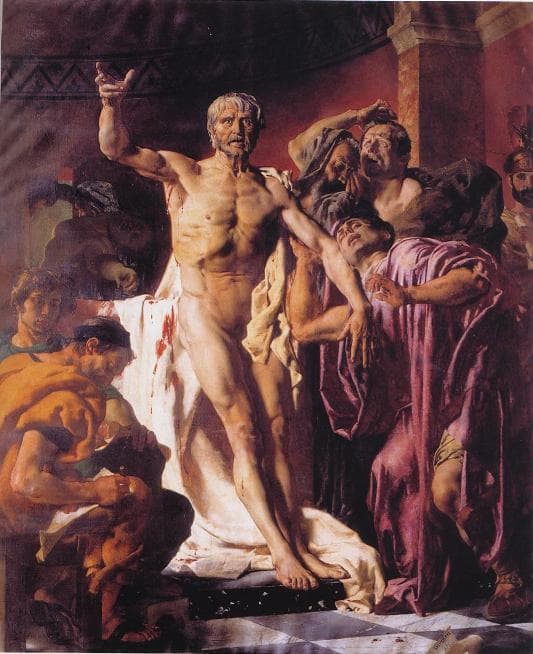
It is at Baiae, on the Campanian coast, that Lucilius meets Seneca in the late summer of 63 AD — two years after the philosopher's quiet withdrawal from Nero's court. The afternoon light floods a shaded portico overlooking the sea, and on a low table between them lie several papyrus scrolls, the earliest drafts of letters Seneca has been sending his younger friend across the months of their separation. They have known each other long enough for silence to be comfortable. It is Lucilius who finally breaks it.
—You have been sending me letters for months now, Seneca. What made you choose the epistola as your way of teaching?
I began writing to you, Lucilius, because letters are the most honest form of speech I know. In the forum and in the palace, a man performs — he shapes his words for the ears of power. But a letter reaches you alone, in the quiet of your Sicilian office, and I can say what I actually think. As I have written to you more than once: life is a long apprenticeship, and we must not be surprised if we need our entire existence to learn how to live. I write these letters because I am still learning myself. The epistola is not a monument — it is a conversation. And you, my dear Lucilius, have been patient enough to keep answering.
A letter reaches you alone — and I can say what I actually think.
—In every letter, you return to death. Is it fear that drives this, or something harder to name?
Not fear — clarity. When a man withdraws from the court, from the daily performance of Roman public life, he discovers he has been postponing his own thoughts for years. I write about death because the Stoic who avoids that subject has understood nothing. The true danger is not dying; it is dying badly — frightened and unprepared, having never examined what a life is actually worth. In every letter I send you, I am also writing to myself, reminding myself of what I believe before I need to believe it in earnest. Death does not threaten the philosopher who has made peace with it. It simply arrives, and finds him ready.
The true danger is not dying — it is dying badly, having never examined what a life is worth.
—You own estates in Campania and a fine house in Rome. Does the philosopher not feel the weight of his own fortune?
They are right to point at me, and I would rather they did than not. A Stoic who claimed to have no fortune would be practicing a different kind of dishonesty. I have estates, yes. What I maintain — or attempt to maintain — is that these things hold no part of my soul. The Stoic does not despise wealth; he simply does not cling to it. If Fortune took everything tomorrow, I would not weep for the marble. What my critics mistake is this: detachment is not poverty. It is indifference. The test is always the same — if this were gone, who would I become? That is the only question the philosopher must be able to answer honestly.
—I remember arriving at your domus last summer — the garden was beautiful, the evening long. Can a wealthy man truly be free?
You arrived that evening with a philosophical question already forming on your lips — I remember it well. And yes, the garden was fine. But tell me, Lucilius: did the garden answer your question, or did the conversation we had in it? A domus is a shell. I have known men in poverty who were enslaved to their hunger, and men in palaces who owned nothing within themselves. What a philosopher possesses in marble is far less interesting than what he owes to ratio — to reason itself. The house stands where I left it. I choose not to be it.
—For thirteen years you guided Nero. How does a man hold philosophy and imperial power in the same hand?
With great difficulty — and, in the end, imperfectly. I will not pretend that tutoring Nero was a straightforward exercise in philosophy. I was given a boy who would become an emperor, and for some years I genuinely believed Stoic principles could shape a reign. Burrus and I counselled restraint, clemency, deliberation. The first five years of Nero's rule were, I think, years in which philosophy had some foothold in Roman governance. But a prince who answers to no one except Fortune herself is a difficult student. The teacher can illuminate the path; he cannot walk it for his pupil. I learned this slowly, and the lesson cost more than I expected.
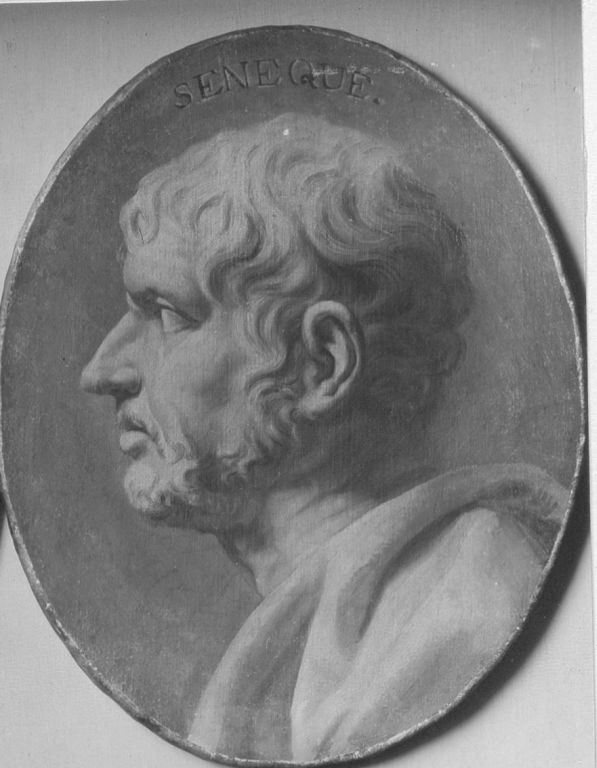
—When you dedicated De Clementia to Nero in his first years of reign, did you genuinely believe philosophy could govern an emperor?
I believed it because I needed to believe it. The argument of De Clementia is not naive — history offers examples of rulers who governed through love rather than fear, and who were stronger for it. What I did not fully reckon with was that a young man surrounded by those who encouraged his worst impulses would gradually cease to hear the philosopher at all. By the time I withdrew from the court in 62, I had reached a painful understanding: philosophy can shape a man, but only if that man wishes to be shaped. Nero's ear belonged to Rome's cruelty long before it ceased to belong to me. That is not philosophy's failure. It is power's oldest habit.
—Your tragedies — Medea, Phaedra, Thyestes — are dense with tyrants and broken virtue. Did you write them while still at the Palatine?
Most of them, yes — and that is, perhaps, what gave them their particular character. Medea's violence, Thyestes' horror of power turned monstrous — I was not drawing purely from Greek myth. I was drawing from what I observed around me, from what I feared becoming, from what I watched the empire becoming. A philosopher who writes tragedies does something different from one who writes treatises: he places his darkest knowledge in the mouths of characters who cannot be him, so that the audience — and the author — can look at it without flinching. The stage is, in that sense, a form of courage.
—There is a line in Medea about souls that know no master. Did you write it with anyone particular in mind?
I wrote it with everyone in mind, which amounts to the same thing. What the stage permits that a treatise does not is the bodily presence of a passion destroying itself — you watch Medea act against her own reason, and you understand something about the ruin of virtue that no philosophical argument can fully convey. Whether Nero read those plays, I cannot say with certainty. Whether he understood them as I intended — I suspect considerably less. A tyrant who encounters a mirror rarely recognises himself in it. That is, I suppose, both the limitation of literature and its small, stubborn mercy.
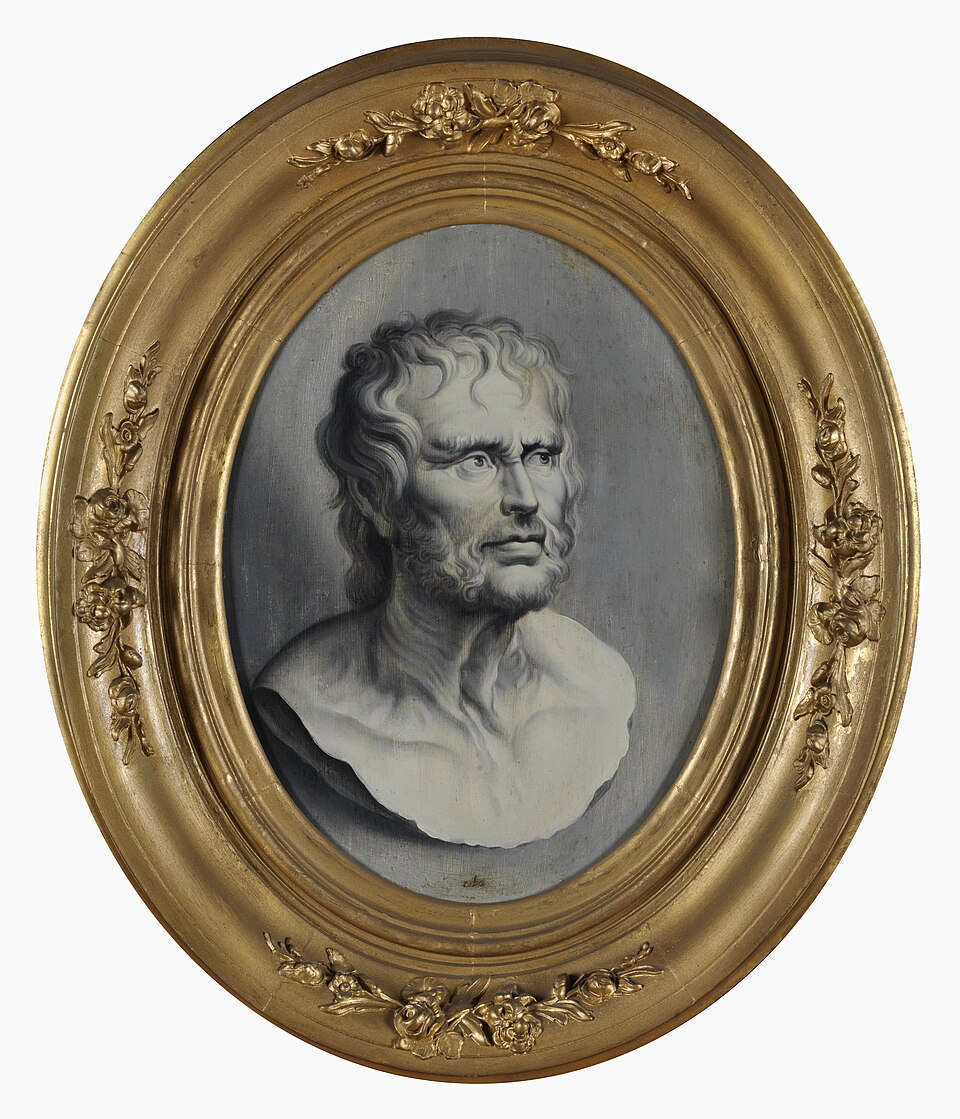
—You have written to me of a soul that cannot be shaken. What does that look like, in practice, when death approaches?
An unshakeable soul is not a soul that feels nothing — that is a common misreading of Stoic teaching, and one I have spent considerable ink correcting. To face death without flinching means to have decided, in the calm of a study or a garden, that the things Fortune can take from us — health, position, reputation, life itself — are not our soul. The soul that trembles before the emperor's judgment has already surrendered something more valuable than whatever he threatens to seize. Ratio — that capacity for reason which distinguishes us from the frightened animal — this is what we keep. No power on earth can actually take it, unless we hand it over first.
The soul that trembles before the emperor's judgment has already surrendered something more valuable than whatever he threatens to seize.
—You wrote to me of your evening examination of conscience, Seneca. Sitting here with you at last — what question troubles you most?
The question that returns most reliably each evening is also the simplest: have I lived this day in accordance with what I believe, or have I merely performed it? The performance exhausts a man. Living — truly living, secundum naturam — is lighter. I find, Lucilius, that as these years of retreat have lengthened, the gap between those two things has narrowed — not because the world has grown simpler, but because I have grown considerably less interested in the world's assessment of me. That, I think, is the only freedom a man in Rome can honestly claim. Not freedom from the emperor's power — but freedom from wanting his approval.
—What do you hope I will do with these letters once you are no longer here to write them?
Keep them, or share them — it makes little difference to me which. I wrote them to think aloud, not to build a monument. If some future reader finds in them a reason to examine his own life rather than his neighbor's fortune, that would be enough. I did not write to Lucilius as a master writes to a pupil. I wrote as one man still learning writes to another man still learning. That is the only honest form philosophy can take at our age. The Epistulae are not a conclusion — they are the record of a search. Use them if they are useful. The conversation was the thing; the papyrus was only how we preserved it.
This imaginary interview was generated by artificial intelligence from sources documented in Seneca's profile. It dramatises what the figure might have said based on what we know about them, but does not constitute attested historical testimony. For primary sources and factual documentation, refer to the full profile.