Kids interview Seneca
by Charactorium · Seneca (4 av. J.-C. — 65) · Philosophy · 5 min read
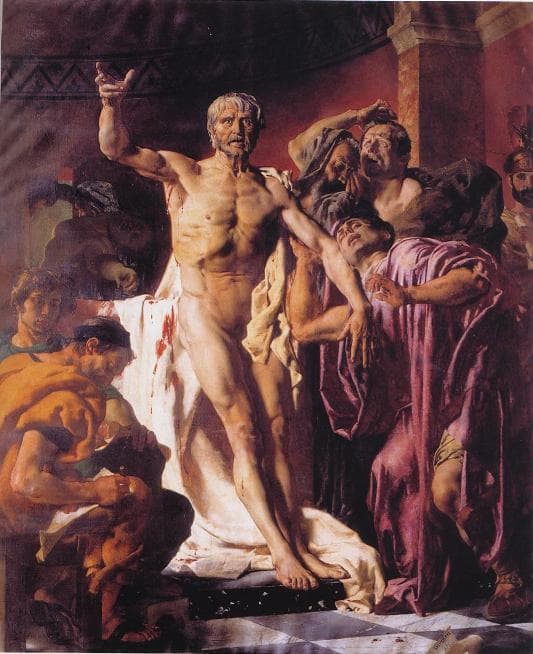
Two twelve-year-olds are on a class field trip about ancient Rome. They have heard that a famous philosopher — one who once taught an emperor and survived a long exile — is willing to answer their questions. Seneca sits on a low stone bench, a rolled papyrus in his lap, and nods at them with a warm, unhurried smile.
—You were sent to a faraway island as punishment — what happened exactly?
In 41 AD, the Emperor Claudius banished me to Corsica — a rocky island far from Rome, far from my books, far from everyone I knew. I had done nothing wrong, but at the imperial court, that rarely matters. Imagine leaving a great noisy city for a shore where only the wind speaks to you. At first, I was devastated. But slowly I learned something extraordinary: a man alone with nothing but his thoughts can still be free. No emperor can reach inside your mind. I spent eight years there. By the time I returned to Rome, I had understood the most important thing a Stoic must discover — that genuine freedom is something you carry within yourself.
No emperor can reach inside your mind.
—How did you end up as teacher to someone who would one day be emperor?
In 49 AD, Agrippina — the emperor's mother, and one of the most powerful women in Rome — chose me personally. I had just returned from my long exile. She wanted the sharpest mind in Rome to shape her son. Young Nero was about twelve at the time — not so different from you, actually. I taught him how to speak clearly, how to reason justly, how to govern with wisdom. I even wrote him a long treatise — the De Clementia — entirely about the virtue of mercy in a ruler. I truly believed that ideas planted young could grow into something noble. And the first years of his reign, I will say, gave me real hope.
—Did you ever feel like you were failing as Nero grew more and more cruel?
Yes — and that is the hardest thing to admit. I stayed at court until 62 AD, thirteen years in total, trying to hold back what I could see coming. Imagine trying to steady a ship in a storm using only your voice. That is how it felt toward the end. The historian Tacitus wrote that I could not restrain Nero once he grew older and more violent — and he was right. There came a moment when I saw my words were no longer heard, only endured. I stepped away from the palace quietly. A teacher cannot control what a student chooses to become. I had written that truth a thousand times. Living it proved far harder.
A teacher cannot control what a student chooses to become.
—What did those eight years on that rocky island actually change in you?
Everything, if I am honest. Before Corsica, I was ambitious — I wanted fame, influence, a career at the heart of Roman politics. The exile stripped all of that away. I had nothing but a straw mat, the sound of the sea, and my own thoughts for company. At first that felt like punishment. Then, slowly, it started to feel like a gift. I discovered which parts of me were real and which were only costume. I came back to Rome leaner — not in body, but in spirit. I knew exactly what I valued. You cannot know what you truly need until everything else has been taken from you. That is a lesson I would not trade for anything.
—People said you were incredibly rich but told others not to care about money — wasn't that unfair?
They said that to my face — people at the imperial court, poets, my enemies. And I did not flinch, because the accusation deserved a real answer. Yes, I was wealthy. I owned houses, lands, a fortune measured in denarii — the silver coins of our empire. But here is what I truly believed: the Stoic does not hate wealth. He simply refuses to be ruled by it. If everything were taken tomorrow, he would not crumble. The real test is not what you possess — it is whether your possessions possess you. I will confess honestly: I did not always live up to my own teaching. But I never stopped trying. That, I hope, counts for something.
—Why did you write so many letters instead of just writing proper books?
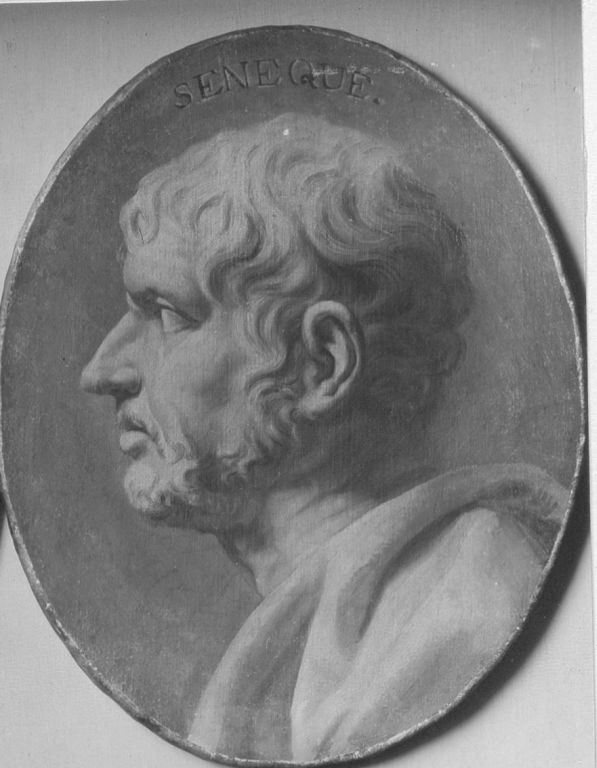
Because a letter breathes. When I wrote to Lucilius, I imagined him right in front of me — surprised, curious, pushing back. One hundred and twenty-four letters, written in the last years of my life, between 63 and 65 AD. By then I knew my time was running short — you sense it at my age, like a candle burning low. I wanted to say something true and human, not something polished and cold. I wrote on wax tablets in the early morning, before the city woke. I wrote that life is one long apprenticeship, and that even old men are still learning how to live. That felt more honest than any formal treatise.
—What did you do every single morning before anyone else was awake?
I sat very still and asked myself three questions: Was I just yesterday? Was I brave? Did I waste any of the hours I was given? The Romans had a word for this kind of quiet time — otium — time given to the mind rather than to politics or business. Most senators used their mornings for receiving flatterers. I preferred silence. Then I would read a few lines of philosophy, light a small oil lamp — the kind made of clay, the kind that smells of warm olive oil — and write. Those early hours belonged only to me. No visitor could intrude, no emperor could reach them. That is where I was most free.
—Did you ever feel guilty about your beautiful home and all your gold?
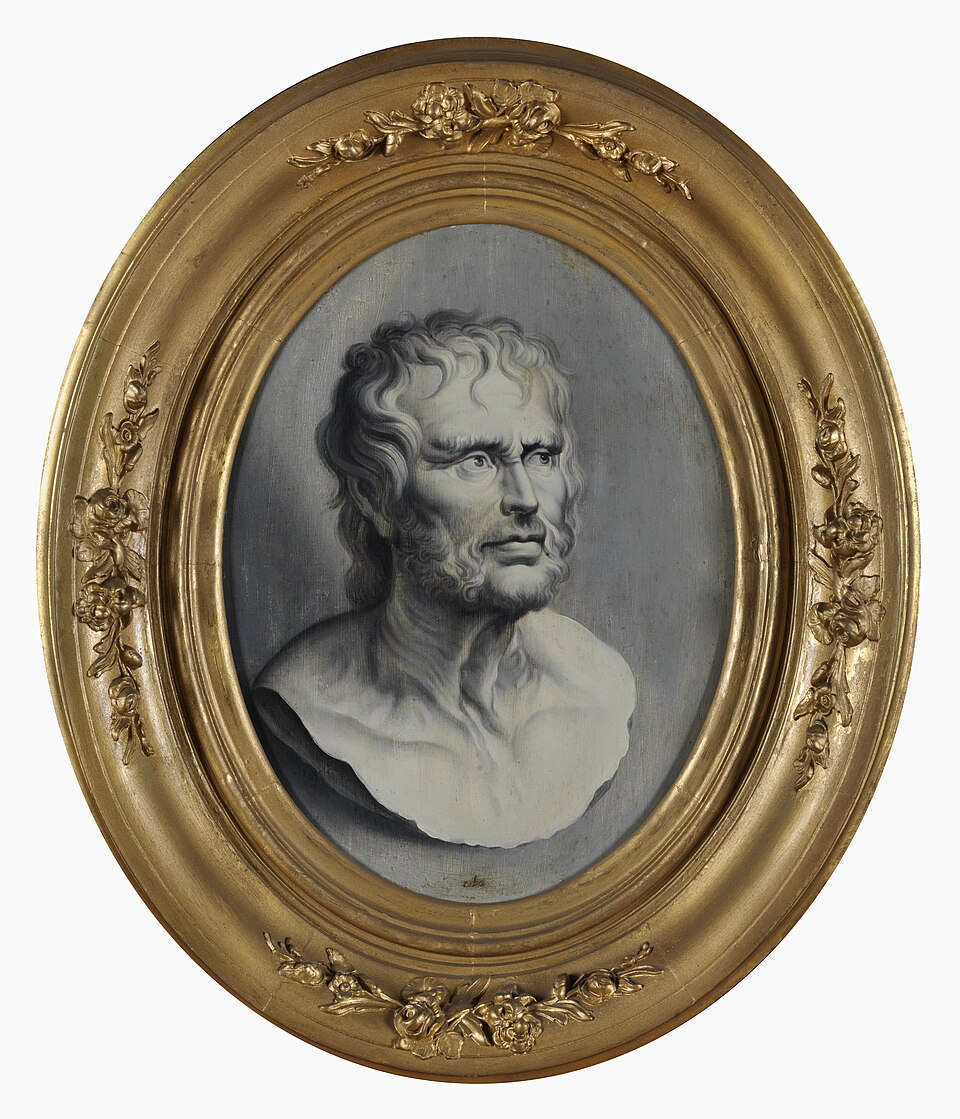
Sometimes, yes. A Stoic philosopher with marble floors — even I could see the irony. But let me tell you something true: I lived as simply as I could within my wealth. My meals were plain — bread, olives, water, nothing extravagant. I did not hold grand banquets. My house in Rome had gardens and a library I loved dearly, but inside those walls I tried to live no differently than a man of modest means. In the De vita beata — On the Happy Life — I worked all this out openly in writing. True happiness, I argued there, comes not from possessions but from virtue. I believed that then. I still believe it now.
—When Nero accused you of plotting against him, were you scared?
In 65 AD, soldiers arrived at my door. The Pisonian conspiracy — a plot to assassinate Nero — had been uncovered, and my name had been whispered to the emperor. I had not conspired. But innocence does not protect you when power has decided to be afraid. Was I scared? I think what I truly felt was closer to grief. Thirteen years earlier, I had taught that boy to construct a proper argument. Now he was sending armed men to end my life. And yet — I was not entirely surprised. I had written for decades that power and true friendship cannot coexist at the summit of an empire. I had simply forgotten I was living that lesson myself.
—How did you manage to stay calm when you knew you were going to die?
I thought of Socrates — that great Athenian philosopher who had faced his death with a steady hand, centuries before me, because he had lived exactly as he believed. He was my model. I gathered my friends around me, I spoke to them as calmly as I was able, and I told them not to weep. A Stoic does not fight what cannot be fought. He meets it with open eyes. I had written all my life that death itself is not what should be feared — only a life lived shamefully deserves our dread. The moment had come to prove I had truly meant it. I hope — I genuinely hope — that I did.
Do not fear death — fear only the life you fail to live well.
This imaginary interview was generated by artificial intelligence from sources documented in Seneca's profile. It dramatises what the figure might have said based on what we know about them, but does not constitute attested historical testimony. For primary sources and factual documentation, refer to the full profile.