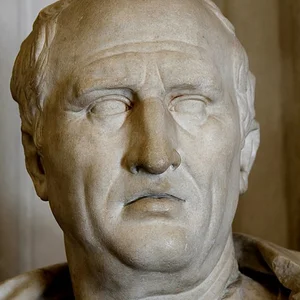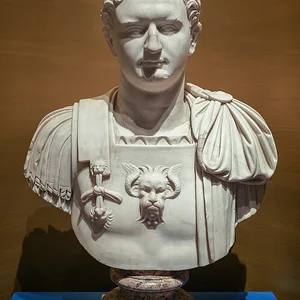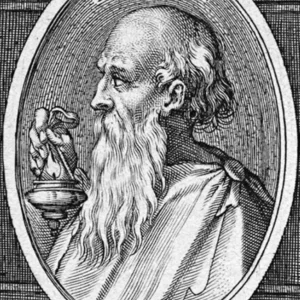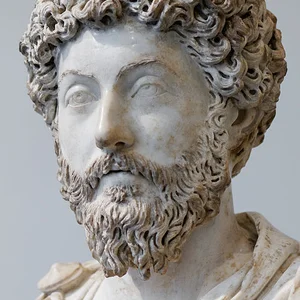

Roman Stoic philosopher (4 BC – 65 AD), Seneca left a lasting mark on ancient thought through his reflections on wisdom, virtue, and detachment from material wealth. Tutor to Emperor Nero, he was also a playwright and statesman, leaving a major body of written work including the celebrated Letters to Lucilius.
Seneca(4 av. J.-C. — 65)
Seneca
Rome antique
8 min read
Frequently asked questions
Famous Quotes
« Life is not about waiting for the storm to pass, but learning to dance in the rain.»
« No man was ever wise by chance.»
« As long as you live, keep learning how to live.»
« True freedom is to be a slave to nothing you desire.»
« It is never too late to learn.»
Key Facts
- 4 BC: Born in Cordoba, Hispania (present-day Spain)
- c. 49 AD: Becomes tutor to the young Nero and political adviser under Claudius
- 55–62 AD: Exerts a moderating influence on Nero's government
- 62 AD: Withdraws from political life following the death of Burrus
- 65 AD: Condemned to death by Nero; takes his own life (Stoic suicide)
Works & Achievements
A collection of 124 letters addressed to his friend Lucilius, laying out the principles of Stoicism and the pursuit of wisdom. This major work is one of the foundational texts of Roman Stoic philosophy and remains an essential reference for students of ethics.
A treatise dedicated to the Emperor Nero, setting out the virtues of clemency and benevolence in a ruler. It represents Seneca's attempt to shape imperial policy through Stoic philosophy.
A collection of philosophical treatises covering themes such as the happy life, divine providence, and death. These texts offer a profound meditation on Stoic ethics and the search for true happiness.
Greek-inspired dramas including Medea, Phaedra, and Thyestes, which adapt ancient myths for the Roman stage. These theatrical works showcase Seneca's literary talent and explore human passion and moral questions.
An encyclopedic treatise examining natural phenomena — earthquakes, comets, meteorology — from a Stoic perspective. This scientific and philosophical work seeks to understand the order of nature and humanity's place in the cosmos.
Seneca's role as advisor and tutor to the Emperor Nero during his formative years and the early part of his reign. This political position allowed Seneca to apply his Stoic principles to imperial governance, though with limited success.
Anecdotes
Seneca became the tutor of the emperor Nero in 49 AD, seeking to instill the principles of Stoicism in the young prince. Although Nero initially followed his teachings, he gradually strayed from them, leaving Seneca torn between his philosophical ideals and the harsh realities of political life.
Despite preaching detachment from material possessions, this Stoic philosopher amassed an enormous personal fortune — a contradiction that drew sharp criticism from his contemporaries. Seneca himself acknowledged the apparent paradox, arguing that the Stoic does not scorn wealth but simply does not become enslaved to it.
In 65 AD, Seneca was accused of involvement in the Pisonian conspiracy against Nero. Condemned to death, he chose to take his own life by opening his veins — much like Socrates — embodying Stoic principles on the acceptance of fate right to the very end.
Seneca wrote verse tragedies that, though largely lost during the medieval period, reveal a gifted dramatist exploring themes of tyranny and virtue. Rediscovered during the Renaissance, these plays demonstrate that Stoic philosophy was the beating heart of his entire body of work.
Late in life, Seneca composed his celebrated Letters to Lucilius — a collection of 124 letters offering words of wisdom to a young friend. This work became one of the primary sources of Roman Stoicism and is still studied in schools today for its reflections on virtue and death.
Primary Sources
Life, Lucilius, is a long apprenticeship. We should not be surprised that we need our entire existence to learn how to live. And even when we have devoted all of it to that study, there will still be something left to learn.
Mercy is the virtue by which a ruler tempers his power and exercises justice with compassion. It is what makes a ruler loved by his subjects rather than feared.
The happy life consists in having a strong, elevated, and unshakable soul. It means living in accordance with nature and reason, detaching oneself from the false goods of wealth and power.
The gods have power over things, but brave souls acknowledge no master. Virtue alone commands the souls worthy of it.
Seneca, a man of great talent and remarkable eloquence, exercised a beneficial influence over Nero while the emperor was still young. But as Nero grew older and more violent, Seneca was unable to restrain him from wrongdoing.
Key Places
Seneca's birthplace in Hispania (modern-day Spain). The philosopher was born in 4 BC in this Roman colony, into a family of the equestrian order.
The capital where Seneca spent most of his adult life. There he served as senator, advisor to Nero, and playwright, writing his major philosophical works.
The place where Seneca served as tutor and advisor to Emperor Nero. It was from this center of power that he exercised his political and philosophical influence.
A seaside resort in Campania where Seneca stayed regularly. This place of otium (leisure) embodies the detachment from material possessions he advocated in his Stoic philosophy.
The place of exile to which Seneca was banished by Emperor Claudius in 41 AD for approximately eight years. It was during this exile that he wrote several of his Letters to Lucilius.
An important city in Campania with which Seneca maintained close ties, situated on the Bay of Naples. It was near this region that he spent his final days in 65 AD.
Typical Objects

Writing surfaces made of wood coated with wax, used by Seneca to compose his letters, philosophical treatises, and plays. These tablets were the everyday tool of Roman intellectuals for drafting and preserving their texts.

The ancient book format on which Seneca's major works were copied, including his Letters to Lucilius. Papyrus was the prestigious material for circulating philosophical texts throughout the Roman Empire.

The official garment of the Roman citizen, worn by Seneca as a statesman and senator. This white toga with a purple stripe (latus clavus) symbolized his elevated social status and his political responsibilities as an advisor to Nero.

An everyday object used for lighting in the Roman villas where Seneca lived and wrote. These ceramic or bronze lamps reflect the simple material conditions the Stoic philosopher advocated, despite his considerable wealth.

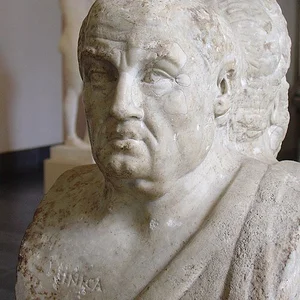
A sculpted likeness of the Stoic philosopher, in keeping with the Roman tradition of commemorating great figures. These busts reflect Seneca's lasting cultural significance in Rome's intellectual history.

A collection of plays composed by Seneca, including tragedies such as Medea and Phaedra. These dramatic works reveal his major contribution to Latin literature beyond his philosophical treatises.

A personal item of high office used by Seneca to authenticate his correspondence and official acts before Emperor Nero. The engraved ring symbolized imperial authority and trust.

Roman currency from the Julio-Claudian era bearing the emperor's image. It embodies the irony of Seneca's life — a wealthy philosopher who preached detachment from material possessions, even as he amassed a personal fortune as a businessman and imperial advisor.
School Curriculum
Vocabulary & Tags
Key Vocabulary
Tags
Daily Life
Morning
Seneca rises before dawn and devotes his first hours to Stoic meditation and philosophical reading, a practice he strongly recommends in his writings. He examines his conscience and prepares his mind for the challenges of the day by revisiting Stoic principles. After this period of solitary reflection, he receives his clients and friends who come to greet him, following the Roman ritual of the salutatio.
Afternoon
As a statesman and tutor to Nero, Seneca spends his afternoons attending to political duties — participating in debates in the Roman Senate or advising the emperor. He meets with visitors and disciples who come to him with philosophical questions, and attends to his correspondence, most notably his famous Letters to Lucilius. He may also attend public readings or rhetorical debates in Rome.
Evening
In the evening, Seneca dines modestly in keeping with the Stoic principles of sobriety, then retires to write his philosophical treatises and plays. He continues his personal reflections and reviews the events of the day through the lens of Stoic philosophy. Before bed, he mentally prepares the lessons he will share the following day.
Food
Seneca advocates a simple, frugal diet in line with Stoic principles: bread, vegetables, fruit, and water form the basis of his meals. Though wealthy, he deliberately shuns the excesses of the Roman table and elaborate cuisine, viewing temperance as an exercise in virtue. He often eats alone or in small company, avoiding lavish banquets.
Clothing
Seneca wears the white Roman toga (toga pura) befitting his standing as a high-ranking Roman citizen, paired with a tunic. His neat appearance reflects his elevated social status, but without excessive display — in keeping with his philosophy of detachment from material possessions. He favors simplicity and dignity over ornate luxury.
Housing
Seneca lives in a fine Roman townhouse (domus) in Rome, equipped with the features typical of patrician residences: an atrium, colonnaded porticoes, private gardens, and a library. Paradoxically, despite his considerable wealth, he maintains a degree of inner austerity, turning his home into a place of philosophical retreat and teaching for his disciples. His living environment is comfortable, but free from extravagant excess.
Historical Timeline
Period Vocabulary
Visual Style
Un style visuel alliant la sobriété de la portraiture romaine classique à une atmosphère contemplative et studieuse, où la lumière chaude et tamisée met en valeur la sagesse stoïcienne du philosophe dans son environnement d'écriture.
Sound Ambience
Une ambiance de méditation stoïcienne dans un cabinet d'étude romain du Ier siècle, mêlant les sons délicats de la réflexion philosophique (plume sur papyrus, pages qui tournent) aux bruits discrets de la vie quotidienne antique, baignée dans une sérénité intellectuelle tempérée par les échos lointains de l'empire.
Liens externes & ressources
Références
Œuvres
Lettres à Lucilius
41-65 apr. J.-C.
Traité sur la Clémence
55-56 apr. J.-C.
Essais moraux
40-65 apr. J.-C.
Tragédies (neuf pièces)
40-65 apr. J.-C.
Questions naturelles
62-64 apr. J.-C.
Préceptorat de Néron
49-62 apr. J.-C.