Imaginary dialogue between Pierre de Lescure and Vercors
by Charactorium · Vercors (1902 — 1991) · Literature · 5 min read
It is in a small apartment in the Latin Quarter, on a winter evening in 1943, that Pierre de Lescure meets Vercors around a shaded lamp and a cup of ersatz coffee. Outside, the curfew empties the streets; on the table, the proofs of a new title await the ink of the artisan press. The two men have known each other since they decided, together, to make publishing an act of refusal. Lescure, tonight, wants to hear the man behind the pseudonym — and behind the risk they share.
—Jean, you and I know your real name, but for the whole of France you are only a mountain range. Why hide behind Vercors?
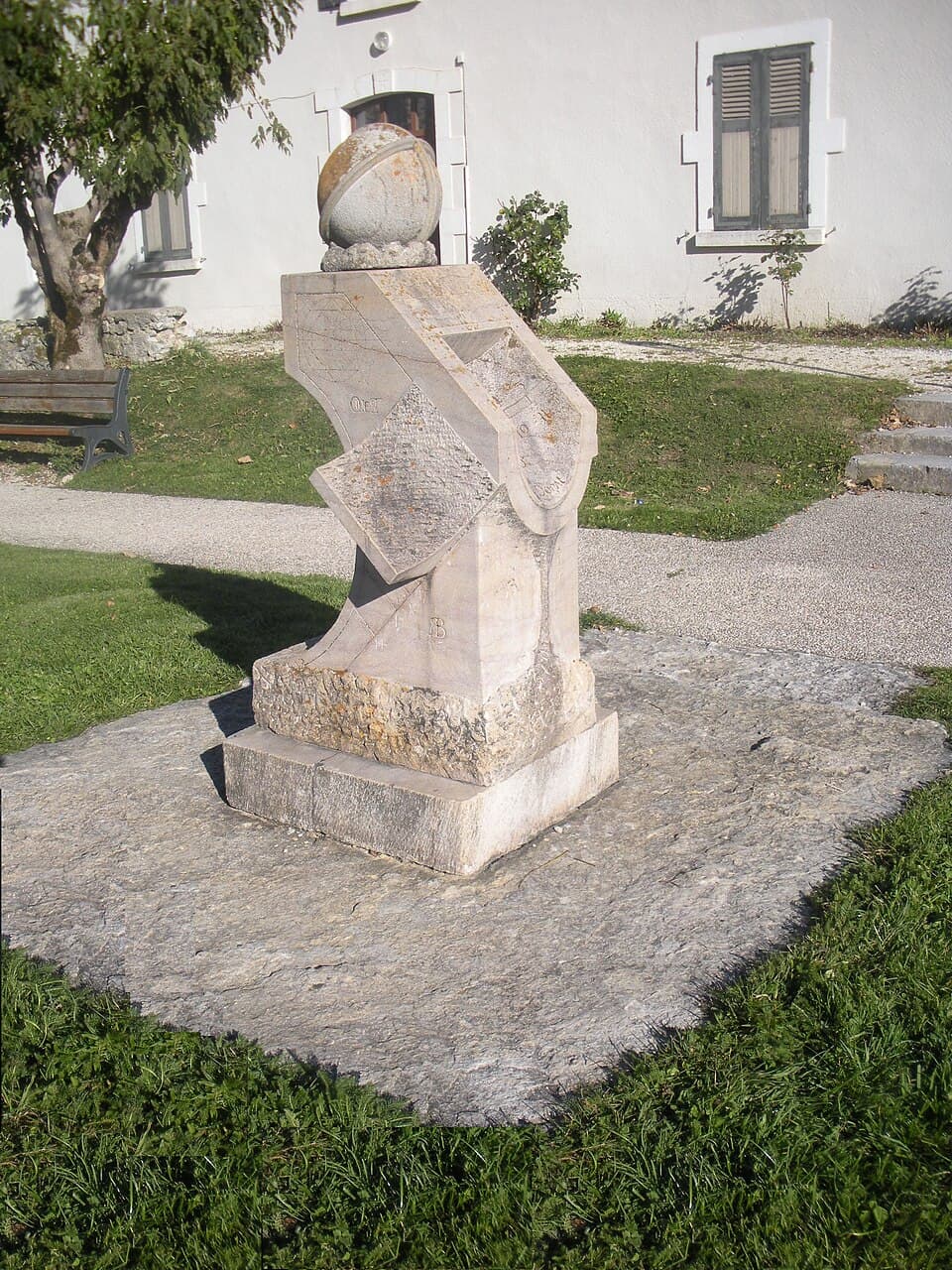
You who saw me choose this name, Pierre, know it was no accident. I am Jean Bruller, and that name the occupier could have tracked to my door. Vercors, that Isère mountain range, seemed to say everything without confessing anything: height, refuge, a land that cannot be subdued. By signing thus, I became a mountain rather than a man — and a mountain does not stop. I will keep the secret until the Liberation, I swore to myself. As long as the war lasts, Bruller no longer exists. There is only a signature, and behind it, a country that refuses to be silent.
By signing thus, I became a mountain rather than a man — and a mountain does not stop.
—Do you remember, when you had me read the first pages of Le Silence de la mer? Where did you get the idea of an officer welcomed without a word?
I remember as if it were yesterday, Pierre — you were reading by the lamp, and you yourself said nothing for a long time. I wanted a German officer billeted with us, courteous, almost sincere, and a family that opposes him with the only refusal left to them: silence. Not a cry, not an insult. A dignity closed like a door. I described him with his light blue eyes, his ash-blond hair, his regular features without relief, because he had to be human for our refusal to truly weigh. That is what mattered to me: to show that one can resist without hatred, by the sole bearing of the soul. Silence is not the absence of speech — it is speech that one refuses to give to the enemy.
Silence is not the absence of speech — it is speech that one refuses to give to the enemy.
—I hear that your book is circulating in typewritten copies even before our print runs. Does that worry you, or move you?
Both, my friend, both. To learn that Le Silence de la mer is being typed up at night, sheet after sheet, to be passed from hand to hand — how can one not be moved? Each copy is a risk taken by a stranger for me, for us. It also worries me, because the more the text spreads, the more it can trace back to you, to the press, to all of us. But you see, a book that is copied by hand under the coat is proof that it has become necessary. It no longer belongs to me. It belongs to those who hide it under their coat and hand it to a trusted friend, whispering.
A book that is copied by hand under the coat is proof that it has become necessary.
—When we decided to found Éditions de Minuit, we both knew what we risked. Why did we take that step?
Because we had to respond, Pierre. Lies filled everything — the newspapers, the walls, the airwaves. To be silent was to consent. You and I understood that a publishing house, even tiny, even clandestine, could be a weapon. We had almost nothing: an artisan press, scarce paper, steady hands. And yet each volume that emerged from the shadows was a slap to censorship. I am not unaware of what we risk: if we are discovered, it means arrest, perhaps worse. But I prefer that to living bent over. We are not making books, we are making proofs that French thought has not surrendered.
We are not making books, we are making proofs that French thought has not surrendered.
—You who watch over these print runs with me, tell me: how do you keep going, day after day, under the threat of arrest?
I keep going because I am not alone, and you know that better than anyone. In the morning, I move through Paris like an ordinary man, dull suit, hat low, looking like nothing. In the afternoon, there are discreet meetings, proofs passed from hand to hand, safe apartments. In the evening, the curfew, rationed electricity, and ears strained for any step on the stairs. Fear, I have tamed like one tames an animal: I keep it close, I do not deny it. What sustains me is knowing that you too are watching, that others are watching. Shared danger weighs half as heavy. And then writing, each night, makes me stronger than the threat.
Fear, I have tamed like one tames an animal: I keep it close, I do not deny it.
—Our manuscripts are not only about military honor. You wanted to write about persecution. Why La Marche à l'étoile?
Because there are silences we cannot keep, Pierre. People talk about weapons, sabotage, and we almost forget the crime being committed against men because they were born Jewish. La Marche à l'étoile, I wrote it for that: so that we do not forget those who are torn away, marked, dehumanized. A writer who looks away from the hunted innocent is nothing but a phrase-maker. Our house must not only defend France — it must defend man. As long as a press can still print the word 'justice' in the night, I will work at it. It is our shared honor to have consented to this.
A writer who looks away from the hunted innocent is nothing but a phrase-maker.
—Before all this, before our presses, you wielded a different kind of pen. You are little known as a draftsman — tell me about that craft.
Ah, you go back a long way, Pierre! Before I became this Vercors spoken of in whispers, I was an illustrator. I worked for the Muséum d'Histoire Naturelle, pencil bent over plates, rendering the vein of a leaf or the fold of a wing. Pen and ink are my first language; drawing taught me patience and precision, that way of looking for a long time before making a stroke. When I moved to writing, I kept that eye: I describe a face as I drew a specimen, line by line. The officer in Le Silence, I first saw him as one sees a model. The draftsman never left the writer — he simply began composing with words.
I describe a face as I drew a specimen, line by line.
—Does this double hand, of draftsman and writer, help you in our clandestine work today?
More than you think. A man used to drawing plates knows how to care for a layout, measure a margin, judge a typeface. When our volumes come off the artisan press, I want them to be beautiful, Pierre — not just courageous, beautiful. For a clandestine book must prove that occupied France still produces beauty, not just pamphlets. My craft as a draftsman gave me a taste for work well done, even in haste and fear. A clean page is also a form of resistance: it says we have yielded nothing, neither in content nor in form. The calligrapher and the resistant, in me, work the same sheet.
A clean page is also a form of resistance: it says we have yielded nothing.
—When the Liberation comes, and it becomes known that Vercors is Jean Bruller, what do you fear, what do you desire from that revelation?
I desire nothing for myself, Pierre, and that is sincere. The day I speak my name, I would like people to remember not a man, but a house, a press, all those who copied and hid. What I fear is that they will make a statue of me when we were only a workshop of stubborn people. The pseudonym will fall, but the work must remain anonymous in spirit: the work of many, never of one. You and I know how many hands carried these books. I would like that to be remembered. The rest — my name, my face — belongs to the part of me I do not care to deliver.
I would like people to remember not a man, but a house, a press.
—You told me you dream of writing one day about what separates man from beast. Does the war already fuel that question?
You have a good memory, Pierre — yes, this question haunts me, and the war has sharpened it. When I see what men inflict on others, I constantly ask myself: what is it that makes us human? Is it blood, intelligence, or that refusal of evil that sometimes barely distinguishes us from the beast? The officer in my novel is cultured, sensitive, and yet he serves barbarism. There lies the enigma. One day, when we are free, I would like to write about it, push the question to the point of vertigo. For defining the human is not a philosopher's game: it is knowing in whose name we resist today. We are fighting precisely for that definition.
Defining the human is not a philosopher's game: it is knowing in whose name we resist.
This imaginary interview was generated by artificial intelligence from sources documented in Vercors's profile. It dramatises what the figure might have said based on what we know about them, but does not constitute attested historical testimony. For primary sources and factual documentation, refer to the full profile.